Best Books to Understand Peter Singer, in Order
This curriculum moves from Singer's most accessible and famous arguments, through his systematic ethical framework, into the effective altruism movement he helped inspire, and finally into the sharpest philosophical objections his work has provoked. Each stage builds the conceptual vocabulary needed for the next, so that by the end the reader can engage Singer's ideas — and his critics — at a genuinely sophisticated level.
First Encounter: Singer's Core Arguments
BeginnerGrasp Singer's two most famous and world-changing arguments — that animals deserve moral consideration and that affluent people have a strong duty to give — in their most readable form.
▸ Study plan for this stage
Pace: 4–5 weeks, ~40–50 pages/day. Start with "Animal Liberation" (approximately 300 pages) over 2–3 weeks, then move to "The Life You Can Save" (approximately 200 pages) over 1–2 weeks. Allow time for reflection between books.
- Speciesism: the prejudice against animals based solely on species membership, analogous to racism and sexism
- The capacity to suffer as the morally relevant criterion for moral consideration, not intelligence or species membership
- The argument from marginal cases: if we grant moral status to humans with severe cognitive disabilities, consistency demands we grant it to animals with similar capacities
- The principle of equal consideration of interests: similar interests deserve similar weight regardless of whose interests they are
- Affluence creates a duty to prevent suffering and death when we can do so without sacrificing anything of comparable moral importance
- The drowning child analogy: our obligation to distant strangers is as strong as our obligation to save a child drowning in front of us
- The practical implications of Singer's arguments: vegetarianism/veganism and significant charitable giving are moral obligations, not optional
- The distinction between ideal and non-ideal theory: what we should do versus what we can realistically achieve
- What is speciesism, and how does Singer argue it is analogous to racism and sexism?
- Why does Singer believe the capacity to suffer, rather than intelligence or rationality, is the morally relevant criterion for moral consideration?
- What is the argument from marginal cases, and how does it challenge our treatment of animals?
- According to Singer, what is the relationship between affluence and moral obligation to help distant strangers?
- How does the drowning child analogy work, and what does Singer conclude about our duty to give to effective charities?
- What practical changes does Singer argue his moral arguments entail for how we should live?
- Track your own consumption for one week: document every animal product you consume and every charitable donation you make. Reflect on how Singer's arguments apply to your choices.
- Read one chapter from 'Animal Liberation' and write a one-page summary of Singer's main argument in that chapter, then identify one counterargument you find persuasive and write a response to it.
- Calculate your effective altruism impact: research one highly effective charity (e.g., GiveWell-recommended organizations) and calculate how much of your income would be needed to prevent one death or serious illness. Reflect on Singer's claim about what we owe.
- Engage the drowning child analogy directly: write a dialogue between yourself and Singer in which you raise three objections to his conclusion that distant strangers deserve the same moral weight as nearby children.
- Compare Singer's arguments across the two books: create a chart showing how his animal ethics arguments in 'Animal Liberation' and his global poverty arguments in 'The Life You Can Save' rely on the same underlying moral principles.
- Interview someone who disagrees with Singer (a meat-eater, a non-donor, or both) and document their objections. Then write a response from Singer's perspective, showing you understand both the objection and his likely reply.
Next up: This stage establishes Singer's two foundational moral arguments and their radical implications; the next stage will deepen your engagement by exploring the philosophical objections, refinements, and real-world complications that critics and Singer himself have raised.
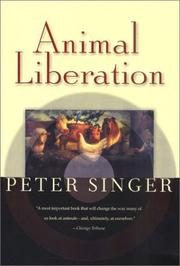
The book that launched the modern animal rights movement and the ideal starting point: Singer writes for a general audience, introduces the concept of speciesism, and lays out his utilitarian logic accessibly. Reading this first gives you Singer's voice and his core method of argument.
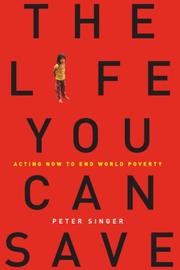
Singer's most approachable case for radical giving, built around a single vivid thought experiment. It introduces his consequentialist ethics of obligation without requiring prior philosophy, and pairs naturally with Animal Liberation as a second beginner text.
The Philosophical Foundation
BeginnerUnderstand the full utilitarian ethical system that underlies all of Singer's positions, and see how he applies it across a wide range of real-world moral problems.
▸ Study plan for this stage
Pace: 8–10 weeks, ~40–50 pages/day. Start with *Practical Ethics* (4–5 weeks, ~400 pages), then move to *Writings on an Ethical Life* (4–5 weeks, ~300 pages). Read in focused chunks by chapter or thematic section to allow time for reflection and exercises between readings.
- Utilitarianism as the foundation: maximizing overall well-being/minimizing suffering as the core moral principle, and why Singer adopts it over deontological or virtue-based ethics
- The principle of equal consideration of interests: how all sentient beings' interests count equally regardless of species, nationality, or other morally arbitrary characteristics
- Expanding the moral circle: understanding why Singer extends moral concern beyond humans to animals and future generations based on utilitarian logic
- Practical application across domains: how utilitarian reasoning applies consistently to abortion, euthanasia, animal ethics, global poverty, and environmental issues
- The demandingness objection and personal sacrifice: recognizing that utilitarianism can require significant personal moral demands and how Singer addresses this tension
- Impartiality vs. agent-centered prerogatives: the tension between utilitarian impartiality and the intuition that we may prioritize our own projects and relationships
- Moral reasoning from first principles: developing the skill to derive specific moral conclusions from utilitarian foundations rather than relying on intuition or tradition
- The relationship between theory and practice: seeing how abstract ethical principles translate into concrete guidance on real moral problems
- What is utilitarianism, and why does Singer believe it provides a better foundation for ethics than alternative approaches like deontology or virtue ethics?
- How does the principle of equal consideration of interests work, and what does it imply about the moral status of non-human animals?
- Apply utilitarian reasoning to at least two of Singer's major case studies (e.g., abortion, euthanasia, global poverty, animal agriculture). What conclusions follow, and why might they conflict with common intuitions?
- What is the demandingness objection to utilitarianism, and how does Singer respond to it? Do you find his response convincing?
- How does Singer's utilitarian framework handle the tension between impartiality (treating all interests equally) and the intuition that we may have special obligations to family, friends, or compatriots?
- Identify a real-world moral issue not explicitly discussed in the books. How would you apply Singer's utilitarian framework to analyze it?
- After reading each major chapter in *Practical Ethics*, write a one-page summary of the utilitarian argument on that topic (e.g., abortion, euthanasia, animal liberation) and identify where it diverges most sharply from conventional moral views.
- Create a comparison chart mapping Singer's positions across different domains (abortion, euthanasia, poverty, animals, environment) and identify the common utilitarian logic underlying each. Note which conclusions you find most counterintuitive and why.
- Select one essay from *Writings on an Ethical Life* and trace how it applies utilitarian principles to a specific real-world problem. Outline the argument step-by-step, then identify potential objections and how a utilitarian might respond.
- Conduct a thought experiment: design a hypothetical moral dilemma that tests utilitarian reasoning (e.g., a scenario involving competing interests of humans and animals, or present vs. future generations). Work through it using Singer's framework and compare your conclusion to what non-utilitarian ethics would suggest.
- Engage in a structured debate or written dialogue: argue both for and against one of Singer's most controversial conclusions (e.g., on infanticide, global poverty obligations, or animal rights). This forces you to understand the strongest version of his position and its most serious challenges.
- Reflect in a personal ethics journal: identify an area of your own life where your current behavior conflicts with utilitarian principles as Singer describes them (e.g., consumption, charitable giving, dietary choices). Analyze the gap between theory and practice, and explore what would be required to align them.
Next up: Having internalized Singer's utilitarian framework and seen how it applies across diverse moral domains, you will be ready to engage critically with objections, alternative ethical theories, and the limits of utilitarianism—preparing you to evaluate Singer's work in dialogue with his critics and to understand how his positions have evolved.

Singer's masterwork of applied philosophy, covering abortion, euthanasia, world poverty, animal rights, and the environment within a single coherent framework. Reading it after the two beginner books lets you see the unified theory behind the specific arguments you already know.
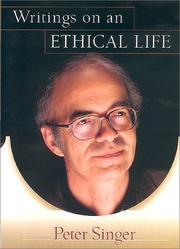
A curated anthology of Singer's essays that bridges his major books and fills in positions not covered elsewhere. It consolidates and reinforces the framework from Practical Ethics before the curriculum moves to harder territory.
Effective Altruism: The Movement Singer Inspired
IntermediateUnderstand how Singer's ethics gave rise to the effective altruism movement, how that movement has developed its own ideas and institutions, and where it has been challenged from within.
▸ Study plan for this stage
Pace: 4–5 weeks, ~40–50 pages/day. Week 1: "Doing Good Better" (chapters 1–4). Week 2: "Doing Good Better" (chapters 5–8). Week 3: "The Most Good You Can Do" (chapters 1–4). Week 4: "The Most Good You Can Do" (chapters 5–8). Week 5: Review, synthesis, and exercises.
- Effective altruism as a philosophy and movement: how it applies reason and evidence to do the most good
- MacAskill's core EA principles: comparing causes, evaluating neglectedness and tractability, and personal fit
- The problem of naive charity and how to identify high-impact interventions across global health, poverty, and existential risk
- Singer's philosophical foundations for EA: utilitarianism, impartiality, and the demandingness objection
- Institutional development of EA: organizations, funding mechanisms, and the effective altruism community
- Internal tensions and challenges within EA: critiques of quantification, concerns about scope, and debates over cause prioritization
- The relationship between Singer's original ethics and EA's evolution: where the movement has extended, modified, or diverged from his ideas
- Personal decision-making within EA: career choice, earning to give, and moral motivation
- What are the core principles MacAskill outlines for evaluating which causes deserve your altruistic effort, and how do neglectedness and tractability factor into cause selection?
- How does Singer's utilitarian framework in 'The Most Good You Can Do' provide philosophical grounding for the effective altruism movement, and where does he address the demandingness of his ethics?
- What are the main categories of cause areas within effective altruism (e.g., global health, animal welfare, existential risk), and what does each book say about how to prioritize among them?
- What internal criticisms or challenges to effective altruism does Singer acknowledge in 'The Most Good You Can Do,' and how do these reflect broader debates within the movement?
- How has the effective altruism movement developed its own institutions, funding mechanisms, and community structures beyond Singer's original philosophical work?
- What role does personal fit and comparative advantage play in EA decision-making according to MacAskill, and how does this complicate the idea of a single 'most good' action?
- Cause prioritization exercise: Using MacAskill's framework (scale, neglectedness, tractability), evaluate three cause areas mentioned in the books and rank them by expected impact. Write a one-page analysis justifying your ranking.
- Philosophical tension mapping: Create a chart comparing Singer's utilitarian demands in 'The Most Good You Can Do' with MacAskill's practical approach in 'Doing Good Better.' Identify where they align and where they diverge.
- Career impact analysis: Apply MacAskill's personal-fit framework to your own skills and circumstances. Identify three potential career paths and estimate their impact using EA reasoning (earning to give, direct work, research, etc.).
- Critique synthesis: Read one internal critique of effective altruism (e.g., from academic philosophy or the EA community itself) and write a 2–3 page response that draws on both books to defend, refine, or challenge the EA position.
- Institutional audit: Research one EA organization mentioned in either book (e.g., GiveWell, 80,000 Hours, Open Philanthropy). Analyze how its work reflects or extends the principles outlined in MacAskill and Singer.
- Demandingness dialogue: Write a dialogue between Singer's utilitarian position and a critic who worries EA is too demanding. Use specific examples from both books to ground the conversation.
Next up: This stage establishes the philosophical and practical foundations of effective altruism as a movement, positioning you to critically examine specific cause areas (global health, animal welfare, existential risk) and the empirical evidence behind them in the next stage.
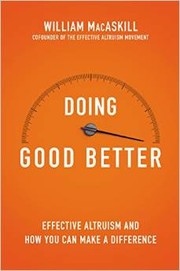
The canonical introduction to effective altruism by one of its co-founders, showing how Singer's utilitarian logic gets operationalized into cause prioritization and evidence-based giving. Reading it here lets you see Singer's ideas extended and refined by the next generation.

Singer's own account of the effective altruism movement he helped inspire, written after the movement had matured. It deepens The Life You Can Save and responds to early critiques, making it the right capstone for this stage.
The Objections: Serious Philosophical Pushback
ExpertEngage the strongest philosophical, political, and moral objections to Singer's utilitarian framework — from rights-based theory, from commonsense morality, and from political philosophy — so you can evaluate his arguments rather than simply accept them.
▸ Study plan for this stage
Pace: 8–10 weeks, ~40–50 pages/day (with 1–2 reflection days per week). Regan (~400 pages): 2 weeks; Singer (~300 pages): 2.5 weeks; Nussbaum (~400 pages): 2.5 weeks; synthesis & review: 1 week.
- Regan's rights-based theory: the inherent value of individuals and the 'respect principle' as an alternative to utilitarian aggregation
- The difference between utilitarian and deontological frameworks: why Regan rejects the calculus of consequences in favor of inviolable rights
- Sentience vs. agency: Regan's argument that moral patients (animals) deserve rights based on being 'subjects-of-a-life,' not just sentience
- Singer's response in The Expanding Circle: how utilitarianism accommodates moral progress and expanding moral concern without abandoning consequentialist reasoning
- The problem of demandingness: how utilitarian logic can conflict with ordinary moral intuitions and political feasibility
- Nussbaum's capabilities approach: a middle path between pure rights-based theory and utilitarianism, grounded in human and animal flourishing
- The role of political philosophy: how questions of justice, institutions, and practical implementation challenge pure theoretical frameworks
- The limits of abstract theory: recognizing where Singer, Regan, and Nussbaum diverge on real-world moral and political questions
- What is Regan's critique of utilitarianism, and why does he argue that rights-based theory better protects animals than Singer's approach?
- How does Singer respond to rights-based objections in The Expanding Circle, and does his defense adequately address Regan's concern about the 'replaceability argument'?
- What does it mean to be a 'subject-of-a-life' in Regan's framework, and how does this differ from Singer's criterion of sentience?
- How does Nussbaum's capabilities approach offer a different foundation for animal ethics than both Regan and Singer, and what are its strengths and limitations?
- Where do Singer, Regan, and Nussbaum agree and disagree on practical questions (e.g., vegetarianism, animal testing, wildlife management)?
- Can utilitarianism be reconciled with commonsense morality and political feasibility, or does Singer's framework require us to reject ordinary moral intuitions?
- Comparative argument map: Create a visual diagram showing Regan's, Singer's, and Nussbaum's core arguments on animal moral status, highlighting points of agreement and disagreement.
- Objection-response pairs: For each major objection Regan raises against utilitarianism (e.g., the 'replaceability argument,' the problem of demandingness), write Singer's likely response based on The Expanding Circle, then evaluate which is more convincing.
- Case study analysis: Apply all three frameworks to a concrete scenario (e.g., factory farming, wildlife culling, animal testing for medical research) and write a 2–3 page analysis of how each theorist would approach it and why they differ.
- Capability inventory: For a specific animal (e.g., a cow, an octopus, a chimpanzee), list the capabilities Nussbaum identifies as central to flourishing and assess which are present or absent; compare this to how Regan and Singer would evaluate the animal's moral status.
- Synthesis essay: Write a 4–5 page critical essay on whether Singer's utilitarianism can accommodate the strongest objections from rights-based theory and commonsense morality, using evidence from all three books.
- Debate preparation: Prepare opening statements and rebuttals for a three-way debate between a Regan-inspired rights theorist, a Singer-inspired utilitarian, and a Nussbaum-inspired capabilities theorist on a contentious issue (e.g., 'Should we prioritize reducing animal suffering or protecting animal rights?').
Next up: This stage equips you to recognize the deepest philosophical tensions in Singer's work and to evaluate utilitarian ethics not as dogma but as one rigorous framework among others—preparing you to synthesize these critiques into a mature, nuanced position on animal ethics and moral philosophy in the final stage.

Regan argues for animal rights on a deontological, rights-based foundation that directly challenges Singer's utilitarian approach. Reading it here shows that rejecting speciesism does not require accepting Singer's consequentialism, sharpening your critical view of both.

Singer's own philosophical and evolutionary account of how moral progress happens — a more theoretical text that also anticipates and responds to critics. Placing it here lets you hear Singer defend his framework after you have encountered Regan's challenge.

A rigorous capabilities-based critique of both Singer and Regan by one of the world's leading moral philosophers, published in 2023. It represents the current state of the debate and is the ideal final book because it demands everything the earlier stages have built.
Discussion
Keep reading
Paths that share books, cover the same subject, or open a related topic.