Effective Altruism: Best Books to Read in Order
This curriculum builds from the core logic and practice of effective altruism into its most ambitious and contested frontiers — longtermism, global priorities research, and civilizational risk. Starting at an intermediate level, each stage assumes the reader is thoughtful and motivated but may be new to EA's formal frameworks; by the end, they will be equipped to engage with the cutting-edge debates shaping how EA thinkers allocate attention and resources across causes.
The EA Foundations
IntermediateUnderstand the core philosophy of effective altruism — impartial beneficence, cause prioritization, and the use of evidence and reason to do the most good — and begin applying it practically.
▸ Study plan for this stage
Pace: 8–10 weeks, ~40–50 pages/day (approximately 2–3 weeks per book, with 1 week for integration and reflection)
- Impartial beneficence: the moral principle that everyone's wellbeing matters equally, regardless of personal relationships or proximity
- Cause prioritization: how to systematically evaluate which problems deserve attention based on scale, tractability, and neglectedness
- Evidence-based altruism: using data, reason, and empirical research rather than intuition to determine where to direct resources
- Effective giving: translating EA principles into concrete decisions about charitable donations and career choices
- The drowning child analogy and its implications: understanding moral obligations to distant strangers and the limits of intuitive ethics
- Personal sacrifice and moral commitment: examining how deeply EA principles should shape individual life choices
- Comparative advantage in doing good: recognizing that different people can contribute to altruism in different ways
- What is impartial beneficence, and how does it challenge common-sense morality about special obligations to family and friends?
- How do MacAskill's three criteria (scale, tractability, neglectedness) help you evaluate which causes deserve your resources?
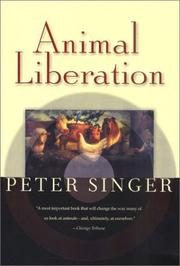
- What is Singer's argument in 'The Life You Can Save,' and how does the drowning child analogy extend our moral intuitions about helping distant strangers?
- What are the main portraits of moral commitment in 'Strangers Drowning,' and what tensions does MacFarquhar identify between altruism and personal flourishing?
- How would you apply EA principles to choose between two different charitable causes or career paths?
- What are the strengths and limitations of evidence-based altruism as described across these three books?
- Conduct a personal cause prioritization exercise: identify 3–5 global problems you care about, research their scale/tractability/neglectedness, and rank them using MacAskill's framework
- Calculate your personal giving budget: determine what percentage of income you could realistically donate, research 2–3 highly effective charities (using GiveWell or similar), and commit to a donation
- Write a 500-word reflection on the drowning child analogy: explain how Singer's thought experiment changed (or didn't change) your intuitions about moral obligation to distant strangers
- Interview or survey 3–5 people about their charitable giving: ask why they give to certain causes, then analyze their answers through the lens of EA principles
- Create a personal 'altruism profile': assess your comparative advantages (skills, interests, resources) and draft a 1–2 year plan for how you could contribute to a cause you've prioritized
- Read and annotate one case study from 'Strangers Drowning' (a profile of a highly committed altruist), then write a critical reflection on whether their approach is sustainable or advisable
Next up: This stage grounds you in EA's philosophical foundations and practical frameworks, preparing you to explore specialized cause areas, advanced ethical questions, and the institutional and systemic approaches to altruism in the next stage.
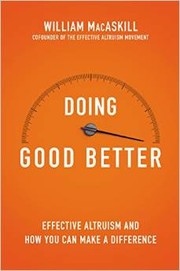
The definitive accessible introduction to EA: it establishes the key concepts (counterfactual impact, scale, neglectedness, tractability) that every subsequent book in this curriculum assumes. Read this first to build the shared vocabulary.
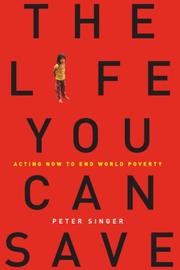
Singer's moral argument for giving — rooted in utilitarian ethics — provides the philosophical backbone behind EA's urgency. Reading it second deepens the 'why give at all' question before moving to 'how to give best.'

A journalistic study of people who live by radical altruism, this book honestly explores the psychological and ethical tensions of trying to do the most good — a grounding counterpoint before diving into more abstract frameworks.
Cause Prioritization & Global Impact
IntermediateLearn how EA thinkers systematically compare and rank causes — global health, animal welfare, systemic change — and understand the reasoning behind directing resources to the highest-leverage interventions.
▸ Study plan for this stage
Pace: 8–10 weeks, ~40–50 pages/day (alternating between books: 2–3 weeks on The Precipice, then 2–3 weeks on Poor Economics, with 1–2 weeks for integration and reflection)
- Existential risk taxonomy and scale: understanding how Ord categorizes humanity's greatest threats (pandemics, AI, climate, nuclear war) and why some risks dwarf others in expected impact
- Cause prioritization frameworks: learning to compare causes using scale, tractability, and neglectedness—and how The Precipice and Poor Economics model these differently
- Global poverty as a tractable cause: Banerjee's evidence-based approach to why the poorest billion matter and which interventions actually work versus intuitive but ineffective solutions
- Moral weight and resource allocation: grappling with how to weigh different populations (present vs. future humans, animals, potential beings) when deciding where EA resources should flow
- Empirical humility in development: Poor Economics' core insight that poverty is not monolithic and that small, tested interventions often outperform grand theories
- Longtermism and near-termism trade-offs: understanding Ord's argument for prioritizing existential risk reduction and how it competes with immediate poverty alleviation
- Neglectedness and comparative advantage: recognizing that the highest-impact cause for you depends on your skills, position, and what others are already doing
- According to Ord, what are the main categories of existential risk, and why does he argue that the 21st century is humanity's most dangerous period?
- How do Banerjee and Duflo challenge the conventional wisdom about why poor people remain poor, and what does this imply for cause prioritization in global health and development?
- What is the relationship between scale, tractability, and neglectedness in cause prioritization, and how do The Precipice and Poor Economics illustrate these trade-offs differently?
- Why might focusing on existential risk (as Ord advocates) be more impactful than focusing on current global poverty (as Banerjee's work suggests), and what are the strongest counterarguments?
- What specific interventions does Banerjee highlight as evidence-based and cost-effective, and how would you evaluate whether they represent the highest-leverage uses of resources?
- How should an effective altruist decide between working on a neglected existential risk versus a more tractable near-term cause like malaria prevention?
- Create a cause prioritization matrix for 5–6 global causes (e.g., AI safety, malaria prevention, factory farming, nuclear security, education access). Score each on scale, tractability, and neglectedness, then rank them and justify your top 3.
- Read Ord's risk estimates for existential catastrophe in the 21st century and model the expected value of a hypothetical intervention that reduces one risk by 1%. Compare this to the expected value of preventing 1,000 malaria deaths (using Banerjee's cost-effectiveness data).
- Identify one specific poverty intervention Banerjee discusses (e.g., deworming, microfinance, teacher incentives). Research its current funding level and number of organizations working on it. Write a 1-page analysis of whether it remains neglected and why.
- Interview or survey 3–5 people outside EA circles about what they think are the world's most pressing problems. Compare their answers to Ord's risk hierarchy and Banerjee's poverty focus. Reflect on what assumptions differ and why.
- Design a small-scale experiment or pilot program inspired by Banerjee's methodology: identify a local problem, form a hypothesis about what causes it, and outline how you'd test a low-cost intervention (e.g., in your community, workplace, or school).
- Write a 2–3 page dialogue between Ord and Banerjee debating whether a $1 million donation should go to AI safety research or to scaling a proven anti-poverty program. Use specific claims from both books.
Next up: This stage equips you with both a systematic framework for comparing causes and concrete evidence about what works in development, preparing you to evaluate specific career paths and giving strategies in the next stage—where you'll apply these prioritization skills to your own life and resources.

Ord introduces the framework of existential and global catastrophic risk as a cause area, arguing compellingly that safeguarding humanity's long-run potential may be the most important priority. This is the essential bridge from near-term to long-term thinking.
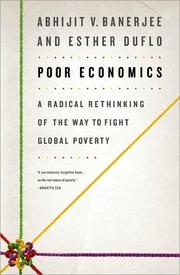
A rigorous, evidence-based examination of global poverty interventions — the empirical tradition that underpins EA's global health cause area. It trains the reader to think carefully about what actually works and why.
Longtermism & the Far Future
ExpertEngage seriously with longtermism — the view that positively influencing the long-run future is a top moral priority — including its philosophical foundations, implications, and strongest critiques.
▸ Study plan for this stage
Pace: 12–14 weeks, ~40–50 pages/day. Allocate 4–5 weeks to each book, with 1–2 weeks for synthesis and integration between books. Expect 2–3 weeks of slower reading during Superintelligence due to technical density.
- Longtermism as a moral framework: the claim that positively shaping the far future should be a top priority because the future contains vastly more people than the present
- The astronomical waste argument: why humanity's potential future light cone represents an enormous moral stake that dwarfs near-term concerns
- Existential and catastrophic risks: how extinction events and permanent civilizational collapse threaten humanity's long-term potential
- AI as a pivotal century technology: why advanced artificial intelligence poses both existential risk and unprecedented opportunity to shape the future
- The alignment problem: the technical and philosophical challenge of ensuring advanced AI systems pursue goals aligned with human values
- Moral uncertainty and decision-making under deep uncertainty: how to act rationally when facing unknown probabilities and value disagreements about the far future
- Critiques of longtermism: addressing concerns about fanaticism, empirical tractability, and whether present-focused ethics might be more justified
- Practical implications: how longtermist reasoning translates into concrete cause prioritization and career decisions today
- What is longtermism, and what is the core moral argument MacAskill presents for why we should prioritize the far future?
- How does Bostrom define superintelligence, and what are the main pathways he identifies through which advanced AI could pose existential risks?
- What is the alignment problem as described by Christian, and why is it considered a central challenge for AI safety?
- What are the strongest objections to longtermism discussed across these books, and how do the authors respond to them?
- How do the three books connect? What role does AI play in longtermist reasoning, and how does alignment relate to existential risk?
- What concrete actions or research directions does longtermist reasoning suggest, according to these authors?
- After finishing What We Owe the Future, write a 1–2 page personal response: Do you find the longtermist argument compelling? What assumptions does it rest on, and which ones do you find most questionable?
- Create a visual map of existential risks: list the major categories Bostrom discusses (AI, biotechnology, nanotechnology, etc.), and for each, note the mechanism of risk and why it matters to longtermism.
- Read a recent critique of longtermism (e.g., from philosophers like Hilary Greaves's critics or effective altruism skeptics) and write a 1-page analysis of how MacAskill's arguments either address or fail to address that critique.
- Work through a concrete alignment scenario: choose one technical challenge Christian describes (e.g., reward specification, scalable oversight) and outline why solving it matters for the long-term future.
- Debate exercise: argue both for and against the claim 'AI alignment is the most important problem for humanity to solve right now,' drawing on all three books.
- Career/cause mapping: based on longtermist reasoning from these books, identify 3–5 potential career paths or research areas that could positively influence the far future, and explain your reasoning for each.
Next up: This stage establishes longtermism and AI safety as foundational moral priorities; the next stage should explore how to operationalize these insights through specific cause areas, institutional change, and personal decision-making in an uncertain world.

The most thorough popular case for longtermism, arguing that future people matter morally and that we can take meaningful action to improve their prospects. Read after The Precipice, which primes the intuitions this book formalizes.

The landmark analysis of advanced AI as a potential existential risk — one of the most discussed cause areas in longtermist EA. Dense but essential for understanding why AI safety commands so much EA attention and funding.

A more accessible and journalistic companion to Bostrom, grounding AI risk in concrete technical and social realities. Reading it after Superintelligence makes the abstract threat legible and actionable.
Critique, Nuance & Synthesis
ExpertStress-test EA's assumptions by engaging with serious philosophical and empirical critiques, and synthesize a mature, self-aware approach to doing the most good.
▸ Study plan for this stage
Pace: 4–5 weeks, ~40–50 pages/day (approximately 280–350 pages total)
- How moral philosophy frameworks (consequentialism, deontology, virtue ethics) clash in real-world decisions and why no single system has all the answers
- The gap between philosophical theory and practical human decision-making, including cognitive biases and emotional constraints
- Schur's critique of moral perfectionism and the psychological toll of trying to optimize every ethical choice
- How different ethical systems handle competing values, uncertainty, and the problem of unintended consequences
- The role of humility, pluralism, and acceptance of moral residue in a mature ethical approach
- Why being 'good enough' often beats paralyzing pursuit of perfection in consequentialist reasoning
- What are the core differences between consequentialist, deontological, and virtue ethics approaches, and when does each framework fail to provide clear guidance?
- How does Schur use real-world dilemmas to expose the limitations of trying to apply pure moral philosophy to everyday life?
- What is moral residue, and why does acknowledging it matter for a realistic approach to doing good?
- How does the pursuit of moral perfection create psychological harm, and what does Schur propose as an alternative?
- What role does uncertainty play in ethical decision-making, and how should EA practitioners account for it?
- How can you integrate insights from multiple ethical frameworks rather than committing to a single system?
- Map a real decision you face (career, donation, time allocation) across all three frameworks (consequentialism, deontology, virtue ethics) and note where they diverge and why
- Identify one area where you currently feel moral perfectionism is paralyzing you; design a 'good enough' threshold and test it for one week
- Read a chapter and write a 1-page response identifying: (a) where Schur's critique applies to EA thinking, (b) where EA might push back, (c) what you'd do differently
- Conduct a 'moral residue audit': list 3 recent decisions where you chose one good outcome over another; reflect on what was sacrificed and whether you've processed that loss
- Debate yourself: argue both for and against the claim that 'EA's focus on maximization is psychologically unsustainable' using evidence from Schur
- Create a personal ethical decision-making protocol that incorporates Schur's insights—specify which frameworks you'll consult, how you'll handle uncertainty, and when you'll accept 'good enough'
Next up: This stage equips you to recognize EA's philosophical foundations and their limits, preparing you to engage with empirical critiques of EA's assumptions about impact measurement, rationality, and global priorities in subsequent stages.

A witty but philosophically serious tour through moral philosophy (utilitarianism, deontology, virtue ethics) that helps the reader locate EA within the broader landscape of ethics and identify its blind spots.
Discussion
Keep reading
Paths that share books, cover the same subject, or open a related topic.