Ethics: how to think about right and wrong
This curriculum takes a complete beginner from "ethics is just gut feeling" to genuine philosophical fluency across all major moral frameworks. It builds in four stages: first developing moral intuition and vocabulary through accessible entry points, then surveying the classical frameworks systematically, then stress-testing those frameworks with hard cases and thought experiments, and finally engaging with cutting-edge debates where professional philosophers still disagree.
Awakening Moral Intuition
BeginnerDiscover that ethics is a rigorous discipline, not just opinion — and develop the basic vocabulary (consequentialism, duty, virtue, fairness) needed to go deeper.
▸ Study plan for this stage
Pace: 6–8 weeks total. Week 1–5: "Justice" by Sandel (~25–30 pages/day, reading in chapter-sized chunks and pausing to reflect after each case study). Week 6–8: "The Fifth Book of the Nicomachean Ethics" by Aristotle (~8–12 pages/day — slower pace to accommodate the dense, translated prose; re-read diffic
- Consequentialism & Utilitarianism: the idea (explored throughout Sandel's 'Justice') that the morally right action is the one that maximizes overall welfare or happiness
- Deontological/Duty-based ethics: Kant's framework (as Sandel presents it) that some actions are intrinsically right or wrong regardless of consequences
- Virtue ethics: the view that morality is grounded in character and human flourishing (eudaimonia), introduced by Sandel and then examined directly in Aristotle
- Fairness & Distributive Justice: Rawls's veil-of-ignorance thought experiment in Sandel, and Aristotle's distinction between distributive and corrective justice in Book V
- Aristotle's concept of Justice as proportionality: just distribution is not equal shares but shares proportional to relevant merit or need
- Corrective Justice: Aristotle's account of how justice restores balance after a wrong — the precursor to modern legal and restorative justice thinking
- Moral intuition vs. moral theory: Sandel's method of using dilemmas (trolley problems, market pricing, etc.) to show that raw intuitions need theoretical grounding
- The 'telos' (purpose/function) of persons and communities: Aristotle's teleological reasoning that justice must be understood in relation to what human beings and political communities are for
- After reading Sandel's 'Justice,' can you define consequentialism, deontology, and virtue ethics in your own words and give one real-world example of each?
- How does Sandel use the trolley-problem and similar dilemmas to demonstrate that moral intuition alone is insufficient — and what does this reveal about the need for ethical theory?
- What is Rawls's 'veil of ignorance' as Sandel explains it, and why does it lead to a principle of fairness rather than pure utility?
- According to Aristotle in Book V of the Nicomachean Ethics, what is the difference between distributive justice and corrective justice, and what role does proportionality play in each?
- How does Aristotle's teleological view of human nature (telos/eudaimonia) shape his understanding of what a just person and a just community look like?
- Where do Sandel's modern frameworks and Aristotle's ancient account of justice agree, and where do they most sharply diverge?
- Dilemma Journal: After each chapter of 'Justice,' write a half-page response to Sandel's central dilemma — first recording your gut reaction, then labeling which ethical framework (consequentialist, deontological, virtue-based) best supports your view. Track how your intuitions shift across chapters.
- Vocabulary Flashcards: Build a running glossary of at least 15 terms (e.g., utility, categorical imperative, telos, eudaimonia, distributive justice, corrective justice, veil of ignorance) with a definition in your own words and a concrete example for each.
- Aristotle Paraphrase Exercise: Take one dense paragraph from Book V of the Nicomachean Ethics and rewrite it in plain modern English (2–3 sentences). Then write one sentence explaining why the idea still matters today.
- Real-World Justice Audit: Choose one current news story involving a policy debate (taxation, healthcare, criminal sentencing). Write one paragraph analyzing it through each of the four lenses — consequentialist, deontological, virtue-based, and Aristotle's proportional justice — to see how the frameworks produce different verdicts.
- Socratic Dialogue: Find a study partner (or write both sides yourself) and stage a 10-minute debate: 'Should organ donation be mandatory?' — one person argues from Sandel's utilitarian perspective, the other from Aristotle's justice-as-merit perspective. Afterward, write a one-paragraph reflection on which argument felt more persuasive and why.
- Concept Map: Draw a single diagram connecting all four major frameworks (consequentialism, duty, virtue, fairness) with arrows showing where they agree, where they conflict, and where Aristotle's Book V fits within or alongside them.
Next up: By establishing the four foundational frameworks and showing — through Sandel's dilemmas and Aristotle's rigorous analysis — that ethics demands systematic reasoning, this stage equips the reader with the conceptual vocabulary and critical habits needed to engage more demanding primary texts and deeper theoretical debates at the intermediate level.
A Harvard professor's bestselling introduction that uses vivid real-world dilemmas to introduce utilitarianism, Kantian duty, and virtue ethics in plain language — the perfect first map of the terrain.

Read after Sandel so you already know what virtue ethics is; Aristotle's original account of the good life and character is foundational to everything that follows, and Sandel's framing makes it far less daunting.
The Three Great Frameworks
BeginnerUnderstand consequentialism, deontology, and virtue ethics from their primary sources and best modern expositions — well enough to apply and compare them.
▸ Study plan for this stage
Pace: 10–12 weeks total, roughly 20–30 pages/day with built-in reflection days. Week 1–2: Mill's "Utilitarianism" (~112 pages; read slowly, re-reading chapters 2 and 4 at least twice). Weeks 3–6: Kant's "Groundwork" (~120 pages in most translations; budget extra time — aim for 8–12 pages/day with heavy an
- The Principle of Utility (Greatest Happiness Principle): actions are right in proportion as they promote happiness and wrong as they produce the reverse — Mill's foundational claim in 'Utilitarianism'
- Quality vs. Quantity of Pleasures: Mill's famous revision of Bentham — that some pleasures are inherently higher than others, addressed in 'Utilitarianism' Chapter 2
- Proof of Utility: Mill's controversial argument in Chapter 4 that happiness is the only thing desirable as an end, and the logical objections it raises
- The Categorical Imperative (Formula of Universal Law & Formula of Humanity): Kant's supreme principle of morality in the 'Groundwork' — act only on maxims you could will to be universal laws, and always treat rational beings as ends, never merely as means
- Duty, Good Will, and Moral Worth: Kant's argument in 'Groundwork' Part I that only a good will is unconditionally good, and that moral worth comes from acting from duty, not merely in accordance with it
- Autonomy and the Kingdom of Ends: Kant's vision in the 'Groundwork' of rational agents as self-legislators in a moral community — the basis of human dignity
- MacIntyre's 'Disquieting Suggestion' and the Emotivist Critique: the opening argument of 'After Virtue' that modern moral discourse is fragmented, incoherent, and reduced to mere expressions of preference
- The Aristotelian Tradition and the Narrative Self: MacIntyre's recovery in 'After Virtue' of virtue as intelligible only within practices, traditions, and the narrative unity of a human life — his positive alternative to Enlightenment ethics
- According to Mill in 'Utilitarianism', how does he distinguish between higher and lower pleasures, and why does this distinction matter for defending utilitarianism against the objection that it is a 'doctrine worthy only of swine'?
- What is Kant's Categorical Imperative in the 'Groundwork', and how do the Formula of Universal Law and the Formula of Humanity relate to each other? Can you construct and test a maxim using each formula?
- Why does Kant in the 'Groundwork' insist that an action has genuine moral worth only when done from duty rather than merely in accordance with duty? Give an example that illustrates the difference.
- What is MacIntyre's central diagnosis in 'After Virtue' of why modern moral philosophy fails, and what role does emotivism play in his critique?
- How does MacIntyre use the concept of a 'practice' in 'After Virtue' to rehabilitate virtue ethics, and how does the idea of the 'narrative unity of a human life' support his account of the virtues?
- How would Mill, Kant, and MacIntyre each evaluate the same moral dilemma — for example, lying to protect a friend — and what does the comparison reveal about the deepest disagreements between the three frameworks?
- Maxim Testing Drill (Groundwork): Write down five everyday actions (e.g., breaking a promise for convenience, donating anonymously). For each, formulate the maxim, apply Kant's Formula of Universal Law, then apply the Formula of Humanity. Record whether each passes or fails and why.
- Utility Calculus Journal (Utilitarianism): For one week, record one real decision per day. After each, estimate the consequences for all affected parties, weigh higher vs. lower pleasures as Mill defines them, and determine what the Principle of Utility would prescribe. Note where your intuition conflicts with the result.
- Three-Framework Verdict Table: Choose three morally complex scenarios (e.g., whistleblowing on a friend, harvesting one organ to save five, breaking a rule to help someone in need). Create a table with rows for each scenario and columns for Mill, Kant, and MacIntyre. Fill in each cell with the framework's verdict and its core reasoning, then write a paragraph on which verdict you find most defensi
- MacIntyre's 'Practice' Mapping (After Virtue): Identify two activities in your own life (e.g., teaching, playing chess, medicine). Using MacIntyre's vocabulary from 'After Virtue', identify the internal goods, external goods, standards of excellence, and virtues required by each practice. Reflect on whether the practice has been corrupted by the pursuit of external goods.
- Steelman Essays: Write a one-page steelman (the strongest possible defense) of each of the three frameworks, as if you were a committed utilitarian, a committed Kantian, and a committed virtue ethicist. Then write a one-page critique of each. This forces genuine engagement with all three books rather than defaulting to a favorite.
- Socratic Dialogue Exercise: With a study partner (or in writing), stage a dialogue between Mill and Kant on a single case — use only arguments and concepts that actually appear in 'Utilitarianism' and the 'Groundwork'. Then have MacIntyre (drawing from 'After Virtue') interrupt and challenge both. Identify the precise point of deepest disagreement.
Next up: Mastering these three frameworks as distinct, internally coherent systems gives the reader the critical vocabulary and comparative lens needed to engage productively with more advanced topics — such as metaethics, applied ethics, and contemporary challenges to all three traditions — without being swept away by any single school of thought.
The clearest and most readable defense of consequentialism ever written; short enough to finish in an afternoon and essential before tackling any critique of the view.
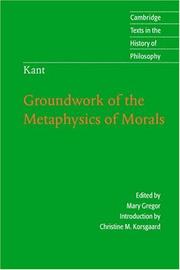
Kant's compact statement of the categorical imperative — the cornerstone of deontological ethics. Reading Mill first gives you a foil that makes Kant's contrasting logic sharper.
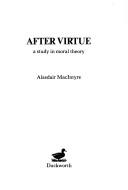
MacIntyre's landmark argument that modern ethics is incoherent without the virtue-ethics tradition ties the three frameworks together and explains why they conflict — the ideal capstone for this stage.
Thought Experiments & Hard Cases
IntermediateUse famous philosophical puzzles and applied dilemmas to stress-test the frameworks, sharpen moral reasoning, and understand where each theory succeeds and breaks down.
▸ Study plan for this stage
Pace: 6–8 weeks total: Weeks 1–4 on "Practical Ethics" (~25–30 pages/day, reading one applied chapter per session and pausing to journal reactions); Weeks 5–7 on "The Right Thing To Do" (~20–25 pages/day, treating each essay as a standalone puzzle); Week 8 reserved for comparative review, essay drafting,
- The Expanding Circle & equal consideration of interests (Singer) — the principle that the interests of every being affected by an action deserve equal moral weight, regardless of species, nationality, or proximity
- Utilitarian calculus under real-world constraints — how Singer applies preference-utilitarianism to abortion, euthanasia, global poverty, and animal liberation, and where aggregating interests produces counterintuitive verdicts
- The drowning child / distance irrelevance argument (Singer) — the claim that geographical or social distance does not diminish our obligation to prevent serious harm when we can do so at little cost to ourselves
- Speciesism as a moral prejudice (Singer) — the analogy between speciesism and racism/sexism, and the philosophical burden this places on drawing morally relevant lines between humans and animals
- Moral frameworks as diagnostic tools (Rachels) — using consequentialism, Kantian ethics, and virtue ethics not as complete answers but as lenses that illuminate different aspects of a hard case
- Cultural relativism vs. moral objectivism (Rachels) — the argument that disagreement across cultures does not entail that no view is more defensible, and why some cross-cultural moral criticism is legitimate
- The bare-difference argument and act/omission distinction (Rachels) — the famous bathtub cases challenging the moral significance of the killing/letting-die distinction, with direct implications for euthanasia debates
- Reflective equilibrium in practice — the iterative method of adjusting both principles and intuitions when they conflict, as modeled throughout both books
- After reading Singer's drowning-child argument in 'Practical Ethics,' can you reconstruct its logical structure (premises → conclusion) and identify the strongest objection to each premise?
- Singer argues that our obligations to distant strangers in poverty are as strong as our obligation to a drowning child in front of us. What assumptions does this analogy rest on, and does Rachels' framework in 'The Right Thing To Do' support or complicate Singer's conclusion?
- In 'Practical Ethics,' Singer applies utilitarian reasoning to euthanasia and abortion. Where does the preference-utilitarian framework yield results that clash with widely shared moral intuitions, and how should a careful reasoner respond to that clash?
- Rachels uses the bare-difference argument (the two bathtub cases) to challenge the act/omission distinction. Can you explain the argument, evaluate its validity, and describe a case where the distinction might still carry moral weight?
- Both Singer and Rachels engage with cultural relativism. What is each author's verdict, and whose argument do you find more philosophically rigorous — and why?
- Having worked through both books, which ethical framework (consequentialist, deontological, or virtue-based) best handles the hard cases presented, and what does the answer reveal about the limits of any single theory?
- Argument mapping: For each major applied chapter in 'Practical Ethics' (e.g., famine, animal liberation, euthanasia), draw a premise-conclusion diagram. Mark every premise as empirical or normative, then write one targeted objection to the weakest normative premise.
- Stress-test Singer's circle: List five real moral decisions you make weekly (diet, charitable giving, consumer choices). Apply Singer's equal-consideration principle to each. Write a one-paragraph verdict on whether you are acting consistently with the principle and, if not, whether the inconsistency is defensible.
- Rachels role-reversal drill: Take any two opposing positions from essays in 'The Right Thing To Do' (e.g., pro- and anti-euthanasia). Write a 300-word steel-man for the side you find least persuasive, using only arguments Rachels himself would consider philosophically serious.
- Framework face-off journal: Choose one hard case from Singer (e.g., infanticide or animal experimentation). Write three short paragraphs — one applying utilitarian reasoning, one applying Kantian reasoning, one applying virtue ethics — then write a fourth paragraph explaining which framework's verdict you endorse and why.
- Intuition audit: Identify three moments in either book where your gut reaction strongly disagreed with the author's conclusion. For each, decide whether the intuition survives philosophical scrutiny or whether the argument should override it. Write up your reasoning in 150–200 words per case.
- Socratic dialogue practice: With a study partner (or in writing), stage a 20-minute debate on Singer's famine-relief argument. One person defends Singer's position using only premises from 'Practical Ethics'; the other raises objections using Rachels' toolkit from 'The Right Thing To Do.' Debrief by identifying which objections Singer's text actually anticipates.
Next up: By exposing the fracture lines within each major framework through Singer's applied cases and Rachels' conceptual dissections, this stage equips the reader to move from stress-testing individual theories to the meta-ethical question of how — and whether — moral knowledge itself can be grounded, which is the natural focus of a subsequent stage on metaethics and moral epistemology.
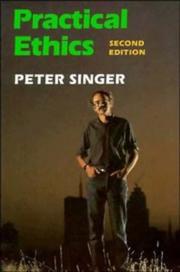
Singer applies utilitarian reasoning unflinchingly to abortion, animal welfare, global poverty, and euthanasia — forces you to follow arguments wherever they lead rather than retreating to intuition.
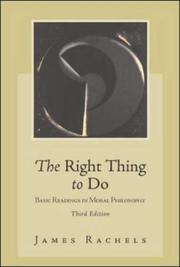
A carefully curated anthology of classic essays and thought experiments (trolley problems, the drowning child, moral relativism) that gives you the greatest hits of applied ethics in one volume.
Going Deeper — Metaethics & Contemporary Debates
ExpertMove from first-order ethics ('what should I do?') to metaethics ('what does it even mean for something to be right?') and engage with the frontier questions professional philosophers debate today.
▸ Study plan for this stage
Pace: 12–16 weeks total, roughly 20–25 pages/day, 5 days/week. Suggested breakdown: Weeks 1–4 for Mackie's "Ethics" (~180 pp; focus on slow, analytical reading of the error theory arguments); Weeks 5–10 for Parfit's "Reasons and Persons" (~540 pp; the densest text — budget extra time for Parts III & IV on
- Moral Error Theory & Moral Skepticism (Mackie): the claim that all positive moral statements are false because objective moral facts do not exist, grounded in the 'argument from queerness' and the 'argument from relativity'
- Projectivism vs. Moral Realism (Mackie): the idea that humans 'project' subjective attitudes onto the world and mistake them for objective features, and why Mackie thinks realists are systematically mistaken
- The Subjectivity/Objectivity Distinction in Ethics (Mackie): distinguishing first-order moral claims from second-order metaethical claims, and why Mackie insists ordinary moral discourse presupposes objectivity it cannot have
- Self-Defeating Theories & Rational Benevolence (Parfit): how individual and collective rationality can be mutually undermining, and Parfit's taxonomy of self-defeating moral and prudential theories
- Personal Identity & Its Ethical Implications (Parfit): the Reductionist view that persons are not separately existing entities, and the radical downstream consequences for desert, responsibility, and future-oriented obligations
- The Non-Identity Problem & Obligations to Future Generations (Parfit): why standard person-affecting moral views fail to condemn policies that harm future people who would not otherwise have existed
- Repugnant Conclusion & Population Ethics (Parfit): the logical tension between total and average utilitarian views when comparing possible populations of different sizes and welfare levels
- Evolutionary Debunking & the Expanding Circle (Singer): how Darwinian accounts of the origin of altruism interact with — and potentially undermine or support — normative ethics, and Singer's argument that reason itself drives the progressive expansion of the moral circle beyond kin and tribe
- After reading Mackie, can you clearly articulate the difference between his first-order moral views (he still makes them) and his second-order metaethical error theory — and why holding both simultaneously is not contradictory?
- What exactly is Mackie's 'argument from queerness,' and what would a moral realist's strongest rebuttal look like? Does Mackie anticipate it?
- Parfit argues that some moral theories are 'self-defeating.' Using his own examples, explain what makes a theory self-defeating and whether self-defeat is necessarily a fatal objection.
- How does Parfit's Reductionist view of personal identity challenge commonsense intuitions about punishment, prudential concern for one's future self, and obligations to distant future generations? Which of these challenges do you find most compelling?
- What is the Non-Identity Problem, and why does it expose a deep flaw in person-affecting moral views? Does Parfit offer a satisfying resolution, or does he leave it open?
- Singer argues in 'The Expanding Circle' that the evolutionary origin of ethics does not determine its justification. How does this claim interact with Mackie's projectivism — does Singer's account escape Mackie's error theory, or is it vulnerable to the same critique?
- Argument mapping (Mackie): Write out the argument from queerness and the argument from relativity as formal numbered premises leading to a conclusion. Then write a one-page steelman rebuttal from a moral realist perspective, and assess which side has the stronger case.
- Socratic dialogue (Mackie vs. Singer): Draft a 600-word imagined dialogue in which Mackie's projectivist challenges Singer's claim that reason can objectively expand the moral circle. Force each position to respond to the other's strongest objection.
- Personal identity thought experiments (Parfit): Work through Parfit's fission/fusion cases (the 'divided self' and teletransportation scenarios) in writing. For each, state what the Reductionist says, what the Non-Reductionist says, and what the ethical stakes are for desert and future obligations.
- Non-Identity Problem case study (Parfit): Choose a real-world policy debate (e.g., climate change, genetic selection, national debt) and write a 500-word analysis showing exactly where and why the Non-Identity Problem arises, and evaluate at least two possible ways out Parfit discusses.
- Population ethics matrix (Parfit): Create a comparison table contrasting Total View, Average View, and Critical Level utilitarianism on at least four test cases Parfit raises (including the Repugnant Conclusion). Annotate each cell with whether you find the verdict intuitive or monstrous, and why.
- Integrative synthesis essay: After finishing all three books, write a 1,000-word essay answering: 'If Mackie is right that there are no objective moral facts, can Singer's expanding circle project — or Parfit's population ethics — retain any normative force?' Use specific arguments and page references from all three texts.
Next up: By wrestling with whether moral claims can be true at all (Mackie), what rationality and identity demand of us across time and populations (Parfit), and how reason expands moral concern (Singer), the reader has built the metaethical vocabulary and tolerance for unresolved tension needed to engage applied ethics, political philosophy, and emerging debates — such as AI ethics, global justice, and lo
Mackie's famous 'error theory' — the argument that moral facts don't exist — is the most important challenge to everything learned so far, and forces a reckoning with the foundations of morality itself.
Widely considered one of the greatest works of moral philosophy of the 20th century; Parfit's puzzles about personal identity, future generations, and self-interest push ethical reasoning to its absolute limits.

A fitting culmination: Singer synthesizes evolutionary biology, reason, and ethics to ask how far our moral obligations extend — leaving the reader with a personal challenge, not just academic knowledge.
Discussion
Keep reading
Paths that share books, cover the same subject, or open a related topic.