Best Books on Medical Ethics and Bioethics, in Reading Order
Bioethics is an unusual discipline in that it was built backwards: the scandals came first, the principles were written afterwards to prevent them. This path follows that order — the cases that forced the field into existence, then the framework of principles and the history of how it was assembled, then the bedside work of applying it, and finally the arguments that the framework does not settle. It is a path for thinking clearly about how medicine treats people, not a source of guidance about anyone's own care.
The Cases That Made the Field
BeginnerUnderstand the specific abuses and failures that created modern research ethics and informed consent, so that the principles in the next stage arrive as answers to real problems.
▸ Study plan for this stage
Pace: Nine weeks for roughly 1,500 pages, and none of it is technical — the difficulty is entirely in the material. Bad Blood is 272 pages, two weeks. The Immortal Life of Henrietta Lacks is 381 pages and reads quickly, two weeks. Medical Apartheid is 501 pages and is relentless by design; three weeks, an
- The Tuskegee study's actual structure: hundreds of Black men in rural Alabama enrolled by the Public Health Service under a euphemism for syphilis, observed rather than treated, and left untreated even after penicillin became the standard cure
- That Tuskegee was not secret — it was described in the medical literature for four decades without meaningful professional objection, which is the single most important fact about it
- The regulatory chain it produced: public exposure, congressional hearings, national research legislation, and the Belmont Report that the next stage's principles descend from
- The Lacks case as a different problem: the tissue was taken during legitimate treatment, the cell line transformed biology, and the family learned about it decades later — so the wrong is not experimentation without treatment but the gap between legal permission and moral consent
- The related legal settlement that patients do not retain property rights in excised tissue, which means the Lacks problem was resolved against the family rather than solved
- Washington's structural argument: that Tuskegee and HeLa are not aberrations but points on a documented continuum running from experimentation on enslaved people through the twentieth century
- The measurable downstream consequence — durable distrust of medical research among Black Americans, which is a rational response to evidence rather than a failure of health literacy
- Fadiman's case as the harder one, because nobody in it is a villain: competent physicians, a devoted family, an incompatible understanding of the illness, and a child harmed by the collision
- Tuskegee ran openly in the medical literature for forty years. What does that establish about relying on professional norms and peer review as ethical safeguards?
- In the Lacks case, separate the legal question of tissue ownership from the moral question of consent. What does each require, and does answering one settle the other?
- Washington argues these episodes were systemic rather than aberrant. What is the evidence structure of that claim, and what would count against it?
- Fadiman assigns no villain. Is that the right treatment of the case, and what would be lost if she had assigned one?
- Which of these four cases would today's consent and review regime actually have prevented? Answer case by case rather than in general
- Draw the causal chain from the exposure of Tuskegee to the modern institutional review board, naming every intermediate document and body. You will use this chain in the next stage
- Write 300 words describing the Lacks case as it would appear in a research protocol submitted today, and mark which elements would be flagged and which would still pass
- Take one experiment Washington documents and write a paragraph on the consent process it used — including where consent was obtained and why it was nonetheless invalid
- After Fadiman, write 400 words presenting the case sympathetically from the physicians' point of view, then 400 from the family's. Do not resolve them
- Keep a running list of every rule in modern research ethics you can trace to a specific event in these four books. It should reach a dozen entries and it makes the next stage far easier
Next up: You now know what the field was built to prevent, which is the only way to read its founding framework as a set of answers rather than as abstract philosophy.
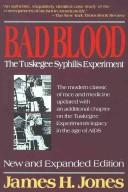
The definitive history of the Tuskegee syphilis study, the case that more than any other produced the modern consent regime. Start here because almost every rule in the field can be traced to something that happened in this book.
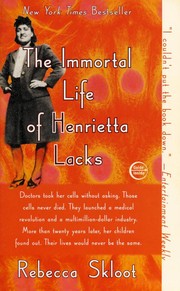
The HeLa cell line, told through the family whose tissue was taken without consent or compensation. It introduces ownership of biological material and the gap between legal permission and moral consent — a problem Tuskegee's reforms did not solve.
Widens the two cases above into a documented history of medical experimentation on Black Americans from slavery onward. Read third, once you have the specific cases, because the argument is that they were not aberrations.

A Hmong child's epilepsy, and a collision between a family's understanding of the illness and a Californian hospital's. It shifts the stage from wrongdoing to genuine good-faith failure, which is the harder and more common ethical situation.
The Framework and Where It Came From
IntermediateLearn the four-principles approach — autonomy, beneficence, non-maleficence, justice — and understand it as a historical product of the previous stage rather than as timeless doctrine.
▸ Study plan for this stage
Pace: Eight weeks. Strangers at the Bedside is 313 pages and takes two — read it first, because it explains what problem the framework solves. The Birth of Bioethics is 431 pages and takes two to three; it is the who-and-when book and supplies the names the primary text assumes. Principles of Biomedical E
- Rothman's thesis: authority over medical decisions moved from the individual physician's bedside judgement to committees, review boards, courts and outside rule-makers, and the profession did not surrender it voluntarily
- The 1966 exposé of unethical experiments in the mainstream American medical literature, which did what forty years of Tuskegee publications had not — it forced the profession to concede a general problem rather than individual lapses
- The right-to-die litigation of the 1970s as the second driver, which established that decisions about a patient's treatment were not the physician's to make alone
- Jonsen's account of the discipline forming out of theology, philosophy and medicine, with named institutions and commissions rather than an anonymous intellectual current
- The dialysis allocation committee of the early 1960s as the founding scandal of distributive ethics — ordinary citizens deciding who would live, using criteria nobody could defend once they were published
- The Belmont Report's three principles and their relationship to the four that Beauchamp and Childress articulate: respect for autonomy, non-maleficence, beneficence and justice
- That the four principles are prima facie obligations requiring specification and balancing, not a decision procedure — the framework tells you what considerations are in play and explicitly does not tell you which wins
- The common morality claim underpinning the whole system, and the standing criticisms of principlism: that it functions in practice as a checklist, that it encodes a culturally specific priority on autonomy, and that casuistry, virtue ethics, care ethics and narrative ethics each offer a different ro
- Who exactly came to the bedside, in Rothman's account, and what did the individual physician lose? Was anything valuable lost along with the abuses?
- Why did the 1966 exposé change the profession when Tuskegee's own publication record had not? What was different about the argument, the author, or the venue?
- What does it mean that the four principles are prima facie? When two conflict, what does the framework actually supply?
- What is the common morality, and what argumentative work does the claim do for Beauchamp and Childress? What happens to the framework if the claim is false?
- State the strongest criticism of principlism and describe what one alternative approach offers in its place
- Take one case from the previous stage and analyse it with all four principles. Then list every question the analysis leaves unresolved — that list is the honest assessment of the framework
- Write out each of the four principles twice: once as the general statement, and once specified into a rule concrete enough to guide an actual decision. Specification is the part everyone skips
- Trace the Belmont Report's three principles into Beauchamp and Childress's four and account for the difference. It is not merely a relabelling
- Write 400 words on whether autonomy properly comes first among the four, or whether it merely comes first in American practice. Use a case from the previous stage where the answer matters
- Return to your list of traceable rules from the previous stage and mark, for each, which principle it implements
Next up: The framework is now in hand as theory — the next stage watches it applied to real cases at the bedside, which is where its silences become visible.
A historian's account of how ethics committees, review boards and outside oversight moved decision-making away from the individual doctor. Read it before the principles themselves: it explains what problem the framework was invented to solve.

Written by someone present at the founding, this traces how a loose set of theological and philosophical arguments hardened into an academic discipline. It gives you the names and commissions that the primary texts assume you know.
The foundational text of the field and the source of the four principles. It is a serious academic work rather than an introduction, which is why it sits third — the two histories above make its arguments legible instead of abstract.
Ethics at the Bedside
IntermediateSee how the framework is used in practice, particularly in end-of-life decisions, where the principles most often conflict with one another.
▸ Study plan for this stage
Pace: Six weeks. Clinical Ethics is a short structured manual rather than a book to read through; spend a week learning the four-box method and then keep it open for the rest of the stage. Being Mortal is 283 pages, reads fast, and takes two weeks — but read it slowly enough to notice how the argument is
- The four-box method — medical indications, patient preferences, quality of life, contextual features — as a completeness check rather than a decision algorithm, which is exactly why it works in practice
- Decision-making capacity as task-specific and clinically assessed, distinct from legal competence, and the fact that capacity determinations are where a great deal of real ethical weight is quietly carried
- The three surrogate standards in order of priority: expressed wishes, substituted judgement, and best interests — and cases where the second and third point in opposite directions
- Advance directives and the uncomfortable evidence that they frequently fail to change what actually happens, which is a fact about systems rather than about documents
- Gawande's central claim that medicine optimises for survival and function while patients near the end of life are often optimising for something else entirely, and that nobody asks
- The structure of the serious-illness conversation Gawande advocates — understanding, fears, trade-offs, and what a good day looks like — as a concrete technique rather than an attitude
- Zitter's picture of the intensive care unit as a set of defaults that produce a trajectory nobody selected, with each individual decision defensible and the aggregate outcome indefensible
- Moral distress among nurses and trainees as evidence: it is what an ethical failure feels like from inside a system in which no individual made the wrong call
- Work a real case through all four boxes. Which box gets skipped most often in practice, and what does skipping it cost?
- Distinguish substituted judgement from best interests, and construct a case where they give opposite answers. Which should win, and on what grounds?
- Advance directives frequently fail to change outcomes. Why? What do Gawande and Zitter each propose instead, and are their proposals compatible?
- What exactly does medicine optimise for, on Gawande's account, and what mechanism makes it do so even when individual clinicians know better?
- Zitter argues many failures are structural. Sort the ethical failures in this stage into those better individual decision-making would prevent and those it would not
- Take one of Gawande's cases and run it through the four boxes, filling every cell including the contextual one that people leave blank
- Write out the serious-illness conversation questions, then answer them for yourself in writing. The exercise is uncomfortable and it is the only way to know whether the questions are any good
- Draft your own advance directive, then write a paragraph identifying which of its provisions would be useless in the specific situations Zitter describes
- Read Zitter's accounts of moral distress and write 300 words on what an institution could change that an individual clinician could not
- Compare how the four principles and the four boxes handle the same case. Note where the boxes catch something the principles do not
Next up: The bedside cases show the framework working within a functioning system — the last stage takes on the two situations it was not designed for: a profession that goes wrong at scale, and an argument that is valid but unacceptable.

The practical companion to Beauchamp and Childress: a four-box method for working a real case through indications, preferences, quality of life and contextual features. This is the book clinical ethics consultants actually reach for.

A surgeon's argument that medicine systematically mistakes what dying patients want. Read after the method, because Gawande's cases are exactly the ones where autonomy and beneficence pull in opposite directions.

An intensive-care and palliative physician on how the machinery of the ICU produces outcomes nobody chose. It closes the stage by showing that many ethical failures are structural rather than the result of any individual decision.
The Arguments the Framework Does Not Settle
IntermediateEngage the harder philosophical and historical questions — how medicine goes wrong at scale, and what happens when consistent ethical reasoning reaches conclusions most people reject.
▸ Study plan for this stage
Pace: Seven weeks. The Nazi Doctors is 561 pages and takes three to four; it is the hardest reading on the path in a way that has nothing to do with difficulty, and short daily portions are the right approach. Practical Ethics is 395 pages of tightly argued philosophy and takes three; read it slowly, reco
- Lifton's concept of doubling: the formation of a second functioning self, so that the same person operates as a physician at home and as a killer at work without experiencing the contradiction
- The medicalisation of killing — physicians certifying deaths, medical vocabulary applied to the process, and the framing of extermination as a therapy performed on a national body
- The continuity from the earlier euthanasia programme to the camps, including the personnel, which is the part that makes the case a continuum rather than a rupture
- That the physicians involved were not marginal figures, and that many retained a functioning professional self-image throughout — which is why bioethics treats stated intention and professional identity as worthless evidence about conduct
- The Nuremberg Code of 1947, and the fact that American researchers largely regarded it as a document about Germans, which is why Tuskegee continued for another quarter century
- Singer's method: preference utilitarianism, the principle of equal consideration of interests, and personhood grounded in capacities rather than species membership
- The conclusions that follow from those premises on abortion, severe disability at birth, euthanasia and the allocation of resources, several of which are widely and seriously rejected
- The disability rights critique of Singer, which is not squeamishness but a substantive argument about who is competent to judge a life's quality — and which he has engaged with directly
- What is doubling, and how does it differ from ordinary self-deception, from following orders, and from ideological conviction?
- The Nuremberg Code existed from 1947 and Tuskegee continued to 1972. Explain that, using Rothman and Jones as well as Lifton
- Lifton is a psychiatrist interviewing perpetrators decades later. What are the methodological limits of that evidence, and does the argument survive them?
- State Singer's principle of equal consideration of interests and derive one of his contested conclusions from it, without weakening any premise
- Where do you reject Singer's conclusion — and can you name the premise you are rejecting, or only the conclusion you dislike? The second answer is not a philosophical position
- Reconstruct one physician's trajectory from Lifton as a timeline, marking every point at which a different decision was still available
- Write 500 words on why American researchers treated the Nuremberg Code as inapplicable to themselves, drawing on all three stages before this one
- Take one Singer argument, set it out as numbered premises and a conclusion, identify the premise you reject, and write a paragraph defending the rejection on its own terms
- Read a disability rights response to Singer alongside his own chapter, and write 500 words on what each gets right about the other
- Write the closing essay: 1,500 words on whether the four principles are adequate to the cases in the first and last stages of this path, citing a book from every stage and naming the specific case where the framework fails
Next up: This closes the path; the natural continuations are research ethics and clinical trial design, the ethics of genetic technologies and reproduction, global health justice, and the primary journals where these disputes are actively argued.
A psychiatric study of how physicians came to run the machinery of genocide while still understanding themselves as healers. It is the field's limit case, and the reason bioethics treats professional self-image as evidence of nothing.
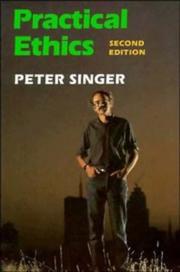
A rigorous utilitarian working-through of abortion, euthanasia, disability and the allocation of scarce resources. Placed last deliberately: Singer's conclusions are widely and seriously contested, and the point of reading him after the whole framework is to see where consistent argument and settled intuition come apart.
Discussion
Keep reading
Paths that share books, cover the same subject, or open a related topic.