Microfinance and Financial Inclusion: The Best Books, In Order
This curriculum builds from the human story and founding vision of microfinance, through its mechanics and evidence base, to critical analysis and systemic thinking about financial inclusion and poverty. Each stage deepens the reader's vocabulary, intuition, and critical lens before the next, so no prior knowledge of economics or development finance is needed to start.
The Human Story & Founding Vision
BeginnerUnderstand what microfinance is, why it was created, and how it feels on the ground — building empathy and core vocabulary before any theory.
▸ Study plan for this stage
Pace: 4–5 weeks, ~40–50 pages/day. "Banker to the Poor" (1 week), "Small Loans, Big Dreams" (1.5 weeks), "Portfolios of the Poor" (1.5–2 weeks), plus 3–4 days for review and reflection.
- Microfinance as a response to systemic poverty and exclusion from traditional banking, not charity
- Muhammad Yunus's foundational insight: poor people are creditworthy and can lift themselves out of poverty with access to small loans
- The Grameen Bank model: group lending, mandatory savings, and social accountability as alternatives to collateral
- How microfinance operates on the ground in real communities—the lived experience of borrowers, lenders, and loan officers
- The tension between mission (poverty alleviation) and sustainability (profitability) in microfinance institutions
- Borrowers' actual financial lives: how poor households manage multiple income streams, debts, and savings simultaneously
- Microfinance as a tool for economic empowerment, particularly for women
- The limits and risks of microfinance: debt cycles, over-borrowing, and when loans don't solve structural poverty
- What problem was Muhammad Yunus trying to solve when he founded Grameen Bank, and why did he believe traditional banking had failed?
- How does the Grameen Bank lending model (group lending, mandatory savings, social accountability) differ from conventional bank lending, and why was this model necessary?
- What does it feel like to be a borrower in a microfinance program? Describe the experience based on stories from 'Small Loans, Big Dreams' and 'Portfolios of the Poor.'
- According to 'Portfolios of the Poor,' how do poor households actually manage their money day-to-day, and how does this reality differ from assumptions about poverty?
- What are the key tensions or contradictions in microfinance as described across these three books?
- Why is microfinance often framed as empowering for women, and what evidence do these books provide?
- Create a timeline of microfinance's founding: mark key moments from Yunus's early experiments through Grameen's growth. Annotate each with the problem it solved or challenge it faced.
- Write a character sketch of 3–4 borrowers from 'Small Loans, Big Dreams' and 'Portfolios of the Poor.' For each, describe their income sources, debts, and how a microfinance loan fit into their financial strategy.
- Diagram the Grameen Bank lending model: show how group lending, mandatory savings, and social accountability work together. Compare it visually to a traditional bank's collateral-based model.
- Interview someone in your community about how they access credit (formal or informal). Write a 1–2 page reflection comparing their experience to the borrowers in these books.
- Debate the mission vs. sustainability tension: write two 1-page arguments—one defending microfinance as a poverty tool, one critiquing it as insufficient or risky. Use specific examples from the books.
- Create a 'day in the life' narrative for a loan officer in a microfinance institution, drawing on details from the books about their role, challenges, and relationships with borrowers.
Next up: This stage builds the emotional and narrative foundation—you now understand *why* microfinance exists and *how it feels*—preparing you to analyze its mechanisms, measure its impact, and evaluate its effectiveness in the next stage.
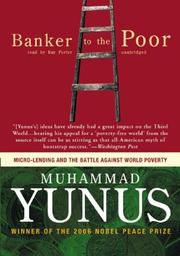
The founder of Grameen Bank tells the origin story of microcredit in his own words — the perfect first book to understand the 'why' and the human stakes of microfinance.
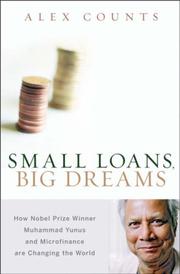
A ground-level account of Grameen Bank in action, showing how group lending actually works in Bangladeshi villages and reinforcing the concepts Yunus introduced.
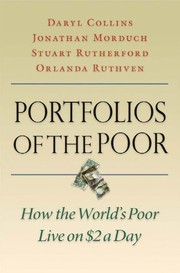
Based on detailed financial diaries of poor households in three countries, this book replaces assumptions with data and shows exactly how the poor manage money — essential context before studying interventions.
Mechanics of Microfinance
BeginnerGrasp the core models — group lending, solidarity circles, MFI operations — and understand how microfinance institutions are structured and sustained.
▸ Study plan for this stage
Pace: 4–5 weeks, ~25–30 pages/day (approximately 600–700 pages total across both books)
- Group lending mechanisms and how joint liability reduces default risk and replaces collateral
- Solidarity circles and peer monitoring as alternatives to traditional credit assessment
- MFI organizational structures, governance models, and sustainability through operational efficiency
- Microfinance pricing models: interest rates, fees, and cost recovery in serving low-income clients
- Information asymmetry problems in microfinance and contractual solutions (dynamic incentives, progressive lending)
- Institutional design choices: NGO vs. bank models, regulated vs. unregulated MFIs
- Client targeting, loan product design, and portfolio management in microfinance
- The role of savings, insurance, and complementary services in MFI operations
- How does group lending with joint liability solve the collateral problem in microfinance, and what are its limitations?
- What is a solidarity circle, and how does peer monitoring within these circles reduce information asymmetry?
- Compare the organizational models of MFIs operating as NGOs versus regulated banks—what are the trade-offs?
- How do MFIs determine interest rates and fees to achieve financial sustainability while serving poor clients?
- What contractual mechanisms (e.g., dynamic incentives, progressive lending) do MFIs use to manage moral hazard and adverse selection?
- How do savings products and insurance services contribute to MFI sustainability and client welfare?
- Create a detailed case study comparing two real MFIs (e.g., Grameen Bank and a local MFI in your region) on their lending models, governance, and sustainability metrics
- Design a hypothetical group lending contract: specify group size, joint liability terms, dynamic incentives, and explain how each element addresses a specific microfinance problem
- Calculate the break-even interest rate for a microfinance loan given operational costs, default rates, and target profit margins—then compare to actual MFI rates
- Map out a solidarity circle structure for a specific client segment (e.g., women traders in an urban market); identify monitoring mechanisms and potential failure points
- Analyze a real MFI's financial statements (annual reports are often public) to assess operational efficiency, cost-to-income ratios, and sustainability
- Write a 2–3 page memo proposing an MFI organizational model (NGO vs. bank) for a specific geographic/economic context, justifying your choice with concepts from the readings
Next up: This stage equips you with the structural and operational foundations of microfinance, preparing you to examine in the next stage how these mechanisms perform in real-world contexts—including their social impact, client outcomes, and the policy environment that shapes MFI behavior.

The clearest accessible textbook on how and why microfinance contracts are designed the way they are, covering group lending, interest rates, and incentive structures without requiring advanced economics.

Bridges the gap between development idealism and financial practice, explaining how MFIs raise capital, manage risk, and scale — crucial for understanding the industry's real-world mechanics.
Financial Inclusion & the Bigger Picture
IntermediateZoom out from microcredit to the broader agenda of financial inclusion — savings, insurance, payments — and understand how these tools connect to poverty reduction.
▸ Study plan for this stage
Pace: 4–5 weeks, ~40–50 pages/day (approximately 280–350 pages total)
- Effective altruism as a framework for evaluating interventions: using evidence, scale, and neglectedness to prioritize where charitable resources have the most impact
- Financial inclusion as a high-impact development intervention: how savings, insurance, and payment systems reduce poverty more effectively than microcredit alone
- The importance of rigorous evidence and randomized controlled trials (RCTs) in assessing whether development programs actually work
- Systemic barriers to financial access: understanding why the poorest populations remain excluded from formal financial systems and what solutions address root causes
- Trade-offs in aid effectiveness: recognizing that good intentions don't guarantee good outcomes, and how to distinguish between feel-good interventions and evidence-based ones
- The role of financial resilience: how insurance and savings mechanisms help the poor manage shocks and build stability, not just access credit
- Comparative cost-effectiveness: learning to evaluate which financial inclusion tools deliver the most poverty reduction per dollar spent
- What are the three key criteria MacAskill uses to evaluate the impact of charitable interventions, and how do they apply to financial inclusion programs?
- How does MacAskill's critique of microcredit challenge the conventional wisdom about microfinance, and what evidence does he present?
- What role do savings and insurance play in financial inclusion, and why might they be more impactful than microcredit for poverty reduction?
- What is the difference between feel-good interventions and evidence-based ones, and how can you identify which is which when evaluating a financial inclusion program?
- How do randomized controlled trials help us understand whether a financial inclusion intervention actually works, and what are their limitations?
- What systemic barriers prevent the poorest populations from accessing formal financial services, and what solutions does MacAskill discuss?
- Select a real-world microfinance or financial inclusion organization (e.g., Grameen Bank, M-Pesa, or a local microfinance institution). Using MacAskill's framework, evaluate its interventions on scale, neglectedness, and tractability. Write a 1–2 page assessment.
- Find a published RCT or impact evaluation of a financial inclusion program (savings, insurance, or payments). Summarize the methodology, key findings, and limitations. Discuss whether the evidence supports scaling the intervention.
- Create a cost-effectiveness comparison table for three different financial inclusion interventions (e.g., microcredit vs. mobile money vs. insurance). Estimate cost per person reached and potential poverty reduction impact based on evidence discussed in the book.
- Interview or survey 3–5 people about their financial practices (savings, borrowing, insurance). Map their barriers to formal financial access and propose a financial inclusion solution using MacAskill's criteria for impact.
- Debate exercise: Argue both sides—why microcredit is still valuable vs. why savings/insurance/payments are higher-impact. Use specific evidence from MacAskill to support each position.
- Design a hypothetical RCT to test whether a new financial inclusion intervention (of your choice) actually reduces poverty. Define your treatment, control group, outcome measures, and sample size.
Next up: This stage equips you with a critical, evidence-based lens for evaluating financial inclusion tools and their real-world impact—preparing you to dive deeper into the specific mechanisms, implementation challenges, and context-dependent outcomes of individual financial services in the next stage.
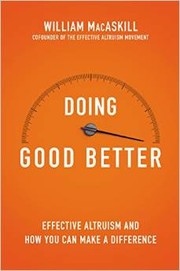
Introduces evidence-based thinking about development interventions, giving the reader a rigorous framework to evaluate microfinance impact claims that will be essential in the next stage.
Evidence, Criticism & Honest Reckoning
IntermediateEngage with the rigorous evidence on what microfinance actually achieves, understand its limits and failures, and think critically about when and how it works.
▸ Study plan for this stage
Pace: 8–10 weeks, ~40–50 pages/day (accounting for dense empirical content and reflection time)
- Randomized controlled trials (RCTs) as evidence for microfinance impact—what they reveal and what they miss
- The poverty trap: why poor households make seemingly irrational financial decisions and how this challenges microfinance assumptions
- Microfinance's mixed results: when microcredit works, when it doesn't, and for whom (selection effects, context dependency)
- The mission drift problem: how SKS Microfinance's pursuit of growth and profitability compromised its social mission
- Behavioral economics and the psychology of borrowing: debt cycles, over-indebtedness, and the limits of financial inclusion
- The difference between access to credit and sustainable poverty reduction
- Institutional incentives and their role in shaping microfinance outcomes—profit motives vs. social impact
- What does the RCT evidence in Poor Economics reveal about the actual impact of microcredit on borrower welfare, and what are the limitations of this evidence?
- According to Banerjee and Duflo, why do poor households often make financial decisions that seem irrational, and how does this complicate microfinance's theory of change?
- What is mission drift, and how did SKS Microfinance's transformation from nonprofit to for-profit illustrate this problem in Akula's account?
- In what contexts and for which borrower groups does microfinance appear most effective, and when does it fail or cause harm?
- How do the incentive structures within microfinance institutions shape their behavior and outcomes, according to Akula's insider perspective?
- What is the difference between financial inclusion (access to credit) and poverty reduction, and why does microfinance often deliver the former but not the latter?
- Create a comparison table of 3–4 RCT findings from Poor Economics (e.g., savings products, health insurance, business training) and note what each study actually measured, what it found, and what questions it left unanswered
- Write a 2-page reflection on a time you made a financial decision under stress or uncertainty; then analyze it through Banerjee and Duflo's lens of scarcity and cognitive load—how does their framework explain your behavior?
- Map SKS Microfinance's mission drift: create a timeline of key decisions in Akula's narrative (founding → growth → for-profit conversion → crisis) and identify the institutional incentives driving each decision
- Design a hypothetical microfinance intervention for a specific borrower profile (e.g., a street vendor, a farmer, a domestic worker) using insights from both books—specify the product, the context where it would work, and where it might fail
- Conduct a close reading of one RCT chapter from Poor Economics and one narrative chapter from A Fistful of Rice on the same topic (e.g., debt, savings, or business growth); write a 3-page synthesis showing how the quantitative and qualitative evidence complement or contradict each other
- Interview or survey 3–5 people with microfinance experience (borrowers, loan officers, or practitioners) about their actual outcomes; compare their stories to the evidence and narratives in the books—where do they align or diverge?
Next up: This stage equips you with a grounded, evidence-based understanding of microfinance's real-world impact and limitations, preparing you to evaluate alternative or complementary approaches to poverty reduction—such as cash transfers, public services, or systemic reforms—in the next stage.
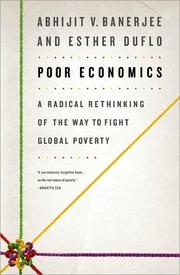
Nobel laureates Banerjee and Duflo synthesize randomized controlled trials on poverty interventions including microfinance, delivering an honest, nuanced verdict on what works and what doesn't.

The founder of SKS Microfinance — India's largest MFI — chronicles its explosive growth and eventual crisis, illustrating the real tensions between mission and commercialization.
Systemic Thinking & the Future of Inclusion
ExpertSynthesize everything into a systemic view of how financial systems, policy, and technology can be redesigned to fight poverty at scale.
▸ Study plan for this stage
Pace: 4–5 weeks, ~40–50 pages/day (with 2–3 days per week for synthesis and reflection)
- The poverty trap: how extreme poverty becomes self-perpetuating through lack of capital, infrastructure, and opportunity
- Sachs' Millennium Development Goals framework and its role in designing systemic interventions at the country and global level
- The interconnection between geography, institutions, demography, and technology in shaping poverty outcomes
- Big Push theory: why incremental aid fails and why coordinated, large-scale investment across multiple sectors is necessary
- The role of technology, innovation, and infrastructure (roads, electricity, internet) as systemic leverage points for poverty reduction
- How policy, governance, and international cooperation must align to create enabling conditions for inclusive growth
- The distinction between charity and systemic redesign: moving from aid dependency to sustainable, self-reinforcing development systems
- Scaling solutions: how successful local models can be adapted and multiplied across regions and nations
- What is the poverty trap, and why does Sachs argue that poor countries cannot escape it through incremental improvements alone?
- How does Sachs' Big Push theory challenge conventional aid models, and what does a coordinated, multi-sector intervention look like in practice?
- What role do geography, institutions, and demography play in perpetuating or breaking cycles of poverty according to Sachs?
- How can technology and infrastructure (energy, transport, communications) serve as systemic leverage points for poverty reduction at scale?
- What is the relationship between the Millennium Development Goals and systemic financial inclusion, and how do they inform policy design?
- How must global institutions, national governments, and private actors realign their incentives and coordination to achieve poverty reduction at scale?
- Map a poverty trap for a specific country or region: identify the interconnected barriers (geography, infrastructure, capital, institutions) and trace how they reinforce each other
- Design a Big Push intervention: select a low-income country and outline a coordinated, multi-sector investment plan across health, education, agriculture, and infrastructure
- Analyze a real-world development project or policy: evaluate whether it follows incremental aid logic or Big Push logic, and assess its systemic effectiveness
- Create a technology roadmap: identify 3–5 critical technologies (energy, transport, digital) that could unlock poverty reduction in a specific context, and map implementation barriers
- Develop a policy alignment framework: outline how national government, international donors, NGOs, and private sector actors would need to coordinate to implement a systemic poverty reduction strategy
- Case study synthesis: compare two countries or regions—one that has broken the poverty trap and one still trapped—and identify the systemic differences in their institutions, infrastructure, and policy
Next up: This stage equips you with a systemic, macro-level understanding of how poverty operates as an interconnected system and how coordinated interventions across sectors can redesign financial systems for inclusion; the next stage will likely deepen your ability to operationalize these insights through specific financial instruments, technology platforms, and implementation strategies that translate s
Places microfinance within the grand challenge of ending extreme poverty, connecting financial inclusion to health, education, and governance — giving the reader the broadest possible frame for everything they've learned.
Discussion
Keep reading
Paths that share books, cover the same subject, or open a related topic.