Best Books to Understand Epicurus, in Reading Order
This curriculum moves from accessible introductions to Epicurus's own surviving words, then into the great Roman elaboration of his thought, and finally into scholarly and modern philosophical engagement with Epicureanism. Each stage builds the conceptual vocabulary — pleasure, atoms, death, friendship, tranquility — needed to read the next layer with genuine depth.
The Source: Epicurus in His Own Words
BeginnerRead all of Epicurus's surviving writings — the three letters and the Principal Doctrines — and understand them with scholarly guidance.
▸ Study plan for this stage
Pace: 4–5 weeks, ~25–30 pages/day. Start with Sedgwick's "The Art of Happiness" (1-2 weeks), then move to Diogenes Laertius's "The Lives and Opinions of Eminent Philosophers" Book X on Epicurus (2-3 weeks).
- Epicurus's three letters (Letter to Herodotus, Letter to Pythocles, Letter to Menoeceus) as primary sources for his philosophy
- The distinction between necessary and unnecessary desires, and how this shapes the good life
- Pleasure as the highest good, properly understood as freedom from pain and fear
- Ataraxia (tranquility) and aponia (absence of bodily pain) as the true aims of life
- Epicurus's critique of superstition and irrational fear, especially fear of gods and death
- The role of friendship and community in achieving a happy life
- How Sedgwick's framing helps contextualize Epicurus's actual words in Diogenes Laertius
- The Principal Doctrines as a condensed summary of Epicurean ethics
- What are the three letters of Epicurus, and what does each address?
- How does Epicurus define pleasure, and why is this definition often misunderstood?
- What is the relationship between ataraxia and aponia in Epicurus's philosophy?
- Which desires does Epicurus classify as necessary, and why does this classification matter for living well?
- How does Epicurus argue against the fear of death and divine punishment?
- What role do friendship and simple living play in Epicurus's conception of happiness?
- How do the Principal Doctrines summarize and reinforce the teachings in the three letters?
- Create a two-column chart: list Epicurus's necessary vs. unnecessary desires, and note which ones you currently pursue; reflect on how this aligns with his ethics
- Write a one-page letter from Epicurus to a modern person explaining why they should not fear death or the gods
- Compare Sedgwick's interpretation of Epicurus in 'The Art of Happiness' with the actual words of Epicurus in Diogenes Laertius; note where Sedgwick emphasizes certain points
- Memorize and explain 5–7 of the Principal Doctrines; write a short paragraph on how each one relates to the three letters
- Identify three misconceptions about Epicureanism (e.g., that it endorses excess) and use the primary texts to refute each one
- Create a visual diagram showing how ataraxia, aponia, friendship, and simple living interconnect in Epicurus's system
Next up: This stage grounds you in Epicurus's own surviving words and their scholarly interpretation, preparing you to critically examine how later philosophers and critics have distorted or defended his ideas in subsequent stages.

This edition by George K. Strodach (Penguin Classics) collects the Letter to Menoeceus, Letter to Herodotus, Letter to Pythocles, and the Principal Doctrines with a lucid introduction — the ideal first encounter with the primary texts.

Book X of this ancient compendium is our single most important source for Epicurus's biography and preserves the three letters in full; reading it now deepens appreciation of how the tradition was transmitted.
The Great Poem: Lucretius and Epicurean Physics
IntermediateMaster the full Epicurean worldview — atoms, the void, the soul, death, and free will — as elaborated in the most ambitious Epicurean text ever written.
▸ Study plan for this stage
Pace: 8–10 weeks, ~40–50 pages/day (alternating between Lucretius and Greenblatt; Lucretius 6 days/week, Greenblatt 2–3 days/week as a contextual counterpoint)
- Atomism as the foundation of Epicurean physics: atoms and the void as the only fundamental realities, with all phenomena explained through their motion and combination
- The clinamen (swerve): the spontaneous, uncaused deviation of atoms that breaks determinism and grounds both free will and the unpredictability of nature
- The nature of the soul as a material, atomic substance distributed throughout the body; its mortality and dissolution at death
- Death as the cessation of sensation: why death is nothing to fear once you understand that the dead experience no suffering
- The role of physics in achieving ataraxia (tranquility): how understanding the true nature of things liberates us from irrational fears of gods and the afterlife
- Lucretius's poetic method: how epic verse and vivid imagery serve as philosophical pedagogy, making abstract physics emotionally compelling
- The historical recovery of Epicureanism: how Greenblatt's narrative reveals the suppression and misrepresentation of Epicurus's ideas across centuries
- The distinction between necessary and unnecessary desires: how physics informs ethics by clarifying what we truly need versus what we've been conditioned to crave
- What role does the clinamen (swerve) play in Lucretius's atomism, and how does it solve the problem of determinism?
- According to Lucretius, why is death nothing to fear, and what does this claim depend on regarding the nature of the soul?
- How does Lucretius use poetic language and imagery to convey abstract physical principles, and why is this method philosophically important rather than merely decorative?
- What is the relationship between understanding Epicurean physics and achieving ataraxia (freedom from fear and pain)?
- How does Greenblatt's account of the manuscript discovery and transmission of Epicurean ideas change your understanding of what Lucretius was trying to accomplish?
- What are the key differences between Epicureanism as Lucretius presents it and the popular caricature of Epicureanism that Greenblatt documents as a historical distortion?
- Create a visual diagram or concept map showing the relationships between atoms, the void, the clinamen, and the formation of composite bodies (including the human body and soul) as Lucretius describes them in Books 1–2.
- Write a 500-word explanation of Lucretius's argument about death (Book 3) as if teaching it to someone who is genuinely afraid of dying; use his logic to address their specific fears.
- Select three vivid passages from Lucretius (e.g., descriptions of atomic motion, the plague of Athens, or the fear of gods) and analyze how the poetic form—meter, imagery, metaphor—reinforces the philosophical argument.
- Trace the historical narrative in Greenblatt: create a timeline showing how Epicureanism was suppressed, misrepresented, and recovered, and identify key moments where the manuscript of Lucretius played a role.
- Compose a dialogue between Lucretius and a contemporary person who believes in an afterlife or divine punishment; use Lucretius's physics and arguments to address their worldview.
- Compare Lucretius's account of the soul's materiality and mortality (Book 3) with his account of sensation and perception (Book 4); write a short essay on how these two accounts cohere in his system.
Next up: This stage grounds you in the complete Epicurean metaphysical and physical system—the foundation upon which all Epicurean ethics and practice rest—preparing you to explore in the next stage how this worldview translates into a concrete way of life, including friendship, community, and the pursuit of simple pleasures.

De Rerum Natura is the fullest surviving exposition of Epicurean philosophy; the Alicia Stallings verse translation (Penguin) makes it genuinely readable while preserving the poem's power.
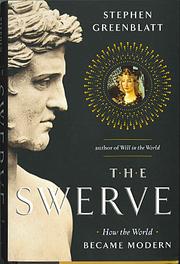
Greenblatt's Pulitzer-winning narrative of how Lucretius's manuscript was rediscovered in 1417 provides essential historical context and makes the stakes of Epicurean ideas vivid and concrete.
Philosophical Depth: Scholarship and Critique
IntermediateEngage with serious scholarly analysis of Epicurean ethics, epistemology, and physics, and understand the strongest philosophical objections and defenses.
▸ Study plan for this stage
Pace: 8–10 weeks, ~40–50 pages/day (accounting for dense philosophical argumentation and need for re-reading key passages)
- Nussbaum's therapeutic model: how Epicureanism functions as a philosophical cure for fear and pain rather than a hedonistic pursuit of pleasure
- The role of natural and necessary desires in Epicurean ethics and how they differ from empty desires
- Epicurean physics and atomism as the foundation for overcoming religious and cosmic fear
- The critique of Epicureanism as misunderstood: distinguishing the historical Epicurus from later caricatures
- Friendship and community in Epicurean ethics as essential goods, not mere instrumental means
- The epistemological foundations of Epicureanism: how sensation, anticipation, and memory ground knowledge and ethical judgment
- Nussbaum's engagement with contemporary philosophical objections to Epicurean ethics and her defenses
- The relationship between asceticism and hedonism in Epicurean practice and Nussbaum's reframing of this tension
- How does Nussbaum characterize Epicureanism as a 'therapy' and what philosophical problems is it designed to cure?
- What is the distinction between natural and necessary desires versus empty desires in Epicurean ethics, and why does this distinction matter?
- How does Epicurean atomistic physics contribute to the ethical goal of ataraxia (freedom from fear)?
- What role do friendship and community play in Epicurean ethics according to Nussbaum, and how does this challenge the stereotype of Epicureanism as selfish?
- What are the major contemporary philosophical objections to Epicureanism that Nussbaum addresses, and what are her counterarguments?
- How does Nussbaum use textual evidence from Epicurus and his followers to defend Epicureanism against misinterpretation?
- Create a detailed taxonomy of desires (natural/necessary, natural/unnecessary, empty) with specific examples from your own life; then evaluate which Epicurean philosophy would recommend pursuing
- Write a 2–3 page comparative analysis of Nussbaum's interpretation of Epicureanism versus the popular caricature; cite specific passages from the book to support each claim
- Construct a logical argument map showing how Epicurean physics (atomism, the void, necessity) supports the ethical conclusions about ataraxia and aponia
- Engage in a Socratic dialogue (written or recorded) between yourself and a critic of Epicureanism, using Nussbaum's defenses to respond to objections about selfishness, moral relativism, or intellectual poverty
- Analyze a primary source passage from Epicurus (provided in Nussbaum's text) and write an exegetical commentary explaining how Nussbaum's interpretation illuminates its meaning and addresses alternative readings
- Design a thought experiment that tests one of Nussbaum's key claims about Epicurean ethics (e.g., whether friendship is truly necessary for the best life) and write up your findings
Next up: Having mastered Nussbaum's scholarly defense of Epicureanism and its philosophical coherence, you are now equipped to evaluate how Epicurean ideas have been applied, transformed, or challenged in later philosophical traditions and contemporary debates about the good life.
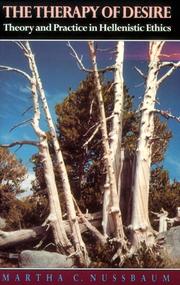
Nussbaum devotes substantial chapters to Epicurus's therapeutic conception of philosophy; reading her now sharpens critical thinking about whether Epicurean pleasure is a convincing account of the good life.
Modern Revival: Epicureanism Today
ExpertUnderstand how Epicurean ideas have been revived, contested, and applied in contemporary philosophy, psychology, and culture.
▸ Study plan for this stage
Pace: 4–5 weeks, ~25–30 pages/day (approximately 600–700 pages total across both books)
- O'Keefe's reconstruction of Epicurus's actual philosophy versus popular misconceptions about hedonism and excess
- The distinction between kinetic and katastematic pleasures and their role in contemporary well-being frameworks
- How Epicurean ethics addresses modern anxieties: fear of death, social anxiety, and the pursuit of unnecessary desires
- Pigliucci's Stoic-Epicurean synthesis and the practical application of ancient philosophy to 21st-century life
- The role of friendship, community, and modest living in achieving eudaimonia within contemporary contexts
- Critiques and defenses of Epicureanism in modern philosophy, psychology, and consumer culture
- How Epicurean principles can inform decisions about work, relationships, technology, and consumption
- What is the fundamental difference between Epicurus's actual philosophy and the popular caricature of 'epicureanism' as indulgent hedonism?
- How do kinetic and katastematic pleasures differ, and why does this distinction matter for understanding the good life today?
- What role does the fear of death and divine punishment play in Epicurus's ethics, and how do modern thinkers address these fears?
- How does Pigliucci integrate Epicurean and Stoic ideas, and what advantages does this hybrid approach offer for contemporary living?
- What specific strategies does Epicureanism offer for managing modern anxieties around social status, consumption, and career pressure?
- How can Epicurean principles of friendship and community be applied to navigate digital culture and modern relationships?
- Create a personal 'desire audit': categorize your current desires (food, possessions, social status, experiences) using Epicurus's framework of necessary vs. unnecessary desires; identify which ones genuinely contribute to your well-being
- Conduct a week-long 'simple living experiment': practice eating modest meals, reducing digital consumption, and spending time in meaningful conversation; journal how this affects your stress levels and satisfaction
- Debate exercise: argue both for and against the claim that 'Epicureanism is a viable ethical framework for modern consumer society'; use specific examples from O'Keefe and Pigliucci
- Write a comparative analysis (2–3 pages) of how Epicureanism and Stoicism (as presented by Pigliucci) address one modern challenge: work-life balance, social media anxiety, or financial pressure
- Interview or survey 3–5 people about their understanding of 'living the good life'; compare their answers to Epicurean and Stoic principles discussed in the books
- Design a personal 'Epicurean action plan': identify 2–3 specific changes to your daily life (relationships, work, consumption, leisure) based on Epicurean principles; set measurable goals for 30 days
Next up: This stage equips you with a nuanced understanding of how ancient Epicurean philosophy addresses contemporary challenges, preparing you to evaluate whether and how these ideas can be integrated into your own worldview and to engage critically with other modern philosophical schools that claim to answer the question of how to live well.

O'Keefe's volume in the Ancient Philosophies series offers the most rigorous up-to-date philosophical reconstruction of Epicureanism, engaging with modern debates in ethics and philosophy of mind.

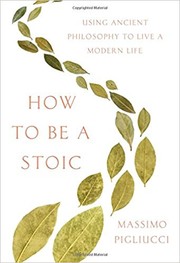
Pigliucci, a philosopher and practicing Stoic-turned-Epicurean, includes a direct chapter on Epicureanism alongside other ancient schools, showing exactly how the philosophy translates into 21st-century practice — a fitting capstone.
Discussion
Keep reading
Paths that share books, cover the same subject, or open a related topic.