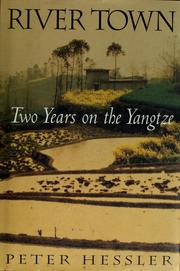
Start with River town. It is the first book, the simplest in structure, and the one that sets up everything after it: two years teaching English in Fuling, a small Yangtze city, in the mid-1990s, told largely by season. Unlike most author paths, chronology here is not optional — Peter Hessler's later books are explicitly written as returns, and reading them out of order means watching someone come back to a place you have never been.
Resist skimming the early chapters where nothing much happens. The slowness is the method being established: Hessler stays somewhere long enough to stop being a visitor, and the first eighty pages are largely about how badly that goes at first. Two weeks at 30 pages a day, with natural stopping points at the chapter breaks.
The rest of the China trilogy
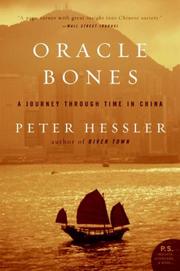
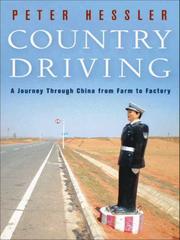
Oracle Bones and Country driving, four to five weeks for 966 pages. Oracle Bones is the harder read because it braids several unrelated storylines — an archaeologist, a defector, former students, a script scholar — and does not signpost the connections. Allow 25 pages a day and do not fight the interleaving; it resolves. Country driving is in three clearly separated sections and goes faster: a drive along the Great Wall, a village outside Beijing over several years, and a factory town in the south.
Taken together the three cover roughly 1996 to 2007, which is the period in which China changed fastest, observed at ground level rather than from a policy desk. That is the reason to read them in order rather than picking the one with the best premise.
The magazine work
Strange Stones Dispatches From East And West, one to two weeks. 354 pages of self-contained dispatches, two or three per sitting. Order does not matter within it, but there is a useful experiment available: read the American pieces in a block against the Chinese ones. The same method applied to rural Colorado and to rural China exposes what is method and what is subject.
This is also the right sampler if you are unsure about committing to the trilogy.
Egypt, and the return
The Buried and Other Rivers, about four weeks. Read The Buried first — the chronology matters. It covers several years in Cairo after 2011, learning Arabic and reporting through a revolution and its reversal, and it is the book where his approach is tested against a place that will not hold still.
Other Rivers returns to Chinese teaching two decades on, and it is written as a deliberate double exposure against River town — the same job, a different country, and the students of the 1990s compared with their children. It is close to unreadable as a first Hessler book and very good as a last one. Around 30 pages a day for both, with time to look up the Egyptian political timeline as you go.
Where to stop
River town and Country driving are the two that carry the reputation, and stopping after them is entirely defensible. If you read three, make the third The Buried, which is the most ambitious thing he has written. Oracle Bones is the one most readers find hardest and the one his admirers most often name as the best.
For reporting of a similar temperament, David Grann and Erik Larson sit closest on this site.
Follow the full ordered path here: Peter Hessler Reading Order: Where to Start.