Best Books to Understand Aquinas, in Reading Order
This curriculum builds a deep, structured understanding of Thomas Aquinas across four stages, moving from accessible biography and context through primary-text selections, then into his core philosophical doctrines, and finally into modern Thomistic scholarship. Because the learner starts at an intermediate level, the path skips purely introductory overviews and instead opens with substantive but readable secondary literature before diving into Aquinas's own words.
Portrait of the Man and His World
IntermediateUnderstand who Aquinas was, the intellectual world he inhabited, and the key questions he set out to answer — building the conceptual vocabulary needed to read him directly.
▸ Study plan for this stage
Pace: 4–5 weeks, ~25–30 pages/day (Copleston first, 2–3 weeks; Davies second, 2 weeks)
- Aquinas's life, education, and formation within the Dominican order and medieval Christendom
- The intellectual synthesis Aquinas attempted: reconciling Aristotelian philosophy with Christian theology
- The medieval theological context: the role of reason, faith, and revelation in understanding truth
- Aquinas's method of inquiry: the quaestio form and how he structured theological argument
- The relationship between natural philosophy (reason) and sacred doctrine (revelation) in Aquinas's thought
- Key figures and movements that shaped Aquinas: Aristotle, Augustine, the Islamic philosophers (Averroes, Avicenna), and the University of Paris
- The fundamental questions Aquinas addressed: God's existence and nature, the soul, virtue, law, and grace
- Aquinas's legacy and influence on Catholic theology and Western intellectual tradition
- Who was Thomas Aquinas, and what were the major events and influences in his life and intellectual formation?
- What was the central intellectual problem Aquinas faced, and how did he propose to solve the tension between Aristotelian philosophy and Christian theology?
- What is the quaestio method, and how did Aquinas use it to structure his theological arguments?
- How did Aquinas understand the relationship between reason and faith, and between natural philosophy and sacred doctrine?
- What were the key questions about God, the soul, virtue, and grace that Aquinas set out to answer, and why were these urgent in his historical moment?
- How did Aquinas's thought represent both a continuity with and a departure from earlier medieval theology (particularly Augustine)?
- Create a timeline of Aquinas's life (birth, education, major works, death) and annotate it with the key intellectual movements and figures he encountered at each stage
- Read one complete quaestio from the Summa Theologiae (e.g., ST I, Q. 2 on God's existence) and diagram its structure: objections, sed contra, corpus, and replies—then write a one-page reflection on how this form shapes the argument
- Write a 2–3 page comparative essay: 'Augustine vs. Aquinas on [one topic]' (e.g., reason and faith, or the nature of God), using specific passages from Copleston and Davies to ground your analysis
- Create a concept map showing the relationships between key figures in Aquinas's intellectual world: Aristotle, Augustine, Averroes, Avicenna, Albertus Magnus, and Aquinas himself—label the arrows with the nature of influence or disagreement
- Identify and summarize 3–4 'big questions' that Aquinas inherited from his predecessors and that he sought to resolve; for each, write one sentence explaining why it mattered in medieval Christendom
- Rewrite one key passage from Davies (e.g., on the synthesis of reason and faith) in your own words, then explain it to an imagined peer who has no background in medieval theology
Next up: This stage equips you with the biographical context, historical urgency, and methodological vocabulary needed to engage directly with Aquinas's own texts—you now understand *who* he was, *why* his questions mattered, and *how* he structured his arguments, preparing you to read the Summa Theologiae and other primary works with comprehension and critical awareness.

Copleston's concise intellectual biography situates Aquinas in medieval scholasticism and surveys his major doctrines with philosophical precision — the ideal first map for an intermediate reader.
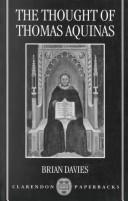
Davies provides a rigorous yet accessible thematic guide to Aquinas's philosophy and theology, introducing key terms (esse, essence, act, potency) that recur throughout the primary texts.
Into the Summa — Reading Aquinas Directly
IntermediateRead Aquinas in his own words through carefully chosen selections, learning to navigate the scholastic question-and-objection format and grasping his arguments on God, creation, and the soul.
▸ Study plan for this stage
Pace: 8–10 weeks, ~25–30 pages/day (Pegis introduction first: 2–3 weeks; Summa selections: 5–7 weeks)
- The scholastic question-and-objection format: how Aquinas structures arguments through objections, sed contra, and corpus to build logical chains
- The Five Ways and proofs for God's existence: understanding Aquinas's cosmological, teleological, and contingency arguments
- Creation ex nihilo and the doctrine of being: how God creates the universe from nothing and the relationship between essence and existence
- The nature of the soul: its definition as the form of the body, its intellectual powers, and its immortality
- Aquinas's synthesis of Aristotle and Christian theology: how he reconciles pagan philosophy with revealed truth
- The hierarchy of being and participation: how creatures participate in God's being and how this shapes metaphysics
- The role of natural law and reason: how human reason reflects divine law and guides moral understanding
- Reading strategies for dense scholastic prose: parsing objections, identifying the main argument, and tracing logical dependencies
- What is the scholastic question format, and how do objections, the sed contra, and the corpus work together to construct Aquinas's argument?
- Explain one of the Five Ways in your own words and identify which type of causality or necessity it relies on.
- How does Aquinas distinguish between essence and existence, and why is this distinction crucial to his doctrine of creation?
- What is the soul according to Aquinas, and how does he defend its immortality using the intellect?
- How does Aquinas use Aristotelian philosophy to support Christian theological claims? Give at least one concrete example.
- What does it mean for creatures to 'participate' in God's being, and how does this concept shape Aquinas's metaphysics?
- Map out the structure of 3–4 complete questions from the Summa: list all objections, identify the sed contra, summarize the corpus in one sentence, and explain how each part functions logically.
- Reconstruct one of the Five Ways as a formal syllogism (major premise, minor premise, conclusion) and test its logical validity.
- Write a 2–3 page dialogue between yourself and Aquinas in which you raise a modern objection to one of his arguments (e.g., on God's existence or the soul's immortality) and attempt to answer it in his voice.
- Create a visual diagram showing the hierarchy of being in Aquinas's metaphysics: God at the apex, then angels, humans, animals, plants, and matter—label the key differences between each level.
- Compare Aquinas's treatment of a single topic (e.g., the nature of God, the intellect) across two different questions in the Summa; note how his reasoning develops and what new distinctions emerge.
- Translate one dense paragraph from the Summa into plain modern English, then explain it to someone unfamiliar with scholasticism without using technical jargon.
Next up: This stage equips you to read Aquinas's own arguments directly and understand his method, preparing you to engage with his ethics, virtue, and practical theology in the next stage, where you will apply these foundational concepts to questions of human action and the good life.

Pegis's anthology draws the best selections from both the Summa Theologiae and Summa Contra Gentiles with editorial guidance, making it the standard entry point for reading Aquinas's own prose.
After Pegis, the reader is ready to engage the full Prima Pars (Part I) directly — covering God, creation, and the human person — which forms the metaphysical backbone of everything else Aquinas wrote.
Ethics and Metaphysics in Depth
ExpertMaster Aquinas's natural law ethics, virtue theory, and the deep metaphysical commitments (being, essence, participation) that underpin them, reading both primary and the best secondary sources together.
▸ Study plan for this stage
Pace: 8–10 weeks, ~40–50 pages/day (alternating between Finnis and Aquinas primary text in parallel)
- Natural law as participation in eternal law: how Aquinas grounds ethics in God's rational ordering of creation
- The four cardinal virtues (prudence, justice, temperance, fortitude) and their metaphysical foundations in human flourishing
- Essence and existence as distinct principles: why Aquinas argues created things have essence-existence composition while God alone is pure being
- The analogy of being: how creatures participate in being through a graduated likeness to God, not univocal sameness
- Practical reason and the natural inclinations: how human reason apprehends the good through our nature's fundamental orientations
- The relationship between metaphysics and ethics: how Aquinas's account of being grounds his account of the good and human action
- Actuality and potentiality: the metaphysical framework explaining why creatures are dependent on God and why virtue is the actualization of human potential
- How does Aquinas's doctrine of participation (essence-existence composition) differ from Platonic participation, and why does this matter for his ethics?
- Explain the connection between natural law and eternal law in Aquinas's thought. How does understanding God's being as pure actuality ground the natural law?
- What role do the four cardinal virtues play in Aquinas's ethics, and how are they rooted in his metaphysics of human nature and flourishing?
- According to Aquinas, why must created beings have a real distinction between essence and existence, and what does this imply about their dependence on God?
- How does practical reason work in Aquinas's natural law theory? What is the relationship between the natural inclinations and the precepts of natural law?
- What is the analogy of being, and how does Aquinas use it to explain how creatures can be said to 'be' while God alone is being itself?
- Create a detailed outline mapping Finnis's exposition of Aquinas's natural law theory to the metaphysical principles in *On Being and Essence*—show where Finnis relies on Aquinas's account of being and essence to justify each step of the natural law argument
- Write a 2,000-word essay: 'How Aquinas's Metaphysics of Essence and Existence Grounds His Ethics of Natural Law.' Use specific passages from both texts to show the logical dependence
- Construct a comparative table contrasting Platonic participation with Thomistic participation (essence-existence composition). Explain why Aquinas rejects Platonism and what his alternative achieves for ethics
- Close-read and annotate three key passages from *On Being and Essence* (e.g., on the distinction of essence and existence, on God as pure being, on how creatures participate in being). For each, write a paragraph explaining its ethical implications as Finnis would develop them
- Work through a concrete virtue (e.g., prudence or justice) using both texts: show how Finnis describes it as a disposition, then trace its metaphysical grounding in Aquinas's account of actuality, potentiality, and human nature
- Debate exercise: defend the thesis 'Aquinas's metaphysics of being is necessary, not optional, for his natural law ethics' using evidence from both Finnis and the primary text. Anticipate objections
Next up: This stage equips you with the integrated metaphysical-ethical vision that defines Aquinas's entire system, preparing you to examine how he applies these principles to specific moral questions (law, justice, sexuality, war) and to engage critically with contemporary Thomistic ethics and metaphysics.
Finnis reconstructs Aquinas's ethics and natural law with analytical rigor, making the Prima Secundae's treatment of law and virtue accessible and philosophically compelling before tackling it directly.
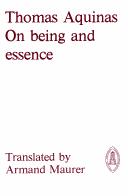
Maurer's translation and commentary on De Ente et Essentia unlocks Aquinas's foundational metaphysical distinctions (esse/essentia, act/potency) in a short, focused text ideal for this stage.
Modern Thomism and Living Debate
ExpertEngage with the major twentieth- and twenty-first-century Thomistic thinkers who have extended, revised, and debated Aquinas's legacy, seeing how his thought speaks to contemporary philosophy and theology.
▸ Study plan for this stage
Pace: 8–10 weeks, ~40–50 pages/day. Start with Gilson (3–4 weeks), move to Feser's Beginner's Guide (2–3 weeks), then tackle The Last Superstition (3–4 weeks). Allow 1 week for synthesis and review.
- Gilson's recovery of medieval metaphysics: how twentieth-century Thomism reclaimed Aquinas's existential metaphysics against modern rationalism and empiricism
- The act of existence (actus essendi) as the cornerstone of Thomistic metaphysics and its modern philosophical implications
- Feser's systematic presentation of Aquinas's core arguments: the Five Ways, substance and accident, causation, and the nature of God
- The relationship between faith and reason in Aquinas, and how modern Thomists defend this synthesis against both scientism and fideism
- Natural law theory as applied to contemporary ethics, politics, and human flourishing in Feser's work
- The critique of modern philosophy (Descartes, Hume, Kant) embedded in Thomistic metaphysics and epistemology
- How Thomism addresses contemporary debates: consciousness, free will, teleology, and the mind-body problem
- The living debate within Thomism itself: different schools of interpretation and their contemporary relevance
- What does Gilson mean by the 'existential' dimension of Aquinas's metaphysics, and why did twentieth-century Thomists need to recover this against modern philosophy?
- Explain Aquinas's Five Ways as presented by Feser. What is the logical structure of each argument, and what contemporary objections does Feser address?
- How do Thomists distinguish between essence and existence, and why is this distinction crucial for understanding God and creation?
- What is natural law according to Aquinas and Feser, and how does it ground moral reasoning in contemporary contexts?
- How do Feser's critiques of Descartes, Hume, and Kant in The Last Superstition connect to the positive reconstruction of Thomistic metaphysics?
- What does it mean to say that Aquinas's thought is 'teleological,' and how does this address modern debates about purpose and design in nature?
- After reading Gilson, write a 2–3 page essay explaining the difference between Thomistic existential metaphysics and Cartesian rationalism. Use specific passages from Gilson.
- Create a detailed outline of each of Aquinas's Five Ways as Feser presents them. For each, identify the key premise, the logical steps, and one modern objection Feser addresses.
- Construct a concept map showing the relationships between essence, existence, substance, accident, causation, and God in Thomistic metaphysics, using examples from Feser's Beginner's Guide.
- Read one of Feser's chapters on natural law and apply Thomistic principles to a contemporary ethical issue (e.g., bioethics, justice, human sexuality). Write a 3–4 page analysis.
- Identify and summarize 3–4 key critiques Feser makes of modern philosophy in The Last Superstition. For each, explain how the Thomistic alternative addresses the problem.
- Engage with a secondary source or academic article on modern Thomism (e.g., a Stanford Encyclopedia entry on Aquinas or a journal article on Feser's work). Write a 2-page reflection on how it deepens or challenges your reading of the three books.
Next up: This stage establishes how Thomistic metaphysics and natural law remain philosophically rigorous and relevant in the modern world, preparing you to engage with either specialized Thomistic debates (e.g., on epistemology, aesthetics, or political philosophy) or to apply Thomistic principles to specific contemporary problems in theology, ethics, and science.
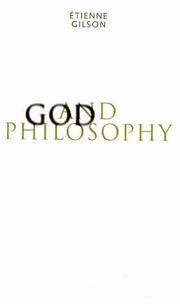
Gilson, the towering figure of twentieth-century Thomism, traces the unique Thomistic insight that God is pure act of being (ipsum esse subsistens) and defends its superiority over other philosophical theologies.
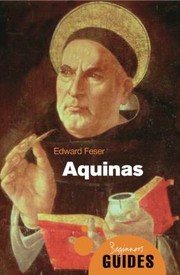
Feser's analytically styled introduction revives Thomistic metaphysics and natural theology for contemporary readers, directly engaging modern objections and showing the system's continued philosophical force.

Feser's polemical but philosophically serious defense of Aristotelian-Thomistic thought against modern naturalism consolidates everything learned and situates Aquinas in today's sharpest debates.
Discussion
Keep reading
Paths that share books, cover the same subject, or open a related topic.