The Women's Prize for Fiction: The Winners Worth Reading, in Order
The Women's Prize was founded after the 1991 Booker shortlist contained no women at all, and it has run every year since 1996 for a full-length novel written in English by a woman of any nationality and published in the UK. It has changed sponsor repeatedly — Orange, then Baileys, then a trust funded by private donors — which is why its winners are catalogued under three different prize names, and it has been argued over from the start, both by people who think a single-sex prize is condescending and, more recently, over the eligibility of trans women, which the prize resolved by stating that it is open to all women. Read by accessibility rather than by year: the winners that hook a reader, the ones everyone is already talking about, the prize's own settled canon, and then the formally difficult ones.
Start Here
BeginnerRead three winners that are strongly plotted and immediately gripping, and get a feel for the prize's range across continents in a single stage.
▸ Study plan for this stage
Pace: Six to seven weeks. Half of a Yellow Sun is the longest of the three at over 400 pages and deserves three weeks at 25 pages a day. An American Marriage and The Song of Achilles are both quick — a week to ten days each. Read them in the given order; the first is the anchor.
- The prize's basic terms, which shape everything on this path: a full-length novel in English, by a woman of any nationality, published in the UK, judged annually
- Half of a Yellow Sun's three-perspective structure — Ugwu the houseboy, Olanna the professor's partner, Richard the English writer — and the deliberate choice to give the war's largest section to the servant
- Adichie's non-linear ordering, moving between the early sixties and the late sixties so that you meet consequences before causes
- Biafra's secession and the war and famine that followed, treated as lived domestic experience rather than as geopolitics
- An American Marriage's epistolary middle section, where a wrongful imprisonment is conducted almost entirely through letters that stop being answered
- Public injustice deforming private life, which is the prize's most persistent recurring interest and appears in almost every stage of this path
- The Song of Achilles' reframing of the Iliad through Patroclus, a narrator who is present for very little of the war's decisive action
- That the prize rewards readability, which the Booker rarely does — the reason all three of these books can be read for pleasure without effort
- Why does Adichie give Ugwu the section she does? Consider what the war looks like from a servant's position that it cannot from Olanna's.
- The novel is told out of order. Name one thing you learned in the late section that changed how you read an earlier scene.
- In An American Marriage, the letters stop working. Locate the exchange where the failure begins and say what caused it.
- Who has the strongest claim in An American Marriage — Roy, Celestial or Andre? The novel is designed so this cannot be settled cleanly; make the case for each before choosing.
- Patroclus narrates a war he barely fights in. What does the Iliad look like from that vantage, and what is lost?
- Keep a note of what each of the three narrators of Half of a Yellow Sun knows and when. The novel's power comes from the gaps between the three, and the gaps are easy to miss on a first reading.
- Read the letters section of An American Marriage in one sitting. Then write 200 words on what a letter can do that a scene cannot. Note that our catalogue's record for this novel credits its audiobook narrators alongside the author; the book is Tayari Jones's novel.
- After The Song of Achilles, read Book 16 of the Iliad. Write 300 words on what Miller added, what she changed and what she left exactly as it was.
- Write one sentence per book on why it might have won a prize specifically for novels by women. Keep the answers; you will test them at the end of the path.
Next up: You have the prize's range and its taste for a big subject told transparently, which is the baseline against which the next four winners' formal games become visible.

Biafra's secession and the war that followed, through a houseboy, a professor's mistress and an English writer. The best first Women's Prize winner: enormous subject, completely transparent storytelling, and it later won a public vote for the best winner of the prize's first twenty-five years.

A newlywed husband is wrongly imprisoned and the marriage has to survive it, told in alternating voices and letters. Read it second because it is the most purely readable book here and because it sets up the prize's recurring interest in how public injustice deforms private life.
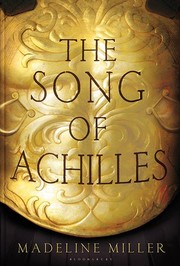
The Iliad retold from Patroclus's side. A first novel that took ten years to write and became a phenomenon years after winning; useful here as proof that the prize will reward a straightforwardly enjoyable book, which the Booker rarely does.
The Ones Everyone Is Talking About
BeginnerCover four recent winners that dominate reading groups, and start noticing the prize's taste for a strong premise executed cleanly.
▸ Study plan for this stage
Pace: Seven to eight weeks. Piranesi is short and can be read in two or three sittings. The Power and Home Fire are each about two weeks. Hamnet takes two. The order matters: Piranesi trains the trust that The Power then exploits at greater length.
- Piranesi's journal form: a narrator who records everything faithfully and understands almost none of it, so the reader assembles the truth from evidence he does not interpret
- The House itself — statues, tides, halls — described with such precision that the reader accepts it long before asking what it is
- The Power's framing device: the whole novel is a manuscript written thousands of years later and sent between two correspondents, which is doing far more work than the premise
- The inversion premise handled as history rather than as fantasy — the ten years of institutional and religious change are the book's actual subject
- Home Fire as Antigone relocated: a radicalised brother, a sister who will not abandon the body, and a Home Secretary who is also a father
- Shamsie's five-section structure, one per character, which forces the reader to inhabit the position they liked least
- Hamnet's central withholding — Shakespeare is never named in the book — and what the refusal does to a story everyone thinks they know
- Agnes as the novel's centre and the plague chapter's famous digression, which follows a flea rather than a person
- When did you realise what Piranesi's situation is, and what specific detail gave it away? Clarke plants several before the obvious one.
- In The Power, what does the frame narrative claim about the manuscript, and how should that change your reading of everything inside it?
- The Power's inversion is often summarised as a role reversal. Is that what the novel argues, or something else about power itself?
- Home Fire gives each character a section. Which one did you resist most, and did the section change your view of them? That is the design.
- Why is Shakespeare unnamed in Hamnet? Give the effect, not the intention.
- Read Piranesi's journal entries noting every fact the narrator records without understanding. The list is the plot.
- Read the framing letters of The Power first and last, in that order, and write 300 words on what the second reading revealed.
- Set Home Fire beside Sophocles' Antigone and map the roles. Where Shamsie departs from the play, write one sentence on why.
- Take the plague chapter of Hamnet and write 200 words on why the digression is where it is. It is the most discussed passage in the novel and it is not decoration.
Next up: With the prize's contemporary taste established, you can look back at what it was rewarding in its first decade and see how much of that judgement has held.
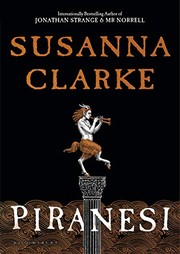
A man lives in an endless house of statues and tides, keeping a journal, and does not know he is a prisoner. Short, strange, and the gentlest introduction to an unreliable narrator you will find — read it before The Power, which asks a similar trust of you at greater length.
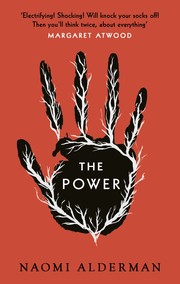
Teenage girls develop the ability to give electric shocks and the world's power structure inverts within a decade. Framed as a historical document written far in the future — a device worth watching closely, because it is doing more work than the premise.

Antigone relocated to a British Pakistani family, a radicalised brother and a Home Secretary's son. Read it after The Power: both are novels about state power, but Shamsie's is the one that shows what the prize means by moral seriousness.

The death of Shakespeare's son, told from his wife's point of view, with the playwright himself never named. A masterclass in withholding, and a good bridge to the older winners in the next stage, which ask for more patience.
The Prize's Own Canon
IntermediateRead three winners from the prize's first decade that have lasted, and see what the Orange Prize was rewarding before the Women's Prize existed under that name.
▸ Study plan for this stage
Pace: Seven to eight weeks. Small Island is long and multi-voiced — three weeks. Bel Canto takes two. We Need to Talk About Kevin is around 400 pages and is the slowest of the three for reasons that have nothing to do with prose difficulty; give it three weeks and expect to put it down. Read it last as pl
- Small Island's four narrators — two Jamaican, two English — who keep correcting each other's version of the same events
- 1948 and the Windrush arrival treated as ordinary domestic life, with the racism located in landlords and neighbours rather than in institutions alone
- Levy's use of a wartime past for each narrator, so that every character's present is explained by a section set years earlier
- That the prize found this story well before British publishing generally did, which is the strongest available argument for what a prize like this is for
- Bel Canto's tonal control: a hostage siege that becomes months of domesticity, with the thriller's clock removed and replaced by a chamber-piece pace
- Opera as the novel's binding device — a shared aesthetic experience that lets people with no common language cohere
- We Need to Talk About Kevin's epistolary form: one voice, addressed to an absent husband, with everything filtered through a narrator who has every reason to shape the account
- The unreliability question the novel poses and refuses to settle, which is why it remains the most argued-over winner
- Small Island's four narrators contradict one another. Find one event told twice and say what each version needs to be true.
- What does Levy gain by giving each character a wartime section before the 1948 present?
- Bel Canto removes the urgency a hostage plot normally supplies. What replaces it, and does the ending justify the choice?
- Is Eva a reliable narrator? Set out the strongest case each way, and note that the novel is built so that you cannot verify her.
- These three won in the prize's first decade. Which of the three has aged best, and on what criterion?
- Chart the four Small Island narrators against a single timeline. Where their accounts conflict, mark it. Note that our catalogue's record for this novel repeats the author's name; it is Andrea Levy's novel.
- For Bel Canto, write 200 words on what the opera singer is for structurally, rather than what she means. The record for this one lists a translator alongside the author; the book is Ann Patchett's novel.
- Read the last thirty pages of We Need to Talk About Kevin, then reread the first thirty. Write 300 words on what the reread changed.
- Write a 300-word defence of a single-sex literary prize and a 300-word case against one, both as strongly as you can, and do not conclude in writing. The argument has run since the prize was founded after a Booker shortlist with no women on it, and it is part of the subject.
Next up: Having read the prize at its most readable and its most uncomfortable, you can meet the winners that are hard on the sentence itself and judge whether the prize's riskier choices paid off.
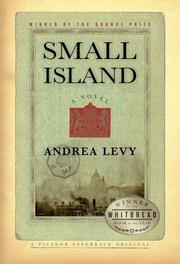
Jamaican migrants and their London landlords in 1948, in four voices that keep correcting each other. It later won a Best of the Best vote for the prize's first decade, and it is the clearest demonstration that this prize found the Windrush story well before British publishing generally did.
A hostage siege at a South American vice-president's house turns into months of uneasy domesticity around an opera singer. Read it for the tonal control — a thriller premise handled at the pace of a chamber piece.

A mother writes to her estranged husband about their son, who murdered his classmates. Rejected by dozens of publishers and the most uncomfortable winner in the prize's history; place it last in this stage because it is the point where the path stops being enjoyable and starts being demanding.
The Difficult and the Overlooked
BeginnerFinish with three winners that are hard on the sentence level or have simply been forgotten, and decide for yourself which of the prize's judgements have held.
▸ Study plan for this stage
Pace: Six to seven weeks. A Girl Is a Half-formed Thing is short but the first twenty pages are genuinely hard; read them twice in a single sitting and the rest will take a week. How to Be Both takes two weeks. Fugitive Pieces is poet's prose and should be read slowly — two to three weeks at twenty pages
- McBride's broken, pre-verbal first person, which puts the reader inside a mind rather than beside it — the syntax is the character, not a stylistic overlay
- That the difficulty in A Girl Is a Half-formed Thing is entirely front-loaded: after twenty pages the technique stops registering as technique
- The book's publication history — nine years unpublished, then issued by a very small press — as evidence of what mainstream publishing would not take
- How to Be Both's two halves, a Renaissance fresco painter and a grieving modern teenager, printed in both possible orders so that different copies begin differently
- What the two orderings do to the reading: whichever half you get first becomes the frame for the second, and the novel is a demonstration of that
- Smith's playfulness with formal risk against McBride's severity — the same appetite, opposite temperaments
- Fugitive Pieces as poet's prose: a Polish boy dug out of the mud of a buried city, raised on a Greek island, in sentences that behave like verse
- That one of the earliest winners is now largely unread, which is the path's strongest argument for mining the prize's back catalogue rather than its shortlists
- At what point did McBride's syntax stop being an obstacle? Name the page. What had changed — the book, or you?
- Which half of How to Be Both did your copy give you first, and how would the novel differ in the other order? Be specific.
- Michaels writes prose that behaves like poetry. Where does that serve the material, and is there anywhere it does not?
- All three of these took formal risks. Which risk was most necessary to what the book was doing, and which could have been dropped?
- Looking at all thirteen winners on this path, what do you now think the prize rewards? Test the answer against the one-line predictions you wrote in stage one.
- Read the first twenty pages of A Girl Is a Half-formed Thing twice consecutively without stopping. This is the only thing that works, and it works reliably.
- Find out which order your copy of How to Be Both uses, then read a summary of the other half's opening and write 200 words on how the novel would have changed.
- Copy out one paragraph of Fugitive Pieces and mark its line breaks as if it were verse. Doing so shows what Michaels is actually doing.
- Write 500 words ranking the winners on this path and defending your top three and bottom three. Note that the prize has run under three sponsor names — Orange, Baileys, and a donor-funded trust — which is why its winners appear in catalogues under different prize titles, and why the back catalogue is easy to lose track of.
Next up: This is the end of the path. The natural next move is the shortlists rather than the winners: the prize's losing books are frequently the more interesting half of any given year.

Written in a broken, pre-verbal first person that puts you inside a mind rather than beside it. It took nine years to find a publisher and was issued by a tiny press behind a bookshop; the first twenty pages are the whole difficulty, and after them the technique is simply how the book speaks.
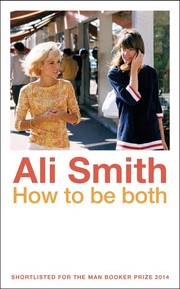
Two halves — a Renaissance fresco painter and a grieving modern teenager — printed in both possible orders, so different copies of the book begin differently. Read it after McBride: same appetite for formal risk, far more playful about it.
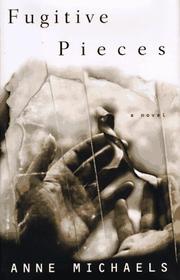
A Polish boy dug out of the mud of a buried city and raised on a Greek island, written by a poet in prose that behaves like poetry. One of the earliest winners and now largely unread — the best argument on this path that the prize's back catalogue is worth mining.
Discussion
Keep reading
Paths that share books, cover the same subject, or open a related topic.