Ali Smith Reading Order: How to Read the Seasonal Quartet
The Seasonal Quartet was written and published in near-real time about British politics between the Brexit referendum and the pandemic, and its four books are meant to be read in order — they answer each other and the later ones assume the earlier. This path gives you one standalone novel first, so the quartet's methods are familiar, then the quartet in sequence.
Start here
IntermediateBegin with the standalone that teaches you how she builds a book.
▸ Study plan for this stage
Pace: 2 weeks for about 380 pages. Read one half of the book, stop for a day, then read the other - the pause is part of the design, because the two halves are printed in different orders in different copies and the break is where you notice which one you were given.
- The two halves - the Renaissance fresco painter Francesco del Cossa and the grieving teenager George - and the fact that copies exist in both orders
- That which half you read first genuinely changes the book, so your reading is not the only legitimate one
- The Palazzo Schifanoia frescoes in Ferrara as a real artwork the novel is built on and around
- Smith's sentence: unpunctuated momentum, puns treated as arguments rather than jokes, wordplay that carries the emotional weight
- Grief handled sideways - the novel almost never states it, and is about very little else
- Looking as a moral activity: what is in front of you, who is allowed to be seen, and who is painted over
- The title's double sense of 'both' - both halves, both genders, both times
- Which half did your copy print first, and what did that order make you assume before the other half corrected it?
- How does Smith get an unpunctuated, run-on voice to carry a coherent narrative - what replaces the punctuation?
- What is George actually doing in her surveillance and her repeated video watching, and why is that a form of mourning?
- The two halves are five hundred years apart. What holds them together besides the fresco?
- Is 'how to be both' a question the novel answers, or a condition it demonstrates?
- Before starting, check which half your copy prints first and write it down. When you finish, look up the other order and read the first twenty pages of the half you read second - it becomes a different opening.
- Look up images of the Palazzo Schifanoia frescoes at the point the novel first describes them, and keep the images to hand for the rest of that half.
- Take one page of Smith's unpunctuated prose and add the punctuation yourself. Read both versions aloud and note exactly what the punctuation kills.
- Write down every pun the novel uses on the word 'both' or 'be' that you can find, then decide which ones are load-bearing and which are decoration.
Next up: You now know how Smith builds a book out of two things held at once, which is exactly the machinery the Seasonal Quartet runs across four volumes and four years.
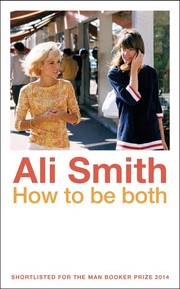
Two halves — a Renaissance fresco painter and a grieving teenager — printed in two different orders, so which you read first depends on the copy you happen to buy. Costa winner, Booker-shortlisted, and the best single demonstration of her method.
The Seasonal Quartet, in order
IntermediateRead the four in sequence. This is the one place where order is a requirement rather than a recommendation.
▸ Study plan for this stage
Pace: 8-10 weeks. Read Autumn, Winter, Spring, Summer in that order at roughly one book every ten to fourteen days - the volumes run from about 240 to 400 pages. Do not leave months between them: the later books assume you still remember the earlier ones, and Summer in particular collapses if the first th
- Written and published in near-real time, from the months after the Brexit referendum to the first lockdown, so the politics are contemporary rather than retrospective
- Autumn's opening riff on Dickens - 'It was the worst of times, it was the worst of times' - and each book's opening rewriting a famous first line
- Each novel paired with a real and often overlooked artist: Pauline Boty in Autumn, Barbara Hepworth in Winter, Tacita Dean in Spring, Lorenza Mazzetti in Summer
- Shakespeare's late plays as scaffolding - Cymbeline named explicitly in Winter, Pericles in Spring
- The SA4A thread running through all four books, and the immigration removal centre at the centre of Spring, which is the angriest of the four
- Daniel Gluck and Elisabeth Demand as the pair Autumn establishes and Summer returns to
- Summer as a gathering book: characters from all three previous novels reappear and the quartet closes as one structure
- Smith's insistence on hope as a discipline rather than a mood, hardest to sustain in Spring and deliberately hardest won there
- Autumn was called the first post-Brexit novel. What in it is actually about the referendum, and what is about something older?
- Winter is colder in its politics than Autumn but funnier on the page. How does the Christmas setting and the floating head let Smith do both?
- Spring is set around a detention centre and is the angriest book. Where does its hope come from, and do you believe it?
- Which characters does Summer bring back, and what does each return depend on your remembering?
- The four artists are all somewhat neglected figures. What is Smith arguing by hanging each book on one of them?
- Does the quartet work as four novels or as one novel in four parts?
- Write down the first sentence of each of the four books as you reach it, and identify the classic opening it is rewriting. Read the four together at the end.
- Look up one Pauline Boty painting, one Barbara Hepworth sculpture, one Tacita Dean work and one Lorenza Mazzetti film at the point each artist enters the relevant novel. Ten minutes each; it changes what the surrounding chapter is doing.
- Keep a single running page of every SA4A appearance across all four books, with the page reference. Read the page after Summer - it is a complete argument on its own.
- Read the Cymbeline passages in Winter, then read a plot summary of Cymbeline, then decide what the play is doing in the novel that a different play could not.
- After Summer, list every returning character and note which earlier book they came from and what you had to remember about them. The list is the measure of what a real-time quartet can do that four standalones cannot.
Next up: The quartet is late Smith working at speed on public events; the earlier novels show the same techniques being invented on private material.
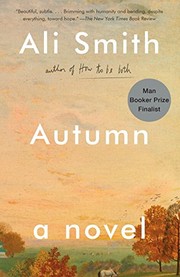
Written and published within months of the Brexit referendum, and often called the first post-Brexit novel. A young woman visits a very old man in a care home. Our record carries a nonsense year.

A fractured family Christmas in Cornwall, haunted by a disembodied head. Dickens is the scaffolding underneath it, and the politics are colder than in Autumn.

Set around an immigration removal centre, and the angriest book of the four by a distance. It is also the one where her optimism is hardest won.
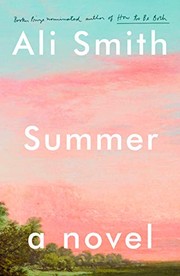
Written into the first lockdown and published months later, gathering up characters from all three previous books. It only works if you have read them.
The earlier novels
IntermediateGo back to the books that built the reputation.
▸ Study plan for this stage
Pace: 3 weeks. The Accidental is about 310 pages and Hotel World about 245, and both are structurally fragmented, so read each in fairly long sittings rather than short ones - the voices are easier to hold if you do not put the book down mid-section.
- Hotel World's five voices circling one death - a chambermaid, Sara Wilby, who fell down a dumbwaiter shaft in the hotel
- The dissolving, disintegrating opening voice of Hotel World, which is a dead girl losing hold of language and is the most formally extreme thing Smith has written
- The Accidental's structure: the Smart family - Eve, Michael, Astrid, Magnus - each given their own sections in their own register
- Amber, who arrives at the Norfolk holiday house and is never satisfactorily explained by anyone
- The chapter in The Accidental where the prose becomes a sonnet sequence, and what formal games are for in a family novel
- Astrid's camera as an early version of the surveillance and looking that runs through all of Smith's later work
- The uninvited stranger who reorganises a household - a figure Smith returns to across her whole career
- In Hotel World, can you tell who is speaking before the section tells you? What does each voice do to the language that the others do not?
- What has actually happened to Sara Wilby, and why does the novel withhold a straightforward account of it?
- Who is Amber, and does The Accidental want you to settle the question? What does each Smart family member think she is?
- Why does Michael's section turn into sonnets, and is the joke at his expense?
- Compare Amber's arrival with the strangers who arrive in the Seasonal Quartet. Is Smith doing the same thing twenty years apart, or has the figure changed?
- Read Hotel World's five sections and, before each section names its speaker, write down who you think it is and what tipped you off. Check yourself at the end of each.
- Mark the moment in The Accidental where Michael's prose becomes formal verse, then read that section aloud. The comedy and the cruelty are both in the metre.
- Track Astrid's camera through The Accidental - what she films, what she does not, and what happens to the footage. Then set it beside George's video watching in How to Be Both.
- Write a paragraph in Smith's early register: a family member describing an ordinary event while withholding the thing they are actually thinking about. Then compare it with any Eve section.
Next up: The uninvited-guest structure is now familiar enough that the last novel, which is built almost entirely out of it, reads as the purest version of the idea.
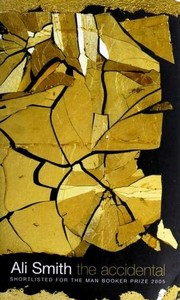
A stranger arrives at a family's holiday home and nobody quite asks who invited her. Whitbread winner and Booker-shortlisted.

Five voices circling a hotel where a chambermaid has fallen to her death. Her breakthrough, and formally the most restless thing she has done.
One more
IntermediateThe remaining major novel.
▸ Study plan for this stage
Pace: About a week and a half for roughly 290 pages. The four sections are self-contained enough to read one every two evenings, which suits a book organised around the four words of its own title.
- The premise: Miles Garth goes upstairs at a Greenwich dinner party, locks himself in the spare room, and stays there for months while a crowd assembles outside
- Four sections named for the words of the title - There, But, For, The - each narrated by someone with only a slight connection to Miles
- That Miles himself never gets a section, so the man at the centre of the novel is never entered
- Brooke Bayoude, the child whose relentless punning is the book's engine and its moral centre
- Hospitality and its limits as the subject: what England will and will not let through the door
- Smith's puns as a form of attention rather than cleverness - the book argues that taking language apart is how you take a situation apart
- The dinner party as a set piece of English social violence conducted entirely through politeness
- Work out each narrator's actual connection to Miles. How thin is the thinnest, and why did Smith make it that thin?
- Why does Miles never speak for himself, and what would be lost if he did?
- What happened at the dinner party that made him go upstairs - does the novel let you decide, and does it matter?
- Brooke's puns are constant. Where do they stop being funny and start being the argument?
- How does the four-word title structure work - is each section really about its word, or is that a joke on the reader?
- After each section, write one sentence on how that narrator knows Miles. Read the four sentences together at the end - the diminishing connection is the design.
- Keep a list of Brooke's puns for one chapter and mark which ones a character reacts to. The pattern of who indulges her and who does not sorts the cast morally.
- Reread the dinner party scene after finishing the book and mark the exact remark you think sends Miles upstairs. Then argue the case for a different one.
- Set the crowd that assembles outside the house beside the crowds and borders of Spring. Write half a page on what changed in Smith's politics between the two books.
- Write a short paragraph in Brooke's voice about an adult behaving badly - all questions and wordplay, no accusation. It is the hardest of Smith's registers to fake.
Next up: With the standalone, the quartet, the early breakthroughs and this book behind you, the short story collections and the essays are the natural next stop, and you can read them in any order.

A dinner guest goes upstairs and refuses to come out, for months, while the world assembles outside. A comedy about hospitality and England.
Discussion
Keep reading
Paths that share books, cover the same subject, or open a related topic.