Chimamanda Ngozi Adichie Reading Order: Where to Start
Adichie's body of work is small enough to read completely in a few months, and it happens to be one of the rare cases where publication order and reading order agree — each novel is bigger and more ambitious than the last, and the essays and the memoir sit alongside rather than interrupting. Start with Purple Hibiscus, the shortest and most contained novel, then take Half of a Yellow Sun and Americanah in order. The short non-fiction can be read at any point, but it lands harder once you have seen her argue the same ideas through characters first.
Start Here: The First Novel and the Stories
BeginnerMeet Adichie in her most contained mode — one family, one household — and pick up the Nigerian political background the later books assume.
▸ Study plan for this stage
Pace: 3 weeks, about 25 pages a day. Purple Hibiscus is 307 pages and moves quickly once the opening Palm Sunday scene is behind you — two weeks. The Thing Around Your Neck is 224 pages in twelve stories; read two or three a sitting across the third week rather than straight through, since several share s
- Purple Hibiscus opens on the day Jaja refuses communion and then goes back months to explain it, so chapter one is the end of the first movement rather than its beginning.
- Eugene is not a hypocrite, and the novel is harder because of it. He is genuinely brave in public, publishing against a military government at real cost, and violent at home, and Adichie declines to let either fact cancel the other.
- Freedom arrives as noise. The house at Nsukka is poor, loud and argumentative, and Kambili's silence is the instrument that measures how far she has to travel.
- The coup in the background is not scenery. It is the same problem as the father — absolute authority defended as protection — restated at national scale, and the parallel is the book's structure.
- Papa-Nnukwu's traditional practice is presented as devotion rather than as the absence of it, which is the first appearance of the argument against a single story that runs through everything she writes.
- The Thing Around Your Neck is her workshop: several stories are trial runs for material the novels later take up at length, and one of them, The Headstrong Historian, is written as a direct reply to Things Fall Apart.
- Her method is already visible at story length — pages of ordinary domestic detail, then one sentence that reframes everything behind it.
- Why does the novel open on Palm Sunday and then reverse? What would be lost by telling it in order?
- What exactly does Kambili's stutter track, and at what point does it stop?
- Aunty Ifeoma's household is materially far poorer than Kambili's. Name three things the book shows it has instead.
- Does Purple Hibiscus ask you to forgive Eugene? Assemble the evidence on both sides before answering.
- Which story in The Thing Around Your Neck could carry a novel, and what would it need that the story deliberately refuses?
- Mark the page where Kambili first speaks without being asked. That is the plot.
- List what the family is forbidden to do in the first fifty pages. The list is short, specific, and explains everything that follows.
- Read The Headstrong Historian last, against whatever you know of Things Fall Apart. It is written as an answer to it.
- Note which stories are set in Nigeria and which in America. The split is close to even, and it is the ground the next two novels are built on.
Next up: The domestic scale here is deliberate practice for the two big novels, where the same family pressures are set inside a war and an emigration.

Her debut and the right first book: a fifteen-year-old girl, a violent and devout father, and a coup in the background. It is short, it moves, and it introduces the Igbo Catholic world that the later novels widen out from.

Twelve stories split between Nigeria and the United States, several of which are trial runs for material she later expands. Read it second, as the bridge between the domestic scale of Purple Hibiscus and the two big novels.
The Two Big Novels
IntermediateRead the books she is best known for, in order, and understand why the war novel has to come before the migration novel.
▸ Study plan for this stage
Pace: 8 weeks at about 25 pages a day, and do not read them back to back. Half of a Yellow Sun is 500 pages and its late-sixties sections are genuinely hard going — four weeks. Americanah is 592 pages and reads much faster — three to four weeks. Leave a few days between them; the switch from a starvation
- Half of a Yellow Sun is about the Biafran war, and that is the reason it comes first: it is the historical wound the later characters are leaving. This stage is not a detour into history before the good stuff.
- The parts are not in chronological order. The novel moves from the early sixties to the late sixties, then doubles back, and the event it steps over is placed where it will hurt most rather than where it happened.
- The war is narrated from three positions chosen for their distance from each other — a village boy working as a houseboy, a professor's partner from the Lagos elite, and an Englishman who can leave whenever he likes. None of the three is the author's proxy.
- The book inside the book, on who was silent while Biafra died, is the novel's argument about who gets to write a war. Its authorship is a deliberate late reveal, and it is the point of the whole structure.
- Americanah's blog posts are a formal risk: they state directly what the novel elsewhere dramatises. Whether they earn their place is a live question worth holding open as you read rather than settling on page fifty.
- Ifemelu does not discover she is black in Nigeria. She discovers it in America, and the novel treats race as something a place does to a person rather than a property they carry.
- Hair carries the argument. The braiding salon frames the entire book, and the decision to stop relaxing is the turning point stated as a physical fact instead of a realisation.
- Obinze's London chapters are the counterweight — the same emigration without the American vocabulary for it, and with deportation at the end.
- Why does Adichie hand the final testimony of the war to Ugwu rather than to Richard, and at what point did you realise she had?
- Where does the time jump land you, and what do you know by then that the characters do not?
- Do the blog posts earn their place, or does the novel say it better in scene? Point to one clear example of each.
- What has Ifemelu lost by the time she returns to Lagos, and does the novel treat that return as a homecoming?
- Set the two emigrations side by side. What can Obinze not say in London that Ifemelu can say in Princeton?
- Keep a one-page list of the main characters and who is where when the war starts. The parts jump in time and the cast scatters geographically.
- Mark the last ordinary domestic scene before the war reaches Nsukka. Adichie sets it up carefully, and it is the measure for everything after it.
- Read one blog post out of context, then back in place. Deciding whether it survives removal is the fastest honest test of the device.
- After Americanah, reread the first page of Half of a Yellow Sun. Ugwu walking to a new job is the same story of arrival, with everything else stripped out.
Next up: You have now met her arguments about power, race and belonging inside characters, which is the right preparation for hearing her state them in her own voice.

The Biafran war seen through a houseboy, a professor's mistress and an English writer, and the novel most readers consider her best. Read it before Americanah: the war is the historical wound that explains why the later characters leave.
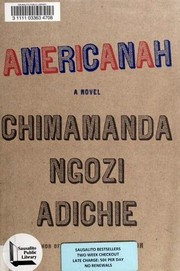
A Nigerian woman in America discovering she has become black, a blog about race written inside the novel, and a love story that survives three countries. The most quoted of her books and the natural place to arrive rather than to begin.
The Essays
BeginnerRead the two short polemics that made her a public figure, and see the argument stated directly after meeting it in fiction.
▸ Study plan for this stage
Pace: One week, and you could physically read both in an afternoon. We Should All Be Feminists is 64 pages adapted from a talk and reads aloud in about half an hour. Dear Ijeawele is 80 pages of fifteen numbered suggestions. Read them a day or two apart so the second arrives as an answer to the first rath
- We Should All Be Feminists keeps the shape of the talk it came from — anecdote, turn, restated claim — and the argument is deliberately narrow so that it cannot be waved away as theory.
- The Nigerian setting matters. Most of the examples are Lagos examples, and it is not an American argument being made in an American context, which is how it is most often quoted.
- Dear Ijeawele is the same case rewritten as practical instruction to one friend about one child, and the move from persuasion to instruction changes what can be asserted without argument.
- Adichie's public statements on gender in the years since these two books have made her a contested figure for some readers who otherwise share her politics; the disagreement sits around the work rather than inside these pages.
- Reading the essays after Americanah shows what the fiction was doing that the essays cannot: the novels test the arguments against characters who resist them, and the essays do not have to.
- The plainness is a choice rather than a limit. Both books are built out of sentences designed to survive being lifted out and quoted, which is exactly what happened to them.
- State the claim of We Should All Be Feminists in one sentence, with nothing added of your own. It is narrower than most summaries of it.
- Which of the fifteen suggestions in Dear Ijeawele would be hardest to follow, and does she acknowledge the cost of it?
- Where do the essays repeat Americanah, and where do they say something the novel does not?
- The essays argue and the novels show. Which changed your mind more, and why is that not the same question as which is better?
- Each book is addressed to a specific listener — a lecture audience, a friend with a newborn daughter. What does each address make sayable that the other does not?
- Read We Should All Be Feminists aloud. It was written to be heard and the rhythm is half the argument.
- Write down the anecdotes she uses and work out which single one the essay actually rests on. The others are illustration.
- Set the first suggestion of Dear Ijeawele beside the last page of Purple Hibiscus. Same subject, opposite mode, and fourteen years apart.
Next up: With the arguments stated plainly, the last stage is where the voice drops its guard entirely, and then rebuilds fiction around what is left.
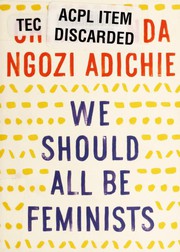
A TEDx talk turned into a fifty-page book, and the piece that put her in front of a general audience. Read it after Americanah, which dramatises most of what it argues.
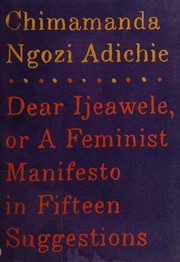
A letter to a friend on raising a daughter, written as fifteen concrete suggestions. Shorter and more practical than We Should All Be Feminists, and the two are usually read as a pair in this order.
The Recent Books
IntermediateFinish with the grief memoir and the long-awaited fourth novel, both written after a decade-long gap in her fiction.
▸ Study plan for this stage
Pace: 5 weeks. Notes on Grief is 72 pages in short numbered sections — one evening, and probably not more, because it is not built to be rationed. Dream Count is 512 pages divided between four women; four weeks at about 25 pages a day, taking each woman's section as its own unit rather than counting pages
- Notes on Grief is the least composed thing she has published — short numbered fragments written close to the event, with the ordering left rough — and after four controlled books it shows you exactly how much control the fiction was exercising.
- It is a pandemic book by circumstance rather than by subject: her father dies at a distance she cannot cross, and the closed borders are why the grief has no ritual to land in.
- She is angry in it, at condolence language and at the demand to be consoled, which is unusual in a genre that generally performs serenity.
- Dream Count is her first novel in more than a decade and is built as four women's sections rather than one arc, so read it as a set of portraits arranged to comment on each other.
- It is written by someone who has read every reaction to Americanah, and several of its choices read as replies — including which of the four women is given the least glamorous life and the most weight.
- The pandemic is the frame rather than the subject, which is what lets her hold four women who would not otherwise share a room inside the same year.
- Notes on Grief is placed before Dream Count deliberately: the memoir shows the voice unguarded, and you can then hear the novel doing similar work with the guard back up.
- What does Notes on Grief refuse to do that grief memoirs usually do?
- Which of its sections would you cut, and what does the fact that it survived tell you about when the book was written?
- In Dream Count, whose section is strongest, and does the book agree with you in how much room it gives her?
- The four women know each other unevenly. Where do their accounts of the same person disagree, and does the novel correct either one?
- Having read all eight books, what has changed in her prose between Purple Hibiscus and Dream Count, and what has not moved at all?
- Read Notes on Grief in one sitting, then leave a week before starting Dream Count. Going straight from one to the other flattens both.
- After Dream Count, write one sentence per woman naming what she wants. The ones you find hard to write are the reason the book is structured this way.
- Set the first page of Purple Hibiscus beside the first page of Dream Count and note what she no longer feels she has to explain to you.
- Pick the book of the eight you would give someone who has never read her, and make the two-sentence case. It is rarely the one you liked most.
Next up: That is the whole body of work as it currently stands, which means anything she publishes next can be read against a complete arc rather than in isolation.

A short book about the sudden death of her father during the pandemic, written in unguarded fragments. It is the least composed thing she has published, and reading it after the novels shows how much control the fiction was exercising.

Her first novel in more than a decade, following four connected women across Nigeria and America. Save it for last — it is written by someone who has read all the reactions to Americanah and is answering them.
Discussion
Keep reading
Paths that share books, cover the same subject, or open a related topic.