Start with The friend. A woman inherits a Great Dane from a friend who has killed himself; the book is short, dry, essayistic, and about grief without a sentimental sentence in it. Sigrid Nunez's novel is a fair sample of what a panel of working writers rewards, and it can be finished in two evenings — which matters, because the far end of this path contains one of the hardest novels in American fiction.
That novel is Gravity's Rainbow, and starting there is how people conclude that literary prizes are not for them. Seven hundred pages of V-2 rockets and paranoia, written in prose that gives nothing away for free. The judges split over it, the Pulitzer board vetoed its own jury over the same book in the same season, and Thomas Pynchon sent a comedian to accept the award on his behalf. It belongs at the end of the list, not the front.
The writers' prize, not the board's prize
The National Book Award was created in 1950 by the American book trade and is judged by panels of working writers. That single fact is the difference between this list and the Pulitzer's: the same year frequently produces two entirely different American novels of record, because one is chosen by practitioners and the other by a board.
It is open only to United States citizens. Its history also contains a genuine farce: through the early 1980s the award was briefly rebranded as the American Book Awards, with dozens of trade categories and a televised ceremony modelled on the entertainment industry, which the literary world mocked relentlessly until it was reversed. The prize survived by admitting that had been a mistake.
Recent and readable
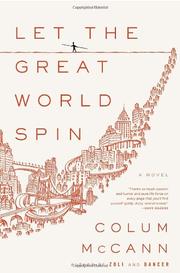
After The friend, read Interior Chinatown, a novel formatted as a screenplay about an actor trapped in the role of Generic Asian Man. It is the shortest book here and it establishes early that this award will hand its top fiction prize to something that barely looks like a novel. Then Let the great world spin, which orbits the man who walked a wire between the towers in 1974 and tells New York through a dozen lives that barely touch — a conventional book after two unconventional ones, and the best demonstration of the linked-narrative structure the award keeps rewarding.
The contemporary core
Read Salvage the Bones before Sing, Unburied, Sing. The first covers twelve days in a poor Mississippi family's life as Hurricane Katrina approaches, narrated by a pregnant fifteen-year-old; the second is a road trip to a Mississippi prison with two ghosts riding along. Taken back to back, Jesmyn Ward's two wins make the award's judgement look unusually consistent, and she is the only living writer holding two fiction prizes.
The Shipping News asks you to get used to Annie Proulx's clipped, half-verbless sentences, which are the reason it took both this award and the Pulitzer in one cycle. The Corrections — a Midwestern family assembled for one last Christmas — is long, comic and cruel, and the natural step up before the postwar novels.
The postwar canon
Invisible Man is the award's most important early choice and still the one to read first from that era; the prologue alone reorganises what you expect a novel to do. The Moviegoer was a famous upset, a first novel from a small publisher beating the era's giants, and it is a very short book about a very large idea. Herzog gives you Saul Bellow, who won the fiction award three times, in his funniest and least dated mode.
The books the judges knew would cause trouble
Finish here. Gravity's Rainbow is the hard wall. Sabbath's Theater follows an ageing, obscene puppeteer who refuses every consolation offered to him; it was Philip Roth's own favourite of his books and is by a distance his most offensive, which makes it a clean test of whether a writers' panel rewards craft independent of likeability. Trust Exercise spends a third of its length inside a 1980s performing-arts high school and then produces a second section that reads the first one back as a lie. Reviewers divided completely over it, and it is the right last stop precisely because the argument about it has not closed.
Follow the full ordered path here: National Book Award Winners: Where to Start with the Fiction Winners.