The Nobel Prize in Literature: Which Laureates to Read First, and in What Order
The Nobel is awarded to a writer, not a book — for a whole body of work, in Alfred Nobel's phrase 'in an ideal direction' — which is why a laureate list is useless as a reading list until someone chooses the right door into each writer. That is what this path does. It is also worth knowing what the prize has missed: no Tolstoy, no Joyce, no Woolf, no Borges, no Nabokov, no Achebe, and a century of heavy weighting toward Europe. The Swedish Academy suspended the award entirely in 2018 after a sexual-assault and leak scandal and gave two the following year, one of them contested on political grounds. Read here by difficulty: short novels by major laureates, then modern laureates you can enter anywhere, then the ones with a reputation for difficulty, then the laureates almost nobody reads now.
Short Books, Major Laureates
BeginnerMeet three laureates in under 200 pages each, and establish that a Nobel writer is not automatically a difficult one.
▸ Study plan for this stage
Pace: Three to four weeks for all three. The Old Man and the Sea is an afternoon. Disgrace is around 220 pages and reads in three or four sittings. Blindness is the longest and needs a fortnight — budget the first twenty pages as acclimatisation to the punctuation rather than as reading proper.
- That the Nobel is awarded to a writer for a body of work rather than to a book, which is why every stage of this path is really about choosing a door
- The rare exception in Hemingway's case, where the Academy named The Old Man and the Sea in the citation — worth knowing because it almost never happens
- Hemingway's iceberg method: declarative sentences, omitted interiority, and meaning carried by what is left out
- Coetzee's flat present-tense narration in Disgrace, which withholds authorial judgement on David Lurie completely and leaves the reader to supply it
- Post-apartheid South Africa as the setting rather than the subject, and the novel's refusal to resolve what happens on the farm into a moral lesson
- Saramago's punctuation: no quotation marks, dialogue run into paragraphs, speakers marked only by capitals — an obstacle for about twenty pages and then invisible
- Blindness as allegory that declines to name its allegory, with no character given a proper name at all
- The general principle this stage establishes: a Nobel writer is not automatically a difficult one, and the difficulty when it comes is usually technical rather than intellectual
- Hemingway leaves almost everything out. Take one page of The Old Man and the Sea and say what is being withheld and how you know it is there.
- Coetzee never tells you what to think of Lurie. What does the novel's refusal cost the reader, and is that cost the point?
- What happens on Lucy's farm and what does the novel decline to say about it? Notice how much of your reading is your own inference.
- Saramago's punctuation is the whole difficulty of Blindness. After the first fifty pages, what is it doing that ordinary punctuation would not?
- No one in Blindness is named. What does that gain, and what does it prevent?
- Read The Old Man and the Sea in one sitting, then rewrite one paragraph adding the interiority Hemingway removed. The result should be worse, and seeing why is the exercise.
- Write 200 words stating the case that Lurie is treated sympathetically by Disgrace, then 200 words stating the case that he is not. Cite scenes for both.
- Push through the first thirty pages of Blindness without stopping, even if it feels wrong. Then write one sentence on when the punctuation stopped registering.
- For each of the three, write down in one line what a citation for the whole writer might say. You are practising the distinction between a book and a body of work.
Next up: You now know that the prize's difficulty is usually technique rather than obscurity, which lets you read four more recent laureates without treating any of them as an examination.
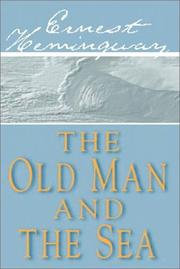
An old fisherman, a marlin, and the sea. The Academy cited it by name in Hemingway's award, which almost never happens, and it can be read in an afternoon — the ideal first step into a prize that otherwise looks forbidding.
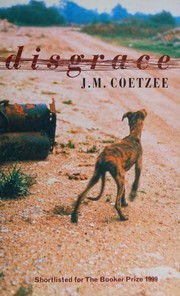
A South African professor loses his job over an affair and retreats to his daughter's farm. Cold, exact and short, and the best introduction to the Nobel's modern taste for moral discomfort delivered without commentary.

An epidemic of white blindness, told without quotation marks and with almost no full stops where you expect them. Read it third: the punctuation is the only difficulty, it takes about twenty pages to absorb, and doing so prepares you for every stylistic experiment later on this path.
Modern Laureates You Can Enter Anywhere
IntermediateRead four laureates from the last fifty years through their most approachable major novel, and get a feel for how wide the prize's geography has become.
▸ Study plan for this stage
Pace: Six to eight weeks. Never Let Me Go and Human Acts are both short and quick to read but slow to recover from; separate them. Song of Solomon takes two weeks at 30 pages a day. Snow is the longest and needs two to three. Keep Human Acts last for the reason given.
- Ishiguro's withheld information as structure: Never Let Me Go tells you what the children are for by degrees, and the flat, polite narration is what makes it bearable
- Kathy's retrospective voice, which normalises the situation because she has never known another — the technique the whole novel rests on
- Song of Solomon as Morrison's most conventionally plotted novel: a journey south, a family secret, a name to be recovered, which is why it is the right first Morrison rather than Beloved
- Flight as Morrison's organising image, from the opening scene onward, and the folk material she builds the ending on
- Snow's political situation — a poet returning from exile to a snowbound border town, headscarf bans, suicides, a coup staged in a theatre — and its layered narrator
- Why Pamuk's award was contentious inside Turkey, which the novel itself explains better than any commentary
- Han Kang's chain of narrators in Human Acts, including one who is dead, and the 1980 Gwangju uprising as the material rather than the backdrop
- That the technique in Human Acts is simple and the material is not — which is the reason for its placement at the end of the stage
- When did you understand what Hailsham is, and when does Kathy? What is the gap between those two moments doing?
- Song of Solomon ends on an image of flight. Is it triumph, escape or abandonment? Argue from the folk song the novel quotes.
- Pamuk gives Snow a narrator who is himself a character. What does that frame let the novel do with the political material?
- Snow presents the headscarf question through several irreconcilable characters. Can you state each position in its own terms without ranking them?
- Human Acts is narrated by many voices including a corpse. What does each voice know that the others cannot, and why is that the right form for this subject?
- Mark the point in Never Let Me Go where you first knew, and reread the twenty pages before it. Ishiguro will have told you three times already.
- Trace the Sugarman song through Song of Solomon from first appearance to last, writing down what it means at each occurrence.
- For Snow, list the political positions the novel presents and write one sentence each in that character's own voice. Do not rank them; the exercise is to hold them simultaneously.
- After Human Acts, write 300 words on why Han Kang uses a chain of narrators rather than one. Then leave a few days before starting the next stage.
Next up: Having read seven laureates without meeting a genuinely hard book, you are in a position to test which of the famously difficult ones are actually difficult.
Three children at an English boarding school slowly work out what they are for. The gentlest possible entry to a laureate — plain sentences, withheld information — and a useful bridge, since Ishiguro also won the Booker and appears on that path too.

A Michigan man travels south to find out where his family came from. Morrison's most conventionally plotted novel and the right first Morrison, rather than the more famous and much harder Beloved.
A poet returns from exile to a snowbound Turkish border town where girls are killing themselves over the headscarf ban. Pamuk's most political and most readable novel, and the one that best explains why his award was contentious inside Turkey.
The 1980 Gwangju uprising and its aftermath, told through a chain of narrators including a corpse. The most recent laureate here and the most emotionally punishing book in this stage, so read it last — the technique is simple, the material is not.
The Ones with a Reputation
IntermediateTake on three laureates whose reputation for difficulty is partly earned and partly a myth, and learn which is which.
▸ Study plan for this stage
Pace: Five to six weeks. One Hundred Years of Solitude runs past 400 pages and takes two to three weeks — the family tree is the pacing device. Snow Country is under 200 pages and should take a week despite being short, because it needs rereading. Cat and Mouse is a novella and takes a few evenings. Read
- That the difficulty of One Hundred Years of Solitude is bookkeeping rather than prose: seven generations of Buendías sharing about four names between them
- Macondo's cyclical time, in which events recur across generations with variations, and the way repetition is the novel's argument rather than a device
- Magical realism as narration rather than as content — the flat, unastonished tone applied to impossible events is the whole technique
- Kawabata's opposite problem: the emotional content of Snow Country sits in the gaps between images, so the sentences are easy and the book is not
- Shimamura's refusal to commit and Komako's investment in him, an asymmetry the novel never states outright and never resolves
- The hot-spring town and the seasonal structure, where landscape carries what the characters will not say
- Grass's Danzig setting and the shame-comedy of Mahlke's Adam's apple and the stolen medal — a small object standing for an entire national self-deception
- That two of the three difficulties here are technical and locally solvable, which is the lesson of the stage: reputation and difficulty are not the same measure
- Which parts of One Hundred Years of Solitude did you have to reread, and were they hard or merely confusing? Be precise about the difference.
- The Buendías repeat their ancestors. Is the novel arguing that history repeats, or something more specific about this family?
- In Snow Country, what does Shimamura want? The novel will not say, so answer from what he does.
- Kawabata leaves emotion in the gaps. Find one image that carries a feeling nobody states, and say how it does it.
- What does the medal mean to Mahlke in Cat and Mouse, and what does the narrator's account of him reveal about the narrator?
- Keep the Buendía family tree open from page one and add to it yourself rather than consulting a printed one. Drawing it is what makes the novel easy.
- Read Snow Country twice in the same week — once quickly, once at a page a minute. Write 200 words on what the second reading gave you.
- Set a page of García Márquez beside a page of Kawabata and write 300 words on the two opposite ways of making a reader work.
- Note that our catalogue's record for One Hundred Years of Solitude credits its translator alongside the author — the book is the standard English translation of García Márquez's novel. Grass's best-known book is The Tin Drum, but the reliably catalogued volume here is this novella from the same Danzig sequence; if you want The Tin Drum afterwards, buy it separately and check you are getting the co
Next up: With the reputations tested against the books, you can take on the harder question the last stage poses: whether the Academy's century of judgements holds up at all.

A hundred years of the Buendía family in Macondo, with a cast who share about four names between them. The difficulty is entirely bookkeeping, not prose — keep the family tree open and it reads as easily as anything on this path.

A Tokyo dilettante visits a hot-spring town and a geisha he will not commit to. Very short and genuinely hard, because Kawabata leaves the emotional content in the gaps between images rather than in the sentences — the opposite problem from García Márquez, and worth meeting straight after it.

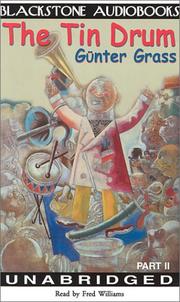
A schoolboy in wartime Danzig, his conspicuous Adam's apple, and a stolen medal. Grass's famous novel is The Tin Drum, but the copy this catalogue reliably returns for it is a part-volume rather than the whole book, and this novella from the same Danzig sequence is the better-served and much shorter way into the same author and the same city.
The Laureates Nobody Reads Now
IntermediateFinish with three winners who were enormous in their day and have largely vanished, and form a view on whether the Academy's judgement holds up over a century.
▸ Study plan for this stage
Pace: Eight to ten weeks. Independent People is long and demanding — three to four weeks at 25 pages a day. The Bridal Wreath is the first third of a trilogy and takes two to three. Molloy is short but is the slowest reading on the entire path: give it two to three weeks and do not try to read it quickly.
- Bjartur of Summerhouses as an argument rather than a character: a sheep farmer whose absolute refusal to be indebted to anyone destroys everyone he loves, presented without authorial verdict
- Independent People's long absence from print in English and its subsequent recovery, which is the standard case that the Nobel preserves writers the market would otherwise lose
- The Icelandic saga tradition Laxness is writing inside and against, which explains the flatness with which catastrophes are reported
- Kristin Lavransdatter as the work the Academy actually cited — a trilogy, of which this volume is the first third, so it should not be read as a standalone novel
- Fourteenth-century Norway rendered as a lived material world rather than as period colour, which is Undset's distinctive achievement
- Molloy's two-part structure: one narrator crawling toward his mother, one sent to find him, in long unbroken blocks with the second half mirroring the first
- Beckett's comedy, which readers of the reputation do not expect and which is the thing that makes the book readable at all
- The broader question the stage exists to raise: with no Tolstoy, no Joyce, no Woolf, no Borges, no Nabokov and no Achebe on the list, and a century of heavy European weighting, what exactly does the prize track?
- Bjartur's independence ruins his family. Is Laxness condemning the ideal or the man? The novel is careful not to say, so build the case both ways.
- Independent People was out of print in English for decades. Does reading it now support the claim that the prize rescues writers, or would you have judged it a period piece without the medal?
- The Bridal Wreath is a third of the cited work. What does reading only the first volume let you judge, and what does it not?
- Molloy has two narrators. What is the relationship between the halves, and does the second explain the first or repeat it?
- Given the list's famous omissions and its European weighting, what would you say the Nobel actually measures? Answer from the eleven laureates you have read rather than from the controversy.
- Read the first fifty pages of Independent People and write down Bjartur's stated principle in his own words. Then check it against his conduct every hundred pages.
- Read Molloy in short daily stretches — ten pages is enough — and keep a one-line note of anything that made you laugh. The list will be longer than you expect and it is the way into the book.
- Decide in writing whether to continue with the Kristin Lavransdatter trilogy, and give your reasons. Most English editions still carry the older translated title The Bridal Wreath on the cover of this first volume.
- Write 500 words assessing the Nobel's judgement using only the books on this path: which laureates you would defend, which you would not, and what the omissions suggest. Note in passing that the Academy suspended the award in 2018 following a scandal and gave two the next year, one of them contested — facts worth having, and separate from any judgement of the books.
Next up: This is the end of the path. The natural next move is to pick the laureate here you most want more of and read their major work rather than their entry point — Beloved, The Tin Drum, or the rest of the Kristin Lavransdatter trilogy.
An Icelandic sheep farmer ruins everyone around him in pursuit of owing nothing to anyone. Out of print in English for decades and now the standard argument that the Nobel does find writers the market would otherwise have lost.
The first volume of the Kristin Lavransdatter trilogy, set in fourteenth-century Norway. Note that most English catalogue records still file it under its older translated title The Bridal Wreath, so expect that name on the cover; the trilogy is the work the Academy actually cited, so treat this as the opening third rather than a standalone novel.

Two narrators, one crawling, one searching, in two long unbroken parts. The hardest book on this path and the right endpoint: if you can read Molloy for pleasure, the rest of the laureate list holds no terrors.
Discussion
Keep reading
Paths that share books, cover the same subject, or open a related topic.