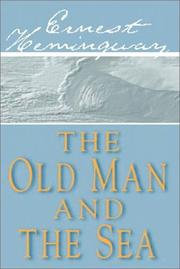
Start with The Old Man and the Sea. An old fisherman, a marlin, and the sea, in a book you can read in an afternoon — and the rare case where the Swedish Academy cited a single title by name in the award, which almost never happens. It is the ideal first step into a prize that otherwise looks forbidding from the outside.
The laureate who will defeat you is Samuel Beckett, and specifically Molloy: two narrators, one crawling, one searching, in two long unbroken parts with almost nothing to hold onto. It is the right endpoint for this path and the worst possible entry to it. Snow Country. is the other trap — very short, and genuinely hard, because Yasunari Kawabata leaves the emotional content in the gaps between images rather than in the sentences.
The prize goes to a writer, not a book
That is the whole problem with laureate lists. The Nobel is awarded for a body of work, in Alfred Nobel's phrase for writing in an ideal direction, which means a list of laureates tells you nothing about where to enter any of them. Choosing the right door per writer is the only thing that makes the list usable, and it is what this path does.
It is also worth knowing what the prize has missed. No Tolstoy, no Joyce, no Woolf, no Borges, no Nabokov, no Achebe, and a century of heavy weighting toward Europe. The Academy suspended the award entirely in 2018 following a sexual-assault and leak scandal within its own ranks, then gave two the following year, one of which was contested on political grounds over Peter Handke's public statements about the Yugoslav wars. The prize's judgement is a hundred-year record of a small committee, and reading it is more interesting if you hold that in view.
Short books, major laureates
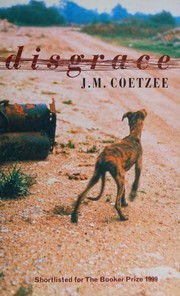
After Hemingway, read Disgrace: a South African professor loses his job over an affair and retreats to his daughter's farm. Cold, exact, short, and the best introduction to the prize's modern taste for moral discomfort delivered without commentary. Then Blindness, an epidemic of white blindness told without quotation marks and with punctuation that ignores where sentences usually stop. That is the only difficulty, it takes about twenty pages to absorb, and absorbing it prepares you for harder books later.
Modern laureates you can enter anywhere
Never Let Me Go is the gentlest possible entry to a laureate — three children at an English boarding school slowly working out what they are for, in plain sentences that withhold everything. Kazuo Ishiguro also won the Booker, so this is the natural crossing point between the two lists. Song of Solomon is Toni Morrison's most conventionally plotted novel and the right first Morrison, ahead of the more famous and much harder Beloved. Snow sends a poet back from exile to a snowbound Turkish border town, and is Orhan Pamuk's most political and most readable book. Human Acts covers the 1980 Gwangju uprising through a chain of narrators including a corpse; Han Kang's technique is simple and the material is not, so read it last in this group.
The ones with a reputation
One Hundred Years of Solitude has a reputation for difficulty that is entirely bookkeeping — the Buendía family share about four names between them, and the prose is as easy as anything on this path once you keep the family tree open. One warning about the record: our catalogue files this book under its translator, Gregory Rabassa. The author is Gabriel García Márquez, and Rabassa's English version is the one almost every reader means.
Snow Country. follows, for the reasons above. Then Cat and Mouse, a schoolboy in wartime Danzig, his conspicuous Adam's apple and a stolen medal. Günter Grass's famous novel is The Tin Drum, and the honest position is that our catalogue only reliably returns a part-volume of it — that gap is ours, and this short novel is a fair substitute rather than a first choice.
The laureates nobody reads now
Independent people follows an Icelandic sheep farmer who ruins everyone around him in pursuit of owing nothing to anyone; it was out of print in English for decades and is now the standard argument that the Nobel rescues writers the market would have lost. The bridal wreath is volume one of three — the opening book of Sigrid Undset's Kristin Lavransdatter trilogy, set in fourteenth-century Norway, and sold under several different English titles, so check what you are buying. Finish with Molloy. If you can read it for pleasure, the rest of the laureate list holds no terrors.
For laureates read alongside their national traditions rather than one by one, see world literature.
Follow the full ordered path here: The Nobel Prize in Literature: Which Laureates to Read First, and in What Order.