Dystopian Fiction: The Best Novels to Read, in Order
Dystopian fiction is one of literature's most powerful lenses for examining power, freedom, and what it means to be human. This curriculum begins with the most accessible and iconic classics, then moves through the genre's philosophical and stylistic depths, before arriving at modern masterworks that expand who gets to imagine — and survive — the dark future.
The Cornerstones
BeginnerEstablish the foundational vocabulary of dystopian fiction — surveillance, propaganda, totalitarianism, and the crushed individual — through the two most iconic novels in the genre.
▸ Study plan for this stage
Pace: 8–10 weeks, ~40–50 pages/day. Allocate 4–5 weeks for *Brave New World* (~300 pages), then 4–5 weeks for *Nineteen Eighty-Four* (~328 pages), with 1 week for review and synthesis.
- Surveillance and control mechanisms: how *1984* uses telescreens and the Thought Police versus *Brave New World*'s conditioning and psychological manipulation
- Propaganda and language as tools of power: Newspeak in *1984* and the use of slogans, entertainment, and soma in *Brave New World*
- Totalitarianism and its architecture: the Party's absolute dominion in *1984* versus the World State's seemingly benevolent but inescapable system
- The crushed individual: how Winston Smith and the citizens of the World State lose agency, identity, and the capacity for authentic thought and emotion
- Pleasure versus pain as control: *Brave New World*'s use of comfort and happiness to suppress dissent versus *1984*'s use of fear and torture
- The role of truth and reality: how both regimes distort, deny, or redefine truth to maintain power
- Resistance and its futility: the doomed attempts at rebellion in both novels and what they reveal about power structures
- How do the surveillance systems in *1984* (telescreens, Thought Police) and *Brave New World* (conditioning, social pressure) differ in method but achieve similar results of control?
- What is Newspeak, and how does it function as a tool of totalitarian control in *1984*? How does *Brave New World* achieve similar linguistic control through different means?
- Compare the role of pleasure and pain in maintaining power in each novel. Why might Huxley's approach be considered more insidious than Orwell's?
- What is the significance of Winston Smith's relationship with Julia, and how does it illustrate the Party's power to crush individual desire and autonomy?
- How do both novels depict the destruction of the individual self? What specific scenes or moments best illustrate this process?
- In what ways do the endings of both novels suggest that resistance to totalitarianism is futile, and what does this imply about the authors' views on human nature and power?
- Create a comparison chart mapping control mechanisms in *Brave New World* and *1984*: list each method of control (e.g., surveillance, propaganda, drugs, punishment) and note how each regime deploys it.
- Annotate 3–4 key passages from each novel that best illustrate the 'crushed individual.' Write a 200-word reflection on what each passage reveals about the author's vision of totalitarianism.
- Invent your own dystopian slogan or piece of propaganda in the style of either the World State or the Party. Explain the psychological mechanism it exploits and how it serves the regime's interests.
- Write a dialogue between Winston Smith and a citizen of the World State (e.g., Lenina or Bernard). What would they say to each other about freedom, happiness, and control? What would they fail to understand about each other's world?
- Create a visual timeline or infographic showing the stages of control in *1984* (from Winston's initial doubts to his final acceptance). Do the same for *Brave New World*, and note where the trajectories diverge.
- Analyze a real-world example of propaganda or surveillance from the past century. Which novel does it more closely resemble, and why? Write a 300-word essay grounding your analysis in specific textual evidence.
Next up: This stage establishes the foundational vocabulary and thematic architecture of dystopian fiction, preparing you to explore how later dystopian works either reinforce, subvert, or complicate these core patterns of control, resistance, and the fate of the individual.
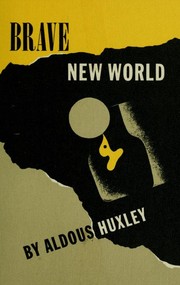
Start here because Huxley's world of pleasure-as-control is immediately vivid and readable, and introduces the idea that dystopia can seduce rather than terrorize — a concept that echoes through every later book on this list.

Read second so Orwell's terror-as-control stands in sharp contrast to Huxley's comfort-as-control; together these two novels define the two poles of the genre and give the reader a complete conceptual foundation.
The Classic Canon
BeginnerBroaden the reader's sense of dystopian storytelling across different settings, voices, and fears — from Cold War allegory to feminist nightmare — while staying with highly accessible prose.
▸ Study plan for this stage
Pace: 8–10 weeks, ~40–50 pages/day (approximately 2–3 weeks per book with reflection time)
- Dystopias emerge from exaggerated versions of real-world fears: censorship and conformity (Fahrenheit 451), gender oppression and reproductive control (The Handmaid's Tale), and the collapse of civilization into tribalism (Lord of the Flies)
- The role of institutions and power structures in creating and maintaining dystopian systems—whether state propaganda, theocratic control, or the absence of governing authority
- How dystopian fiction uses individual protagonists (Montag, Offred, Ralph) to expose systemic injustice and explore the limits of resistance
- The relationship between knowledge, literacy, and freedom—what characters know, what they're forbidden to know, and how information shapes their worlds
- Dystopian settings as warnings: understanding how each author extrapolates from their own historical moment (Cold War paranoia, 1980s feminism, post-WWII anxieties about human nature)
- The psychological and emotional toll of living under dystopian conditions: isolation, fear, complicity, and the struggle to maintain identity and hope
- Narrative perspective as a tool: how first-person (Offred), third-person (Montag, Ralph) narration shapes reader empathy and understanding of dystopian worlds
- How does each author use a specific social fear or historical anxiety to construct their dystopian world, and what does this reveal about the time period in which the book was written?
- Compare the role of institutions in Fahrenheit 451 and The Handmaid's Tale: how do centralized systems of control operate differently, and what makes each effective or vulnerable?
- In Lord of the Flies, how does the absence of external authority create a dystopia? What does this suggest about human nature compared to the state-imposed dystopias in the other two books?
- What is the relationship between knowledge and power in each novel? How do characters gain, lose, or hide information, and what are the consequences?
- How do the protagonists (Montag, Offred, Ralph) respond differently to their dystopian circumstances, and what do their choices reveal about the possibilities for individual agency under oppression?
- What role does language, communication, or silence play in maintaining or resisting the dystopian order in each book?
- Create a 'fear map' for each book: identify the core social anxiety the author is exploring (e.g., loss of critical thinking, loss of bodily autonomy, loss of civilization) and trace how it manifests in the world-building, rules, and character experiences
- Write a comparative character study of Montag, Offred, and Ralph: how does each character's background, values, and circumstances shape their response to dystopia? Which character's resistance feels most possible or impossible to you, and why?
- Identify and annotate 3–5 key passages from each book that reveal the author's critique of real-world systems. Write a brief analysis of what each passage suggests about the author's historical moment
- Design a 'propaganda artifact' from one of the three dystopian worlds (e.g., a government poster from Fahrenheit 451, a Gilead pamphlet from The Handmaid's Tale, a 'law' from the boys' island in Lord of the Flies). Explain how it reinforces the dystopian system
- Create a dialogue between two characters from different books (e.g., Montag and Offred, or Offred and Ralph) discussing their respective worlds. What would they recognize in each other's experiences? What would surprise them?
- Write a reflective essay (1,500–2,000 words) comparing how each author uses individual resistance or complicity to critique their dystopian system. Which form of resistance feels most realistic or necessary to you?
Next up: This stage establishes the foundational vocabulary and thematic patterns of dystopian fiction—oppressive systems, individual resistance, and real-world anxieties made strange—preparing you to engage with more complex, experimental, or philosophically demanding dystopian narratives in the next stage.
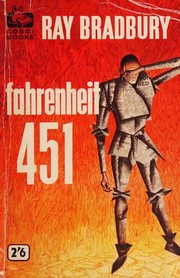
A natural next step: Bradbury's lyrical, fast-moving story about book-burning extends Orwell's theme of erased truth into a specifically American, media-saturated context.
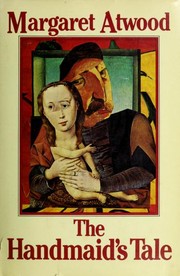
Atwood shifts the axis of oppression to gender and the body, demonstrating that dystopia is not a single story — and her intimate first-person voice makes the horror deeply personal.
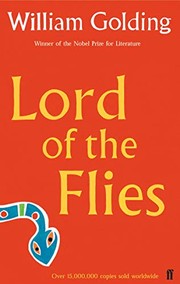
By stripping away the state entirely, Golding asks whether dystopia is imposed from outside or emerges from human nature itself — a philosophical question that deepens everything read so far.
Deeper Architecture
IntermediateEngage with more structurally and philosophically complex dystopias that demand more from the reader — longer narratives, unreliable perspectives, and darker moral ambiguity.
▸ Study plan for this stage
Pace: 8–10 weeks, ~40–50 pages/day (accounting for re-reading and philosophical passages). Allocate 2–3 weeks per book to allow for reflection and note-taking on complex themes.
- Unreliable narration and subjective reality: how first-person perspectives in We and A Clockwork Orange distort truth and challenge reader interpretation
- State control and psychological manipulation: the One State's mathematical conditioning, Ludovico's Technique, and systems of dehumanization
- Language as a tool of oppression and resistance: Newspeak-adjacent linguistic control in We, nadsat slang in A Clockwork Orange as both weapon and identity
- Moral ambiguity and the absence of redemption: the collapse of traditional ethics in post-apocalyptic and totalitarian settings
- Narrative form as meaning: how McCarthy's sparse, fragmented prose mirrors the degradation of civilization in The Road
- The individual versus the collective: competing visions of human autonomy, free will, and the cost of conformity
- Philosophical nihilism and existential despair: how these texts grapple with meaninglessness, survival, and the value of human connection
- How does D-503's unreliable narration in We shape your understanding of the One State, and what does his perspective reveal about the nature of indoctrination?
- Compare the mechanisms of control in We (the One State's mathematical society) and A Clockwork Orange (Ludovico's Technique). Which is more philosophically troubling and why?
- What is Burgess's argument about free will versus imposed goodness in A Clockwork Orange, and how does the novel's ending complicate this argument?
- How does McCarthy's minimalist prose style in The Road function as a narrative choice, and what does it communicate about the world and the characters' inner lives?
- In The Road, what role does the father-son relationship play in a world stripped of meaning, morality, and hope? What does their bond suggest about human resilience?
- Across all three novels, how do the authors use language and communication (or its breakdown) to explore themes of control, resistance, and humanity?
- Close-read a passage from We (e.g., D-503's first entries) and annotate it for signs of his indoctrination, contradictions, and emerging doubt. Then reread it after finishing the novel to track how your interpretation shifts.
- Create a comparative chart mapping the methods of control in We and A Clockwork Orange: who controls, how they control, what resistance looks like, and what the cost of rebellion is in each system.
- Write a 2–3 page essay analyzing nadsat slang in A Clockwork Orange: How does Burgess use language to make Alex simultaneously sympathetic and repugnant? What does the reader's gradual understanding of the slang mirror about complicity?
- Rewrite a scene from The Road in McCarthy's sparse style, then rewrite the same scene in ornate, emotionally explicit prose. Reflect on what each style gains and loses—what does McCarthy's choice sacrifice and preserve?
- Construct a philosophical dialogue between D-503 (We), Alex (A Clockwork Orange), and the father (The Road) on the question: 'Is it better to be free and evil, controlled and good, or alive and empty?' Use direct quotes from each text.
- Track the concept of 'goodness' across all three novels: How is it defined, imposed, rejected, or rendered meaningless in each? Write a synthesis essay on what these three texts collectively argue about morality in dystopia.
Next up: This stage equips you with the critical tools to recognize how dystopian fiction weaponizes narrative form, language, and philosophy to interrogate power—preparing you to engage with even more experimental, metafictional, or genre-hybrid dystopias that deconstruct the form itself.
Written before Orwell and Huxley, Zamyatin's novel is the direct ancestor of both; reading it now reveals the genre's true origin and rewards the reader who already knows the descendants.
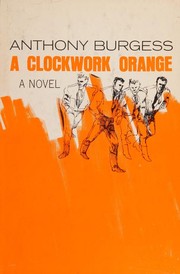
Burgess forces the reader to inhabit a violent protagonist through invented slang, making the question of free will vs. social conditioning viscerally uncomfortable — a major leap in narrative difficulty and moral complexity.
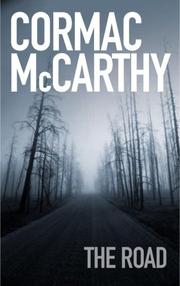
McCarthy's post-apocalyptic masterpiece strips dystopia down to its barest emotional core — survival, love, and meaning — and its stark, punctuation-free prose is a formal challenge that rewards careful reading.
Modern Visions
ExpertEncounter contemporary dystopian fiction that expands the genre's boundaries — incorporating race, climate, capitalism, and non-Western perspectives — and see how living authors are redefining the dark future.
▸ Study plan for this stage
Pace: 8–10 weeks, ~40–50 pages/day (with reflection days built in)
- Bioethics and dehumanization: How dystopias expose the commodification of human bodies and lives (Never Let Me Go's organ donors, The Power's gender-based exploitation, Station Eleven's pandemic-driven social collapse)
- Power structures and their inversion: Examining how dystopias reimagine hierarchies—gender reversals in The Power, class systems in Never Let Me Go, and the fragility of institutional power in Station Eleven
- Intimacy and connection as resistance: The role of personal relationships, memory, and art as counterforces to systemic dehumanization across all three novels
- Slow-burn dystopia vs. sudden collapse: Contrasting Ishiguro's normalized horror with Mandel's catastrophic rupture to understand different modes of dystopian narrative
- Non-Western and intersectional perspectives: How Alderman's feminist reframing and Mandel's attention to marginalized voices expand dystopian fiction beyond Western, male-centered narratives
- Ambiguity and moral complexity: Moving beyond good-vs-evil binaries to embrace the ethical gray zones these authors inhabit
- The role of art, culture, and memory in dystopia: How Station Eleven and Never Let Me Go use Shakespearean theater and music as anchors for meaning-making
- Climate, infrastructure, and survival: Station Eleven's engagement with pandemic and ecological fragility as contemporary dystopian concerns
- How does Ishiguro's portrayal of Kathy and her peers' acceptance of their fate differ from traditional dystopian resistance narratives, and what does this reveal about normalized dehumanization?
- In The Power, how does Alderman's gender reversal function as more than a thought experiment—what specific systems of oppression does she illuminate through this inversion?
- Compare the role of memory in Never Let Me Go and Station Eleven: how do characters use the past to maintain humanity in the face of dystopian collapse?
- What is the significance of the Survival is Insufficient traveling theater troupe in Station Eleven, and how does art function as a form of resistance or meaning-making in post-collapse society?
- How do these three novels expand the definition of dystopia beyond totalitarian government control to include bioethical, gender-based, and ecological threats?
- Which novel presents the most hopeful vision of human resilience, and on what textual evidence do you base this assessment?
- Character empathy mapping: Create detailed profiles of Kathy (Never Let Me Go), Allie/Roxy (The Power), and Kirsten (Station Eleven), tracking how each character's agency shifts across their respective narratives. Annotate moments where they resist or accept their dystopian circumstances.
- Comparative power analysis: Chart the power structures in each novel (biological/medical in Never Let Me Go, gender-based in The Power, social/institutional in Station Eleven). Identify who holds power, how it's maintained, and what happens when it destabilizes.
- Close reading: Select one pivotal scene from each book (e.g., Kathy's first 'donation' in Never Let Me Go, the initial gender shift in The Power, the flu's outbreak in Station Eleven) and write a 2–3 page analysis of how the author uses language, pacing, and perspective to normalize or dramatize dystopian horror.
- Artistic response: Create a piece of art, music, or writing inspired by one of the novels—mirroring how characters in these books use creativity to process trauma. Write a brief reflection on what this exercise revealed about the role of art in dystopian contexts.
- Debate preparation: Prepare arguments for a structured debate on the question: 'Which novel presents the most realistic vision of contemporary dystopia?' Use textual evidence from all three books.
- Thematic synthesis essay: Write a 4–5 page essay comparing how Never Let Me Go, The Power, and Station Eleven each define 'humanity' in the face of systemic dehumanization. What do these definitions have in common, and where do they diverge?
Next up: This stage equips you with a sophisticated understanding of how contemporary authors are expanding dystopian fiction beyond Cold War anxieties to address urgent present-day crises—preparing you to engage with even more experimental, genre-blending, or globally diverse dystopian works in the next stage.

Ishiguro's quietly devastating novel withholds its dystopian premise almost entirely, forcing the reader to construct the horror from implication — a masterclass in restraint that redefines what the genre can do.
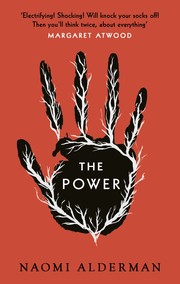
A direct, subversive conversation with Atwood's Handmaid's Tale, Alderman inverts gendered power to ask whether the problem is who holds power or power itself — essential reading for any serious student of the genre.

Mandel's non-linear, elegiac post-collapse novel closes the curriculum by asking what is worth preserving from civilization — a hopeful, humane counterpoint that proves dystopian fiction is ultimately about what we value, not just what we fear.
Discussion
Keep reading
Paths that share books, cover the same subject, or open a related topic.