Start with Half of a Yellow Sun. Biafra's secession and the war that followed, seen through a houseboy, a professor's mistress and an English writer — an enormous subject handled with completely transparent storytelling. It later took a public vote for the best winner in the prize's history, and it is the book most likely to send you straight to a second.
The winner that will defeat you if you start there is A Girl Is a Half-formed Thing, written in a broken, pre-verbal first person that puts you inside a mind rather than beside it. The difficulty is concentrated in the first twenty pages and it does resolve, but it is a terrible introduction to a prize whose range is much wider than that. We need to talk about Kevin is the other one to postpone — not for difficulty but for discomfort, since it is a mother writing to her estranged husband about the son who murdered his classmates.
Why this prize exists
The Women's Prize was founded after the 1991 Booker shortlist contained no women at all, and it has run every year since 1996 for a full-length novel written in English by a woman of any nationality and published in the UK. It has changed sponsor repeatedly — Orange, then Baileys, then a trust funded by private donors — which is why its winners sit in catalogues under three different prize names and why a complete list is oddly hard to find.
It has been argued over since it started. Some critics hold that a single-sex prize is condescending to the writers it honours; the prize's answer has always been the 1991 shortlist and the pattern it represented. More recently the eligibility of trans women was disputed, and the prize resolved it by stating that it is open to all women. Both arguments are part of its public record and neither is settled by pointing at the winners.
Start here
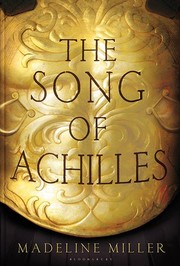
After Adichie, read An American Marriage: a newlywed husband is wrongly imprisoned and the marriage has to survive it, told in alternating voices and letters. It is the most purely readable book here and it sets up the prize's recurring interest in how large public forces land inside one household. Then The Song of Achilles, the Iliad retold from Patroclus's side — a first novel that took ten years to write and became a phenomenon years after winning, and proof that this prize will reward a straightforwardly enjoyable book in a way the Booker rarely does.
The ones everyone is talking about
Piranesi is short and strange: a man lives in an endless house of statues and tides, keeping a journal, and does not know he is a prisoner. It is the gentlest introduction to an unreliable narrator you will find, so read it before The Power, which asks a similar question with far more noise — teenage girls develop the ability to give electric shocks and the world's power structure inverts inside a decade, framed as a historical document written far in the future. Watch that frame closely; it is doing more work than it first appears.
Home Fire relocates Antigone to a British Pakistani family, a radicalised brother and a Home Secretary's son, and it is the clearest statement of what this prize means by moral seriousness. Hamnet tells the death of Shakespeare's son from his wife's point of view without ever naming the playwright — a masterclass in withholding, and a good bridge to the older winners.
The prize's own canon
Small island follows Jamaican migrants and their London landlords in 1948, in four voices that keep correcting each other; it won a best-of-the-decade vote and is the clearest demonstration that this prize found the Windrush generation's fiction early. Bel Canto turns a hostage siege into months of uneasy domesticity around an opera singer, and is worth reading for the tonal control alone. We need to talk about Kevin belongs last in this group: rejected by dozens of publishers, and the point at which the prize stopped being read as a polite alternative.
The difficult and the overlooked
A Girl Is a Half-formed Thing took nine years to find a publisher and was issued by a tiny press behind a bookshop. Read How to Be Both after it — two halves, a Renaissance fresco painter and a grieving modern teenager, printed in both possible orders so different copies begin differently — the same appetite for formal risk, far more playful. Finish with Fugitive Pieces, one of the earliest winners and now largely unread, written by a poet in prose that behaves like poetry, and the best argument on this path that the prize's back catalogue is worth excavating.
For the same decades judged by a very different committee, see the National Book Award path.
Follow the full ordered path here: The Women's Prize for Fiction: The Winners Worth Reading, in Order.