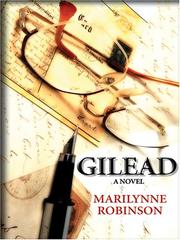
Start with Gilead. An old Iowa preacher writes a letter to the young son he will not live to see grow up; almost nothing happens, and the sentences are the entire reason to read it. That makes it the best possible calibration for a prize that rewards quiet books at least as often as loud ones, and it is short enough that finishing it costs a week rather than a season.
The two that will defeat you if you start there are Beloved and The executioner's song. Toni Morrison's novel is not long, but it withholds its own plot on purpose and rewards a reader who already trusts the prize; Norman Mailer's is a thousand pages of interview transcript submitted and awarded as fiction. Both belong on this path. Neither belongs at the front of it.
What the Pulitzer actually is
Awarded since 1918 to an American author, and shaped by Joseph Pulitzer's own wording asking for a novel dealing with American life — a clause the board has honoured loosely and never abandoned, which is why the winners read like a century-long argument about what America is.
Two structural facts make it unlike any other major fiction prize. A jury proposes three finalists, but a separate board makes the decision and can overrule them outright. And the board can decline to award the prize at all, which it has done eleven times, most explosively in 2012, when three finalists produced no winner and the publishing industry spent the year furious about it. The board also vetoed its own jury over Gravity's Rainbow in 1974. When you read a Pulitzer list you are reading a record of committees, not a ranking of novels.
Short, clear, contemporary
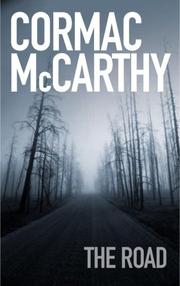
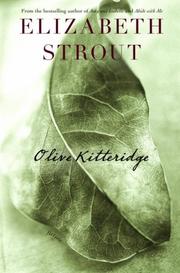
After Gilead, read The Road — a man and a boy walking south through a burnt America, the exact opposite of Robinson's book on the surface and the same book underneath, since both are a father addressing a son about how to be good. Then Olive Kitteridge, thirteen linked stories about a retired Maine schoolteacher who is frequently unkind and never dismissed by her author. It is also a useful piece of prize trivia: the Fiction Pulitzer accepts story collections, which several of its rivals do not.
The American canon
The Age of Innocence was the first Pulitzer awarded to a woman, and worth knowing that the jury had chosen Sinclair Lewis's Main Street before the board substituted Edith Wharton — the overruling habit was there from the beginning. The Grapes of Wrath was banned and burned on publication and given the prize within the year, which tells you how contested the American-life clause has always been. Beloved won after forty-eight writers published an open letter protesting that Morrison had never received a major American award, one of the rare cases where public pressure is part of the visible record.
The big contemporary winners
Read The Underground Railroad directly after Beloved; Colson Whitehead's literalised metaphor is in open conversation with Morrison's novel, and the contrast is the point. The Amazing Adventures of Kavalier & Clay is the most purely enjoyable long winner here — six hundred pages that never feel like work. The Goldfinch is the most divisive winner of the last two decades, sold enormously and dismissed by several prominent critics as a children's book for adults; read it and form your own view, because the disagreement is genuine and unresolved. The Sympathizer is the funniest and most formally controlled of the four, and the one that pushes hardest at the American-life clause by writing American history from outside it.
The deep cuts
Finish with the strange ones. A Confederacy of Dunces won eleven years after its author's suicide, after his mother spent years forcing the manuscript on Walker Percy. The executioner's song is the outer edge of what the prize will accept as fiction and the ancestor of every true-crime narrative since. Lonesome Dove was intended as an anti-Western that would dismantle the myth; readers took it as the greatest Western ever written, and the prize sided with the readers.
For the other side of this argument, the same century read through a different committee, see the Nobel Prize in Literature path.
Follow the full ordered path here: Pulitzer Prize-Winning Novels: The Best Ones to Read, in Order.