Ann Patchett Reading Order: Where to Start
Ann Patchett writes plain, unshowy sentences about people thrown together by accident and obliged to become a family. Start with the two novels that made her reputation, move through the major fiction where the same idea gets tested in different rooms, then go back to the earlier books to see the method forming. The essays close the path by showing the life the novels were built out of.
Start Here
BeginnerMeet Patchett's central subject — the improvised family — in the two novels that best introduce it.
▸ Study plan for this stage
Pace: 4 weeks, ~25 pages a day. Bel Canto (336 pages) in two weeks — its long middle deliberately slows down, so resist skimming it. Then The Dutch House (352 pages) in two more; it is narrated as one long looking-back, and reads best in a few large sittings rather than nightly chapters.
- Patchett's central premise: strangers held in one place long enough to become a family, and the fact that the confinement is always the plot engine
- The plain sentence as a deliberate choice — no verbal display, so that attention goes to what people do to each other rather than to the prose
- Bel Canto's use of translation and opera: two languages people cannot share, and one they can, which is the book's whole argument about how intimacy forms
- The suspended-time structure — a siege, an exile, an unmoving house — that lets Patchett stop the clock and watch relationships instead of events
- Danny and Maeve's parked car outside the Dutch House as Patchett's image for grievance: a story siblings tell each other so often it becomes a place
- First-person retrospection in The Dutch House versus the moving third person of Bel Canto, and what each gains
- Her refusal of villains — even the hostage-takers and the stepmother are given a logic, which is why her endings hurt rather than satisfy
- What actually changes for the hostages and the captors in Bel Canto, and at what point does the reader stop wanting the siege to end?
- How does music do work in Bel Canto that dialogue cannot, and what does that suggest about what Patchett thinks language is for?
- Why is The Dutch House narrated by Danny rather than Maeve, and what does his account systematically fail to see?
- Both novels turn on an exclusion from a home. What does Patchett think a house is, in each case?
- Compare the two endings: what does each refuse the reader, and why is the refusal necessary?
- Note the exact page in Bel Canto where the siege stops feeling like a threat. Write down what changed in the preceding chapter to do it.
- List the improvised family in each novel — who is related by blood, who by circumstance — and mark which bonds survive to the last page.
- Take one page of Patchett's prose and one page of a showier stylist you like; write a paragraph on what her plainness buys her.
- Keep a note of every meal in both books. Patchett stages more turning points over food than anywhere else, and you will want the list later.
Next up: You now know the experiment; the major fiction runs it again in wildly different rooms, which is how you can tell what is premise and what is habit.
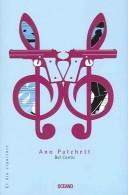
A hostage siege that turns into an opera-loving commune. It is her most famous book and the purest version of her premise: strangers trapped together long enough to love each other.

A brother and sister circling the house they were exiled from, narrated over five decades. The most inviting of her later novels and the best proof that she can hold a reader without a high-concept setup.
The Major Fiction
BeginnerSee the range of settings Patchett runs the same emotional experiment in, from the Amazon to a Michigan cherry orchard.
▸ Study plan for this stage
Pace: 6 weeks, ~25 pages a day. State of Wonder (353 pages) and Commonwealth (322 pages) take about two weeks each; Tom Lake (320 pages) can go faster, and gains from being read in long stretches so the two timelines stay braided.
- The sealed world as a repeatable device: a hostage house, an Amazon research station, a lake theatre company — and how deliberately Patchett builds each one
- State of Wonder as her one true novel of mission and obligation, where the confinement is professional rather than accidental
- Commonwealth's structure — one kiss at a christening, then fifty years of consequence delivered out of order — and what non-chronological telling does to blame
- The ethics of using a family's life as material: Leon Posen's novel inside Commonwealth is Patchett arguing with her own practice
- Tom Lake's frame of a mother telling her daughters a controlled version of her past, and the gap between what she narrates and what she withholds
- The recurring pattern of a mentor or older woman who is admired, resented and finally seen plainly — Swenson, Beverly, Duke
- How little Patchett needs by this stage: Tom Lake achieves with an orchard and a lockdown what Bel Canto needed guns for
- What obligation drives Marina up the river in State of Wonder, and has the novel resolved it by the end or merely moved it?
- Commonwealth is told out of sequence — what would be lost if its events were straightened into a line?
- What is Leon Posen's novel doing inside Commonwealth, and what is Patchett confessing by putting it there?
- In Tom Lake, what does Lara choose not to tell her daughters, and how does the novel let you see it anyway?
- Across these three books, what does Patchett consistently do at the moment a family member is lost — and how is it different from what a more sentimental novelist would do?
- Diagram the Keating and Cousins children in Commonwealth on one page before you are fifty pages in; the novel assumes you can hold six children in your head.
- Compare the opening chapters of Bel Canto and State of Wonder side by side and list the moves that are identical — the sealing of the world happens the same way twice.
- Read Our Town's third act (it is short) while reading Tom Lake; the novel is in continuous conversation with it.
- Write down the version of Lara's summer that her daughters actually receive, then the version you believe, and mark where they diverge.
Next up: Having seen the mature method, go backwards to the two early novels where it is still being assembled and the seams are visible.

A pharmacologist sent up the Rio Negro after a vanished mentor. Read it after Bel Canto — it is the other 'sealed world' novel, and the comparison shows how deliberately she builds them.

Her most autobiographical novel: one kiss at a christening party detonates two marriages and six children. It moves the improvised family from exotic settings into ordinary American life.
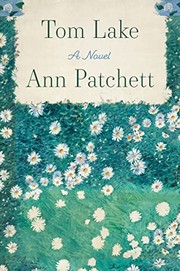
Three grown daughters get their mother's story of a lost summer of theater and love. The late-career distillation — quiet, structurally simple, and best appreciated once you know what she usually needs a siege to achieve.
The Earlier Novels
IntermediateTrace the method backwards to the books where Patchett was still finding the voice, and see what she kept.
▸ Study plan for this stage
Pace: 4 weeks, ~25 pages a day. The Patron Saint of Liars (360 pages) in two weeks — its three-narrator structure makes natural stopping points. The Magician's Assistant (357 pages) in two more; the Nebraska half rewards slow reading, since almost all of the book's meaning is in what the Fetters family do
- The improvised household is already the subject in the first novel — St Elizabeth's is a home for unwed mothers doing exactly what the hostage house later does
- Three narrators in The Patron Saint of Liars (Rose, Son, Cecilia) and how the handoffs expose a woman the first section let you sympathize with
- Rose's leaving as the Patchett problem in its rawest form: a person who abandons without explanation, presented without judgement or excuse
- The Magician's Assistant's premise — grief as a door into a stranger's family — which is Bel Canto's idea worked out in a Nebraska kitchen
- Sabine's marriage to Parsifal as an early study of love that is real and unconsummated, a configuration Patchett keeps returning to
- What the rawer prose reveals: the later polish is not decoration but a way of getting out of the story's way, and here you can see the difference
- Magic, illusion and misdirection as literal subject matter before they become structural technique
- Does The Patron Saint of Liars want you to forgive Rose? Point to the sentences that decide it either way.
- What does the change of narrator do to your reading of the events you have already been given?
- In The Magician's Assistant, what does Sabine actually gain in Nebraska, and what has she given up to get it?
- Which sentences in these two books would the later Patchett have cut, and what would be lost with them?
- How is grief made productive rather than static in The Magician's Assistant, and where does the same move appear in the later fiction?
- After finishing The Patron Saint of Liars, write a one-paragraph account of Rose from each of the three narrators' points of view without rereading; the differences are the novel.
- Mark the exact chapter where The Magician's Assistant stops being about Parsifal and becomes about Sabine.
- Line up the four households you have now read — St Elizabeth's, the Fetters house, the Vice-Presidential residence, the Dutch House — and note what each one demands of the people inside it.
- Pick one early paragraph and one late one on the same kind of moment (an arrival, a death) and describe the change in technique in your own words.
Next up: You have the whole arc of the fiction; the essays now show you the actual friendships, marriages and losses the novels were built out of.

Her first novel, set in a Kentucky home for unwed mothers. The makeshift household is already the subject; the prose is rawer, which makes the later polish visible.

A widow travels to Nebraska to meet her late husband's hidden family. The strangest of the early books and the clearest bridge to Bel Canto's idea that grief makes people adopt each other.
The Essays
IntermediateRead the nonfiction that explains where the novels came from — friendship, marriage, bookselling, and how she actually writes.
▸ Study plan for this stage
Pace: 3 weeks. Truth and Beauty is a short, fast memoir — most readers finish it in three or four sittings, and it is better read in a rush than rationed. Then These Precious Days (336 pages) at one or two essays an evening over two weeks, since the pieces are self-contained and lose force when bolted tog
- Truth and Beauty as the real-life source of the loyalty her novels keep dramatizing — a friendship of unequal need, told without flattering either party
- The ethical question that hangs over the memoir: who owns a shared life, and what Patchett takes on by publishing Lucy Grealy's side of it
- The title essay of These Precious Days as her most novelistic nonfiction — a stranger, a house, an illness, a family assembled in a pandemic year
- Her account of how she actually works: the perfect book held in the head, ruined the moment it is written down
- Bookselling and Parnassus as an argument about literary life that runs against her own industry's assumptions
- How much of the fiction is visible once you know the life — the father, the two marriages, the friend who dies — and the limits of reading novels that way
- What does Truth and Beauty say about friendship that a novel could not have said, and what does it lose by being true?
- Is Patchett fair to Lucy Grealy? Argue it from the text rather than from the controversy that followed.
- In 'These Precious Days', at what point does Sooki stop being a guest and become family, and how is that made visible on the page?
- How does Patchett describe her own writing process, and which of her novels most obviously bears it out?
- Having finished the path, what is the improvised family for — what problem does Patchett keep using it to solve?
- Read Lucy Grealy's Autobiography of a Face alongside Truth and Beauty if you can get it; the two books disagree, and the disagreement is instructive.
- After the title essay of These Precious Days, reread the first chapter of Bel Canto and note how much of the essay's situation is already there.
- Write a list of the five things Patchett says about writing in the essays, and test each one against a novel in this path.
- Draw the whole path as one line: which book would you now hand a friend first, and what has changed about your answer since Bel Canto?
Next up: That is the full body of work, novels and life together — you can now say which of Patchett's families are invented and which were simply reported.

Her memoir of a two-decade friendship with the writer Lucy Grealy. The most emotionally direct thing she has written and the real-life source of the loyalty her novels keep dramatizing.

The mature essay collection — on her father, her bookstore, a friendship formed late. A fitting close because it reads like the nonfiction companion to Tom Lake and The Dutch House.
Discussion
Keep reading
Paths that share books, cover the same subject, or open a related topic.