The Soviet-Afghan War: books to read, in order
The Soviet Union entered Afghanistan in December 1979 expecting a short stabilising operation and left nine years later having lost roughly fifteen thousand soldiers and any illusion of invincibility. This path starts with Afghanistan on its own terms rather than as a Cold War board, moves through the best narrative histories of the war, then reads it twice more — once from the Soviet conscript's position and once from the mujahideen's — and finishes with the outside money that fuelled it and the wreckage it left for the 1990s.
Afghanistan Before the Tanks
BeginnerUnderstand Afghan political structure, the reach and limits of any Kabul government, and the nineteenth-century pattern of foreign intervention the Soviets were about to repeat
▸ Study plan for this stage
Pace: 3 weeks, about 30 pages a day. Barfield is the slowest of the three and the one worth rereading; Ansary and Hopkirk both move fast enough to read in long sittings. Read Barfield's opening chapter on political structure twice before going on.
- Barfield's core claim: Afghanistan has historically been governed as a 'Swiss cheese' state, where central authority is real in the cities and along the roads and thin or absent in the space between — so 'controlling Afghanistan' and 'holding Kabul' are not the same achievement
- The distinction between qawm (the local solidarity group a person actually belongs to) and the abstract national identity Kabul reformers kept legislating for
- The recurring collapse pattern Ansary traces in Games Without Rules: a Kabul modernising programme, a rural and clerical backlash, a dynastic fall — Amanullah in 1929 is the template the PDPA repeated in 1978
- Hopkirk's Great Game as strategic inheritance rather than as period colour: the Soviet politburo of 1979 was arguing about buffer zones and warm-water access in vocabulary a nineteenth-century Russian officer would have recognised
- Why the 1978 Saur coup and the Khalq land and literacy decrees created the insurgency the Soviets came to rescue the regime from — the war predates the invasion
- The difference between a state that is defeated and a state that is never fully assembled, and why foreign armies keep discovering this in the same order
- In Barfield's account, what has actually made an Afghan ruler legitimate at different points, and why did the PDPA's programme fail that test before a single Soviet soldier arrived?
- Ansary and Barfield are writing about the same two centuries from different vantage points — one an Afghan-American narrator, one an anthropologist. Where do their explanations of the 1978-79 breakdown actually diverge?
- What did the December 1979 politburo believe it was intervening in, and which of those beliefs would Barfield say were structurally wrong rather than merely mistaken about detail?
- Hopkirk's British and Russian players lost repeatedly in Afghanistan. What did they lose to — Afghan resistance, terrain, distance, or their own political timetables?
- Why does starting with Afghan internal history change what the following stages will look like, compared with starting at the invasion?
- Take Barfield's argument that centralised rule in Afghanistan has always depended on outside money, and test it against Ansary's narrative of Amanullah, Nadir Shah and Daoud — write a paragraph on where Ansary's evidence supports it and where his story of internal reform politics complicates it
- Build a one-page timeline from 1747 to December 1979 using only Ansary, then annotate it with the moments Barfield treats as structurally important. The gaps between the two lists are where popular narrative and anthropological argument disagree
- Hopkirk writes adventure history with named heroes. Pick one of his episodes — the 1842 retreat from Kabul is the obvious one — and write the same event as Barfield would frame it, in one paragraph, with the individuals removed
- Write down, before you go on, your own answer to 'what would a foreign power actually have to do to govern Afghanistan?' Keep it. The next three stages will test it against a real attempt
Next up: With the Afghan political structure and the pre-1979 collapse in view, you can read the war itself as something happening to a country rather than on a Cold War board.
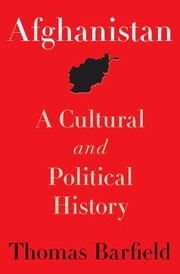
An anthropologist's history of how Afghanistan has actually been governed, and why every attempt to rule it from the centre runs into the same structures. The single most useful book for making the rest of this path intelligible.

An Afghan-American writer's narrative history of two centuries of Afghan politics, written for outsiders and unusually good at explaining internal reform struggles. Read after Barfield: it turns the analysis into a story you can hold.
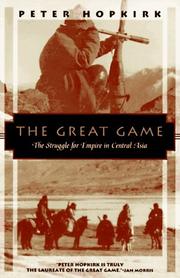
The nineteenth-century Anglo-Russian contest over Central Asia, told as adventure history. Here for the pattern, not for the period — the 1979 politburo made its decision inside a much older Russian argument about the approaches to India.
The War Narrated
IntermediateFollow the whole war end to end — the 1979 decision, the occupation, the escalation, the stalemate and the 1989 withdrawal
▸ Study plan for this stage
Pace: 4 weeks. Braithwaite's Afgantsy is around 400 pages and carries the stage — give it two weeks at 30 pages a day. Feifer moves faster and can be read in a week. Maley's The Afghanistan Wars is analytical rather than narrative and is best read slowly, in chapters, over the last week.
- The anatomy of the December 1979 decision as Braithwaite reconstructs it from Soviet documents: a small circle, a badly informed assessment of Amin, and an expectation of months rather than years
- The gap between the mission the 40th Army was given (garrison and stabilise) and the war it ended up fighting (counter-insurgency it was neither trained nor equipped for)
- Escalation without commitment: why the Soviet force level stayed at roughly 100,000 rather than the number a counter-insurgency doctrine would have required, and what that ceiling was protecting politically
- The Soviet counter-insurgency turn to depopulating the countryside — bombing, mining and crop destruction that drove roughly five million people into Pakistan and Iran as refugees, and killed civilians on a scale the Soviet public was not told about
- Maley's framing of 1979-89 as one phase in a longer state collapse that runs on through the civil war of the 1990s, rather than as a self-contained war with an ending
- The Geneva accords and the 1989 withdrawal as a negotiated exit whose terms did not actually end the fighting
- Braithwaite and Feifer are working from overlapping Russian and Afghan interview material. Where does Feifer's account of the invasion decision differ from Braithwaite's, and which of the two rests on documents rather than recollection?
- What did the 40th Army actually control at the height of the occupation, and how does that answer square with the Kabul government's claims at the time?
- Maley continues past 1989 while Braithwaite and Feifer largely stop there. What does the continuation change about how you judge the Soviet withdrawal as a success or failure?
- By what mechanism did the Soviet leadership come to regard the war as unwinnable — battlefield evidence, cost, casualty politics at home, or Gorbachev's wider foreign-policy reversal?
- Which parts of the war does a narrative history structurally struggle to cover, and what would you expect to be missing when you reach the next stage?
- Braithwaite quotes Soviet casualty figures of roughly 15,000 dead. Find where he says the number comes from, find Feifer's figure and its source, and write two sentences on why an official military death toll is easier to establish than an Afghan civilian one
- Trace one operational sequence — the Panjshir offensives against Massoud are the cleanest — across all three books, noting what each author says was achieved. The disagreement is the exercise, not the sequence
- Write the strongest one-paragraph case that the Soviet intervention was a rational decision on the information available in December 1979, using only Braithwaite's evidence. Then write the rebuttal from the same book
- Extend the timeline you built in stage one through 1989, marking every point at which a Soviet leader could plausibly have withdrawn. Maley's later chapters will tell you what each of those exits would have left behind
Next up: Having the war's shape and chronology fixed lets you drop into the fighting itself without losing your place, which is exactly what the testimony and tactical volumes in the next stage require.

The anchor of the path, by a former British ambassador to Moscow working from Soviet documents and interviews with veterans. The best single account of why the Politburo went in and how the army experienced what followed.

A journalist's narrative built on Russian and Afghan interviews, more accessible and faster-moving than Braithwaite. Read second so the personal testimony lands against a frame you already have.

A political scientist's account running from 1978 through the civil war and beyond, so the Soviet decade is placed as one phase of a longer collapse. The right corrective to reading 1989 as an ending.
Two Armies, Two Wars
IntermediateRead the fighting from inside both sides — Soviet conscripts and their families, and mujahideen commanders — and understand the tactical asymmetry that decided it
▸ Study plan for this stage
Pace: 4 weeks. Read Alexievich and Borovik first, together, over two weeks — they are short and slow going for reasons of content rather than difficulty. Zinky Boys is an oral history of dead conscripts and of the mothers who received them home in sealed zinc coffins, and Borovik reports from a front wher
- The conscript army as a social institution: Alexievich's soldiers are eighteen and nineteen, badly trained, largely uninformed about where they were going, and returned to a country that officially had no war
- Borovik's value as a contemporary Soviet source published under glasnost, written while the war was still running, against Alexievich's retrospective testimony collected afterwards
- The tactical asymmetry the two Grau volumes were built to expose: a mechanised army organised for European manoeuvre warfare operating in valleys, against an enemy with no fixed positions to seize
- The mujahideen problem of coordination — commanders operating independently, with the outside supply chain, not a command structure, as the main integrating force
- Ambush, convoy protection, the helicopter as the Soviet answer to terrain, and what the introduction of man-portable anti-aircraft missiles did to that answer
- The specific mechanisms by which a counter-insurgency of this kind produces mass civilian death: reprisal, area bombardment, mining of agricultural land, and the deliberate emptying of contested valleys
- Why Alexievich was denounced and sued in Russia over this book, and what that tells you about the domestic politics of the war's memory
- The Bear Went Over the Mountain and The Other Side of the Mountain describe the same kinds of engagement from opposite sides. Take one shared tactical situation — a convoy ambush — and state what each side considered the decisive factor
- Alexievich's method is edited testimony with the interviewer removed. What does that method make visible that a conventional military history cannot, and what claims can it not support?
- Borovik was a Soviet journalist writing for a Soviet audience under glasnost. What is he able to say, what does he avoid, and how would you tell the difference?
- What did the Soviet army learn tactically over nine years, and why did learning it not change the outcome?
- After Grau's two volumes, what is your answer to whether the mujahideen won the war or the Soviets lost it, and what evidence would change your mind?
- Read one Grau vignette from the Soviet volume and then find its counterpart situation in the mujahideen volume. Write both accounts of the same tactical problem in a single paragraph each, then note which side's account contains information the other could not have had
- Pick three of Alexievich's testimonies and check what they say about training, equipment and the pre-deployment briefing against Braithwaite's account from the previous stage. Where the testimony contradicts the institutional record, decide which you believe and write down why
- Map one operation described in Borovik onto the terrain descriptions in Grau's commentary. The point is to see whether the journalist's account is consistent with the tactical geography the analyst describes
- Write a paragraph stating the case that Zinky Boys is unreliable as history, as its Russian critics argued. Then write the case that its unreliability is irrelevant to what it is evidence of
Next up: Once you can see the war from inside both armies, the outside money that armed one of them and the political calculation that withdrew the other become the only things left to explain.

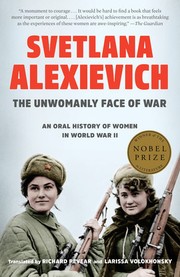
Alexievich's oral history of Soviet soldiers and the mothers who received them home in sealed zinc coffins, for which she was denounced and sued in Russia. Also published as 'Boys in Zinc'; either edition is the same work.
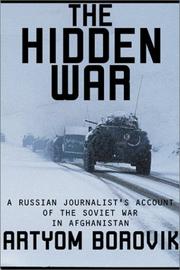
A Soviet journalist's frontline reporting, published under glasnost while the war was still on. It is the contemporary Soviet counterpart to Alexievich's retrospective testimony, and its candour was startling at the time.
Soviet General Staff tactical vignettes with commentary, compiled by a US Army analyst. Dry and enormously clarifying: it shows exactly what a mechanised army could and could not do in that terrain.
The deliberate mirror volume, mujahideen tactical accounts collected by a former Afghan officer with Grau. Read the two back to back and the war's asymmetry becomes concrete rather than rhetorical.
Outside Money and the Wreckage
IntermediateTrace the American, Pakistani and Saudi funding of the resistance, the negotiated Soviet exit, and the line from the 1989 withdrawal to the Taliban and 2001
▸ Study plan for this stage
Pace: 5 weeks. Coll's Ghost Wars is around 700 pages and needs two and a half weeks at 35-40 pages a day; it is the stage's spine. Crile is fast and can be read in five days. Kalinovsky is an archival monograph — a week, read slowly. Rashid's Taliban last, in under a week. Rashid and Coll both describe ma
- The structure of the pipeline: American and Saudi money passed through Pakistan's ISI, which chose which Afghan commanders received it — so the funders did not control the distribution
- Why that structure favoured the most ideological parties over the most militarily effective commanders, and what that meant for who held power after 1989
- Kalinovsky's account of the Soviet exit as a long internal argument rather than a defeat announcement: doubts inside the leadership well before Gorbachev, and a withdrawal negotiated with an eye to what it would look like
- The Najibullah government's survival for three years after the Soviet departure, and what its eventual collapse in 1992 was actually caused by
- Rashid's account of the Taliban's emergence out of the refugee camps and madrasas of Pakistan, the civil war it ended, and the Pakistani state's interest in it
- The line Coll draws from 1979 to September 2001, and where that line is a causal argument rather than a chronology
- Crile's book as a genre problem: the same events told as congressional farce and personality, and what that framing does to the reader's sense of proportion
- Coll and Crile both describe the American funding of the Afghan resistance. Where do their accounts of who drove the escalation actually conflict, and what kind of evidence would settle it?
- Kalinovsky argues the Soviet decision to leave was made largely on internal political grounds. What would have to be true for the alternative explanation — that the mujahideen made the position militarily untenable — to be the better one?
- The Stinger missile is the most repeated single-cause explanation of the Soviet defeat. Reading Coll and Crile against Braithwaite from stage two, how much weight will the evidence actually bear?
- Rashid published Taliban before September 2001. Which of his judgements were vindicated by what followed, and which look like the coincidence of a well-informed guess?
- Between the funding structure, the Soviet withdrawal terms and the 1992 collapse, which single decision did most to produce the Afghanistan of the mid-1990s?
- Take the Stinger claim and trace it across three books — Crile's version, Coll's version, and Braithwaite's from the previous stage. Write down each author's actual claim in one sentence and mark which are about capability and which are about morale
- Coll works from interviews and documents; Crile largely from the recollections of participants who were also his sources for the book's comedy. Pick one episode both cover and identify every fact that appears in Crile but not Coll, then ask what would have to exist for Coll to have used it
- Using Kalinovsky, write the Soviet withdrawal decision as a memo from the Soviet leadership to itself in 1987, listing the options and their costs. It should be possible to do this without reference to the battlefield, and noticing that is the point
- Rashid names the parties and commanders who received the largest share of the outside money. Cross-check that list against who was fighting whom in the 1992-96 civil war, and write two sentences on what the funders had built
- Return to what you wrote at the end of stage one about governing Afghanistan, and revise it. Note specifically which of your original assumptions came from the Cold War frame rather than from the country
Next up: This is the last stage, and it closes the circle the path opened with: the same structures Barfield described absorbing the Soviet decade, and then the money the war left behind.

The Pulitzer-winning account of CIA and ISI involvement from 1979 to September 2001. Open Library files it under a marketplace display string ('Ghost Wars 12-copy floor'); the book itself is Coll's standard history.

The congressional and covert-funding story told as farce and biography. Entertaining and narrower than Coll — read it after him, as colour on a structure you already understand, not as your account of the programme.

An archival study of how the Soviet leadership talked itself into leaving, from the first doubts to Gorbachev's decision. The book that explains the withdrawal as a political process rather than a defeat announcement.
The Pakistani journalist's account of what grew out of the wreckage, written before 2001 and vindicated by it. The path's endpoint: the Soviet war's real consequence was the decade that followed it.
Discussion
Keep reading
Paths that share books, cover the same subject, or open a related topic.