There is no other war in North American history where the nationality of the author changes the subject this completely. In American accounts, 1812 is a scrappy second war of independence that produced an anthem and a national navy. In Canadian accounts, it is a successful defence that made a country. In British accounts, it is a sideshow to the far larger war against Napoleon, dispensed with in a chapter. And for the Indigenous confederacy of the Ohio and Great Lakes country, it was the defeat that ended any prospect of a sovereign Native homeland east of the Mississippi.
That is the most interesting thing about this reading list, and the order is built to exploit it rather than smooth it over. Get the standard survey, then deliberately read the other three wars.
The survey and the myths
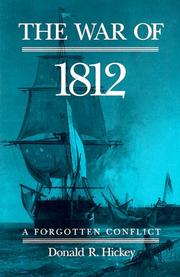
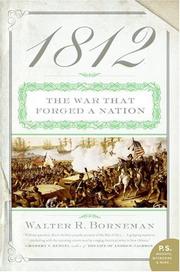
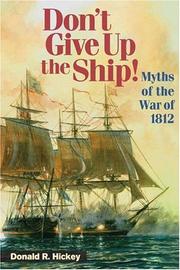
The War of 1812 by Donald R. Hickey is the standard American scholarly account and the right foundation — it is unromantic about American war aims and about how badly the invasions of Canada went. Walter R. Borneman's book, titled simply 1812, is the more narrative single volume if you want momentum over analysis. Then read Hickey again in his other mode: Don't Give Up the Ship! is an entire book of myth-correction, going through the anecdotes everyone repeats and showing which survive contact with the sources. Reading it early inoculates you against most of what you will hear elsewhere.
The same war from London and from Napoleon's shadow
The weight of vengeance by Troy O. Bickham is the essential corrective: 1812 seen as a British imperial problem, fought by a government whose attention and best troops were elsewhere. War of 1812 in the Age of Napoleon by Jeremy Black makes the same move from a British military historian's angle, situating the conflict inside a global war. Between them they explain the thing American accounts rarely address — why Britain settled on terms that conceded nothing about impressment, the issue the United States said it had gone to war over. Empire of liberty by Gordon S. Wood supplies the American domestic context: the young republic, the party quarrel, and how close New England came to walking out.
At sea, on the border, and in Indian country
The naval war has the best literature. Six Frigates by Ian W. Toll is the story of the founding of the United States Navy and is the most enjoyable book on this path. Perilous fight by Stephen Budiansky is the sharper operational account of the sea war. The naval war of 1812 by Theodore Roosevelt is a curiosity worth its place: written in 1882 by a very young Roosevelt, it is still cited for its ship-by-ship detail and is also a primary source for how Americans wanted to remember the war. Note that Budiansky's book and Steve Vogel's Through the perilous fight have nearly the same title and are entirely different books — Vogel's is the 1814 Chesapeake campaign, the burning of Washington and the bombardment of Baltimore.
The Civil War of 1812 by Alan Taylor is the book that changes the picture most. Taylor treats the border country as one society divided by an artificial line, full of migrants, deserters and Irish on both sides, and the title is his argument. Then the Indigenous war: Tecumseh by John Sugden is the standard biography, and The Shawnee Prophet by R. David Edmunds covers his brother Tenskwatawa and the religious revival that made the confederacy possible. Their defeat is the war's most consequential outcome and the one the other national stories quietly drop.
Finish with The Battle of New Orleans by Robert Vincent Remini on the famous victory fought after the peace treaty was signed.
Follow the full path and you will not have read one war four times — you will have read four wars that happened to share a set of dates.
Follow the full ordered path here: The War of 1812: The Best Books to Read First, in Order.
Ready to learn something deeply?
Build a reading path — free