The History of Afghanistan: Best Books to Read in Order
This curriculum takes you from zero background to deep, nuanced understanding of Afghanistan's history across four centuries — from the Great Game rivalries of the 19th century through the Soviet invasion, the rise of the Taliban, and the post-9/11 American war. Each stage builds the geographic, cultural, and political vocabulary you need before the next, so no prior knowledge is assumed at the start.
Foundations: Land, People & the Long Shadow of Empire
BeginnerUnderstand Afghanistan's geography, tribal society, ethnic mosaic, and why great powers have repeatedly tried — and failed — to control it. Build the mental map needed for everything that follows.
▸ Study plan for this stage
Pace: 8–10 weeks, ~40–50 pages/day (with reflection breaks). Start with "Places in Between" (4–5 weeks), then move to "Afghanistan: A Cultural and Political History" (4–5 weeks).
- Afghanistan's geography as a crossroads: mountain barriers, river valleys, and the Hindu Kush as both unifier and divider of peoples
- Tribal and kinship-based social organization: how Pashtun, Tajik, Hazara, and Uzbek identities function as primary loyalty structures, not state institutions
- The concept of 'Pashtunwali' and honor codes: how customary law and tribal governance persist alongside (and often override) formal state authority
- The Great Game and imperial overreach: why British, Russian, and later American powers failed to impose centralized control despite military superiority
- The role of Islam as both unifying force and contested terrain: how religious identity intersects with ethnic and tribal identities
- Afghanistan's economic fragility: how geography, trade routes, and resource scarcity shape political power and conflict
- The distinction between state-building and nation-building: why creating institutions in Kabul does not automatically create loyalty in the provinces
- How does Afghanistan's geography (mountain ranges, river systems, deserts) explain both its cultural diversity and the difficulty of unified political control?
- What are the main ethnic and tribal groups in Afghanistan, and how do kinship networks and honor codes function as alternative sources of authority to the state?
- Why have successive empires (British, Russian, American) failed to achieve lasting control of Afghanistan despite military advantages?
- How does Islam function differently in Afghan society compared to the way it functions in Arab-majority Islamic societies, and what role does it play in tribal and ethnic identity?
- What is Pashtunwali, and how does it shape behavior, justice, and political legitimacy in Afghan society?
- How do the personal observations and encounters in 'Places in Between' illustrate the broader patterns of Afghan social organization and resistance to centralized authority that Barfield describes historically?
- Map exercise: Draw a detailed map of Afghanistan showing major mountain ranges (Hindu Kush, Pamir), river systems, deserts, and the geographic distribution of major ethnic groups. Annotate with notes on how terrain isolates or connects communities.
- Character study from 'Places in Between': Create a profile of 3–4 people Stewart encounters (e.g., his guides, village elders, nomads). For each, identify their ethnic/tribal identity, their relationship to the state, and how their behavior reflects the social codes Barfield describes.
- Pashtunwali analysis: Read Barfield's sections on Pashtun honor codes and cross-reference with specific anecdotes from Stewart's journey. Write a 2–3 page essay on how Pashtunwali functions as an alternative legal and moral system.
- Timeline of empires: Create a visual timeline showing the dates, duration, and outcomes of British, Russian, and American military interventions in Afghanistan. For each, note what geographic or social factors contributed to failure.
- Ethnic identity interview simulation: Write out a dialogue between yourself and a hypothetical Afghan from each major ethnic group (Pashtun, Tajik, Hazara, Uzbek). In each dialogue, explore: What is your primary loyalty? How do you view the Afghan state? How does geography shape your life?
- Comparative analysis: After finishing both books, write a 3–4 page reflection on how Stewart's on-the-ground observations in 'Places in Between' either confirm or complicate Barfield's historical and structural arguments about Afghan society.
Next up: With a solid grasp of Afghanistan's geography, tribal structures, and why empires have failed, you are now ready to examine how these foundations shaped specific historical periods and conflicts—from the rise of the Taliban to the post-2001 reconstruction—and to understand the political actors and ideologies that have competed for power within these constraints.

A foot journey across Afghanistan in 2002 gives an immediate, vivid feel for the land, its people, and its deep historical memory — the perfect sensory introduction before any heavy history.
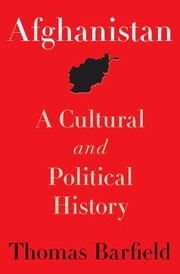
The single best one-volume overview of Afghan history from antiquity to the modern era; establishes the political logic of Afghan society — why the state has always been weak and the periphery strong — which underpins every later book.
The Great Game: Imperial Rivalry & the 19th-Century Crucible
BeginnerGrasp the 19th-century contest between Britain and Russia that shaped Afghanistan's borders, its role as a buffer state, and the patterns of foreign intervention that echo into the 20th and 21st centuries.
▸ Study plan for this stage
Pace: 8–10 weeks, ~40–50 pages/day. Start with "The Great Game" (4–5 weeks, ~40 pages/day), then "The Return of a King" (4–5 weeks, ~50 pages/day). Build in 1–2 review weeks for synthesis.
- The Great Game as a strategic competition: Britain's fear of Russian expansion toward India and the resulting imperial rivalry that treated Afghanistan as a chessboard rather than a sovereign nation
- Afghanistan's geography and its function as a buffer state: how its mountainous terrain, tribal divisions, and position between empires made it simultaneously valuable and ungovernable
- The First Anglo-Afghan War (1839–1842) and its catastrophic failure: how British military overconfidence and cultural misunderstanding led to the destruction of an entire army and established a pattern of foreign intervention backfiring
- The role of individual actors and personalities: how figures like Dost Mohammad, Shah Shuja, and various British commanders shaped events through ambition, miscalculation, and personal rivalries
- The mechanisms of imperial control: puppet rulers, military occupation, intelligence networks, and the use of subsidies and treaties to maintain influence without direct governance
- The persistence of Afghan resistance and tribal autonomy: how Afghans resisted foreign domination across decades despite military disadvantages, revealing the limits of imperial power
- The establishment of borders and the creation of lasting geopolitical tensions: how the Durand Line and other colonial demarcations created disputes that persist today
- The cyclical pattern of intervention and withdrawal: how repeated British attempts to control Afghanistan alternated between military campaigns and diplomatic retreats, setting a precedent for future powers
- Why did Britain view Afghanistan as strategically vital during the 19th century, and what was the specific threat that drove the First Anglo-Afghan War?
- Describe the catastrophe of the British retreat from Kabul in 1842. What factors—military, political, and cultural—contributed to this disaster, and what did it reveal about the limits of imperial power?
- How did the concept of Afghanistan as a 'buffer state' shape British and Russian policies, and what were the consequences of treating a nation primarily as a strategic barrier?
- Compare the approaches of Dost Mohammad and Shah Shuja to Afghan leadership. How did their different strategies and personalities influence the course of the First Anglo-Afghan War?
- What role did geography, tribal divisions, and local knowledge play in Afghan resistance to foreign control? How did these factors limit what imperial powers could achieve?
- How did the events of the 19th century—particularly the Great Game and the First Anglo-Afghan War—establish patterns of foreign intervention and Afghan resistance that would repeat in later centuries?
- Create a detailed timeline of the First Anglo-Afghan War (1839–1842) using both books, marking key military engagements, political decisions, and turning points. Annotate each entry with the perspective of at least two actors (e.g., British commanders, Afghan leaders, local tribes).
- Map the major routes, cities, and geographic features mentioned in 'The Great Game' (Kabul, Kandahar, Herat, the Hindu Kush, the Khyber Pass). Annotate with strategic significance: why did Britain and Russia compete for control of these locations?
- Write character sketches (500–750 words each) for three key figures: Dost Mohammad, Shah Shuja, and a British commander of your choice (e.g., Elphinstone, Macnaghten). For each, explain their goals, constraints, and how their personality shaped their decisions.
- Analyze the Durand Line: research its creation in the context of the books, then write a brief essay (750–1000 words) on how this colonial border continues to affect Afghanistan and Pakistan today. Use specific examples from the texts.
- Create a comparison chart of British interventions across the three Anglo-Afghan Wars (focus on the First War from these books, but research the others). What patterns repeat? What changes? What does this suggest about the sustainability of foreign intervention?
- Conduct a 'Great Game simulation': choose a role (British viceroy, Russian general, Afghan tribal leader, or Amir) and write a series of 3–4 policy memos or letters responding to events in the books. Explain your strategic reasoning based on what you've learned.
Next up: This stage establishes the foundational patterns of foreign intervention, Afghan resistance, and geopolitical competition that will intensify through the 20th century, preparing you to understand how these 19th-century conflicts directly shaped Afghanistan's experience of colonialism, independence, Cold War rivalry, and modern conflict.
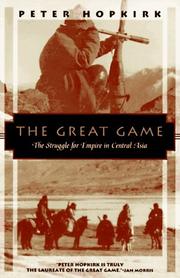
The definitive popular history of the Anglo-Russian rivalry in Central Asia; reads like a thriller and gives essential geopolitical context before tackling the Soviet and American chapters.

A deeply researched narrative of Britain's catastrophic First Anglo-Afghan War (1839–42); shows exactly how and why Afghanistan humiliated a superpower — a template that recurs throughout the curriculum.
The Soviet War & the Mujahideen: 1978–1992
IntermediateUnderstand the communist coup, the Soviet invasion, the CIA-backed jihad, and how the destruction of that war created the conditions for the Taliban — the direct cause-and-effect chain leading to the 1990s.
▸ Study plan for this stage
Pace: 8–10 weeks, ~40–50 pages/day. Start with *Ghost Wars* (600+ pages, ~6 weeks), then *The Kite Runner* (370 pages, ~2–3 weeks) for narrative reinforcement and human perspective.
- The April 1978 communist coup (Saur Revolution) and how Soviet-backed communists seized power in Afghanistan
- The Soviet invasion of December 1979 and the geopolitical Cold War logic that drove it
- The CIA's covert operation to arm and fund the Mujahideen through Pakistan's ISI, and the role of Saudi Arabia and other allies
- The fragmentation of the Mujahideen into competing ethnic and ideological factions (Pashtun, Tajik, Hazara, etc.) and how this prevented unified governance
- The decade-long war's devastating human and infrastructure costs: refugee crises, destroyed cities, and a generation traumatized by violence
- How the Soviet withdrawal (1989) and the collapse of the communist government (1992) left a power vacuum and lawless, war-torn state
- The direct causal link: CIA-backed Islamist fighters, Pakistani support networks, and Saudi Wahhabist ideology created the ideological and military foundation for the Taliban
- What were the immediate causes and consequences of the April 1978 Saur Revolution, and why did the Soviet Union decide to invade in December 1979?
- How did the CIA, working through Pakistan's ISI, fund and arm the Mujahideen, and what were the long-term consequences of this covert operation?
- Why did the Mujahideen never unify into a single force, and how did their ethnic and ideological divisions shape post-1992 Afghanistan?
- What was the human cost of the Soviet-Afghan War, and how did the displacement, trauma, and destruction create conditions for the Taliban's rise?
- How does *The Kite Runner* illustrate the lived experience of ordinary Afghans during this period, and what does it reveal about class, ethnicity, and violence that *Ghost Wars* documents statistically?
- What is the direct cause-and-effect chain from the 1978 coup through the Soviet withdrawal to the Taliban's emergence in the mid-1990s?
- Create a detailed timeline (1978–1992) marking key events: the Saur Revolution, Soviet invasion, major CIA operations, Mujahideen victories, Soviet withdrawal, and fall of Najibullah's government. Annotate each with 2–3 sentences on geopolitical significance.
- Map the major Mujahideen factions by ethnicity and ideology (using *Ghost Wars* chapters on Hekmatyar, Massoud, Dostum, etc.), then explain why their inability to cooperate made post-war state-building impossible.
- Write a 2–3 page analysis: 'How CIA Cold War strategy in Afghanistan created the conditions for the Taliban.' Use specific examples from *Ghost Wars* (operations, funding amounts, choice of allies).
- Read the key *Kite Runner* scenes depicting pre-war Kabul (early chapters) and war-torn Kabul (later chapters). Write a comparative essay on how the novel shows the war's transformation of Afghan society in ways *Ghost Wars* cannot.
- Create a character/actor network diagram showing relationships between: the CIA, Pakistan's ISI, Saudi Arabia, the Soviet Union, Afghan communist leaders, and Mujahideen commanders. Use *Ghost Wars* to label each connection with a specific operation or alliance.
- Conduct a close reading of *The Kite Runner*'s treatment of class and ethnicity (Pashtun vs. Hazara, wealthy vs. poor) and connect it to the geopolitical divisions documented in *Ghost Wars*. Write 1–2 pages on how personal trauma in the novel reflects structural violence in the war.
Next up: This stage establishes the violent, chaotic foundation of 1990s Afghanistan—a state destroyed by war, fractured by competing powers, and primed for a radical movement to impose order; the next stage will examine how the Taliban emerged from this rubble and consolidated power from 1994 onward.

A Pulitzer Prize-winning, meticulously sourced account of the CIA, the ISI, and the mujahideen from 1979 to 9/11; the essential bridge between the Soviet war and the rise of al-Qaeda.

Though fiction, this novel is included here because it conveys the lived Afghan experience of the Soviet era, the refugee exodus, and the Taliban takeover with an emotional depth no policy book matches — read it as a human counterweight to Ghost Wars.
The Taliban: Origins, Ideology & First Reign, 1994–2001
IntermediateUnderstand who the Taliban are, where they came from, what they believe, and how they seized power — essential context before studying the American war that tried to dismantle them.
▸ Study plan for this stage
Pace: 8–10 weeks, ~40–50 pages/day. Start with Rashid's "Taliban" (approximately 400 pages, 2–3 weeks), then move to Abbas's "The Taliban Revival" (approximately 300 pages, 2–3 weeks), with 2–3 weeks for review, note synthesis, and exercises.
- The Taliban's origins in Pakistani madrasas and the Afghan refugee camps of the 1980s–early 1990s, and how the Soviet withdrawal created a power vacuum they filled
- Pashtun tribal politics and Islamic fundamentalism as the twin ideological pillars of Taliban governance, including their interpretation of Sharia law
- The role of Pakistan's ISI (Inter-Services Intelligence) in funding, training, and strategically supporting the Taliban's rise to power
- How the Taliban consolidated control through military campaigns (1994–1996) and their capture of Kabul, exploiting warlord fragmentation and civil war exhaustion
- The Taliban's governance model: emirate structure, religious authority, treatment of women and minorities, and rejection of democratic institutions
- International isolation, UN sanctions, and the Taliban's harboring of Osama bin Laden and al-Qaeda—the seeds of their eventual conflict with the United States
- The Taliban's internal divisions, regional rivalries, and the factors that made their first regime vulnerable to collapse after 9/11
- How Rashid and Abbas differ in their analysis: Rashid's journalistic narrative versus Abbas's focus on Taliban resilience and revival potential
- What were the specific historical conditions in Afghanistan and Pakistan (1979–1994) that enabled the Taliban to emerge, and how did the Soviet withdrawal and subsequent civil war create the opportunity for their rise?
- How did Pashtun tribal identity and Islamic fundamentalism shape Taliban ideology, and how did this differ from other Afghan mujahideen factions?
- What was Pakistan's strategic interest in supporting the Taliban, and how did the ISI's involvement influence Taliban military strategy and governance?
- Describe the Taliban's military campaigns from 1994–1996: which regions did they control, which warlords did they defeat, and what tactics did they use to consolidate power?
- What was the Taliban's vision for Islamic governance, and how did their policies on women, minorities, and Sharia law reflect their ideology?
- Why did the Taliban's harboring of bin Laden and al-Qaeda become a critical turning point in their international standing, and how did this set the stage for their eventual conflict with the United States?
- Create a detailed timeline (1979–2001) marking key events: Soviet invasion, Soviet withdrawal, Taliban founding, major military victories, capture of Kabul, and international sanctions. Cross-reference dates and events between Rashid and Abbas.
- Map Taliban territorial expansion: draw or annotate a map of Afghanistan showing Taliban-controlled regions in 1994, 1996, 1998, and 2001. Identify which provinces fell in which order and note strategic locations (Kandahar, Kabul, Mazar-i-Sharif).
- Comparative analysis: create a chart comparing the Taliban to other Afghan mujahideen factions (Northern Alliance, Hezb-i-Islami, etc.) on ideology, ethnic base, foreign support, and governance model. Use both books to fill it in.
- Close reading exercise: select one chapter from Rashid on Taliban governance (e.g., treatment of women, religious police, Sharia courts) and one from Abbas on Taliban resilience. Annotate for: claims made, evidence provided, and differences in interpretation.
- Role-play debate: prepare arguments for why Pakistan supported the Taliban (ISI perspective) and why the international community opposed them (UN/US perspective). Ground arguments in specific examples from both books.
- Write a 1,500-word essay: 'Why did the Taliban succeed where other Afghan factions failed (1994–1996)?' Use Rashid's narrative of military campaigns and Abbas's analysis of Taliban organizational advantages to construct your answer.
Next up: This stage establishes who the Taliban are, what they believe, and how they seized power—the essential foundation for understanding why the United States invaded Afghanistan in 2001 and the two-decade war that followed.
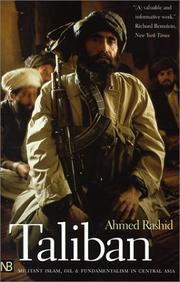
Written by Pakistan's foremost journalist before 9/11, this is the foundational text on Taliban origins, ideology, and their first government; no other book explains the movement's roots as clearly.
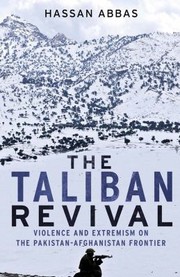
Picks up where Rashid leaves off, explaining how the Taliban regrouped after 2001 using Pakistani sanctuaries — a crucial link between the first and second Taliban eras.
The American War: 2001–2021 & the Reckoning
ExpertCritically analyze the US invasion, the nation-building project, its systemic failures, and the Taliban's return to power — synthesizing everything learned in prior stages into a full historical judgment.
▸ Study plan for this stage
Pace: 10–12 weeks, ~40–50 pages/day. Read *The Forever War* (weeks 1–4), *No Good Men Among the Living* (weeks 5–8), and *The Afghanistan Papers* (weeks 9–12). Allocate 1–2 weeks for synthesis and comparative analysis across all three texts.
- The disconnect between official narratives and ground reality: how military/political leadership misrepresented progress, casualty figures, and strategic objectives throughout the war
- Civilian casualties and the moral cost of counterinsurgency: how drone strikes, night raids, and indiscriminate bombing alienated the Afghan population and fueled Taliban recruitment
- The failure of nation-building: why attempts to impose Western institutions, governance, and military structures collapsed when external support was withdrawn
- Taliban resurgence as a symptom of systemic failure: how US strategy inadvertently strengthened the Taliban through civilian harm, corruption of Afghan allies, and inability to address root grievances
- Institutional dysfunction and accountability gaps: how bureaucratic inertia, inter-agency conflicts, and lack of transparency prevented course correction despite mounting evidence of failure
- The role of corruption and warlordism: how the US propped up and enriched local strongmen and drug traffickers, undermining legitimacy of the Afghan state
- The endgame and withdrawal: why the 2021 collapse was not sudden but the inevitable result of two decades of structural contradictions
- How does Filkins' on-the-ground reporting in *The Forever War* expose the gap between what military commanders claimed was happening and what was actually occurring in Afghanistan?
- What role did civilian casualties—particularly from drone strikes and night raids documented in *No Good Men Among the Living*—play in driving Afghan civilians toward the Taliban?
- How did the US approach to nation-building (military training, institution-building, governance) fail according to all three texts, and what were the structural reasons for this failure?
- What does *The Afghanistan Papers* reveal about how senior officials knew the war was unwinnable or failing, yet continued to publicly claim progress?
- How did the US reliance on warlords, drug traffickers, and corrupt officials (as detailed in Gopal's work) undermine the legitimacy of the Afghan government it was trying to build?
- Why was the Taliban's return to power in 2021 not a sudden collapse but the predictable outcome of the previous 20 years, based on evidence from all three books?
- Create a timeline of major US military operations and strategic shifts (from *The Forever War*), then cross-reference with civilian casualty spikes documented in *No Good Men Among the Living* to identify patterns of cause and effect.
- Compile a list of false claims about progress made by US officials (from *The Afghanistan Papers*) and match them against Filkins' and Gopal's on-the-ground reporting to document specific instances of deception.
- Write a 2,000-word analytical essay: 'How Civilian Harm Became Strategic Failure'—using specific incidents from Gopal's book to show how each major bombing or raid strengthened Taliban recruitment and legitimacy.
- Create a comparative chart of the three texts' explanations for why nation-building failed: organize by category (military, governance, corruption, external factors) and identify where the authors agree and diverge.
- Conduct a 'documentary analysis' of one major operation (e.g., a specific drone campaign or night raid offensive) using all three sources: what did officials claim? What did journalists observe? What does the classified record show?
- Write a critical review (1,500 words) evaluating which author—Filkins, Gopal, or Whitlock—most effectively explains the Taliban's return, and why. Defend your judgment with textual evidence.
Next up: This stage completes the historical arc of Afghanistan from pre-2001 through the Taliban's 2021 return, equipping you to evaluate how the past 40+ years of conflict, intervention, and state collapse have shaped contemporary Afghanistan—preparing you to assess current regional dynamics, humanitarian crises, and the Taliban's governance in the present moment.

A masterpiece of war journalism covering both Afghanistan and Iraq; its ground-level reporting on the early US war years is the best literary entry point into this final stage.

Told from Afghan perspectives — a warlord, a Taliban commander, a housewife — this book fundamentally reframes why the US war failed; it is the most important corrective to American-centric narratives.

Based on thousands of pages of confidential government interviews, this is the definitive inside account of how US officials knew the war was failing for two decades and said otherwise — the perfect capstone to the entire curriculum.
Discussion
Keep reading
Paths that share books, cover the same subject, or open a related topic.