Svetlana Alexievich Reading Order: Where to Begin with the Oral Histories
Alexievich won the Nobel Prize for a body of work that is really one long project: five books assembled from thousands of taped interviews, covering the Soviet century from the inside. This path starts with her shortest and most self-contained book, moves through the two war books that made her name, then takes on the two vast late works, and closes with the oral-history tradition she belongs to and the conventional histories that fill in what her method deliberately leaves out.
The shortest way in
BeginnerUnderstand what Alexievich actually does — how a book made only of other people's voices differs from reportage — using her most contained subject.
▸ Study plan for this stage
Pace: Two to three weeks for around 250 pages, and read it in short sittings rather than long ones — three or four testimonies at a time is a realistic dose. Settle the edition question before you start: the book also exists in a later, fuller English translation published as Chernobyl Prayer, and the two
- A book made entirely of other people's voices. There is no reporter on the page explaining, contextualising or asking — the interviewer has been edited out, and noticing that absence is the first thing to learn here
- Composition as the authorship. Alexievich's work is in the selecting, cutting and sequencing of thousands of taped hours, which is a real authorial act even though not one sentence is hers
- Why Chernobyl is the right first book: the disaster supplies a single fixed centre, so the method can be learned without also holding decades of Soviet history in your head
- The monologue as her unit. Each testimony runs uninterrupted, often for pages, and the effect depends on not being cut back to a quotation
- What the voices know and do not know. Several speakers describe radiation in terms that are physically wrong, and the book leaves the errors standing because the error is part of the testimony
- Emotional register over explanation. The book will not tell you the reactor design, the evacuation timeline or the Politburo response, and that refusal is deliberate rather than a gap
- The opening monologue of the firefighter's wife, which is the most quoted passage she ever published and the fairest test of whether this method works on you
- What is Alexievich actually doing, given that she writes none of the sentences? Describe the work in a paragraph.
- The interviewer's questions are removed. What does that gain, and what does it hide from you as a reader?
- Several speakers say things about radiation that are factually wrong. Why leave them in?
- What does this book refuse to tell you about the disaster? Make the list — it is longer than you expect.
- How is the book ordered? Look at the sequence of testimonies and try to state the principle behind it.
- Read the opening monologue, then write 200 words on what a conventional news feature would have kept from it and what it would have cut.
- Take any three consecutive testimonies and write one line each on why you think they were placed in that order. The sequencing is the authorship and this makes it visible.
- Write down every factual question the book left you with. Keep the list — the final stage is largely about who answers those questions.
- Check which English edition you are reading and find one documented difference between the two. The existence of two substantially different texts is itself a fact about how this work is made.
Next up: You know how a book made of voices works, which is the only preparation for the two books where she applies the method to a war that four decades of official history had already described.
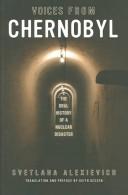
The best entry point because the disaster gives the interviews a single fixed centre, so you learn her method before you have to hold decades of history in your head. Note the edition: this is also published in the UK as Chernobyl Prayer in a later, fuller Anna Gunin and Arch Tait translation, and the two differ in content as well as title.
The war books
IntermediateSee the project she spent decades on — the Second World War told by the Soviet women and children who were left out of the official version.
▸ Study plan for this stage
Pace: Eight to ten weeks. The Unwomanly Face of War is around 350 pages, Last Witnesses around 300, and both should be paced deliberately slowly — no more than twenty or thirty pages at a sitting. A plain warning: Last Witnesses is testimony from people who were small children during the German invasion a
- The originating question of The Unwomanly Face of War: roughly a million Soviet women served, as snipers, pilots, sappers, tank drivers and medics, and the official history had almost nothing to say about them
- Women describing a war in terms the state's version had no room for — the body, hair, uniforms cut for men, fear, and the shame that met many of them on returning home
- Why this book comes first: it is where the method was invented, and it explains what she went looking for and why nobody had recorded it
- Censorship as part of the text's history. The book was cut for its original Soviet publication and later restored, and knowing that changes how you read what is now on the page
- Last Witnesses as the same war from a child's height — no strategic frame, no politics, and a set of details that adults would not have registered
- Why the children's accounts need the adults' first. The previous book supplies the context these speakers never had, which is the argument for the order
- Memory recorded decades later. Every testimony in both books is an old person remembering, and the distance between event and telling is a permanent feature of her material rather than a flaw in it
- The effect of accumulation. No single testimony carries the argument; the case is made by hundreds of them saying compatible things
- What did the official Soviet account of the war leave out, on the evidence of The Unwomanly Face of War, and why would a state leave those things out?
- Many of the women describe a hostile reception at home. What is being punished, in their accounts?
- These testimonies were given decades after the events. How does that distance shape what is remembered and how it is told?
- What do the child witnesses notice that the adult witnesses do not? Find three concrete examples.
- The books make their case by accumulation rather than by argument. Is that a stronger or a weaker form of evidence, and for what kind of claim?
- Would either book work as a shorter selection? Say what would be lost.
- Pick five testimonies from The Unwomanly Face of War and note in one line what each one contains that a military history would omit. The pattern in your five lines is the book's thesis.
- Write 300 words on one woman's account in her own terms, without adding historical framing. Resisting the urge to contextualise is the exercise.
- For Last Witnesses, list the sensory details that recur across different children — smells, foods, objects. The recurrence is doing evidential work.
- Read one testimony from each book about the same phase of the war and set them side by side. The difference in what counts as important is the whole argument for the second book.
Next up: You have the method and the war it was built for, which puts you in a position to follow it into the Soviet Union's last war and then into the collapse of the state that fought all of them.
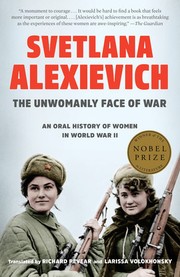
Her first book and the one that established the method: hundreds of Soviet women who fought as snipers, pilots and sappers, describing a war their own state had written them out of. Read it before Last Witnesses because it explains why she went looking for the voices nobody had recorded.

The same war narrated by people who were children during it, and structurally the hardest of her books to read in long sittings. It sits here because the adult accounts in the previous book give you the context these children never had.
The empire coming apart
IntermediateFollow the argument from the Soviet Union's last war to the collapse itself, and understand why her work has been prosecuted and disputed at home.
▸ Study plan for this stage
Pace: Twelve to fourteen weeks. Zinky Boys is around 200 pages and reads in a fortnight. Secondhand Time is over 700 pages and needs two to three months — there is no narrator to lean on and no plot pulling you forward, so a fixed daily allowance of twenty or thirty pages works far better than reading to
- Zinc coffins as the book's title and its central fact — the Afghan war's dead returned in sealed zinc, often to families forbidden to say how they died
- Soldiers and mothers given equal weight, which produces two incompatible accounts of the same war sitting on facing pages
- The 1993 lawsuit in Belarus, brought by veterans and relatives who said their testimony had been altered. The case turned on exactly what an oral historian may do with a transcript, and it remains a real question about the method rather than a settled scandal
- Why that dispute belongs in a study of her work. Every technique this path has described — cutting, compressing, sequencing, removing the interviewer — is precisely what the plaintiffs objected to, and a reader who has learned the method can weigh the objection rather than dismiss it
- Secondhand Time's subject: not the collapse as an event but the two decades afterwards, and what happened to people whose entire framework of meaning was withdrawn
- Homo sovieticus as the book's organising idea — a human type produced by a state, surviving the state's disappearance
- Nostalgia recorded without endorsement. Many speakers miss the Soviet Union, some of them fiercely, and the book neither corrects nor celebrates them
- Length as a formal choice. Seven hundred pages of unmediated voices is an argument that no shorter book could make, and the exhaustion is part of the effect
- What do the soldiers in Zinky Boys say about the war that the mothers do not, and vice versa?
- The lawsuit alleged that testimony was altered in editing. Given everything you now know about how these books are made, set out the strongest case for the plaintiffs and the strongest case for the writer before deciding what you think.
- What is homo sovieticus, as the speakers in Secondhand Time describe it rather than as a slogan?
- Many speakers express nostalgia for the Soviet Union. What are they actually missing, in their own accounts?
- Secondhand Time has no narrator and no thesis. Does an argument nonetheless emerge, and if so, what is it?
- Is the length necessary? Argue it properly rather than assuming either way.
- In Zinky Boys, find one event described by both a soldier and a mother and write a page on the two versions without reconciling them.
- Write 400 words setting out the editing dispute as an argument about method, presenting both positions fairly and reaching no verdict. This is harder than taking a side and it is the point.
- Keep a reading log for Secondhand Time with one line per testimony that struck you. At seven hundred pages the log is what keeps the book from becoming a blur, and afterwards it is a map of what actually reached you.
- Group ten Secondhand Time speakers by what they lost — status, certainty, safety, a country. The categories you end up with are close to the book's real structure.
- Return to the list of unanswered factual questions you started in stage one and add to it. It should now be substantial.
Next up: With all five books read, the final stage puts her beside the tradition she belongs to and the conventional histories that answer the questions her method deliberately declines to ask.

Soviet soldiers and their mothers on the Afghan war, named for the zinc coffins the bodies came home in. It belongs here as the hinge between the war books and the collapse — and as a fact worth knowing, the book led to Alexievich being sued in Belarus in 1993 by veterans and relatives who said their testimony had been altered, a case that turned on exactly what an oral historian is entitled to do with a transcript.

The longest and most demanding book, covering the 1991 collapse and the two decades after it, and the reason it comes last is simply length — over 700 pages of voices with no narrator to lean on. Read it once the method no longer needs explaining.
The company she keeps
IntermediatePlace Alexievich in the oral-history tradition, and read the conventional narrative histories that supply the dates, causes and chains of command her books deliberately omit.
▸ Study plan for this stage
Pace: Eight to ten weeks. The Good War is a large oral history of around 600 pages and is best read in sections rather than through. The archival history titled Chernobyl runs about 400 pages and should be read directly against Voices From Chernobyl, ideally with both open. The Future Is History is around
- The Good War as the American precedent for the form, and the instructive difference: Terkel keeps his questions in and his presence audible, where Alexievich removes herself completely
- Two answers to the same problem. Both writers are shaping other people's speech; one shows the shaping and one conceals it, and neither choice is obviously right
- What conventional archival history supplies: reactor physics, the sequence of decisions, the chain of command, the dates. All of it absent from her Chernobyl book by design
- Reading the two Chernobyl books together as the clearest demonstration in this path of what oral history buys and what it costs
- The Future Is History covering exactly Secondhand Time's decades through seven tracked lives, with a sustained thesis about the return of totalitarianism
- Thesis versus refusal. That book argues where Alexievich declines to, so the two disagree in method even where their moods converge — and comparing them is a question about what a reader is owed
- Sources and their uses. By this point you should be able to say what kind of question each form can answer and which form you would reach for first
- The Nobel citation described her work as a monument to suffering and courage in our time, and it is worth deciding, having read all five books, whether that is the right description
- Terkel's questions are on the page and Alexievich's are not. What does each choice do to the reader's trust?
- Take three questions from the list you have been keeping since stage one and find their answers in the archival Chernobyl history. What did the testimony gain by not answering them?
- Which of the two Chernobyl books would you give to someone who knew nothing about the disaster, and what would they misunderstand as a result?
- The Future Is History advances a thesis; Secondhand Time refuses to. Which approach convinced you more, and is convincing the right standard?
- What can oral history establish that archival history cannot, and where does it have no authority at all?
- Having read all eight books, would you now change the order in which you read Alexievich's five? Say why.
- Read one chapter of the archival Chernobyl history and the corresponding testimonies in Voices From Chernobyl on the same day, then write 300 words on what each format made you understand.
- Take one Terkel interview and re-edit it in Alexievich's manner, removing the interviewer entirely. Note what you had to change beyond deleting the questions.
- Write 400 words on what you think an oral historian is entitled to do with a transcript, referring to the dispute you read about in the previous stage. Reaching a considered position is the exercise; agreeing with anyone in particular is not.
- Draw up a one-page account of the Soviet century as these eight books present it, marking which claims rest on testimony and which on archives.
- Write your own two-sentence citation for her work, then compare it with the Nobel's. The comparison tells you what five books actually did to you.
Next up: This is the end of the path — the five books of the project, the tradition behind them and the histories that answer what they will not — and the natural next step is a reread of Voices From Chernobyl, which is a different book once you know both the archival record and the arguments about how it was made.
The Pulitzer-winning American precedent for what Alexievich does, and the comparison is instructive: Terkel keeps his questions in, she removes herself entirely. Reading them together makes her editorial choices visible rather than invisible.

A conventional archival history of the disaster by a historian of Ukraine, supplying the reactor physics, the Politburo decisions and the timeline that Voices from Chernobyl has no interest in. Pair the two and you can see precisely what oral history buys and what it costs.
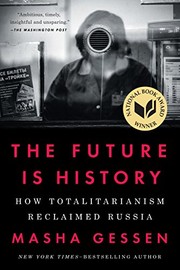
Covers the same post-Soviet decades as Secondhand Time but through seven tracked individuals and a sustained argument about the return of totalitarianism. Gessen advances a thesis where Alexievich refuses to, so the two books disagree in method even where they agree in mood.
Discussion
Keep reading
Paths that share books, cover the same subject, or open a related topic.