9/11 and the War on Terror: books to understand the post-2001 world
This curriculum builds from accessible narrative accounts of the attacks and their immediate context, through the key decisions and wars that followed, to critical and analytical works that interrogate the long-term consequences of the War on Terror. Starting with vivid, journalistic storytelling, each stage adds layers of political, historical, and strategic complexity so that by the end the reader can evaluate 9/11 and its aftermath from multiple informed perspectives.
Foundations: The Attacks and Their Origins
BeginnerUnderstand who carried out the 9/11 attacks, why, and what happened on that day — building the essential vocabulary and narrative baseline for everything that follows.
▸ Study plan for this stage
Pace: 8–10 weeks, ~40–50 pages/day. Start with "The Looming Tower" (470 pages, ~3 weeks), then move to "The 9/11 Commission Report" (567 pages, ~4–5 weeks), with 1–2 weeks for review and synthesis.
- Al-Qaeda's origins, ideology, and evolution from the Soviet-Afghan War through the 1990s
- Osama bin Laden's biography, radicalization, and role as founder and leader
- The specific grievances and strategic objectives that motivated the 9/11 attacks
- The timeline and sequence of events on September 11, 2001 (hijackings, crashes, casualties, response)
- The organizational structure and key figures within al-Qaeda and the 19 hijackers
- Intelligence failures and warning signs that preceded the attacks
- The immediate aftermath: emergency response, casualty counts, and initial investigations
- How the attacks were planned, funded, and coordinated across multiple countries
- What were the major events in Osama bin Laden's life and ideology that led him to found al-Qaeda, and how did the Soviet-Afghan War shape his worldview?
- What specific grievances and strategic objectives did bin Laden and al-Qaeda cite for attacking the United States on September 11?
- Walk through the timeline of September 11, 2001: what happened to each of the four hijacked planes, and what was the sequence of events in New York, Washington, and Pennsylvania?
- Who were the key al-Qaeda operatives and the 19 hijackers involved in planning and executing the attacks, and what were their roles?
- What intelligence warnings and red flags existed before 9/11, and why were they not acted upon effectively?
- How was the 9/11 attack planned, funded, and coordinated, and what does this reveal about al-Qaeda's operational capabilities?
- Create a detailed timeline of key events from bin Laden's early life through September 11, 2001, marking major turning points in his radicalization and al-Qaeda's development.
- Map out the organizational structure of al-Qaeda as described in both books, identifying key leaders, operatives, and their roles in the 9/11 plot.
- Trace the journey of the 19 hijackers: where they trained, how they were recruited, and their movements in the months before the attacks.
- Write a 2–3 page synthesis comparing Wright's narrative account in 'The Looming Tower' with the 9/11 Commission Report's findings on the same events—note where they align and where they emphasize different details.
- Create a visual timeline of September 11 itself (minute-by-minute or hour-by-hour) showing what happened at each of the four crash sites and in the emergency response.
- Identify and list the major intelligence failures and warning signs mentioned in both books (e.g., the Phoenix memo, the Moussaoui arrest, the Cole bombing), and explain why each was missed or not acted upon.
Next up: This stage establishes the foundational narrative—who attacked, why, and what happened—providing the essential context and vocabulary needed to understand the subsequent policy responses, the wars in Afghanistan and Iraq, and the long-term consequences of 9/11.
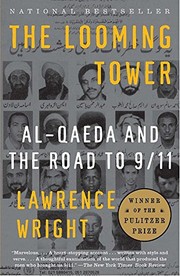
A Pulitzer Prize-winning narrative history of al-Qaeda's rise and the intelligence failures before 9/11 — the single best starting point for understanding how the attacks came to happen.
The authoritative official account of the attacks, written in unusually clear prose; reading it after Wright gives the reader a structured factual framework to anchor everything learned so far.
Into Afghanistan: The First War
BeginnerGrasp the historical and political context of Afghanistan and follow the U.S.-led invasion of 2001, understanding why the war began and why it proved so difficult.
▸ Study plan for this stage
Pace: 6–7 weeks, ~40–50 pages/day. Start with "Ghost Wars" (approximately 600 pages) over 3–4 weeks, then "Taliban" (approximately 400 pages) over 2–3 weeks to allow time for reflection and note-taking.
- Cold War proxy conflict in Afghanistan: how the Soviet invasion (1979) and U.S.-backed mujahideen resistance shaped decades of instability and created the conditions for Taliban emergence
- The rise of the Taliban (1994–1996) as a response to warlord chaos and civil war, and their interpretation of Islamic governance
- Osama bin Laden's presence in Afghanistan and the growth of al-Qaeda within Taliban-controlled territory, including the relationship between bin Laden and Taliban leadership
- U.S. intelligence failures and shifting priorities: how Afghanistan was abandoned after the Soviet withdrawal, leaving a power vacuum that extremist groups exploited
- The geopolitical stakes: Pakistan's role as a key player in Afghan politics, Saudi funding of Islamic movements, and regional competition for influence
- The Taliban's consolidation of power (1996–2001) and their governance model, including treatment of women, minorities, and international relations
- The immediate triggers for the 2001 U.S. invasion: 9/11, the hunt for bin Laden, and the decision to remove the Taliban from power
- Why Afghanistan proved difficult: terrain, tribal structures, weak central authority, and the legacy of decades of war that made nation-building extraordinarily complex
- How did the Soviet invasion of Afghanistan and the U.S.-backed mujahideen resistance create the conditions for the Taliban's rise, according to Coll and Rashid?
- What was the relationship between Osama bin Laden, al-Qaeda, and the Taliban, and why did the Taliban provide safe haven to bin Laden before 9/11?
- Why did the United States disengage from Afghanistan after the Soviet withdrawal, and what were the consequences of this abandonment?
- How did the Taliban consolidate power between 1994 and 1996, and what was their governance model based on?
- What role did Pakistan and Saudi Arabia play in Afghan politics and the rise of the Taliban, as described in these books?
- Why did the U.S. invasion of Afghanistan in 2001 prove so difficult despite initial military success, and what structural factors made long-term stability elusive?
- Create a detailed timeline (1979–2001) mapping key events in Afghanistan: Soviet invasion, mujahideen rise, Taliban emergence, bin Laden's arrival, and the 9/11 attacks. Annotate each with consequences.
- Construct a map of Afghanistan showing major ethnic/tribal regions, key cities, and neighboring countries (Pakistan, Iran, Tajikistan, Uzbekistan). Mark Taliban strongholds and areas of resistance as of 2001.
- Write a 2–3 page character profile of Osama bin Laden based on Coll's account: his background, why he came to Afghanistan, his relationship with the Taliban, and his strategic goals.
- Compare and contrast the mujahideen factions during the Soviet war with the Taliban that emerged afterward. Why did the Taliban succeed where others fragmented?
- Create a stakeholder analysis chart identifying the interests of key players (U.S., Pakistan, Saudi Arabia, Iran, Taliban, al-Qaeda, Afghan warlords) in Afghanistan before 2001.
- Write a reflective essay (3–4 pages) answering: 'Why did the U.S. fail to anticipate or prevent the Taliban's rise and bin Laden's entrenchment in Afghanistan?' Ground your answer in specific examples from both books.
Next up: This stage establishes the historical foundation—why the war began, who the key actors were, and what structural challenges existed—preparing you to examine the actual conduct of the 2001–2021 war, the strategies employed, and why those strategies ultimately failed.

Traces the CIA's involvement in Afghanistan from the Soviet war through 9/11, providing the deep backstory — including the origins of the Taliban and bin Laden — that explains the terrain the U.S. entered in 2001.
A concise, on-the-ground account of the Taliban's rise by a Pakistani journalist who covered the region for decades; essential for understanding the adversary before moving to the war itself.
The Road to Iraq: Decisions and Deceptions
IntermediateUnderstand how and why the Bush administration pivoted from Afghanistan to Iraq, the intelligence failures involved, and the political dynamics that drove the 2003 invasion.
▸ Study plan for this stage
Pace: 8–10 weeks, ~40–50 pages/day (Plan of Attack: 4–5 weeks; Fiasco: 4–5 weeks)
- The shift in strategic focus from Afghanistan to Iraq within months of 9/11, driven by neoconservative ideology and the Powell Doctrine debate
- How the Bush administration constructed a case for war through selective intelligence interpretation, cherry-picked evidence, and suppression of dissenting analysts
- The role of key decision-makers (Bush, Cheney, Rumsfeld, Powell, Wolfowitz) and their competing visions for post-9/11 military strategy
- The gap between pre-invasion planning assumptions and post-invasion realities: underestimating insurgency, troop requirements, and sectarian conflict
- How military leadership (Franks, Sanchez, Casey) operated within political constraints that undermined operational effectiveness
- The consequences of ideological commitment to regime change over evidence-based planning and the institutional failures that enabled it
- According to Woodward's account, what were the key moments and decision-makers that shifted U.S. strategic focus from Afghanistan to Iraq, and what ideological or strategic rationales did they cite?
- How did the Bush administration's intelligence assessment process differ from standard intelligence community practices, and what role did figures like Cheney and Rumsfeld play in shaping that process?
- What were the major assumptions the Pentagon made about post-invasion Iraq (troop levels, insurgency, sectarian dynamics), and how did Ricks document the gap between these assumptions and reality?
- How did Rumsfeld's vision of a 'transformed' military and light-footprint warfare strategy conflict with what military commanders on the ground actually needed to stabilize Iraq?
- What evidence do Woodward and Ricks present about the suppression or dismissal of dissenting voices within the military and intelligence community regarding Iraq planning?
- How did the political decision to invade Iraq constrain the military's operational choices, and what were the consequences for the insurgency and sectarian conflict?
- Create a timeline of key decisions (9/11 through March 2003 invasion) using Woodward, marking which decision-makers pushed for Iraq and when the pivot became irreversible
- Construct a matrix comparing the Bush administration's pre-invasion assumptions about Iraq (from Woodward) against Ricks' documented realities post-invasion; identify which assumptions proved most catastrophically wrong
- Write a 2–3 page analysis of Cheney's role in shaping intelligence interpretation and war planning, using specific examples from both books
- Map the competing visions for Iraq strategy among key figures (Rumsfeld's light footprint vs. military commanders' needs vs. Powell's concerns), using direct quotes from both texts
- Identify 3–4 instances where dissenting intelligence or military advice was suppressed or ignored; document the source, the dissent, and the consequences
- Prepare a debate-style outline: 'Was the Iraq invasion the result of ideological conviction or intelligence failure?' using evidence from both Woodward and Ricks to argue both sides
Next up: This stage establishes how and why the U.S. invaded Iraq based on flawed assumptions and politicized intelligence, setting up the next stage to examine the immediate consequences: the insurgency, sectarian violence, and the military's struggle to adapt to a war it was unprepared to fight.
A deeply reported inside account of the Bush administration's decision to invade Iraq, drawing on direct interviews with key officials — the best single-volume record of how that decision was made.
Picks up where Woodward leaves off, documenting the catastrophic mismanagement of the Iraq occupation; reading it second in this stage shows the gap between the decision and its execution.
Living the Wars: Ground-Level Accounts
IntermediateDevelop an on-the-ground human understanding of what the wars in Afghanistan and Iraq actually looked and felt like for soldiers, civilians, and journalists.
▸ Study plan for this stage
Pace: 8–10 weeks, ~40–50 pages/day. "The Forever War" (approximately 400 pages) takes 4–5 weeks; "Imperial Life in the Emerald City" (approximately 400 pages) takes 4–5 weeks. Build in 1–2 weeks for reflection and integration between books.
- The psychological and physical toll of prolonged combat: how repeated deployments, trauma, and the fog of war shape soldiers' perception of reality and their ability to process what they witness
- The gap between military strategy and ground reality: how top-down decisions made in Baghdad's Green Zone disconnect from the actual conditions, relationships, and consequences soldiers and civilians experience
- Civilian casualties and collateral damage as a lived experience: understanding how military operations affect ordinary Afghans and Iraqis, their families, and their relationship to foreign forces
- Journalism as witness and moral reckoning: how embedded reporters navigate the tension between documenting violence and becoming complicit in it
- The machinery of occupation: how bureaucratic structures, cultural misunderstanding, and imperial assumptions shape the day-to-day reality of rebuilding efforts in Iraq
- The human cost of mission creep: how wars intended to be brief become indefinite, grinding down both combatants and civilians with no clear endpoint
- How does Filkins' repeated exposure to violence and loss change his understanding of the war's purpose and his role as a journalist? What specific moments mark shifts in his perspective?
- What are the concrete ways that decisions made in the Green Zone (as described in Chandrasekaran's book) failed to account for realities on the ground that Filkins witnessed as a soldier and reporter?
- How do both books portray the experience of Afghan and Iraqi civilians caught between military operations and occupation? What do these accounts reveal about the human cost of the wars?
- What patterns of trauma, moral injury, and psychological adaptation do soldiers in 'The Forever War' exhibit, and how do these connect to the broader institutional failures Chandrasekaran documents?
- How do the two books' different vantage points—Filkins as embedded witness and Chandrasekaran as institutional observer—create a more complete picture of the wars than either alone could provide?
- What does 'forever war' mean in light of both books? How do they illustrate the ways these conflicts became open-ended rather than winnable?
- Create a timeline of Filkins' deployments and major events he witnesses in 'The Forever War,' then annotate it with his emotional/psychological state at each point. Identify turning points where his perspective shifts.
- Map the organizational hierarchy and decision-making structure of the Green Zone as Chandrasekaran describes it. For 3–4 major initiatives (reconstruction, governance, etc.), trace how decisions flowed downward and what ground-level consequences resulted.
- Select 3–4 specific incidents from 'The Forever War' where civilian casualties or collateral damage occurred. Research the actual historical events if possible, then write a 2–3 page reflection on how Filkins' account humanizes abstract statistics.
- Conduct a close reading of one chapter from each book that deals with the same location or time period (if applicable). Write a comparative analysis of how the two authors' different roles (soldier/journalist vs. institutional observer) shape what they notice and how they interpret events.
- Interview a veteran, journalist, or aid worker with experience in Afghanistan or Iraq (if accessible), or analyze an oral history from a public archive. Compare their account to moments in both books—what details align, what differs, what gets left out?
- Write a fictional letter from a character in Chandrasekaran's Green Zone to a soldier Filkins encounters in the field, explaining a decision made at the institutional level. Then write the soldier's response, highlighting the gap between intention and reality.
Next up: This stage grounds you in the lived, human reality of the wars—the sensory details, emotional weight, and moral ambiguity soldiers and civilians experienced—preparing you to examine the broader political, strategic, and ideological decisions that shaped these conflicts in subsequent stages.

A masterpiece of war journalism covering both Afghanistan and Iraq from the front lines; its literary immediacy makes the abstract costs of the wars viscerally real.
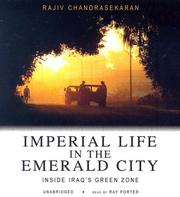
An award-winning account of the Coalition Provisional Authority's failures inside Baghdad's Green Zone, complementing Filkins by showing the civilian and bureaucratic side of the occupation.
Reckoning: Consequences and Critical Analysis
ExpertCritically evaluate the long-term strategic, legal, moral, and geopolitical consequences of the War on Terror, and situate 9/11 within broader histories of U.S. foreign policy and political Islam.
▸ Study plan for this stage
Pace: 8–10 weeks, ~40–50 pages/day (with 1–2 reflection days per week). Maddow (320 pp, ~2 weeks), Wood (400 pp, ~2.5 weeks), Bergen (480 pp, ~3 weeks), plus synthesis and review.
- Institutional drift and the normalization of executive power: how post-9/11 policies became entrenched without explicit democratic debate (Maddow's core argument)
- Ideological genealogy of ISIS and jihadist movements: understanding how individual radicalization and organizational strategy connect to broader Islamic theology and political grievance (Wood)
- The evolution of U.S. counterterrorism strategy across three presidencies: from immediate response to sustained global war, and its strategic effectiveness and costs (Bergen)
- The distinction between terrorism as tactic, jihadism as ideology, and the War on Terror as geopolitical project—and how conflating these obscures analysis
- Blowback and unintended consequences: how military interventions, drone strikes, detention policies, and support for regional allies generate new recruitment narratives and instability
- Legal and constitutional erosion: the role of classified programs, executive orders, and normalized exception in reshaping American governance post-9/11
- The role of grievance narratives in radicalization: how U.S. foreign policy decisions become recruitment tools for extremist organizations
- Long-term geopolitical realignment: how the War on Terror reshaped U.S. relationships with allies, rivals, and the Muslim world
- What does Maddow mean by 'drift,' and how does she argue that post-9/11 executive power became normalized without explicit democratic authorization?
- How does Wood explain the appeal of ISIS ideology to recruits, and what role do grievances about U.S. foreign policy play in his analysis of radicalization?
- According to Bergen, what were the major strategic shifts in U.S. counterterrorism policy across the Bush, Obama, and early Trump administrations, and what were their measurable outcomes?
- How do the three books collectively demonstrate that the War on Terror created unintended consequences that undermined its stated objectives?
- What is the relationship between specific U.S. military and intelligence policies (drone strikes, detention, support for regional regimes) and the recruitment narratives used by jihadist organizations, as illustrated across these texts?
- How do these books challenge the framing of 9/11 as a discrete event requiring a permanent state of exception, versus situating it within longer histories of U.S. foreign policy and Islamic political movements?
- Create a timeline of major U.S. counterterrorism policies (2001–2017) using Bergen and Maddow, then annotate each with: stated objective, actual implementation, and documented consequences. Identify patterns of drift or mission creep.
- Read a primary source recruitment document or propaganda video transcript from ISIS (available through academic databases or the Stanford Internet Observatory). Analyze it against Wood's framework: which grievances does it invoke? Which U.S. policies does it reference? How does this validate or complicate Wood's argument?
- Construct a 'blowback map': select 3–4 major U.S. interventions or policies discussed in Bergen (e.g., drone strikes in Yemen, support for Saudi Arabia, detention practices). For each, trace the documented radicalization narratives it generated, using examples from Wood and Bergen.
- Write a 2,000-word critical essay: 'How did the War on Terror become permanent?' Use Maddow's concept of drift, Wood's analysis of jihadist ideology, and Bergen's policy history to argue how a temporary emergency response became institutionalized.
- Debate exercise (solo or with a partner): Argue both sides—'The War on Terror was strategically necessary' vs. 'The War on Terror created more terrorism than it prevented'—using specific evidence from all three books. Identify which arguments are strongest and which rely on unstated assumptions.
- Comparative policy analysis: Select one counterterrorism tactic discussed across all three books (e.g., drone strikes, detention, support for regional allies). Write a 1,500-word memo evaluating its effectiveness, legality, and long-term strategic cost, citing all three authors.
Next up: This stage equips you with a critical framework for understanding how 9/11 and the War on Terror reshaped American power, law, and geopolitics—preparing you to examine either the specific regional consequences of these policies (Middle Eastern state collapse, refugee crises, sectarian conflict) or the domestic political and civil liberties fallout, depending on your curriculum's next focus.

Examines how the post-9/11 wars accelerated the long drift toward an unchecked executive war-making power in the U.S., providing essential constitutional and political context for the era.
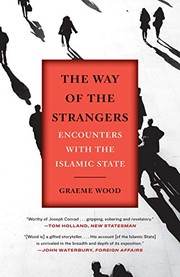
A rigorous, reported examination of ISIS's ideology — the direct successor movement to al-Qaeda in Iraq — showing how the War on Terror's failures generated new and more extreme forms of jihadism.
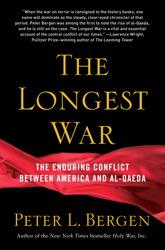
A comprehensive strategic assessment of the entire War on Terror by a leading terrorism scholar who interviewed bin Laden; the ideal capstone that ties together al-Qaeda, Afghanistan, Iraq, and the broader legacy.
Discussion
Keep reading
Paths that share books, cover the same subject, or open a related topic.