Terrorism Studies: The Best Books on Political Violence and How Campaigns End, in Order
Terrorism studies is a field where almost every author has a political commitment and where books tied to a particular decade's threat date very fast, so this path is built to survive that. It starts with definition and history, moves to three incompatible scholarly explanations of why people take up political violence, then to regional case studies deep enough to test those explanations, then to the far less-read literature on how campaigns actually end, and finishes with sustained criticism of what states did in the name of counterterrorism. Every entry says where its author stands.
Definition, and why there isn't one
BeginnerEstablish the field's founding problem: there is no agreed definition of terrorism, and that is not a preliminary annoyance to be cleared up — it is the substance of the argument. Definitions decide who counts as a terrorist and who counts as a state exercising force, so a definition is a political act. By the end of this stage you should be able to state three serious definitions, say which actors each includes and excludes, and notice when a later author has quietly chosen one.
▸ Study plan for this stage
Pace: About five weeks for 950 pages, and the three are very different lengths. Start with Townshend's Terrorism (161pp), an Oxford Very Short Introduction filed in the catalogue under the bare title — four or five sittings, and it is the only book here that treats the definitional problem as the subject
- Why no agreed definition exists, and why that is the field's substance rather than a preliminary tidying job
- The three axes every definition turns on: the actor, the target, and the purpose
- State terror and the question of whether a definition that excludes states by construction is doing analytic or political work
- The distinction between terrorism, insurgency and guerrilla warfare, and where each author draws it
- The long historical record — anarchists to anti-colonial campaigns — as the correction to any claim that a current threat is unprecedented
- How to spot an author who has quietly adopted a definition without arguing for it
- State three serious definitions of terrorism and say, for each, which actors it includes and which it excludes.
- What definition does Hoffman settle on, and what does it do to state violence?
- Where does Townshend say the definitional dispute actually bites on policy?
- What does Laqueur's historical sweep establish that a study of one decade cannot?
- Identify the standpoint of each of these three authors from the text itself, not from a biography.
- Write out Hoffman's definition, Townshend's discussion and Laqueur's working assumption side by side, then apply all three to four historical cases and record where they disagree.
- Take one campaign Laqueur covers and ask whether Hoffman's definition would classify it as terrorism. Write the argument both ways.
- Keep a running definition sheet for the whole path: for each later book, note which definition the author is using and whether they say so.
- Find a news report using the word terrorism and identify which of your three definitions it presupposes.
Next up: With the definitional ground mapped you can read the field's causal theories without being quietly recruited into one author's category scheme.
The shortest honest orientation to the field, by a historian of political violence, and unusually direct about the definitional problem rather than declaring it solved on page one. The catalogue files it under the bare title Terrorism; this is the Oxford Very Short Introduction.
The field's standard survey and the closest thing to a shared reference point, written from inside the policy-facing mainstream of terrorism studies — which critical scholars regard as a standpoint rather than a neutral position. Its definitional chapter is the one most syllabuses assign.

The long historical view — anarchists, Fenians, Russian revolutionaries, anti-colonial campaigns — which is the antidote to treating any current threat as unprecedented. Laqueur writes from a firmly realist, state-security standpoint and is dismissive of structural-cause arguments; know that going in.
Three explanations that cannot all be right
IntermediateCompare the field's main causal accounts on their evidence rather than their conclusions. Pape argues suicide campaigns are a strategic response to foreign occupation; Juergensmeyer argues religious violence follows a logic of cosmic war that strategic models miss; Sageman argues small-group friendship networks, not ideology or grievance, do most of the recruiting. Each is built on a different kind of data — a coded campaign database, interviews with religious militants, and biographies of arres
▸ Study plan for this stage
Pace: Read these three as a set, inside about five weeks for 912 pages, and do not leave gaps between them — they are three incompatible causal accounts and the incompatibility is the stage. Pape's Dying to win (347pp) first, two weeks: it is the most quantitatively serious claim in the field, built from
- Pape's occupation thesis: suicide campaigns as a strategic response by a group to foreign military occupation of territory it prizes
- Cosmic war — Juergensmeyer's account of violence as performative and symbolic rather than instrumental
- The friendship-and-kinship recruitment finding, and its displacement of poverty, ideology and psychopathology as explanations
- Unit of analysis: campaign, movement, and individual are three different objects, and each theory picks one
- Coding decisions as the hidden argument in any database study
- Selection on the dependent variable — the standing problem when you study only groups that did attack
- The Sageman–Hoffman dispute over leaderless jihad, and what would settle it
- State Pape's thesis precisely. Which cases fit it worst, and how does he handle them?
- What does Juergensmeyer mean by cosmic war, and what in his interviews is the evidence for it rather than for strategy?
- What did Sageman actually find in his 170 biographies, and what were the sources for those biographies?
- Take one campaign and write what each of the three would say caused it. Where do the accounts contradict rather than merely differ in emphasis?
- For each author, state what evidence would have changed their mind.
- Can any two of these three be true at once? Argue it from the texts.
- Rebuild one of Pape's coding decisions from his own description and ask what the result looks like if the case is coded the other way.
- Take three of Juergensmeyer's interviewees and mark, in their own quoted words, every statement that is instrumental and every one that is not.
- Draw one of Sageman's networks from the biographies he gives and identify the link that did the recruiting.
- Write a one-page referee report on each book, attacking only its evidence and never its politics.
- Find one published critique of Pape's database and note precisely which of his conclusions it does and does not touch.
Next up: Three theories built on three kinds of evidence now need one case documented well enough to test all three against the same facts.
The occupation thesis, built from a database of every suicide attack over two decades and the most quantitatively serious claim in the field. Heavily contested on its coding decisions and its handling of cases that do not fit; read the critiques alongside it.
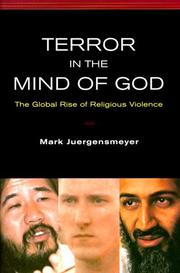
Interviews across Christian, Jewish, Islamic, Sikh and Buddhist militant movements, arguing that religious violence is performative and symbolic rather than instrumental. The direct rebuttal to any purely strategic model, and deliberately comparative so it cannot be read as a book about one religion.
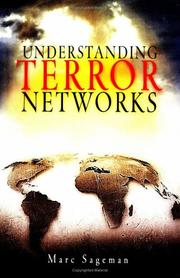
A forensic psychiatrist and former case officer coding the biographies of roughly 170 jihadists, finding kinship and friendship rather than poverty, ideology or psychopathology. Its follow-up Leaderless Jihad extends the argument to self-organised cells and started a public dispute with Hoffman about whether that shift was real.
One case, in enough depth to test the theories
IntermediateRead a single lineage — Afghanistan, al-Qaeda, and what followed — in enough detail to check the previous stage's models against it. The point is not to learn this case for its own sake but to see how much of it any one theory explains, and to notice how much of the standard account rests on journalism rather than on scholarship.
▸ Study plan for this stage
Pace: Eight to nine weeks for 1,545 pages, the longest stage on the path. Coll's book (736pp) is the largest single item — four weeks at 40 pages a session, covering the CIA, Saudi Arabia and Pakistan in Afghanistan up to September 2001; note that our catalogue holds it under a junk marketplace display ti
- Blowback as a documented sequence rather than a slogan — counterterrorism policy generating its next problem
- The distinction between an organisation, a movement and a brand, which is where Gerges and the others part company
- What journalism can establish that scholarship cannot, and the reverse
- Reconstructing a network from biography: the method Wright uses and its blind spots
- Threat assessment as a political product, and the incentives that shape it
- How much of a single case any one causal theory actually explains once the details are in
- Which of Sageman's mechanisms can you see operating in Wright's reconstruction, and which cannot be seen at that resolution?
- Does Coll's Afghanistan material support Pape's occupation thesis, complicate it, or neither?
- What is Gerges's evidence that the organisation was defeated, and what does the later emergence of Islamic State do to it?
- Where do Coll and Wright rely on the same sources, and where do they disagree?
- Which parts of the standard account of this case rest on journalism, and would you believe them at a lower standard of proof if they came from elsewhere?
- Build one timeline from Coll and Wright combined, marking each event with its source. Note every point where only one book carries it.
- Score the case against all three stage-two theories: for each, list two facts that fit and two that do not.
- Take Gerges's central claim and write out what evidence between his writing and now would confirm or refute it.
- For one attack described by both Wright and Juergensmeyer, compare a journalist's causal account with an interview-based one.
Next up: Having watched one campaign in detail, the obvious question is the one the field asks least often — what actually makes campaigns stop.

The CIA, Saudi Arabia and Pakistan in Afghanistan from 1979 to September 2001 — the essential background to everything after, and the book that shows counterterrorism's own history producing its next problem. The catalogue holds it under a junk marketplace display title; the work is Coll's 2004 Pulitzer winner.
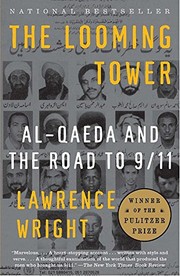
The narrative history of al-Qaeda from Qutb to 2001, and the best test case for Sageman's network argument because Wright reconstructs the specific relationships. Journalism rather than scholarship, and it is more interested in individuals than in structural causes.

A scholar of the Middle East arguing that the organisation was strategically defeated and that Western threat assessments massively overstated it — written before the emergence of Islamic State, which is the obvious objection and one Gerges addressed in later work. Read it as the deliberate corrective to the previous two.
How campaigns actually end
IntermediateMove to the least-read and most useful part of the literature. Almost every terrorist campaign in history has ended, usually not by military defeat, and the mechanisms — decapitation, negotiation, repression, splintering, loss of support, achieving the goal — have very different track records. Both practitioner books here argue for talking, which is a position, not a finding.
▸ Study plan for this stage
Pace: Six to seven weeks. Cronin's How Terrorism Ends (336pp) comes first and deserves three weeks: it is a comparative study across hundreds of groups, scholarly and policy-facing, and it is the single most useful book on the path because it turns an emotive subject into a question with an evidence base.
- Cronin's six ending mechanisms — decapitation, negotiation, success, failure, repression, reorientation — and their very different track records
- Why leadership decapitation performs worse than its popularity suggests
- Negotiation as an empirical claim about outcomes versus negotiation as an advocacy position
- Sacred values and devoted actors: Atran's argument that cost-benefit levers do not reach the people they are aimed at
- The participant-author problem, plain in Powell's account of events he helped shape
- Splintering and loss of constituency support as slow endings that no policy claims credit for
- How Atran's fieldwork bears directly on Pape's rational-actor framing from stage two
- Name Cronin's ending mechanisms and rank them by how often they work, on her evidence.
- What does Cronin say about decapitation, and what is her strongest counter-case?
- Powell argues governments always end up negotiating. What is his evidence, and what does his own role add to and subtract from it?
- What is a devoted actor in Atran's sense, and what field evidence does he give?
- Which stage-two theory does Atran most directly contradict, and on what point?
- If you had to end one live campaign, which mechanism would you choose and what would you need to know first?
- Take five groups from Cronin's study and, for each, write the mechanism that ended it and one alternative explanation she rejects.
- Read Powell's account of one channel and separate what he witnessed from what he concluded. Mark every place his own position is load-bearing.
- Apply Atran's devoted-actor test to two of Pape's cases from stage two and write what changes.
- Return to the Afghanistan case from stage three and ask which of Cronin's mechanisms was ever seriously attempted.
- Write half a page on what evidence would show that negotiation makes campaigns more likely, not less.
Next up: Endings are decided as much by what states do as by what groups want, which makes the state's own conduct the last thing left to examine.

The systematic study of endings across hundreds of groups, and the single most useful book on the path: it converts an emotive subject into a comparative question with an evidence base. Scholarly and policy-facing, and sceptical of leadership decapitation as a strategy.
Blair's chief of staff on the secret channels that produced the Northern Ireland settlement, generalised into an argument that governments always end up negotiating. A practitioner's advocacy, not a study — his own role in the events he describes shapes the account throughout.

An anthropologist doing fieldwork with militants and their families in Indonesia, Palestine and Europe, arguing that devoted actors motivated by sacred values do not respond to the cost-benefit levers policy assumes. The methodological outlier here and the strongest challenge to Pape's rational-actor framing.
Counterterrorism as its own subject
IntermediateFinish by turning the field's lens on the state. Both books are critical accounts of counterterrorism practice by authors who are explicit about their position: Mayer on the legal machinery of detention and interrogation after 2001, Mueller on the argument that the threat was systematically overstated and the response wildly disproportionate to it. Neither is neutral, and each should be read against the mainstream survey you started with.
▸ Study plan for this stage
Pace: About four weeks for 678 pages, and both books are arguments rather than surveys. Mayer's The dark side (412pp) takes two and a half weeks at 30 pages a session: investigative reporting naming the lawyers and officials who built the legal architecture of indefinite detention, rendition and enhanced
- The legal machinery of exception: how detention, rendition and interrogation practices were authorised rather than merely tolerated
- Documentary sourcing as the thing that separates an argued case from a polemic
- Threat inflation and the institutional incentives that produce it
- Risk comparison as a method, and its limits when the risk is deliberately imposed by an adversary
- Opportunity cost in security policy — what the same spending bought elsewhere
- Reading an explicitly committed author: what their standpoint predicts about which facts they will pursue
- What does Mayer establish documentarily, and what does she argue beyond the documents?
- Which specific legal decisions does she identify as the hinges, and who made them?
- What is Mueller's risk comparison, and what is the strongest objection to comparing terrorism deaths with everyday hazards?
- Where does Mueller's argument depend on the threat having been low, and where would it survive the threat having been high?
- How does Hoffman's mainstream account answer each of these two books?
- Which of Cronin's ending mechanisms do the policies Mayer describes make more or less likely?
- Take one chapter of The dark side and list every claim with its source. Mark which rest on named documents and which on anonymous interviews.
- Reproduce one of Mueller's cost or risk calculations from his own figures, then vary one assumption and see how much the conclusion moves.
- Write out the mainstream reply to each book using Hoffman's text from stage one, quoting rather than paraphrasing.
- Revisit your definition sheet from stage one and record which definition each of these two authors is using, and whether the argument depends on it.
Next up: You can now read a new book in this field and place it immediately — its definition, its evidence type, its standpoint, and whether it is describing a campaign or arguing about a policy.
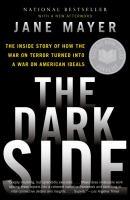
Investigative reporting on how the legal architecture of indefinite detention, rendition and enhanced interrogation was actually built, naming the lawyers and officials who built it. Openly a case for the prosecution; its documentary basis is what makes it hold up.
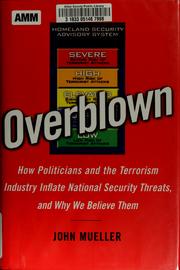
A political scientist's argument that the terrorism threat has been consistently exaggerated and that the counterterrorism response has cost more than the attacks it prevents. Deliberately provocative and easy to caricature, so read the actual risk comparisons; his Terror, Security, and Money extends the case with cost-benefit analysis.
Discussion
Keep reading
Paths that share books, cover the same subject, or open a related topic.