The War of 1812: books to read, in order
The War of 1812 is remembered by Americans as a second war of independence, by Canadians as a successful defence, by the British as a sideshow to Napoleon, and by the Native nations of the Ohio Valley as the war in which they lost everything. This path starts with the standard one-volume histories, then places the war in its Atlantic and Napoleonic context, then handles the naval war that produced most of its famous moments, and ends with the reframings — Alan Taylor's civil war thesis, Tecumseh's confederacy, and the burning of Washington.
The War in One Volume
BeginnerGet the whole war straight — the causes, the failed invasions of Canada, the Chesapeake campaign, New Orleans and the Treaty of Ghent — and clear out the myths before they harden
▸ Study plan for this stage
Pace: 4 weeks. Hickey's The War of 1812 is around 450 pages of scholarly one-volume history — two weeks at 30 pages a day, with notes. Borneman's 1812 is faster and more personality-driven; a week. Hickey's Don't Give Up the Ship! is a myth-by-myth demolition and works best read in short sittings over the
- The war's basic architecture: three failed American invasions of Canada in 1812-13, the naval war on the lakes and the ocean, the British Chesapeake campaign of 1814, and New Orleans in January 1815
- The Treaty of Ghent as a return to the status quo ante — no territory changed hands and none of the stated war aims were secured by the text
- Hickey's unsentimental reading of American war aims and of how badly the war was prosecuted: militia refusals, command incompetence, and a treasury that nearly failed
- The New England opposition and the Hartford Convention, and why the war was as divisive domestically as any in American history before 1861
- The specific myths Hickey dismantles in Don't Give Up the Ship! — the Star-Spangled Banner story, the significance of New Orleans, what Jackson actually achieved, and the war as a 'second war of independence'
- The four national memories of the war (American, Canadian, British, Native) and why they are not simply four perspectives on one agreed set of facts
- What were the United States' stated war aims in June 1812, and which of them does the Treaty of Ghent address?
- Hickey and Borneman narrate the same war at different speeds. Name a judgement Borneman makes about a commander that Hickey's evidence does not support
- Why did the invasions of Canada fail? Distinguish the logistical explanation from the political one, and say which Hickey weights more heavily
- Take three myths from Don't Give Up the Ship! and, for each, say where the false version came from and whose interest it served
- Before going on: write a sentence saying who won the War of 1812. You will be asked to revise it twice
- Build a one-page campaign timeline from June 1812 to January 1815 from Hickey, then annotate it with Borneman's set-piece scenes. The scenes cluster, and where they cluster is where popular memory of the war lives
- Pick one myth Hickey debunks and trace it backwards: find where Borneman handles the same episode and note whether he repeats the myth, hedges, or corrects it. Doing this on a book you have just enjoyed is the exercise
- List every American war aim and every British one, then mark each as achieved, abandoned or moot by December 1814. The resulting table is the whole argument about who won
- Write a paragraph defending the 'second war of independence' framing as strongly as you can, then mark every sentence in it that Hickey has already refuted
Next up: With the war straight and the myths cleared, you can ask why it was fought at all — and read it from a capital that barely noticed.
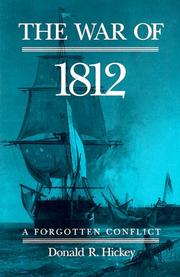
The standard scholarly one-volume history, and the book most later writers argue with. Hickey is unsentimental about American war aims and about how badly the war went, which makes him the right foundation.
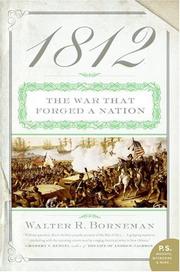
A narrative popular history that moves faster than Hickey and is stronger on the personalities. Read second, as the story to hang on the framework — and note the catalogue files it under the bare title '1812'.
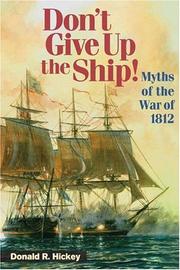
Hickey's book-length demolition of the war's persistent myths, from the Star-Spangled Banner story to what Andrew Jackson actually achieved. Best read once you have absorbed the standard account and can feel which parts are being corrected.
Why It Was Fought, and by Whom
IntermediateUnderstand impressment, trade restriction and expansionism as causes, and see the war from the British side as one theatre of a global struggle with Napoleon
▸ Study plan for this stage
Pace: 5 weeks. Bickham's The Weight of Vengeance takes ten days. Black's War of 1812 in the Age of Napoleon is short and analytical, a week. Wood's Empire of Liberty is a large Oxford History volume — read the chapters from Jefferson's embargo through 1815 closely over two weeks rather than the whole book
- Impressment as a legal and practical dispute: the British claim to remove its own subjects from neutral merchant ships, the American position on naturalisation, and the numbers actually involved
- The Orders in Council and the American embargo as economic warfare, and the fact that the Orders were repealed days before the American declaration
- Expansionism as a cause — the 'war hawks', the appetite for Canada, and Hickey's and Wood's differing weightings of it against maritime grievance
- Bickham's central correction: from London the war was a manageable imperial problem in a global struggle with Napoleon, not a national emergency, and British decisions make sense only at that scale
- Black's strategic frame: British naval and military resources committed elsewhere, and what the North American theatre could actually be given until Napoleon's abdication in 1814
- Wood's domestic account — the Republican political coalition, the deliberate weakness of the federal military establishment, and how a party committed to small government fought a war
- The 1814 change of scale: the release of Peninsular veterans and what that did to the war's second half
- How many American seamen were impressed, on the best available estimate, and how does each of these authors handle a number that both sides had reason to distort?
- The Orders in Council were repealed before the declaration of war. Does that fact support the maritime-grievance explanation or undermine it? Argue both ways before choosing
- Bickham says the war looked different from London. Name two British decisions that appear irrational from an American-centred account and become intelligible in his
- Wood explains why the American military establishment was as weak as it was. What was the ideological commitment behind that weakness, and did the war change it?
- Black places the war inside the Napoleonic conflict. What would have happened to the North American theatre if Napoleon had not abdicated in April 1814?
- Take the impressment figure and trace it across Hickey, Bickham and Wood. Record each author's number and its source. Where an author gives no source, note that too
- Write the British cabinet's case for the war in one paragraph, dated 1813, using only Bickham and Black. It should contain no reference to American honour, and noticing that is the point
- Bickham and Hickey disagree in emphasis on how much expansionism drove the American declaration. Find a passage in each on the war hawks and decide which reading the congressional voting record they both cite better supports
- Using Wood, list the specific fiscal and institutional constraints on the American war effort in 1812. Then check them against the campaign failures in stage one and mark which failures they explain
- Revise the sentence you wrote about who won. Note which of your reasons were about outcomes and which about intentions
Next up: The causes were largely maritime, which makes the naval war the place where the war's aims and its conduct actually meet.

The war viewed from London, where it was a manageable imperial problem rather than a national crisis. It is the best single correction to the American assumption that Britain was much concerned about the outcome.

Black situates the conflict inside the wider European war and the naval strategy that governed it. Read after Bickham for the strategic scale that makes British decisions look rational rather than negligent.

The Oxford history of the early American republic from 1789 to 1815, covering the politics and society that produced the war party. It supplies the domestic context Hickey assumes and Borneman skips.
The War at Sea
IntermediateFollow the frigate duels, the commerce raiding, the British blockade and the lake campaigns, and understand why a handful of single-ship victories mattered so much politically
▸ Study plan for this stage
Pace: 4 weeks. Toll's Six Frigates is long but reads like narrative — ten days. Budiansky's Perilous Fight covers the naval war campaign by campaign and takes ten days. Roosevelt's The Naval War of 1812 is a nineteenth-century primary source; a week, and read it as evidence about 1882 as much as about 181
- Where the six frigates came from: the 1794 Act, the Barbary wars, and why the United States had a handful of unusually heavy frigates and almost nothing else
- The single-ship victories of 1812 — Constitution against Guerriere and Java, United States against Macedonian — and the enormous political effect of engagements with negligible strategic weight
- Why those victories were possible: American frigates rated at 44 guns were materially heavier than the British 38s they beat, and both navies knew it
- Commerce raiding and privateering as the American strategy that actually imposed cost, against the ship-duel narrative that got the attention
- The British blockade as the decisive naval fact: the strangling of American trade, the collapse of federal revenue, and the coastal raiding it enabled
- The lake campaigns — Erie in 1813, Champlain in 1814 — as the theatre where naval control determined land outcomes, unlike the ocean war
- Roosevelt as a source: written at twenty-three, technically rigorous on tonnage and broadside weight, and openly nationalist in a way that lets you watch a myth being professionalised
- Why did a handful of single-ship victories matter so much politically when they changed nothing strategically? Answer for both the American and the British public
- Budiansky and Roosevelt both analyse the frigate duels. Where does Roosevelt's account of relative force differ from Budiansky's, and is the difference in the data or in the framing?
- What did the British blockade cost the United States in revenue and trade, and how close did it bring the federal government to insolvency?
- Toll ends where Budiansky's detail begins. What does Toll's institutional history of the navy's founding explain about the 1812 performance that a campaign narrative alone would miss?
- Roosevelt wrote in 1882 and his book remained standard for generations. What did it establish that was genuinely durable, and what did it help fix in place that Hickey later had to undo?
- Take one frigate action and read all three accounts of it. Write down the broadside weights and crew numbers each author gives, and note where they disagree. This is the check on the 'American seamanship' explanation
- Compare the space Roosevelt gives the ship duels with the space he gives the blockade, then do the same for Budiansky. The ratio is a measure of what each author thinks the naval war was
- Map the Lake Erie and Lake Champlain campaigns onto the land campaigns from stage one, marking which land outcome each naval result determined. Then ask why the ocean war has no equivalent entry
- Write a paragraph making the case that the United States lost the naval war, using the blockade and the trade figures. Then write the case American memory actually kept, and identify the moment in Roosevelt where the second is being constructed
Next up: The naval war is the war as the two governments fought it; the last stage is the war as it was experienced by the people whose country it was fought across.
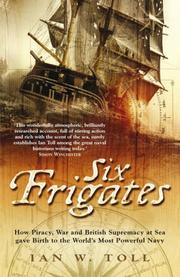
How the United States Navy was created and why those six ships existed at all, running up to and through the war. Superb narrative and the necessary background to every naval engagement in the conflict.

The naval war itself, ship by ship and campaign by campaign, including the blockade that strangled the American economy. Read after Toll, who has already introduced you to the ships and their officers.
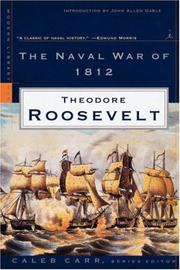
Roosevelt wrote this in 1882 at twenty-three and it remained the standard naval account for generations. Read it last in this stage as a primary source on nineteenth-century American self-understanding as much as for its history.
The Other Wars of 1812
IntermediateRead the war as a civil conflict across borders and as the destruction of Native independence east of the Mississippi, and see how its two most famous episodes actually unfolded
▸ Study plan for this stage
Pace: 6 weeks. Taylor's The Civil War of 1812 is the stage's argument and needs two weeks at 30 pages a day. Sugden's Tecumseh and Edmunds's The Shawnee Prophet should be read as a pair over two weeks — Sugden first, Edmunds immediately after. Vogel's Through the Perilous Fight takes a week, Remini's The
- Taylor's reframing: a borderland war among American citizens, British subjects, Irish rebels and Indian allies, where allegiance was contested and often chosen rather than inherited
- Why the Canada-United States border was a legal fiction in 1812 for most of the people living along it, and what the war did to make it real
- Tecumseh's confederacy as a political project — a pan-Native alliance premised on land being held in common and therefore unsellable by any single nation
- Tenskwatawa's religious revival as the movement's foundation: Edmunds's argument that the spiritual programme came first and made the political one possible
- The destruction of Native independence east of the Mississippi as the war's one decisive outcome, and the fact that no Native party was represented at Ghent
- The 1814 Chesapeake campaign in close detail — Bladensburg, the burning of Washington, and the bombardment of Fort McHenry that produced the anthem
- New Orleans as a battle fought after the treaty was signed: militarily lopsided, strategically irrelevant to the peace, and politically decisive for Jackson and for American memory
- Taylor argues that loyalties in the borderland ignored the national categories the war was fought under. What evidence does he use, and what would count against his reading?
- Sugden and Edmunds divide a single movement between two brothers. Which of them does each author treat as the originating figure, and on what evidence does that judgement rest?
- The Treaty of Ghent has an article concerning the Indian nations. Read what it says, then say what actually happened. The distance between those two is the point of the stage
- Vogel narrates the burning of Washington and Fort McHenry. What did the Chesapeake campaign achieve for Britain, and why did it not translate into a better peace?
- Remini is Jackson's leading biographer writing about Jackson's greatest victory. Where does that relationship show, and does it distort the account or only the emphasis?
- Final answer: who won the War of 1812? Give the answer for each of the four parties separately, with a specific piece of evidence for each
- Take Taylor's central claim about cross-border loyalty and test it against a single episode he narrates in detail. Write down which of his facts would still be true if his frame were wrong
- Read Sugden and Edmunds on the same event — the Battle of Tippecanoe is the cleanest — and write each author's account of who was responsible in one sentence. The two brothers get different blame from different biographers, and the divergence is the exercise
- Map the 1814 Chesapeake campaign onto Vogel's own maps, marking the British landing, Bladensburg, Washington and Baltimore in sequence with dates. Then check the sequence against Hickey's compressed version from stage one and note what compression removed
- Find the casualty figures for New Orleans in Remini and in Hickey. Note the disparity between British and American losses, and then write two sentences on why a battle with that shape produced the political effect it did
- Write the opposing case in a paragraph: that Taylor's civil-war framing is an overreading and the conventional national account is closer to how participants understood themselves. Use Taylor's own evidence, then decide
- Return to your original sentence about who won and rewrite it as four sentences, one per party. Compare with what you wrote at the end of stage one
Next up: This is the final stage: the war now reads as four different wars with four different outcomes, only one of which was actually decided.
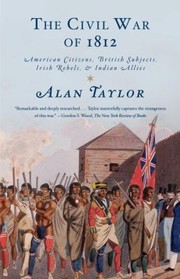
The major reframing: Taylor treats the border war as a civil war among Americans, British subjects, Irish rebels and Indian allies, with loyalties that ignored the national story. The most important book on this list.

The standard biography of the Shawnee leader whose confederacy was the war's real casualty. Read after Taylor, whose argument gives Tecumseh's project the political weight the American narrative denies it.

Tenskwatawa, Tecumseh's brother, and the religious revival that made the confederacy possible. The pair of books is the point: the movement was spiritual before it was military.

The 1814 Chesapeake campaign, the burning of Washington and the bombardment of Fort McHenry, told in close narrative detail. The war's most famous six weeks, restored to their actual sequence.
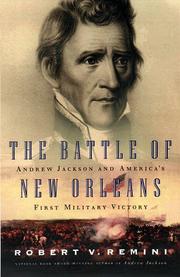
The battle fought after the peace treaty was signed, by Jackson's leading biographer. A fitting last book: the war's decisive American victory decided nothing militarily and everything politically.
Discussion
Keep reading
Paths that share books, cover the same subject, or open a related topic.