The Boer War is usually shelved as a military subject and it is really a mineral one. Any reading order that opens with the first shot in October 1899 leaves you unable to explain why the shot was fired, which is why the first two books below are about diamonds and gold rather than about battles.
The second thing that catches readers out is that this war has two halves which barely resemble each other. The conventional campaign of 1899 to 1900 — sieges, relief columns, humiliating British defeats — is the part that was written up at the time and turned into adventure. The guerrilla war of 1900 to 1902, with farm burning, blockhouses and the camps in which tens of thousands of civilians died, is the part that decides what the war means. A list weighted toward the first half will read like a boys' story. That is a distortion, and it is one this path only partly escapes.
Start with the money
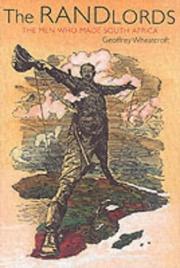
The Randlords is about the mining magnates — Rhodes, Beit, Barnato and the rest — who turned the Witwatersrand into the richest gold field on earth and then found their fortunes sitting inside a republic they did not govern. Geoffrey Wheatcroft is very good on how strange these men were.
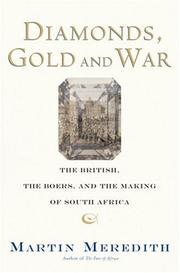
Diamonds, Gold, and War runs the same ground with more of the political machinery attached, from the Kimberley diamond rush through to the outbreak of war. If you want only one opener, take this one; take The Randlords instead if the personalities interest you more than the diplomacy.
The narrative histories
The Boer War by Thomas Pakenham is the standard single-volume account and the reason most English readers know this war at all. It is long, superbly organised, and it does not stop at the fall of Pretoria, which is why it is still the default.
The war for South Africa by Bill Nasson is the corrective to read straight afterwards: shorter, written decades later, far more interested in Africans, in the war's social reach, and in what the country was left holding in 1902. Reading Pakenham and then Nasson is the quickest way to watch the subject change underneath you.
The gap in this list, stated plainly
Every full narrative history on this path was written in English and leans on British sources. The Afrikaner side of this war has a substantial scholarship of its own, and none of it is in our catalogue. Martin Bossenbroek's history, written from the Boer perspective and translated from Dutch, is absent. So is Fransjohan Pretorius, who has spent a career on the commandos in the field and on the concentration camps in which roughly 28,000 Boer civilians, most of them children, died. That is not a footnote. It is the war's outcome and the root of a century of Afrikaner politics.
One book here partly offsets it, and it is the best argument for the path existing at all: Black people and the South African War, 1899-1902. Peter Warwick recovers the tens of thousands of Africans who scouted, drove, laboured and were interned in a separate and worse-supplied camp system, and he dismantles the "white man's war" framing that both belligerents found convenient afterwards. It does not, and cannot, cover the Boer civilian experience.
So read this list as a strong account of how the British fought and how the British later judged themselves, plus one serious corrective on Black South Africans. Do not read it as a balanced survey. If you can get Bossenbroek or Pretorius from a library, they belong between Nasson and Warwick.
The eyewitnesses
Commando is the great Boer memoir — Deneys Reitz was seventeen when he rode out and he stayed to the bitter end. It is the closest thing on this path to an Afrikaner voice, though it is a fighting man's account rather than a civilian's or a historian's.
London to Ladysmith via Pretoria is Churchill's own dispatch book: armoured train, capture, escape, self-promotion at industrial scale. Hero of the empire retells the same episode from outside, with the material Churchill left out. Take one. Take Candice Millard if you want the check on him rather than the performance.
The Great Boer War is Arthur Conan Doyle writing fast and as a partisan. Its value now is as evidence of what a decent liberal Englishman believed while it was happening, not as an account of what happened.
Rounding it out
The Boer War: A History is Denis Judd's compact survey, a good place to consolidate once the narrative is familiar. Good-bye Dolly Gray shows how the war was told before the archives opened. Kitchener is a sympathetic biography of the man who ordered the farm burning and ran the camp system — read it against the grain.
For more paths through contested wars, browse Discover.
Follow the full ordered path here: The Boer War: The Best Books to Read, in Order.