The war lasted about six months in 1879 and contains one of the most disproportionately famous days in British military history: Isandlwana in the morning, where a British column was destroyed by a Zulu army, and Rorke's Drift that evening, where a garrison of about a hundred and fifty held a mission station and eleven Victoria Crosses were awarded for it. That combination — catastrophe and redemption in twelve hours — is why the popular literature is enormous relative to the war's strategic importance.
It is also why the reading order matters more here than the size of the subject suggests. Two of the books you are most likely to be handed need a warning attached.
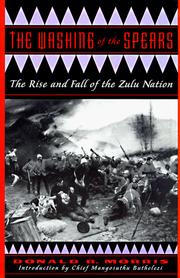
The washing of the spears is still the most widely read single volume on the war, and it deserves its reputation as narrative: Morris wrote a genuinely gripping book in 1965 and it made the subject popular in English. But it rests almost entirely on British colonial-era sources, and its framing of the Zulu kingdom — the sweep of Shaka's conquests, the character of the state, the causes of the war — reflects the settler historiography available to him. Later historians working with Zulu oral testimony and Natal archives have contested a good deal of it. Read it for the story; do not take its interpretation as current.
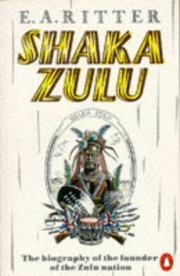
Shaka Zulu needs a stronger warning still. Ritter's 1955 book is openly novelised — it contains invented dialogue and reconstructed scenes presented as narrative, and it is not a work of history in the ordinary sense. It is nonetheless the origin of a great deal of what general readers believe about Shaka. Know that before you start it, and do not start with it.
Where to actually begin
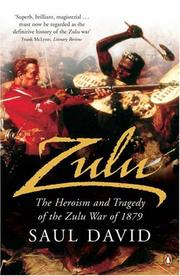
Zulu is the best modern single-volume account, covering the whole war with current scholarship and without the framing problems above. Start here. Then read The washing of the spears if you want the classic narrative, with the caveat in mind.
The rise & fall of the Zulu nation is the corrective: Laband on the kingdom as a state with its own politics, economy and military institutions, rather than as a backdrop to a British campaign. Kingdom in Crisis narrows to the Zulu response to the invasion itself — how the kingdom decided, mobilised and then coped with victory it could not exploit.
Battle by battle
Zulu rising is the deepest modern treatment of Isandlwana and its build-up, and it works hard to reconstruct the Zulu side of the day. How can man die better is Snook on the same battle from a tactical and professional-soldier angle, and Like Wolves on the Fold is his companion on Rorke's Drift. Zulu victory argues a revisionist case about British command failures at Isandlwana; the specific allocation of blame is disputed among specialists, and reading it after Knight lets you see where the disagreement actually lies.
Specialist and aftermath
The anatomy of the Zulu army is the reference on regimental organisation, weapons and tactics. Great Zulu commanders profiles the leaders on the Zulu side, who in most British-facing accounts are barely individuated. Brave men's blood carries the story past 1879 into the Bambatha rebellion of 1906, and Zulu Warriors covers the wars that followed the kingdom's defeat. The aftermath is the part almost everyone skips, and it is where the political consequences of 1879 actually land.
A note on the contested ground generally: historians disagree about how far Shaka's state was a genuine military revolution versus a construction of later colonial writing, and about the immediate responsibility for the invasion. This path gives you the sides. Follow it in order and you will finish knowing which claims are solid and which are still being argued.
Follow the full ordered path here: The Anglo-Zulu War in Books: What to Read, in Order.
Ready to learn something deeply?
Build a reading path — free