Six days of fighting in June 1967 produced a war historians still cannot agree about. The outcome is settled; almost nothing else is. Did Nasser intend a war or blunder into one? Was the Israeli strike pre-emptive or opportunistic? Was the occupation that followed improvised or anticipated? Read one book and you will come away certain. Read four and the certainty goes, which is the correct result.
That is the argument for a reading order here. Start with the decade before, because the crisis of May 1967 is unreadable without the border war that preceded it. Then read the accounts of the war against each other rather than merely one after another. Then follow the consequences, which have now run about three thousand times longer than the fighting did.
The background you cannot skip
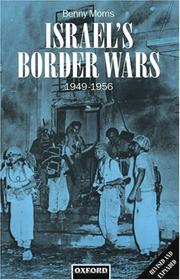
Palestine and the Arab-Israeli conflict by Charles D. Smith is a university textbook, and that is exactly why it goes first: it pairs a narrative with primary documents, so you meet the sources before anyone has interpreted them for you. Benny Morris's Israel's Border Wars, 1949-1956 is the archival study of the infiltration-and-reprisal cycle along the armistice lines — the machinery that made a fourth war likely. The Arabs: A History by Eugene L. Rogan then resets the same decades inside Arab politics, where the conflict with Israel is one pressure among several rather than the organising fact.
Four accounts of the same six days
Six Days of War by Michael B. Oren is the most widely read narrative and the most heavily sourced across Hebrew, Arabic and English material. Oren later served as Israel's ambassador to the United States, from 2009 to 2013. That is a fact about the author, not a verdict on the book; know it and weigh the book yourself. Tom Segev's account, titled simply 1967, comes at the same weeks from inside Israeli society — the recession, the anxiety, the public mood — and reaches conclusions Oren does not. Six Days by Jeremy Bowen is the correspondent's version, built on interviews with participants on both sides and organised close to the hour.
Then two books that move the causes outward. The six-day war by Guy Laron places the origins in regional economic crisis and superpower rivalry rather than in the May crisis alone. Nasser's Gamble by Jesse Ferris uses Soviet and Egyptian material to show how far Egypt's long intervention in Yemen had drained the army that then faced Israel.
Foxbats over Dimona by Isabella Ginor and Gideon Remez argues that the Soviet Union deliberately provoked the war to create a pretext for striking Israel's nuclear reactor at Dimona. Most specialists in the field reject that thesis and read its evidence as circumstantial. It sits on this path to be argued with rather than believed, and it is a good exercise in testing a bold claim against what the archives actually support.
What the war started
The Iron Wall by Avi Shlaim puts 1967 inside a long argument about Israeli strategy toward the Arab world, and is openly revisionist about it. The bride and the dowry by Avi Raz works through the diplomacy of the months immediately after the ceasefire, when the shape of the occupation was still open. The accidental empire by Gershom Gorenberg reconstructs how the first settlements were established and who authorised them; Lords of the land by Idith Zertal and Akiva Eldar covers overlapping ground with a sharper edge, so if you read only one, take Gorenberg first and Zertal as the harder follow-up.
Close with The Hundred Years' War on Palestine by Rashid Khalidi, who writes explicitly as a Palestinian historian and draws on his own family's papers. Reading it directly after Oren is the most useful single hour on this list: two serious historians, the same events, irreconcilable frames.
Work through the full path in order, and you will not end up with the answer — you will end up able to say precisely where the disagreement lies, which is the more durable result. If you want the wider Cold War context afterwards, the Soviet-Afghan War is the other proxy conflict where the archives changed the story.
Follow the full ordered path here: The Six-Day War: The Best Books to Read, in Order.