The Advertising Industry: The Best Books on How Agencies Really Work, in Order
The literature of advertising is written almost entirely by practitioners and reporters rather than academics, and that is its strength — the good books are memoirs, craft manuals and long-form investigations of real accounts. This path starts with the canonical practitioner books, adds the pioneers who invented the trade, moves to how agencies actually operate and pitch, and ends with the empirical research and the critics who argue the whole business works differently from how it says it does.
The books everyone in the business has read
BeginnerLearn what an agency does, what a brief is, and what separates advertising that works from advertising that merely exists.
▸ Study plan for this stage
Pace: 2-3 weeks, roughly 30 pages a day. Read Confessions of an Advertising Man and Ogilvy on Advertising back to back in a week — they are short and heavily illustrated — then give Hey, Whipple, Squeeze This the second week. Read Ogilvy historically, not as instruction: his rules about long copy, headlin
- The brief as the actual unit of work — the client problem compressed into something a creative team can act on
- Ogilvy's research-first position: an ad is a salesman in print, and its job is measurable selling rather than admiration
- The distinction between the business of running an agency (Confessions) and the craft of making the work (Ogilvy on Advertising)
- The concept, the execution and the presentation as three separable skills, and Sullivan's argument that most work dies at the third
- Why almost all advertising literature is written by practitioners, and what that does to its reliability
- The creative department versus account service as a permanent structural tension, not a personality clash
- What does Ogilvy claim makes advertising work, and what evidence does he offer for it? Where does he assert rather than demonstrate?
- Sullivan and Ogilvy disagree about how much a rule can be trusted. Where exactly does Hey, Whipple, Squeeze This contradict Ogilvy on Advertising, and which of them is arguing from data?
- Ogilvy wrote for print, direct mail and thirty-second television. Which of his claims survive a media environment of paid social, search and short video, and which are artefacts of the channel he worked in?
- What is a brief for, and what goes wrong when the client writes it instead of the agency?
- Both Ogilvy books are self-promotional documents for an agency he owned. What would you expect them to omit?
- Take one campaign running now and write the brief that would have produced it, in the form Ogilvy describes. Then write the brief the client probably actually issued. The gap between the two is what the rest of this path is about.
- Pull three specific rules from Ogilvy on Advertising and find Sullivan's counter-position on each in Hey, Whipple, Squeeze This. Write a paragraph naming which of the two is relying on tested results and which on taste.
- Rewrite one contemporary online ad as a long-copy print ad following Ogilvy's headline and body rules, then argue in writing whether the constraint improved it or only made it longer.
- Collect five ads you cannot remember the brand of. Using Sullivan's framework, write down for each whether the failure was concept, execution or media, and defend the call.
Next up: You now hold the industry's own working orthodoxy, which is exactly what the founding figures in the next stage were arguing about before it hardened.
Ogilvy on how to run an agency, get clients and keep them, written in 1963 and still the most quoted book in the industry. Start here because everything after it is either an extension of Ogilvy or a reaction against him.
The later, more visual book, and the practical craft manual on headlines, layouts and television. Read second: Confessions is about the business, this is about the work.

The modern creative department's textbook, and the funniest honest account of concepting, presenting and having your best idea killed. It updates Ogilvy's craft advice for an era of digital and social work.
The people who invented the trade
BeginnerMeet the founding figures — Hopkins on measurable direct response, Bernbach on creative revolution — and see the argument between selling and art that still divides agencies.
▸ Study plan for this stage
Pace: 2 weeks. Hopkins first — My Life in Advertising and Scientific Advertising share one catalogue record here, and both are short enough to finish in two or three evenings; Scientific Advertising is the more important half. Then Bill Bernbach's Book, which is largely reproduced advertisements and shoul
- Hopkins's testing regime — coupon keys, split runs, cost per response — as the ancestor of every performance-marketing dashboard now in use
- Reason-why copy and the preemptive claim (describing an ordinary process as if it were proprietary)
- Bernbach's counter-position: that advertising is persuasion by craft and surprise, and that measurement cannot reach the part that matters
- The creative revolution as an organisational change — copywriter and art director working as a pair — not only an aesthetic one
- The Volkswagen and Avis campaigns as the specific evidence Bernbach's side argues from
- Wells Lawrence's account of what it took to found and run an agency, and what the creative revolution looked like as a business rather than a portfolio
- State Hopkins's case and Bernbach's case in one sentence each. Are they actually incompatible, or are they measuring different things?
- Scientific Advertising describes methods for mail-order goods sold by coupon. Which of Hopkins's claims generalise to brand advertising, and which does he over-extend?
- What did the creative revolution change about how an agency was staffed and organised, and how much of that structure still exists?
- Wells Lawrence ran an agency in an industry that had almost no women at its top. What does her account show about how accounts were actually won that the craft books leave out?
- Today's split between performance marketing and brand advertising is often described as new. Where in this stage does it already exist in full?
- Take one claim from Scientific Advertising — that headlines select the audience, or that samples outperform argument — and design the split test Hopkins would have run to prove it. Then say what a modern platform would let you measure that he could not.
- Pick three Doyle Dane Bernbach ads reproduced in Bill Bernbach's Book and write out, for each, the Hopkins-style reason-why version of the same ad. Argue in a paragraph which one you would have run and why.
- Trace the word 'testing' across Hopkins, Bernbach and Ogilvy's Confessions. Write down what each of the three means by it — they do not mean the same thing.
- Using A Big Life in Advertising, list the steps by which Wells Lawrence actually won a piece of business, then compare that sequence to the way the craft books describe how work gets sold.
Next up: Hopkins and Bernbach argue about what makes an ad good; the next stage covers the machinery that decides whether a good ad is ever made at all.

Both of Hopkins's short 1920s books share a single catalogue record, My Life in Advertising & Scientific Advertising, so this one entry is two works: a memoir of the trade and the founding text of testable, measurable advertising. Read the second half closely, because everything called performance marketing today is a restatement of it.
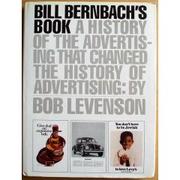
The Doyle Dane Bernbach work — Volkswagen, Avis, Levy's rye — presented with Bernbach's arguments about craft. The direct answer to Hopkins, and the origin of the creative side of the industry's split personality.
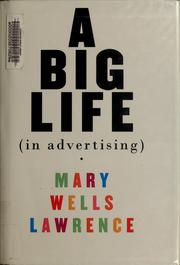
The memoir of the first woman to run a major agency, covering Braniff, Alka-Seltzer and the founding of Wells Rich Greene. Read it here for what the creative revolution looked like from someone building a business inside it.
How agencies actually work
IntermediateUnderstand account planning, the client relationship and the pitch — the parts of the job that determine whether good work ever gets made.
▸ Study plan for this stage
Pace: 2 weeks, one book a week. Read Truth, Lies and Advertising first and Perfect Pitch second — Steel wrote them in that order and the second assumes you know what a planner does. Both are short. This is the least glamorous stage on the path and the most immediately useful: account planning is the funct
- Account planning as the representation of the consumer inside the agency, sitting between research and the creative team
- The difference between research that validates work already made and research that generates the insight behind it
- The written brief as a contract and a constraint — what belongs in it and what belongs nowhere near it
- Why creative testing so often kills the strongest work, and Steel's argument about how to test without doing that
- The new-business pitch as a performance with its own rules, and the structural problem of an industry that gives away strategy for free
- The client relationship as the real determinant of output quality
- What does a planner do that neither an account director nor a creative can do, in Steel's account? Is he a disinterested witness on this point?
- Steel argues that most creative pre-testing is actively harmful. What is his evidence, and what would a defender of the testing companies say back?
- How does the pitch process shape the work that eventually runs? Name two ways an agency is rewarded for something other than effectiveness.
- In-house teams and consultancies now do a large share of what agencies did when Steel wrote. Which parts of the planning function transfer cleanly and which depend on being outside the client?
- Write out the brief that Steel would say was behind a campaign you admire. Which parts of it are you inventing?
- Write a one-page brief for a real product using Steel's structure, then hand it to someone else and ask them to describe the ad it implies. If they cannot, the brief has failed and you should say why in writing.
- Take a piece of qualitative research you can find in public — a published survey, a focus-group write-up — and extract a strategic insight from it in Steel's sense. Then note honestly whether you found the insight in the data or brought it with you.
- Reconstruct a pitch from Perfect Pitch as a sequence of decisions, then map that sequence onto a recent account review reported in the trade press. Where does the reality diverge from Steel's model?
- Argue the opposing case in a paragraph: that account planning is an expensive intermediary that produces post-hoc justification. Use Steel's own examples against him.
Next up: With the theory of how the work should be made in hand, the next stage watches the whole apparatus run on one real piece of business — and fail.
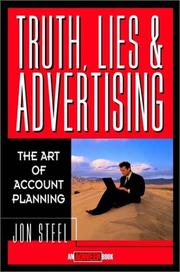
The standard book on account planning: how consumer research is turned into a brief a creative team can use. The clearest explanation of the role that sits between client and creative.
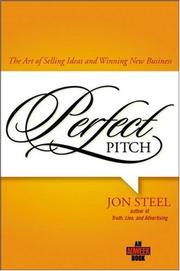
Steel on new-business presentations, which is how agencies live or die. Read after Truth, Lies, and Advertising since it assumes you understand what is being pitched.
Inside a real account
IntermediateWatch the whole machine operate on one piece of business over time, and see the industry from outside its own promotional literature.
▸ Study plan for this stage
Pace: 3 weeks. Where the Suckers Moon is long and reads like narrative journalism; give it two weeks and read it in sittings rather than pages. Adland is shorter and structurally different — a global business history of the agency holding companies — so a week is enough. Note that Rothenberg is reporting
- The account review as the industry's central recurring event, and what it costs both sides
- How a campaign is actually approved — the chain of client decision-makers between the creative work and the air
- Why good work and successful work come apart, which is the whole subject of Rothenberg's book
- The holding-company structure — WPP, Omnicom, Publicis, Dentsu — and what agencies gave up in exchange for capital
- Media buying separated from creative, and the consequences of that split for where the margin sits
- The internationalisation of the trade and the persistence of national advertising cultures inside it
- Rothenberg followed one account for years. At which specific point did the Subaru campaign go wrong, and is the answer the same as the one the participants gave?
- Who inside the client organisation actually held the power to kill the work, and what were their incentives?
- What did holding-company ownership change about how agencies are paid, and how does that show up in the work?
- Tungate's history ends before programmatic buying and in-house client teams. Which of the structural forces he describes produced those, and which of his conclusions do they overturn?
- The commission model gave way to fees and then to procurement-led pricing. Trace that shift across both books and say who gained from each move.
- Build a timeline of the Subaru account from Where the Suckers Moon — review, appointment, campaign, aftermath — and mark the three decisions you think were decisive. Then write the agency's defence of each.
- Map Tungate's holding-company consolidation onto the current ownership of five agencies you can name. Note which of his predictions about scale held and which did not.
- Take one claim Rothenberg makes about why the campaign failed and check it against what Steel's Truth, Lies and Advertising says should have happened at that stage. Write the paragraph where the two authors disagree.
- Find a recent account review reported in the trade press and write it up in Rothenberg's terms: who is pitching, what is being bought, and what the winner has actually promised.
Next up: You have seen the industry describe itself and seen one account fail in detail; the last stage asks whether the whole business works the way any of these books claim.
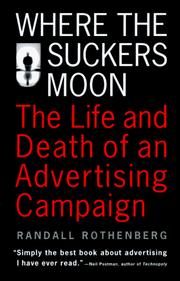
A New York Times reporter followed the Subaru account through a review, a new campaign and its failure. The best long-form case study of the industry in existence, and the one book here written by neither an insider nor a theorist.

A global history of the agency business — the holding companies, the Japanese and European networks, the consolidation. Read after Rothenberg for the structural context his single account sits inside.
What the evidence says, and what the critics say
BeginnerConfront the empirical research on how advertising actually affects buying, and the long tradition of arguing that the industry misdescribes itself.
▸ Study plan for this stage
Pace: 3-4 weeks. Read The Anatomy of Humbug first (it is short and it frames everything else), then How Brands Grow, then The Long and the Short of It, and finish with The Hidden Persuaders. This is where the standard account has genuinely moved: Sharp's empirical work on penetration, mental availability
- The competing models of how advertising works — persuasion, salience, emotional priming — and Feldwick's argument that practitioners assert the first while the evidence supports the others
- Penetration over loyalty: Sharp's finding that brands grow chiefly by acquiring light and non-buyers, not by deepening existing relationships
- Mental and physical availability as the two things advertising can actually change
- The double jeopardy law and the near-uselessness of most segmentation as it is practised
- Binet and Field's long-and-short distinction: brand building works slowly and broadly, activation works fast and narrowly, and the effective ratio between them is roughly sixty-forty
- The measurement window problem — why short-term attribution systematically under-credits brand advertising
- Packard's motivational-research scare as the origin of the public's model of advertising, and the difference between a book's influence and its accuracy
- Feldwick lists several theories of how advertising works. Which one do most practitioners act on, which does he think is right, and what would settle it?
- How Brands Grow contradicts a large part of what Ogilvy and the planning tradition assume. Name three specific claims from earlier stages that Sharp's data undermines.
- Where does the sixty-forty split come from, what data set is it derived from, and what are the stated limits of that data set?
- Sharp and Binet and Field are both empirical and they do not agree about everything. On what point do they diverge, and how would you decide between them?
- Attribution models used now credit the last click. Using Binet and Field, explain precisely which kind of advertising that measurement regime will cause a company to underfund, and why the error compounds.
- What did Packard get right about the industry, and what did he get wrong? Why has the wrong part been more durable?
- Trace the word 'differentiation' across Ogilvy on Advertising, The Anatomy of Humbug and How Brands Grow. Write a paragraph on how each author uses it and which of the three is arguing from measured data.
- Take one statistic Binet and Field cite from the IPA databank and go back to what they say about how the databank was assembled — who submits cases, and which cases never get submitted. Write down what that selection does to the headline number.
- Pick a brand you buy and test Sharp's double jeopardy prediction against whatever public market-share and penetration figures you can find. Report honestly whether the data supports him, contradicts him, or is too thin to say.
- Write the strongest one-paragraph case against How Brands Grow that a creative director from stage one could make, using only material from Bernbach and Feldwick.
- Audit a current campaign against the sixty-forty split: classify each element as brand building or activation, estimate the budget balance, and state what Binet and Field would predict about its long-term effect.
Next up: This is the end of the path: you can now read any claim about advertising effectiveness and say which of these traditions it comes from and what evidence it is standing on.

Catalogued with its full subtitle, Feldwick dismantles the competing theories of how advertising works and argues that the persuasion model most practitioners assume is largely wrong. The most intellectually serious book on this path.

Sharp's empirical marketing science on penetration, mental availability and the weakness of loyalty and differentiation strategies. Read against Feldwick — both attack industry folklore, from different directions.

Binet and Field's analysis of the IPA effectiveness databank, and the origin of the sixty-forty brand-versus-activation split now cited in every planning deck. The empirical case against optimizing only what is measurable.

The 1957 exposé of motivational research that shaped how the public sees advertising for the next fifty years. Read last, and read it critically — its influence far exceeds the strength of its evidence, which is itself part of the industry's story.
Discussion
Keep reading
Paths that share books, cover the same subject, or open a related topic.