Copywriting: write words that sell
This curriculum builds a complete copywriting foundation by starting with the mindset and timeless principles of direct-response legends, then layering in persuasion psychology, specific format mastery (headlines, emails, ads, landing pages), and finally advanced strategy for seasoned practitioners. Each stage assumes the vocabulary and instincts built in the one before it, so reading in order is essential.
Foundations: The Direct-Response Mindset
BeginnerUnderstand what copywriting actually is, how it differs from general writing, and absorb the core direct-response principles — salesmanship in print — that underpin every format.
▸ Study plan for this stage
Pace: 10–12 weeks total, reading ~20–25 pages per day. Week 1–4: "The Adweek Copywriting Handbook" (Sugarman) — read one chapter per sitting, pausing to annotate; Week 5–7: "Ogilvy on Advertising" (Ogilvy) — image-heavy, so allow time to study ads alongside the text; Week 8–12: "My Life in Advertising & S
- Salesmanship in print: copy's sole job is to sell, not entertain or impress — the foundational premise running through Sugarman, Ogilvy, and Hopkins alike
- The slippery slide (Sugarman): every sentence exists only to pull the reader into the next, making readability a structural, not stylistic, concern
- Psychological triggers (Sugarman): the 31 triggers — curiosity, urgency, scarcity, specificity, credibility — and how they map to real buying decisions
- The Big Idea (Ogilvy): advertising must be anchored to one powerful, memorable idea that could run for 30 years; tactics are worthless without it
- Research as the bedrock of copy (Hopkins & Ogilvy): deep product and customer research precedes a single word of writing — 'the more you tell, the more you sell'
- Reason-why advertising (Hopkins): claims must be provable and specific; vague superlatives destroy credibility while concrete facts build it
- The headline as the ad's most critical element (Ogilvy & Hopkins): 80 cents of every dollar is spent or wasted at the headline; it must select the right audience and promise a benefit
- Testing and accountability (Hopkins): advertising is a science of measurable results, not art — every element can and should be tested against a control
- According to Sugarman, what is the single purpose of the first sentence of any piece of copy, and how does this 'slippery slide' principle change the way you structure a long-form ad?
- Ogilvy argues that 'unless your campaign is built around a Big Idea it will pass like a ship in the night.' How would you define a Big Idea in your own words, and what criteria does Ogilvy give for recognizing one?
- Hopkins insists that the era of 'brilliant copy' is over and that advertising must be treated as a science. What specific practices does he describe in 'Scientific Advertising' to make copy testable and accountable?
- Both Ogilvy and Hopkins emphasize exhaustive research before writing. What kinds of research does each author recommend, and where do their approaches overlap or diverge?
- Sugarman lists psychological triggers as tools of persuasion. Choose any three triggers from 'The Adweek Copywriting Handbook' and explain, with a real product example, how each one lowers a buyer's resistance.
- How does Hopkins's concept of 'reason-why' advertising relate to Ogilvy's insistence on specificity and facts over clever wordplay? What would a headline look like that violates both principles, and how would you fix it?
- Slippery-slide rewrite (Sugarman): Take any dull product description you find online. Rewrite the opening three sentences so each one's only job is to force the reader into the next. Read it aloud — if you ever want to stop, diagnose which sentence lost momentum and fix it.
- Trigger audit (Sugarman): Choose a full-page magazine ad or a sales email you received this week. Annotate it against Sugarman's 31 psychological triggers — highlight every trigger you spot, note any that are missing, and write a one-paragraph critique of how effectively they're deployed.
- Big Idea stress-test (Ogilvy): Pick three brands you use daily. For each, write one sentence that captures their Big Idea as Ogilvy would define it. Then write a headline for each that expresses that idea in a way Ogilvy says could 'run for 30 years.'
- Reason-why headline drill (Hopkins): Write 10 headlines for a single product (real or invented) using only specific, provable facts — no superlatives, no vague claims. Then rank them by which best selects the target audience and promises the most compelling benefit.
- Research-first copy sprint (Hopkins & Ogilvy): Before writing a single word of copy, spend 45 minutes researching one product: read reviews, forums, the manufacturer's specs, and competitor ads. Write a one-page 'copy brief' listing the top five customer desires and the top three provable product claims. Only then write a 150-word ad.
- Side-by-side ad comparison (all three books): Find two ads for the same product category — one that feels 'creative' and one that feels 'direct-response.' Using principles from all three books, write a structured critique of each: What is the Big Idea? Does the headline select the audience? Are there psychological triggers? Is there reason-why proof? Which ad would Hopkins call scientific, and why
Next up: Mastering these foundational principles — that copy must sell, that research drives everything, and that every element must earn its place — gives you the mental framework to study specific copywriting formats (headlines, leads, long-form sales pages, emails) in the next stage without mistaking technique for strategy.
The perfect first book — Sugarman writes in plain, encouraging language and teaches the single most important idea: every sentence exists only to pull the reader into the next one. It builds the foundational mental model before anything else.
Ogilvy gives the beginner a sweeping, visual tour of what great advertising looks like in the real world, cementing why research and the consumer's self-interest must drive every word you write.

Written in 1923 and still required reading, this short classic establishes the direct-response principle that copy must be measurable and accountable — a mindset that separates professionals from amateurs.
Persuasion Psychology: Why People Buy
BeginnerInternalize the psychological triggers — desire, fear, social proof, scarcity, identity — that make copy persuasive, so you can deploy them ethically and deliberately in any format.
▸ Study plan for this stage
Pace: 6–8 weeks total: Weeks 1–3 on "Influence" (~30–35 pages/day, including re-reading key chapters); Weeks 4–8 on "Breakthrough Advertising" (~20–25 pages/day — it is dense and demands slow, annotated reading with pauses to reflect after each chapter).
- Cialdini's 6 Principles of Influence — Reciprocity, Commitment & Consistency, Social Proof, Authority, Liking, and Scarcity — and how each one short-circuits conscious deliberation to drive action
- The concept of 'click, whirr' automatic responses: how humans use mental shortcuts (heuristics) and why copywriters can trigger them with specific language patterns
- Ethical deployment vs. manipulation: understanding the line between aligning copy with genuine desires and exploiting psychological vulnerabilities
- Schwartz's concept of 'Mass Desire': the idea that copywriters do not create desire but channel pre-existing, mass human desires already present in the market
- The 5 Stages of Market Sophistication (Schwartz): how a market's awareness of a product category evolves and why the same psychological trigger lands differently depending on the stage
- The 5 Stages of Customer Awareness (Schwartz): Unaware → Problem Aware → Solution Aware → Product Aware → Most Aware — and how each stage demands a different psychological entry point in copy
- Identification and Identity: Schwartz's insight that the most powerful copy sells a future self-image, not a product — connecting desire to who the prospect wants to become
- Fear and Desire as the twin engines of persuasion: how Schwartz frames copy as the bridge between a painful present state and a desired future state
- After reading Influence, can you name all six of Cialdini's principles and give a real-world copywriting example for each — a headline, call-to-action, or piece of body copy — that ethically activates that principle?
- What does Schwartz mean by 'the copywriter cannot create mass desire,' and how does this reframe your job when sitting down to write? How does this connect to Cialdini's idea that influence works best when it aligns with existing motivations?
- How do the 5 Stages of Market Sophistication change which psychological trigger you lead with? For example, why would scarcity or social proof fall flat in a Stage 1 market but work powerfully in a Stage 4 or 5 market?
- How does Schwartz's concept of the 'mechanism' (the unique process or reason-why behind a product's promise) serve as a form of authority — and how does that connect to Cialdini's Authority principle?
- What is the difference between selling a product and selling an identity or future self-image? Pick a product category and write two versions of an opening line: one that sells the product, one that sells the identity.
- How would you use social proof ethically at three different stages of customer awareness — and what form should that proof take at each stage (testimonial, statistics, expert endorsement, etc.)?
- INFLUENCE AUDIT: Collect 10 real ads, emails, or sales pages you encounter in one week. Label every persuasion principle you spot (Cialdini's six). Note whether each use feels ethical or manipulative and write one sentence explaining why.
- PRINCIPLE SWAPS: Take one existing piece of copy (an ad or email you find online). Rewrite the headline and opening paragraph six times — once leading with each of Cialdini's six principles. Compare which version feels most natural for the product and audience.
- DESIRE EXCAVATION (Schwartz Exercise): Choose a product you know well. Before writing a single word of copy, write a 1-page 'desire map' — list every raw, pre-existing desire the target audience already has that this product could channel. Use Schwartz's language: what do they desperately want to feel, become, or avoid?
- AWARENESS STAGE LADDER: Pick one product and write five different opening hooks — one for each of Schwartz's 5 Stages of Customer Awareness. Notice how the psychological trigger and emotional temperature must shift at each rung of the ladder.
- IDENTITY COPY EXERCISE: Select a mundane product (a notebook, a kitchen knife, a running shoe). Write a 100-word piece of copy that sells not the product but the identity of the person who uses it. Use Schwartz's future-self framing and at least one Cialdini principle deliberately.
- ETHICAL CHECKLIST CREATION: Using both books as source material, draft your own personal 'Ethical Persuasion Checklist' — 8–10 questions you will ask yourself before publishing any copy to ensure you are channeling genuine desire rather than manufacturing false urgency or exploiting fear.
Next up: Mastering why people buy psychologically sets the essential foundation for the next stage, where you will learn the structural craft — how to architect headlines, leads, offers, and sequences that systematically deliver these psychological triggers in the right order and format.
The definitive map of human persuasion principles. Reading this before writing a single headline ensures you understand the 'why' behind every copywriting technique you'll learn next.

Schwartz's concept of 'market sophistication' and 'mass desire' is the deepest psychological framework in all of copywriting. It belongs here — after Cialdini — because you now have the vocabulary to appreciate it.
Core Craft: Headlines, Offers, and Long-Form Copy
IntermediateWrite compelling headlines, irresistible offers, and complete long-form sales pieces by applying proven formulas and structures used by the greatest direct-response copywriters.
▸ Study plan for this stage
Pace: 8–10 weeks total: Weeks 1–5 cover "The Copywriter's Handbook" (~25–30 pages/day, reading and annotating chapter by chapter); Weeks 6–10 cover "How to Write a Good Advertisement" (~15–20 pages/day, slower pace to deeply study Schwab's formulas and dissect his real ad examples). Reserve 1–2 days betwe
- Headline formulas and the four headline functions (Bly): stopping power, audience selection, delivering a complete message, and drawing the reader into the body copy
- The AIDA framework (Attention, Interest, Desire, Action) as the structural backbone of all long-form sales copy, as taught across both Bly and Schwab
- Schwab's five-part advertisement formula: get attention, show people an advantage, prove it, persuade people to grasp this advantage, ask for action
- Writing irresistible offers: specificity, risk-reversal (guarantees), urgency, and value-stacking as detailed in Bly's chapters on direct mail and offers
- Body copy techniques from Bly: using subheads to maintain momentum, bullet points for benefit communication, and the 'you' orientation to keep copy reader-focused
- Schwab's 100 good headlines and the underlying psychological triggers behind each — curiosity, self-interest, news, and specificity
- Proof elements: testimonials, data, case studies, and demonstrations as tools to convert interest into desire (covered in depth by both authors)
- Call-to-action (CTA) construction: clarity, urgency, low friction, and the mechanics of response devices as outlined by Bly in direct-response contexts
- According to Bly, what are the four key jobs a headline must perform, and how does failing at any one of them undermine the entire piece?
- How does Schwab's five-part advertisement formula map onto the AIDA framework — where do they align and where does Schwab add nuance?
- What distinguishes a 'benefit' from a 'feature' in body copy, and how do both Bly and Schwab instruct the writer to lead with benefits throughout a long-form piece?
- What specific elements does Bly identify as essential to a strong offer, and how does risk-reversal (e.g., a guarantee) psychologically lower the barrier to response?
- Using Schwab's analysis of his 100 headline examples, what are the four primary psychological appeals a headline can make, and when should each be used?
- How do subheads, bullets, and visual breaks function in long-form copy according to Bly, and why are they especially critical for readers who skim before committing to read?
- Headline sprint using Bly's formulas: Pick one product or service you know well and write 25 headlines in one sitting — at least 5 using each of Bly's major headline categories (how-to, question, command, news, benefit). Then rank them and write a one-sentence rationale for your top three.
- Schwab headline autopsy: Select 10 headlines from Schwab's 100 examples. For each, identify (a) the psychological appeal being used, (b) the specific audience it targets, and (c) rewrite it for a modern product while preserving the original trigger.
- Full long-form sales letter: Using Bly's structural guidance and Schwab's five-part formula, write a complete 600–1,000 word sales letter for a real or fictional product. It must include: a headline, a lead, body copy with at least three proof elements, a clearly stated offer with a guarantee, and a CTA.
- Offer stress-test: Take an existing advertisement (from a magazine, website, or swipe file) and rewrite only the offer section — add specificity, a risk-reversal element, and a reason-why for urgency. Compare the two versions and note what changed psychologically.
- Body copy 'you' audit: Take any piece of copy you've written previously (or a sample from a swipe file) and highlight every instance of 'we,' 'our,' or the brand name. Rewrite every highlighted sentence to be reader-focused using 'you' and 'your,' as Bly instructs. Reflect on how the tone shifts.
- Swipe and dissect: Find one classic long-form direct-response ad (print or online). Map it paragraph by paragraph onto Schwab's five-part formula and Bly's structural checklist. Write a one-page breakdown identifying what each section does, what techniques are used, and what you would change.
Next up: Mastering Bly's structural mechanics and Schwab's psychological formulas gives the reader a reliable toolkit for producing complete copy — the next stage builds on this foundation by exploring deeper consumer psychology, persuasion principles, and advanced positioning strategies that elevate competent copy into truly irresistible, market-dominating work.
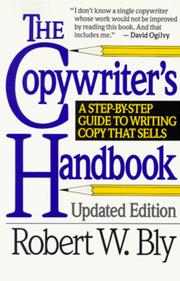
Bly's comprehensive reference covers every format — headlines, body copy, calls to action — with concrete formulas and examples. It's the practical workbench you'll return to again and again.

Schwab's focused, formula-driven approach to headlines and AIDA structure perfectly complements Bly, drilling deeper into the mechanics of attention-grabbing and desire-building.
Modern Formats: Emails, Landing Pages, and Ads
IntermediateApply direct-response principles to the digital formats that drive revenue today — email sequences, landing pages, Facebook/Google ads — with channel-specific tactics and structures.
▸ Study plan for this stage
Pace: 2–3 weeks, ~20–25 pages/day — Ian Brodie writes in a practical, example-rich style, so budget extra time to pause and annotate tactics as you read rather than racing through chapters.
- The 'Engaging Emails' system: how to build a subscriber relationship through value-first content before making any offer
- Subscriber psychology: understanding the 'Commitment and Consistency' principle and how it drives readers from passive subscribers to active buyers
- The Irresistible Lead Magnet: crafting an opt-in offer so specific and valuable that it pre-qualifies ideal clients
- Email sequences vs. broadcasts: knowing when to use automated nurture sequences versus timely one-off emails, and how each serves a different revenue function
- The 'Resonance' framework: writing subject lines and opening lines that feel personally relevant to the reader's exact situation
- Conversion emails: the structural anatomy of an email designed to move a subscriber to click — problem agitation, proof, and a single clear CTA
- List segmentation and relevance: sending the right message to the right sub-audience to protect deliverability and boost engagement
- Trust-building through consistent voice and 'teaching to sell': demonstrating expertise in every email so the sales pitch feels like a natural next step
- What is the core purpose of a lead magnet according to Brodie, and what separates an 'irresistible' one from a generic freebie?
- How does Brodie's 'Engaging Emails' system sequence value-delivery and selling — and why does he argue that leading with selling destroys long-term revenue?
- What role does the 'Commitment and Consistency' principle play in designing an email nurture sequence, and how do you engineer micro-commitments early in the sequence?
- According to Brodie, what are the key structural elements of a high-converting email — from subject line to CTA — and what is the single biggest mistake writers make with calls to action?
- How should you approach segmentation to keep emails feeling personal and relevant, and what signals from subscriber behavior should trigger a different message track?
- How does Brodie recommend you measure email effectiveness beyond open rates, and what does a 'healthy' list look like in terms of engagement signals?
- LEAD MAGNET AUDIT: Draft two versions of a lead magnet title for a niche of your choice — one generic, one using Brodie's specificity criteria. Show both to someone unfamiliar with the topic and record which they'd trade an email address for and why.
- 5-EMAIL WELCOME SEQUENCE: Write a complete 5-email onboarding sequence for a fictional product or service. Email 1 delivers the lead magnet; emails 2–4 teach and build trust using Brodie's value-first model; email 5 makes a soft offer. Label each email's strategic purpose in brackets before writing it.
- SUBJECT LINE SWIPE FILE: Write 15 subject lines for the same hypothetical email using Brodie's 'Resonance' framework — vary the emotional trigger (curiosity, fear of loss, aspiration, social proof) and note which approach you'd A/B test first and why.
- CONVERSION EMAIL TEARDOWN: Find a real marketing email in your inbox that is trying to sell something. Annotate it line-by-line against Brodie's structural framework — identify what it does well, where it violates his principles, and rewrite the weakest section.
- SEGMENTATION MAP: For a list of 1,000 hypothetical subscribers (define 3 audience personas yourself), draw a simple flowchart showing which emails each persona receives, what behavioral trigger moves them to a different track, and what the conversion goal is for each track.
- BROADCAST VS. SEQUENCE DECISION LOG: Over one week, collect 10 real email marketing examples (newsletters, promos, etc.) and classify each as a 'broadcast' or 'sequence email' using Brodie's definitions. Write one sentence explaining the revenue function each is serving.
Next up: Mastering Brodie's email persuasion system gives you a repeatable trust-and-convert engine in the inbox; the next stage builds outward from that foundation to the full digital funnel — landing pages that capture the lead in the first place, and paid ads (Facebook/Google) that drive cold traffic into the top of that funnel, demanding the same direct-response principles applied to even shorter, high

A focused, practical guide to writing email sequences that nurture and convert, covering subject lines, story-driven content, and calls to action specific to the inbox.
Advanced Mastery: Voice, Strategy, and the Long Game
ExpertDevelop a distinctive voice, think strategically about positioning and the full customer journey, and study the habits and worldview of elite copywriters to reach the top tier of the craft.
▸ Study plan for this stage
Pace: 6–8 weeks total: Weeks 1–3 on "Tested Advertising Methods" (~20–25 pages/day, including re-reading key chapters on headlines and testing); Weeks 4–6 on "The Boron Letters" (~2–3 letters/day, journaling after each); Week 7–8 reserved for synthesis, re-reading marked passages from both books, and comp
- Empirical testing as the foundation of great copy — Caples' insistence that opinions mean nothing; only measured results reveal what works
- Headline supremacy: Caples' taxonomy of headline types (self-interest, news, curiosity) and why the headline is worth 80% of your effort
- The 'before and after' mental model: understanding the reader's emotional state before they see your ad and engineering the shift you want to produce
- Reason-why copy vs. atmosphere copy — when logic sells and when emotion leads, and how elite writers blend both deliberately
- Halbert's 'A-pile vs. B-pile' framework: understanding how readers triage their attention and writing copy that survives the cull
- Voice as a strategic asset: Halbert's conversational, confessional, street-smart tone as a deliberate positioning choice, not an accident of personality
- The full customer journey mindset: Halbert's letters reveal how copy must account for trust-building over time, not just a single transaction
- The copywriter's lifestyle and worldview: Halbert's meta-lessons on curiosity, hunger, physical energy, and treating the craft as a lifelong obsession
- According to Caples, what are the three primary categories of high-performing headlines, and can you produce an original example of each for a single product?
- How does Caples define 'tested' advertising, and why does he argue that even experienced copywriters cannot reliably predict which ad will win without a test?
- What is Halbert's 'A-pile vs. B-pile' concept, and what specific techniques does he recommend to ensure a sales letter lands in the A-pile?
- How does Halbert use his own voice — personal stories, humor, raw honesty — as a trust-building mechanism, and how does this reflect a long-term customer journey strategy rather than a one-shot sale?
- Where do Caples and Halbert agree on the fundamentals of persuasion, and where does their advice appear to diverge? How do you reconcile the differences?
- What non-copywriting habits and mindsets does Halbert argue are essential to reaching the elite tier of the craft, and how do they connect to the quality of the work on the page?
- Headline laboratory (Caples): Pick one real or fictional product and write 25 headlines — at least 5 in each of Caples' three categories (self-interest, news, curiosity). Score each on specificity and emotional pull, then select your top 3 and write a short rationale for each choice.
- Autopsy an ad (Caples): Find a classic direct-response ad (print or digital) and reverse-engineer it using Caples' framework — identify the headline type, the lead structure, the proof elements, and the call to action. Write a one-page critique noting what Caples would praise and what he would change.
- A/B headline split test simulation: Write two versions of the same email subject line or ad headline using different Caples categories. Send them to a small real audience (a mailing list, a social post, or a peer group) and record which gets more opens/clicks. Reflect on what the result teaches you that intuition alone could not.
- Voice dissection and imitation (Halbert): Choose any three consecutive letters from The Boron Letters and annotate them for voice moves — where Halbert uses self-deprecation, urgency, storytelling, or direct address. Then rewrite the opening page of one letter in your own voice, preserving the structural moves but replacing Halbert's personality with yours.
- Customer journey mapping: Using Halbert's multi-letter philosophy as a model, map out a 5-step sequence (awareness → interest → desire → trust → action) for a product or service you choose. Write a short brief (not the full copy) for each touchpoint, specifying the emotional job each piece of copy must do.
- Synthesis manifesto: After finishing both books, write a 1–2 page personal copywriting manifesto that defines your emerging voice, your non-negotiable testing habits (drawn from Caples), and the mindset principles (drawn from Halbert) you commit to. Return to this document at the end of every future stage to revise and sharpen it.
Next up: By internalizing Caples' data-driven discipline and Halbert's strategic voice and long-game thinking, the reader now has both the empirical rigor and the personal authority needed to tackle specialized advanced domains — such as digital funnels, brand storytelling, or high-ticket sales copy — where these foundational principles must be adapted to new formats and audiences.
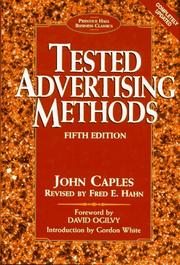
Caples's rigorous, test-driven approach to what actually works in copy — especially headlines — gives advanced writers the discipline to move beyond intuition and into repeatable excellence.

Written as letters to his son, Halbert reveals the mindset, work ethic, and street-level strategy of arguably the greatest direct-mail copywriter who ever lived — essential reading for anyone serious about mastery.
Discussion
Keep reading
Paths that share books, cover the same subject, or open a related topic.