The history of advertising: books to read, in order
Advertising is an industry that has produced an unusual amount of writing about itself, most of it either self-congratulation or denunciation, and the trick to reading it is knowing which you have in your hands. This path alternates deliberately: the historians who reconstructed how the business was actually built, the practitioners who wrote down what they thought they were doing, the critics who argued that the whole enterprise manufactures the desires it claims to serve, and finally two books from inside the modern trade that are honest about how little anyone really knows. It ends where the argument has always been — on whether advertising creates wants or reflects them, a question a century of evidence has not settled.
How persuasion became an industry
BeginnerUnderstand what actually created the advertising business — national brands, mass-circulation magazines and the agency's odd role as the media's sales arm rather than the client's employee — and be able to date the shift from selling space to writing copy.
▸ Study plan for this stage
Pace: Four to five weeks for 1,062 pages across three books of almost identical length. Fox's The Mirror Makers is 383 pages, the narrative spine, and reads easily at forty pages an evening — ten days, and take it first. Pope's The Making of Modern Advertising is 340 pages of scholarly business history co
- What actually created the business: national brands needing national demand, mass-circulation magazines needing revenue, and a distribution system capable of putting the same package in every town.
- The agency's odd origin as the media's sales arm rather than the client's employee — agents bought and resold space, and the commission they earned came from the publisher, which shaped the industry's incentives for a century.
- The shift from selling space to writing copy, which is the moment the agency becomes a creative business, and the commission structure that survived that shift without being redesigned for it.
- Pope's account of professionalisation: trade associations, circulation auditing, standardised rates, and the campaign to distinguish respectable advertising from the patent-medicine trade it grew out of.
- Strasser's corrective: branding, packaging, sampling, trade cards, distribution deals and retailer relations were all instruments of making a mass market, and advertising was one among them.
- The specific cases worth carrying forward — Crisco, Kodak, Wrigley, Quaker Oats — because each shows a different mechanism for converting a commodity into a brand.
- Fox's recurring thesis, which the rest of the path is a test of: that advertising's creative periods alternate with its scientific ones on a roughly generational cycle.
- Why did a national advertising industry emerge when it did? Name the three or four preconditions and say which was binding.
- Explain the commission system: who pays the agency, for what, and what behaviour does that reward?
- How did agencies move from selling space to producing the advertisement? What changed in the client relationship, and what did not?
- Take one of Strasser's cases and list every instrument used to build the brand. What share of the work did advertising do?
- Is Fox's creative-versus-scientific cycle a real pattern or a way of organising a narrative? Note your answer now and revisit it at the end of the path.
- Diagram the money flow in the early agency business — advertiser, agency, publisher — with the commission marked. Then redraw it for a modern agency and note what changed.
- Take one Strasser case and write out its brand-building sequence as a dated list of actions. Mark which are advertising and which are not.
- Build a timeline from Fox with two tracks: agencies and their leaders, and the media the industry bought. You will hang the whole path off it.
- Write half a page on what advertising would look like if the agency had always been paid by the client rather than by the publisher. Pope gives you enough to make it more than speculation.
Next up: With the industry's structure established, the next stage is the industry explaining itself, which is a different genre and has to be read as one.
The standard narrative history of American advertising from the patent-medicine era to the 1980s, organised around the people who ran the agencies. Readable, well judged, and the right spine to hang everything else on. Fox's recurring argument — that advertising's creative periods alternate with its scientific ones on a roughly generational cycle — is worth testing against the rest of the path.

The scholarly account of how the agency business was actually structured between 1880 and 1920: the commission system, the relationship with publishers, the professionalisation, the arrival of national brands. Drier than Fox and much better on the economics of why the industry took the shape it did.
The other half of the story — the making of the mass market itself, through Crisco, Kodak, Wrigley and Quaker Oats. Strasser shows advertising as one instrument among several for converting local, unbranded commerce into national brands, which is the necessary corrective to reading the history as though advertising did it alone.
The practitioners in their own words
BeginnerRead the three positions the industry has taken about itself — advertising as measurable science, as the single unique claim, and as craft governed by research — and be able to see them recur in every subsequent debate about the business.
▸ Study plan for this stage
Pace: Four weeks for 854 pages, all of it fast reading — these are short books by professional persuaders. The Hopkins record here is the combined volume My Life in Advertising and Scientific Advertising, 318 pages holding both of his books, so there is nothing further to buy; read the Scientific Advertis
- The scientific position: advertising as a testable activity, with coupons, keyed responses and split runs producing a measurable cost per reply. Hopkins is where direct-response thinking begins, and mail order is the setting that made the measurement possible.
- The limit of the scientific claim, which Hopkins does not address: the technique measures response where response can be attributed, which is precisely the category of advertising that is easiest to measure and not necessarily the category that matters most.
- Bernays's position, stated without embarrassment: the conscious manipulation of the opinions and habits of the masses is an ordinary and necessary feature of a democratic society, and someone is going to do it.
- That Bernays is a primary source of the first importance and an interested one — he is both describing a practice and advertising his own services in it.
- The Unique Selling Proposition: one claim, strongly stated, repeated to the point of penetration, chosen for what the product can uniquely say. Reeves is the hard-selling research-driven pole and wrote the clearest defence of it that exists.
- Ogilvy's position: research-informed but committed to craft, brand image and long copy, with the reader treated as intelligent. He is a superb writer and a careful curator of his own legend, and both facts matter when reading him.
- That these three positions — measurable science, the unique claim, and image-building craft — recur in every subsequent argument about advertising, including the digital ones, usually without anyone noticing they are a century old.
- The genre problem running through the stage: a practitioner's book is a sales document for the practitioner, and its case studies are selected by the person whose reputation they support.
- What exactly could Hopkins measure, and what could he not? Where does his method quietly stop applying?
- State Bernays's argument in his own terms without editorialising. What is his justification for the practice, and is it consistent?
- Define the Unique Selling Proposition as Reeves does, with its three conditions. Apply it to a product you know.
- Where do Reeves and Ogilvy actually disagree, and where do they merely differ in temperament? Be specific.
- Each of these four men offers evidence for his position. What kind is it, and what would a sceptic want instead?
- Which of the three positions is dominant in advertising you see now? Does the dominant one have better evidence, or a better advocate?
- Design a Hopkins-style test for a claim you actually care about: the variable, the control, the measurement, and the confound you cannot remove. The last item is the exercise.
- Take one contemporary campaign and analyse it three times — as Hopkins, as Reeves and as Ogilvy would. The three readings will not agree, which is the point.
- Read Propaganda and mark every place where Bernays's description is also a solicitation. Then write a paragraph on how that changes the book's value as evidence.
- Return to Fox's creative-versus-scientific cycle and place each of these four men on it. Note whether they fall where Fox's periodisation says they should.
Next up: Having heard the industry describe itself, the next stage looks at what its work actually said and at the first public alarm about it.

Hopkins in the 1920s is where the idea of advertising as a testable science begins — coupons, split runs, tracked response. Note the catalogue record: the widely held edition is the combined volume My Life in Advertising & Scientific Advertising, so this single record contains both of his books and there is no need to buy them separately.
Bernays in 1928, arguing openly that the conscious manipulation of mass opinion is a necessary feature of democratic society, and that he was good at it. A primary source of the first importance and genuinely unsettling — read it before the critics, so their case does not seem overstated when you reach it.

The 1961 statement of the Unique Selling Proposition by the man who made Anacin ads and Eisenhower's television spots. Reeves is the hard-selling, research-driven pole of the industry, and he wrote the clearest defence of it that exists. Read it directly before Ogilvy: they were rivals and the contrast is the argument.
The most widely read book ever written about the trade, from the other pole: research-informed but committed to craft, brand image and long copy. Ogilvy is a superb writer and a careful curator of his own legend. His earlier Confessions of an Advertising Man is the memoir; the only clean record we found for that title carries a French translator in the author field.
The golden age, and the first alarm
IntermediateSee what advertising was actually saying to Americans between the wars and after, and understand why motivational research produced a public panic about subconscious manipulation that outran what the technique could do.
▸ Study plan for this stage
Pace: Three to four weeks for 734 pages. Marchand's Advertising the American Dream is 459 pages and is the best book on this path — a close reading of the interwar advertising itself, with the parables it told and the anxieties it addressed set out systematically; a fortnight at thirty pages a session, an
- Marchand's central finding: interwar advertising told a small number of recurring parables — the first impression, the democracy of goods, the captivated child, civilisation redeemed — and these are the actual content of the persuasion, not the product claims.
- Advertising as reassurance about modernity rather than celebration of it: advertisers positioned themselves as apostles of the new while addressing readers' anxiety about being judged, left behind, or found wanting.
- The systematic inaccuracy of the picture: interwar advertising depicted a society far wealthier, whiter and more urban than the one it addressed, and Marchand treats that distortion as evidence about the advertisers rather than about the audience.
- Advertisers as a social group with their own class position and anxieties, which is Marchand's explanation for why the parables took the shape they did.
- Motivational research: depth interviews and psychoanalytic interpretation applied to consumer choice, and what the technique could and could not actually deliver.
- Why Packard's book caused a panic: the claim that purchasing was being engineered below the level of conscious choice is a claim about autonomy, and it landed in a decade already anxious about mass society.
- The subliminal advertising episode as the extreme case of a claim outrunning its evidence, and the durability of the belief afterwards.
- Packard as a double document — evidence about advertising practice, and better evidence about mid-century American anxiety concerning it — and the founding text of popular advertising criticism.
- Name four of Marchand's parables and give a concrete example of each. What anxiety is each addressing?
- In what specific ways did interwar advertising misrepresent American life? What does Marchand infer from the pattern of distortion?
- What is motivational research, methodologically? What would validate its findings, and was that ever done?
- Where is Packard overstating, and where is he right? Separate the claim about intent from the claim about effect.
- Marchand and Packard are looking at adjacent decades from opposite directions — one reading the advertisements, one reading the practitioners. What does each method miss?
- Take ten interwar advertisements from Marchand's plates and classify each by parable. Then find a current advertisement using the same parable, and write a line on what has changed.
- Reconstruct one motivational research study from Packard as a piece of method: the sample, the instrument, the inference. Then state the objection.
- Write half a page on what evidence would establish that an advertisement changed a purchase decision. Keep it — the next stage is entirely about this question.
- Return to your practitioner readings and ask which of the three positions from stage two the motivational researchers were claiming to advance. The answer is not obvious and is worth an argued paragraph.
Next up: The panic about manipulation raises the question the whole subject turns on, and the next stage puts the two most serious answers directly against each other.
The best book on this list. Marchand read the interwar advertising itself — the parables it told, the social anxieties it addressed, the flattering and inaccurate picture of American life it painted — and shows advertisers as apostles of modernity selling reassurance about it. His Creating the Corporate Soul extends the method to corporate image-making.

The 1957 bestseller that told America its purchases were being engineered by depth psychologists, and made motivational research a public scandal. Packard overstated what the techniques achieved and was right that the industry was trying; read it as both a document of its moment and the founding text of popular advertising criticism.
Does advertising create wants, or reflect them?
IntermediateState the strong critical thesis — that advertising manufactured a culture of consumption to solve capitalism's problem of overproduction — and the strongest historical objection to it, and identify what evidence would actually distinguish them.
▸ Study plan for this stage
Pace: Four to five weeks for 773 pages, and the pairing is the stage. Ewen's Captains of Consciousness is 261 pages, the shorter and more forceful book, and states the critical thesis in its purest form from an explicitly Marxist position; a week to ten days. Lears's Fables of Abundance is 512 pages, almo
- Ewen's thesis at full strength: advertising in the interwar decades set out deliberately to manufacture a consuming public, converting workers whose demands were for time and control into consumers whose demands were for goods.
- The overproduction premise underneath it — that industrial capacity had outrun existing demand, so demand had to be created — and the fact that advertisers themselves sometimes said exactly this, which is Ewen's best evidence.
- Ewen's political position, which he states rather than conceals, and the analytical question it raises: does the framework determine the finding, or does the evidence support it independently?
- Lears's counter-genealogy: advertising descends from the mountebank, the carnival barker, the patent-medicine seller and a long tradition of magical thinking about abundance — not from a corporate strategy meeting.
- Lears's central move: denying advertising the power that both its champions and its critics attribute to it. Advertisers followed cultural change at least as often as they authored it, which is a claim about causal direction rather than about morality.
- That Lears does not exonerate the industry. A weaker industry is not a more admirable one, and this distinction is where most summaries of the book go wrong.
- What evidence would actually distinguish the two accounts: something showing whether a want existed before the campaign that addressed it, which is close to unobtainable and is why the argument has lasted a century.
- The transferable lesson about causal claims in cultural history — that authorship and amplification look identical in the surviving record, which is the same problem the printing-press and internet literatures run into.
- State Ewen's thesis in four sentences. What is the mechanism, and who are the agents?
- What is the overproduction premise, and how much of Ewen's case rests on it? Is the premise historically correct?
- Give Lears's genealogy of advertising. What does tracing it to carnival and magic buy him argumentatively?
- Where does Lears actually contradict Ewen, and where is he changing the subject? Be precise.
- What evidence would show that advertising created a want rather than served one? Design the study, then say why it cannot be run.
- Both authors are working from the same period. Whose account fits Marchand's advertisements better, and why?
- Write both theses as causal diagrams — arrows from industry to culture, and from culture to industry — and mark the evidence each author offers for each arrow.
- Take one campaign from Marchand and explain it first as Ewen would, then as Lears would. Note that both explanations fit, which is the finding.
- Find a passage where an advertiser of the period states Ewen's own thesis in his own words. Then ask what a practitioner's self-description is evidence of, given what stage two taught you about the genre.
- Write half a page on whether the question can be settled at all. If your answer is no, say what the century of argument has nevertheless established.
Next up: After a century of theory about what advertising does, the final stage watches the work being made and asks what the trade actually knows.
The CRITICAL case in its purest form: Ewen argues that 1920s advertising deliberately set out to manufacture a consuming public, converting workers who wanted shorter hours into consumers who wanted more goods. Written from an explicitly Marxist position and hugely influential; read it as the thesis the next book answers.
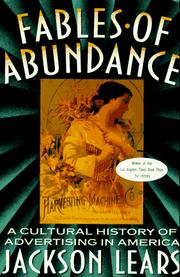
The sophisticated reply, and a better book. Lears traces advertising's roots to older traditions of carnival, magic and the confidence trick, and argues that advertisers were followers of cultural change at least as often as authors of it. It does not exonerate the industry so much as deny it the power both its champions and its critics attribute to it.
The modern trade, and what it knows about itself
IntermediateSee the business from inside a modern agency, know how the industry globalised after the 1980s, and be able to say honestly how much of advertising practice rests on evidence and how much on theories the trade has never really tested.
▸ Study plan for this stage
Pace: Five weeks for 967 pages. Rothenberg's Where the Suckers Moon is 487 pages, the longest here, and follows a single Subaru account review from pitch through campaign to failure with a journalist embedded throughout — a fortnight, and it is the reality check on the memoirs in stage two. Tungate's Adla
- How the work is actually made and sold: the account review, the pitch, the strategy document, the creative brief, the research, the client's decision — and the number of hands the idea passes through before it reaches an audience.
- The gap Rothenberg documents between the strategy and the finished advertisement, which is the concrete answer to every theory in stage two about what advertising is doing.
- Failure as the normal case. A campaign can be well researched, well argued and well made and still not work, and the industry's literature is written almost entirely about the exceptions.
- The internationalisation Tungate covers: the British creative revolution, the very different Japanese agency structure, other national traditions, and the holding-company consolidation that turned agencies into subsidiaries of a handful of groups.
- What consolidation changed — media buying scale, financial reporting pressure, and the separation of creative from media — and why the industry's structure again shaped its output, as it did in stage one.
- Feldwick's survey of the theories: salesmanship, the Unique Selling Proposition, brand image, emotion, fame. Each has been the industry's official answer at some point, and each displaced the last without the last being disproved.
- Feldwick's actual charge, which is sharper than scepticism: the trade adopts theories for reasons of fashion and salesmanship rather than evidence, and it has rarely designed the studies that would distinguish them.
- How this closes the path: the practitioners of stage two were each certain, the critics of stage four were each certain, and the most honest book written from inside the trade says nobody has established which of them is right.
- Walk through the account review Rothenberg follows, naming each stage and who holds the decision at it.
- Where did the Subaru work depart from its own strategy, and what caused each departure?
- Name three national advertising traditions from Tungate and say what distinguishes each structurally, not stylistically.
- What did holding-company consolidation change about how advertising is made? Trace one effect from ownership to output.
- List Feldwick's theories of how advertising works and state each in one sentence. Which do the practitioners in stage two each hold?
- After five stages: does advertising create wants or reflect them, and what is your honest confidence in the answer? Cite the specific books that moved you.
- Chart the Subaru campaign from brief to broadcast, marking at each step what was added and what was lost. Then compare it to Ogilvy's or Reeves's account of how the work gets made.
- Take Feldwick's five theories and, for each, design the study that would test it. Then say why the industry has not run it.
- Using Tungate, write a paragraph on how much of what you have read on this path is a description of advertising and how much a description of American advertising.
- Return to Fox's creative-versus-scientific cycle from stage one and plot every book on this path onto it, by the position it takes rather than by when it was written. Then say whether the cycle survived the test.
- Write a final page on what a century of writing about advertising has actually established, sourcing each claim to a book here and leaving out everything you cannot source. It will be a shorter page than you expect.
Next up: The path ends with the trade's most honest self-assessment, which is that the question it has been arguing about for a century remains open.
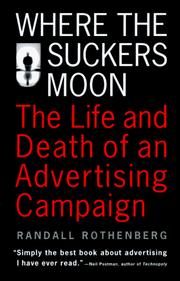
A journalist embedded through one Subaru account review, from pitch to campaign to failure. The most detailed account anywhere of how the work is actually made and sold, and of the gap between the strategy documents and what ends up on television. Read it as the reality check on stage two's memoirs.

A global history of the industry, useful here because everything else on this path is essentially American: the British creative revolution, the Japanese agency model, the French and Brazilian traditions, and the holding-company consolidation of the 1980s onward. Broad rather than deep, and the right corrective to a US-centred reading.

A former planner's short, sceptical survey of the theories of how advertising works — salesmanship, USP, brand image, emotion, fame — arguing that the industry has adopted each in turn without ever establishing which is true. The most intellectually honest book written from inside the trade, and the right place to leave the argument the path has been building.
Discussion
Keep reading
Paths that share books, cover the same subject, or open a related topic.