Best Books on Brand Strategy and Positioning (in Order)
This curriculum builds a rigorous, practitioner-level mastery of brand strategy across four tightly sequenced stages. Starting from the foundational logic of positioning and identity, it moves through the craft of brand storytelling, and culminates in the advanced psychology and architecture behind brands that earn lasting trust and loyalty. Because the learner starts at an intermediate level, early books sharpen strategic vocabulary quickly so later, more nuanced works land with full force.
Positioning & Strategic Foundations
IntermediateUnderstand how brands occupy mental space in consumers' minds and why positioning is the bedrock of every brand decision that follows.
▸ Study plan for this stage
Pace: 4–5 weeks, ~25–30 pages/day (approximately 150–160 pages per book)
- The mind as a ladder: how consumers rank brands in specific categories and why the first position is disproportionately valuable
- Positioning as a defensive strategy: owning a unique mental space that competitors cannot easily replicate
- The difference between product features and consumer perception: why what you say matters less than what sticks in the prospect's mind
- Simplicity and focus: why broad positioning dilutes brand strength and narrow positioning creates dominance
- The role of category creation and redefinition: how brands can reposition by changing the competitive frame
- Differentiation through meaningful distinction: identifying and communicating what truly separates your brand from alternatives
- The cost of repositioning: why changing a brand's position is exponentially harder than establishing it correctly from the start
- What is the 'ladder' concept in positioning, and why does being first in a category matter more than being better?
- How does positioning differ from advertising, and why is positioning a strategic foundation rather than a tactical tool?
- What are the main barriers that prevent consumers from changing their perception of an established brand?
- How can a brand successfully differentiate when operating in a crowded category with strong incumbents?
- What is the relationship between simplicity and positioning strength, and why do many brands fail by trying to be everything to everyone?
- How can repositioning or category redefinition work as a strategy, and what are the risks involved?
- What makes a differentiation strategy sustainable, and how do you identify a meaningful point of difference?
- Map the 'mental ladder' for three categories you use regularly (e.g., smartphones, coffee, athletic shoes). Write down the brands you can recall in rank order, then compare with a peer. Analyze what positions each brand occupies and why.
- Audit your own brand (or a brand you know well): write a one-sentence positioning statement that captures the unique mental space it occupies. Test it with 5–10 people to see if they perceive it as intended.
- Identify a brand that attempted repositioning (e.g., Domino's, Old Spice). Research the old and new positioning, then analyze what worked, what failed, and why the shift was necessary.
- Conduct a competitive positioning analysis: choose a category with 4–5 major players. For each, identify their claimed positioning and their actual perceived positioning. Where are the gaps?
- Write a positioning brief for a hypothetical new brand entering a crowded market (e.g., a new smartphone, energy drink, or financial service). Justify why your chosen position is defensible and why it matters to the target consumer.
- Analyze three advertisements or campaigns from different brands. Identify what positioning each is trying to reinforce. Does the creative execution actually communicate that position clearly, or does it dilute it?
Next up: This stage establishes that positioning is the strategic anchor—the next stage will explore how to build and activate that position through brand architecture, naming, visual identity, and messaging systems that consistently reinforce the mental space you've claimed.

The canonical starting point for brand strategy — it defines the concept of positioning and explains why owning a single idea in the customer's mind is the central challenge of branding. Read first to establish the core strategic vocabulary.

Extends positioning theory into a practical framework for standing out in crowded markets. Reads naturally after Ries & Trout's foundational work, adding competitive depth and real-world case studies.
Brand Identity & Visual Language
IntermediateLearn how to translate positioning strategy into a coherent, expressive brand identity — name, visual system, voice, and personality — that customers instantly recognize.
▸ Study plan for this stage
Pace: 4–5 weeks, ~40–50 pages/day. Start with Wheeler's comprehensive framework (1 week), then Neumeier's two shorter, concept-dense books (1.5 weeks each), with overlap days for integration and practice.
- The five-layer brand identity system (Wheeler): strategy, naming, visual design, messaging, and application
- The Brand Gap concept: closing the distance between what a company thinks it is and what customers perceive
- Visual identity as a strategic tool: logos, color, typography, and imagery as expressions of positioning
- Brand voice and personality: how tone, language, and communication style reinforce identity
- Differentiation through 'Zag': finding the unconventional angle that makes a brand memorable in a crowded market
- Design systems and consistency: creating rules and guidelines that scale identity across touchpoints
- The role of naming in brand identity: how a name signals positioning and shapes perception
- Emotional and functional benefits: translating strategy into tangible brand expressions customers recognize instantly
- What are the five layers of brand identity according to Wheeler, and how does each layer build on the previous one?
- What is the Brand Gap, and how do visual identity, voice, and messaging help close it?
- How would you develop a cohesive visual system (logo, color palette, typography) that directly reflects a brand's positioning strategy?
- What does it mean to 'Zag' in brand strategy, and how does this principle apply to creating a distinctive brand identity?
- How do you create and document brand guidelines to ensure consistency across all customer touchpoints?
- What is the relationship between brand personality and voice, and how do you translate positioning into a recognizable tone of communication?
- Audit an existing brand (e.g., Apple, Patagonia, or a local company): map its visual identity, voice, and messaging back to its positioning. Identify gaps or inconsistencies.
- Create a brand identity brief for a fictional or real startup: define strategy, develop 2–3 name options with rationales, sketch a logo concept, and select a color palette with justification.
- Design a simple brand guidelines document (4–6 pages) covering logo usage, color palette, typography, imagery style, and tone of voice for a brand of your choice.
- Conduct a 'Zag analysis': choose a crowded category (e.g., coffee, fitness, banking) and identify the conventional positioning. Then design a brand identity that breaks the pattern and stands out.
- Develop a brand personality profile: write a character description of your brand, then create 5–10 sample communications (social post, email, tagline, customer service response) that reflect that personality consistently.
- Redesign a brand's visual identity (logo, color, typography) to better align with a new or clarified positioning strategy. Document your decisions and rationale.
Next up: This stage equips you with the tactical tools to express brand strategy visually and verbally; the next stage will focus on how to activate and manage that identity across customer experiences and touchpoints to build loyalty and advocacy.

The definitive practitioner's guide to building a brand identity system from strategy through execution. Read here because it bridges the 'why' of positioning into the tangible 'what' of identity.
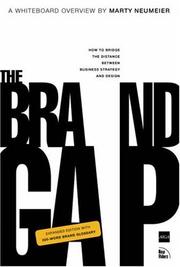
A concise, visually driven manifesto on closing the gap between business strategy and customer experience. Its tight framework reinforces Wheeler's process and introduces the idea of the brand as a 'gut feeling.'
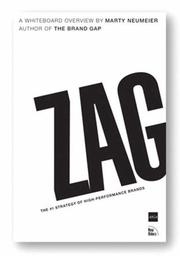
Neumeier's follow-up sharpens the identity lens into a radical differentiation checklist. Read after The Brand Gap to move from diagnosis to a step-by-step design process for a distinctive brand.
Brand Storytelling & Meaning-Making
IntermediateMaster the narrative structures and emotional frameworks that make brands meaningful, memorable, and shareable — turning strategy into stories customers tell themselves and others.
▸ Study plan for this stage
Pace: 4-5 weeks, ~25-30 pages/day (approximately 2-3 hours per day including note-taking and reflection)
- The SB7 Framework: positioning the customer as the hero, not the brand, and the seven essential story elements (character, problem, guide, plan, call-to-action, failure stakes, success outcome)
- Narrative clarity as a competitive advantage: how clear, simple stories cut through market noise and drive customer engagement
- The role of the guide archetype: positioning your brand as the wise mentor who helps customers overcome obstacles and achieve their desires
- Identifying and articulating the external problem (what customers face), internal problem (how it makes them feel), and philosophical problem (what's at stake morally or existentially)
- The power of stakes and failure: making the consequences of inaction vivid and real so customers feel urgency to engage
- Story structure as a sales tool: how the narrative arc naturally moves customers from awareness through decision-making to action
- Brand voice and messaging consistency: translating story principles into clear, compelling copy across all customer touchpoints
- Emotional resonance through specificity: how concrete details, metaphors, and sensory language make brand stories memorable and shareable
- What is the SB7 Framework, and why does positioning the customer as the hero—rather than the brand—create more effective brand narratives?
- How do the three layers of problems (external, internal, philosophical) work together to create emotional urgency and meaning in a brand story?
- What is the guide archetype, and how does embodying this role differentiate a brand from competitors who position themselves as the hero?
- How do stakes and failure consequences function in brand storytelling, and why are they essential to motivating customer action?
- Can you map a specific brand or product you know onto the SB7 Framework, identifying each story element and explaining how they work together?
- How would you translate the narrative principles from the book into a concrete messaging strategy for a website, email campaign, or advertisement?
- Map an existing brand (your own or a competitor's) onto the SB7 Framework: identify the customer as hero, the problem, your brand as guide, the plan, call-to-action, stakes, and success outcome. Write 1-2 sentences for each element.
- Write a 150-word brand narrative for a product or service using the SB7 structure, ensuring the customer is the protagonist and your brand is the supporting guide.
- Analyze a brand's current website copy or advertisement and identify which story elements are present and which are missing. Rewrite a key section to include the missing elements.
- Create a 'three-layer problem' document for your brand or a case study brand: articulate the external problem (practical obstacle), internal problem (emotional consequence), and philosophical problem (deeper meaning or stakes).
- Develop a messaging framework for three different customer touchpoints (e.g., homepage, email welcome series, social media) that maintains narrative consistency while adapting the story to each context.
- Interview 3-5 customers or target audience members about why they chose a particular brand, and identify the narrative elements (guide, stakes, success) that influenced their decision. Document patterns.
Next up: This stage equips you with the narrative architecture to make brands meaningful and memorable; the next stage will deepen how to amplify these stories across channels, measure their resonance, and evolve them as markets and customer needs shift.

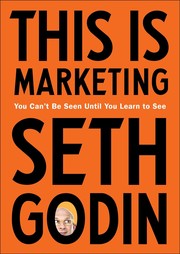
Introduces the StoryBrand framework, positioning the customer — not the brand — as the hero. Essential reading before deeper storytelling works because it gives a clear, repeatable narrative structure.

Decodes the seven 'primal code' elements (creation story, creed, icons, rituals, etc.) that make brands feel like belief systems. Deepens Miller's narrative thinking into cultural and mythological dimensions.
Trust, Memory & Enduring Brand Equity
ExpertUnderstand the psychology of trust, loyalty, and long-term brand equity — and synthesize everything into a strategic model for building brands customers remember and return to for life.
▸ Study plan for this stage
Pace: 8–10 weeks, ~40–50 pages/day (with reflection days). Week 1–3: "Eating the Big Fish" (320 pages); Week 4–5: transition & consolidation; Week 6–10: "How Brands Grow" (480 pages) with integrated case studies.
- Challenger brand strategy: how underdogs disrupt market leaders through distinctive positioning and mental availability rather than market share
- The 'Lighthouse Identity' principle: a clear, ownable brand idea that guides all decisions and creates memorable differentiation
- Memory and mental availability: brands grow through being easy to recall and mentally accessible in purchase moments, not just through heavy spending
- The 'Penetration Paradox': brand growth comes primarily from attracting light buyers and increasing purchase frequency among existing customers, not converting loyalists
- Distinctive brand assets: colors, symbols, sounds, and associations that make a brand instantly recognizable and reduce cognitive load
- Loyalty as a spectrum: most customers are promiscuous; true loyalty is rare, so strategy should focus on habit formation and ease of purchase
- Building enduring equity: combining challenger thinking with growth laws to create brands that compound in memory and preference over decades
- What is a Lighthouse Identity, and how does it differ from a traditional brand mission or vision statement? Why is it essential for challenger brands?
- According to 'How Brands Grow,' what is the primary driver of brand growth, and why do most marketers misunderstand it?
- How can a brand build mental availability and distinctive assets simultaneously? Provide an example from either book.
- What is the Penetration Paradox, and what are its strategic implications for customer acquisition and retention budgets?
- How do the challenger brand principles from 'Eating the Big Fish' complement or challenge the growth laws in 'How Brands Grow'?
- Design a long-term brand equity strategy that integrates Lighthouse Identity thinking with the growth laws—what would be your first three moves?
- Identify a challenger brand in your industry or interest area. Map its Lighthouse Identity: What is the single, ownable idea? How consistently is it expressed across touchpoints? Where does it break down?
- Conduct a mental availability audit: Survey 10–15 people in your target market. Which brands come to mind first in your category? What distinctive assets do they recall? Where are the gaps?
- Create a distinctive brand assets inventory for a brand you know well (or your own). List visual, verbal, sonic, and behavioral assets. Which are truly distinctive vs. generic? How could you strengthen them?
- Analyze a brand's customer base using the penetration framework: Estimate the ratio of heavy, medium, and light buyers. Where is growth actually coming from? How should marketing budget shift based on this insight?
- Write a 2-page strategic brief for a fictional or real brand that synthesizes one insight from 'Eating the Big Fish' (Lighthouse Identity, challenger thinking) with one insight from 'How Brands Grow' (mental availability, penetration). Include a 12-month action plan.
- Interview 3–5 loyal customers of a brand. Ask what makes them return, what they remember, and what would make them switch. Map their answers against the brand's stated strategy. Where is the gap?
Next up: This stage equips you with both the challenger mindset (how to build distinctive, memorable brands) and the growth science (how those brands actually scale and compound), preparing you to move into implementation—whether that's brand architecture, customer experience design, or go-to-market strategy for new products or markets.

A masterclass in how challenger brands build outsized trust and loyalty without the resources of market leaders. Bridges storytelling and identity into competitive brand strategy at the highest level.

Sharp's evidence-based research dismantles branding myths and reveals the empirical laws of how brands actually grow and sustain memory. A critical counterweight to intuition-based models — read last to stress-test everything learned.
Discussion
Keep reading
Paths that share books, cover the same subject, or open a related topic.