The Tobacco Industry: The Best Books on the Century-Long Business, in Order
Tobacco is the best-documented corporate story in existence, because litigation forced the companies to surrender millions of internal pages that are now public. This path follows the business from a colonial cash crop to the invention of the modern cigarette, then to the fifty-year campaign to keep the health evidence contested, then into the courtrooms that finally broke it — and ends with the doubt-manufacturing playbook the industry perfected and other industries borrowed. Read as business history and legal history, not as public-health advice.
How Tobacco Became a Business
BeginnerUnderstand tobacco's four centuries as a commodity, the invention of the mass-market cigarette, and the fact that organised opposition long predates the cancer evidence
▸ Study plan for this stage
Pace: 4 weeks. Gately's Tobacco is a 400-page global history that reads easily — ten days. Tate's Cigarette Wars is a short academic monograph and takes under a week. Brandt's The Cigarette Century is the anchor and needs two weeks at 30 pages a day; its early chapters on the cigarette's invention are the
- Tobacco as a colonial cash crop and a currency: what it did to Virginia's land and labour system long before anyone smoked a manufactured cigarette
- The Bonsack machine and what mechanised rolling actually changed — a product cheap enough, mild enough and uniform enough to be inhaled, and therefore to be consumed all day
- The invention of the modern cigarette as a marketing achievement rather than a technical one: Brandt's account of branding, distribution and the manufacture of demand
- Tate's finding that organised American opposition to cigarettes ran from roughly 1880 to 1930, banned them outright in fifteen states, and was defeated — decades before any cancer evidence existed
- Why the moral case against cigarettes failed and what that failure taught the industry about which arguments it needed to be able to answer
- The two world wars as distribution events: military supply normalising the cigarette across an entire generation of men
- Trust-busting and the 1911 breakup of the American Tobacco Company, and the oligopoly structure that replaced it
- What specifically did mechanisation change about the cigarette as a product, and why does that change make the health story that follows possible?
- Tate describes an anti-cigarette movement that won legislation and then collapsed. What defeated it, and what does its defeat suggest about the limits of moral argument as a regulatory tool?
- Brandt treats the cigarette as a designed object. Name three design or marketing decisions he identifies and say what each was solving for
- Gately and Brandt cover overlapping ground on the early twentieth century from different distances. What does Gately's four-century frame show that Brandt's American focus cannot?
- By 1950, what was the legal and regulatory position of the cigarette in the United States, and which agencies had authority over it?
- Build a timeline of American cigarette consumption per capita from Brandt's figures, marking the Bonsack machine, both world wars, and the state bans Tate describes. The shape of the curve is the argument
- Tate's fifteen state bans were all repealed. Pick one state, find what repealed the ban and who lobbied for repeal, and write a paragraph connecting it to the regulatory mechanisms that will appear in later stages
- Brandt cites the industry's own advertising. Find one campaign he reproduces or quotes and write down exactly what claim it makes — health, taste, status — then note whether the claim is one a regulator could later have called false
- Write, in one paragraph, what a well-informed public health official in 1950 could have known about cigarettes and what powers they would have had to act on it. Keep it; stage two is the test of both halves
Next up: With the product built and the first opposition already defeated, you can read the industry's response to the cancer evidence as a company strategy rather than as a surprise.
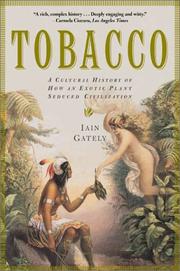
A readable global history of the plant as trade good and cultural object, from Columbus to the twentieth century. Start here so the industry arrives with a commercial history rather than beginning in 1950 with the epidemiology.
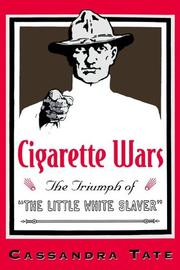
The forgotten American anti-cigarette movement of 1880-1930, which banned cigarettes in fifteen states on moral grounds and then collapsed. Useful because it shows the industry beating an opponent long before it had a scientific one.
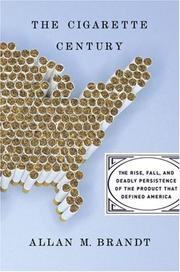
The anchor of the path and the best single book on the subject: a Harvard historian's account of how the cigarette was designed, marketed, defended and eventually regulated. Everything after this stage is depth on one of Brandt's chapters.
The Industry Against the Evidence
IntermediateFollow the companies' response to the cancer findings from 1953 onward — the Frank Statement, the Tobacco Industry Research Committee, the internal research they buried — and read the leaked documents themselves
▸ Study plan for this stage
Pace: 7 weeks. Kluger's Ashes to Ashes is around 800 pages — three weeks at 40 pages a day. Hilts's Smokescreen is short and journalistic, a week. Glantz's The Cigarette Papers is analysis of primary documents and should follow Hilts immediately, a week and a half, read with the documents in front of you.
- The 1953 Sloan-Kettering mouse-painting results and the 1950 Doll and Hill and Wynder and Graham epidemiology as the trigger events the industry was responding to
- The Frank Statement to Cigarette Smokers of January 1954 and the founding of the Tobacco Industry Research Committee: a public commitment to fund research, functioning as a mechanism for producing doubt
- The distinction that runs through all four books between what the companies said publicly and what their internal research established — particularly on nicotine as an addictive drug and on the design of cigarettes to deliver it
- The Brown and Williamson documents: how they reached Hilts, what Glantz and the UCSF researchers did with them, and why publishing them survived legal challenge
- Product design as a legal object — filters, ventilation holes, tar and nicotine ratings, and the gap between machine-measured yields and human smoking behaviour
- Proctor's position as a historian who served as a paid expert witness, and how to read a scholar whose evidence base is a litigation archive and whose conclusion is abolition
- Attorney-client privilege as a research-management tool: routing scientific work through lawyers so that its findings would be shielded from discovery
- What did the internal research establish about nicotine addiction, and by roughly what date? Cite the document class Glantz uses, not just the claim
- The Frank Statement is often described as a public relations move. What regulatory or legal function did it also serve, and which agencies did it succeed in delaying?
- Hilts received the documents and Glantz analysed them. What does each of those two roles let its author claim that the other cannot?
- Proctor argues for abolition. Separate his historical findings from his policy conclusion — which of his claims would survive if you rejected the conclusion entirely?
- Where were the legal weak points in this period? Identify at least two moments where the evidence available would have supported regulatory or criminal action that was not taken, and say what stopped it
- Kluger's is a corporate history, Proctor's a prosecution. Take one episode both cover and describe how the framing changes the same facts
- Take one internal document quoted in Glantz and find the corresponding public statement by the same company in Kluger or Hilts. Write the two side by side, dated. This pairing is the entire evidentiary structure of tobacco litigation
- Trace the claim 'the companies knew nicotine was addictive' across Hilts, Glantz and Proctor. Write down each author's earliest date and the document each relies on, and note where the three disagree about how early is defensible
- The Frank Statement is short. Read it in full — Brandt, Kluger and Proctor all reproduce or quote it — and annotate each sentence with what the internal record shows the signatories knew at the time
- Write a paragraph on why the Federal Trade Commission's tar and nicotine rating scheme, intended as consumer protection, ended up serving the industry. Then write the counter-case that the scheme was better than nothing
- Go back to what you wrote at the end of stage one about a 1950 official's powers. List which of the barriers you identified were legal, which evidentiary, and which were manufactured by the industry between 1954 and 1994
Next up: The documents establish what was known; the next stage is about the legal machinery that finally made knowing it cost the companies money.
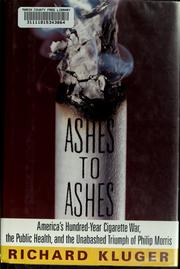
The Pulitzer-winning corporate history, 800 pages of how the American companies behaved decade by decade. Read after Brandt as the detailed business narrative underneath his analytical frame.
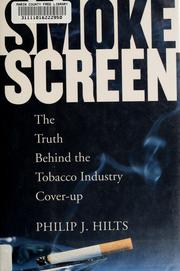
By the New York Times reporter who received the leaked Brown and Williamson papers, on what the companies knew internally about addiction and disease. The story of the disclosure that changed the litigation.
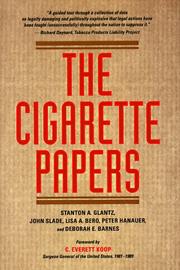
The documents themselves, analysed by the UCSF researchers who published them after the leak. Read directly after Hilts: he tells you how they surfaced, this shows you what they say.

A historian who served as an expert witness, working through millions of pages of the litigation archive and arguing openly for abolition. The most aggressive book here and the most thoroughly sourced; read it knowing it is a case, not a survey.
Courtrooms, Settlements and the Money
IntermediateUnderstand how forty years of failed lawsuits turned into the state Attorney General actions and the 1998 Master Settlement Agreement, and see the industry as a financial object
▸ Study plan for this stage
Pace: 5 weeks. Pringle's Cornered takes ten days. Orey's Assuming the Risk, on the Mississippi case, is a close legal narrative and deserves ten days read carefully. Barbarians at the Gate is long but propulsive and can be finished in the last two weeks; read it as a financial document, not a digression.
- Why the first two waves of tobacco litigation failed: assumption of risk, the warning labels defence, and the industry's strategy of making every case ruinously expensive to bring
- What changed in the third wave — the shift from individual plaintiffs to state Attorneys General suing to recover Medicaid costs, which sidestepped the individual smoker's choice entirely
- The Mississippi case as the template Orey documents: Mike Moore, the private lawyers who funded it, and the contingency structure that made a state suit financially possible
- Whistleblowers as an evidentiary mechanism — Jeffrey Wigand and the internal knowledge that could not otherwise have been introduced
- The 1998 Master Settlement Agreement: what the states got, what the companies bought, and the specific ways in which the settlement's payment structure gave the states an interest in continued cigarette sales
- Why no individual executive was criminally prosecuted out of any of it
- The RJR Nabisco leveraged buyout as the industry seen as a financial object: enormous predictable cash flow, an asset class rather than a business, and why that cash flow made the litigation survivable
- What legal theory did the state Medicaid suits rest on, and why did it succeed where forty years of individual product liability claims had failed?
- Orey's account of Mississippi turns on a small group of lawyers taking enormous financial risk. What does that tell you about the accessibility of this legal mechanism to anyone else?
- The Master Settlement Agreement produced payments tied to future sales volume. Explain the perverse incentive that created, and say whether Pringle treats it as a design flaw or an accepted trade
- Wigand's disclosures were central. What did his testimony add that the leaked documents did not, and why did it matter procedurally rather than just publicly?
- Barbarians at the Gate is not a book about fraud or health. What does the RJR Nabisco deal show about why the companies could absorb decades of litigation, and what does that imply about litigation as a regulatory instrument?
- Set out the three waves of tobacco litigation in a table: the legal theory, the defence that defeated it, and what changed. The third row is the whole story of the 1990s
- Take the Master Settlement Agreement's payment formula as Pringle describes it and work out, in a paragraph, who bears the cost of a decline in smoking rates under it. Then ask whether that is what a public health settlement should look like
- Orey and Pringle both cover the Mississippi litigation. Find one factual point on which their accounts differ and work out which is closer to the court record each is describing
- Read the RJR Nabisco cash-flow figures in Barbarians at the Gate against the settlement payments in Pringle. Write two sentences on whether the settlement was, to the companies, a fine or a cost of doing business
- Write the strongest one-paragraph case that the Master Settlement Agreement was a public health success, then the strongest case that it entrenched the industry. Decide, and state what evidence would change your answer
Next up: The defensive techniques the tobacco companies perfected did not stay in tobacco, and the final stage follows them out.
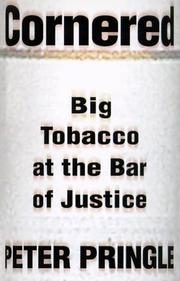
The litigation wave of the 1990s — the plaintiffs' lawyers, the whistleblowers, the state suits — narrated as it unfolded. The clearest account of why the third wave of lawsuits succeeded where the first two failed.
A close account of the Mississippi case and the small group of lawyers who built it, including the Jeffrey Wigand disclosures. Placed after Pringle as the single-case depth behind the general story.
The RJR Nabisco leveraged buyout, written with John Helyar and the definitive book on 1980s deal-making. It belongs here because it is the one account that treats a tobacco company purely as an asset, which is how its owners did.
The Playbook the Industry Exported
IntermediateSee how the tactics developed to defend cigarettes — funded doubt, captured expertise, demands for more research — were transferred to other industries and other regulatory fights
▸ Study plan for this stage
Pace: 4 weeks. Merchants of Doubt takes ten days. Michaels's Doubt Is Their Product is shorter and more procedural — a week, read immediately after Oreskes and Conway so the mechanism follows the history. Proctor's Cancer Wars closes the stage in ten days.
- The Oreskes and Conway thesis: a small, identifiable group of scientists moved from tobacco to acid rain to ozone depletion to climate change, deploying the same technique in each
- The technique itself, stated precisely — not denial but the manufacture of the appearance of unresolved scientific controversy, which converts a policy question into a research question
- 'More research is needed' as a regulatory delay instrument, and why it is nearly impossible to argue against in public
- Michaels's operational account from inside government: how manufactured uncertainty functions in rulemaking, risk assessment and the setting of exposure standards at OSHA and elsewhere
- Product defence as an industry: consulting firms whose service is the production of contrary studies and expert testimony
- Proctor's argument in Cancer Wars that what counts as an established cause of cancer is itself shaped by which parties can fund research and which can litigate
- The difference between scientific uncertainty, which is real and permanent, and manufactured uncertainty, which is a tactic — and how a regulator is supposed to tell them apart
- Name the specific individuals Oreskes and Conway trace across multiple controversies, and identify the institutional vehicle that carried them from one to the next
- Michaels describes the effect of manufactured uncertainty on specific rulemakings. Pick one and explain, step by step, where in the regulatory process the doubt did its work
- Which legal and regulatory mechanisms from the tobacco fight actually worked — document discovery, state Medicaid suits, FDA authority, disclosure requirements — and which of those are available against a diffuse industry like fossil fuels?
- Proctor argues the politics of causation shape the science. What is the strongest objection to that claim, and does he answer it?
- The tobacco playbook's central asset was a public norm that scientific debate should be resolved before regulation. What would a regulatory system that did not depend on that norm look like?
- Take one technique from stage two — the Tobacco Industry Research Committee, or the funding of sympathetic researchers — and find its counterpart in Merchants of Doubt in a non-tobacco controversy. Write both versions in a paragraph each and mark what had to be adapted
- Michaels was a regulator. Find a passage where he describes a specific standard-setting process being delayed, and reconstruct the timeline: proposal, contrary study, delay, outcome. Then check whether the contrary study was ever retracted or discredited
- Trace one statistic across the stage — a mortality or exposure estimate that was contested — and identify who produced the competing figure, who funded them, and how the dispute was resolved or left open
- Write the opposing case in a paragraph: that Oreskes and Conway overstate the coherence of the group they describe and understate genuine scientific disagreement. Use their own evidence, and then say whether it survives
- Return to the whole path and write one page on which single intervention — documents discovery, a whistleblower, a state Attorney General, an FDA rule, a settlement — did most to change the tobacco industry's behaviour. Then ask which of those an industry today could not defeat
Next up: This is the final stage: the tobacco case is now legible as a general method, which is the form in which it will keep turning up.
Written with Erik Conway, tracing a small group of scientists from tobacco to acid rain to ozone to climate change. The book that made the transfer of the playbook a documented claim rather than an accusation.
By an epidemiologist who ran OSHA, on how manufactured scientific uncertainty operates inside regulatory processes. The operational manual to Oreskes's history — read it second, when you want the mechanism rather than the narrative.
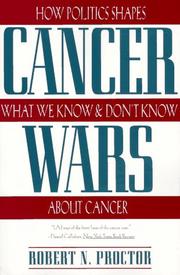
Proctor's earlier book on why the politics of cancer causation is fought the way it is, and how industries shape what counts as knowledge. It closes the path by generalising the argument beyond tobacco entirely.
Discussion
Keep reading
Paths that share books, cover the same subject, or open a related topic.