Best Books on Structural Engineering, in Reading Order
Structural engineering is a subject where the physical intuition has to come before the arithmetic, or the arithmetic never means anything. So this path spends its first half on books that explain how loads travel through a building or a bridge and why structures fail, and only then moves to the analysis textbooks an engineering student works through. The last stage is design in the two materials that carry most of the built world, concrete and steel — where analysis meets code requirements and the work becomes a profession rather than a physics problem.
Why things stand up
BeginnerBe able to look at a beam, arch, truss or cable and say where the load goes and what is in tension and what is in compression — without calculating anything.
▸ Study plan for this stage
Pace: 8-10 weeks, and read all three with a pencil. Structures, or, Why Things Don't Fall Down is 395 pages of prose and takes three weeks at 20 pages a day. Why Buildings Stand Up is 311 pages and takes two to three weeks. Why Buildings Fall Down is 340 pages and is the slowest of the three despite being
- Gordon's central distinction between stress and strain, and why a structure fails at a stress concentration rather than at an average. He gets this across in prose with almost no algebra, which is exactly why it sticks
- Tension, compression, shear and bending as four different things a member can be doing, and the reflex of looking at any structure and naming which is happening where. This reflex is the entire goal of the stage
- Why bending is really tension and compression on opposite faces of the same member, and what that implies about where material should be put — which is the whole reason an I-beam has the shape it has
- Buckling as a stability problem rather than a strength problem: a slender column fails long before its material yields, and the failure depends on length and end conditions rather than on stress alone
- Salvadori's load-path thinking: follow a load from where it lands, through slab, beam, column and foundation, into the ground. Every building question in this path is a load-path question
- The structural systems Salvadori works through — post-and-lintel, arch, vault and dome, truss, cable, frame, shell — and what each does well and badly. The Pantheon and a suspension bridge are answers to different questions
- Lateral loads as the problem that separates a tall building from a stack of floors: wind and earthquake, and the shear walls, braced frames and tubes that resist them
- The failure case studies in the third book, and the fact that each has a specific technical cause worth being able to state: the Hyatt Regency walkway connection detail changed during fabrication, Tacoma Narrows and aeroelastic flutter, Ronan Point and progressive collapse from a single panel loss
- Look at any bridge near you and name every member that is in tension and every one in compression. If you cannot do this for a truss, reread Gordon
- Why does an I-beam have flanges? Answer in terms of bending stress distribution, not in terms of it being the shape beams are
- Explain the Hyatt Regency walkway failure precisely: what was the original connection, what was built instead, and by what factor did the change alter the load on the critical element?
- Take a simple building and trace a load from a person standing on the fourth floor down to the soil. Name every member it passes through
- Why does a slender column fail at a lower stress than a short one of the same material? What does that tell you about which properties matter for a column?
- Walk a building you use daily and sketch its structural system: where the columns are, which way the beams span, where the lateral resistance is. Then check your sketch against what you can see in the parking garage or the stairwell, which is where the structure is usually visible
- For five of the failures in Why Buildings Fall Down, write a three-sentence account of each: what was built, what the mechanism of failure was, and what would have caught it. Doing this in your own words is the exercise
- Build a small truss from craft sticks and load it to destruction. Predict which member will go first and see whether you were right. Getting this wrong once is worth more than reading three chapters
- Take a photograph of five different structures — a bridge, a roof, a tower, a stadium, an old stone building — and annotate each with the load paths and the system type from Salvadori
- Write 400 words explaining to a non-engineer why a suspension bridge and an arch bridge are opposite solutions to the same problem
Next up: You can now read a structure by eye and name what each part is doing, which is the intuition that makes the material behaviour in the next stage mean something.
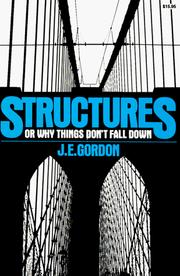
The finest introduction to structures ever written, and the one book everyone in this field recommends first. Gordon explains stress, strain, bending and buckling in plain prose with almost no mathematics, and does it well enough that professional engineers reread it. Start nowhere else.
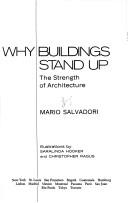
Gordon works from materials outward; Salvadori works from buildings inward, taking real structures from the Pyramids to skyscrapers and showing how each carries its loads. Read it second — it applies Gordon's concepts to the specific problem of buildings.
The companion volume, and the more instructive of the two: Hyatt Regency, Tacoma Narrows, Ronan Point. Failure case studies are how structural judgment is actually transmitted, and reading them now means the later analysis has consequences attached to it.
Materials, failure and the engineer's judgment
IntermediateUnderstand why materials behave as they do, why safety factors exist, and what distinguishes an elegant structure from a merely adequate one.
▸ Study plan for this stage
Pace: 8-9 weeks. The New Science of Strong Materials is 280 pages and takes two to three weeks. To Engineer Is Human is 247 pages and takes two weeks. The Tower and the Bridge is 311 pages, three weeks, and is the one to read with photographs of the structures in front of you.
- Gordon's central puzzle in the materials book: real materials fail at a small fraction of their theoretical strength, and the explanation is defects — cracks, dislocations and flaws — rather than the bulk material being weaker than calculated
- Griffith's crack theory in the form Gordon gives it: a crack propagates when the energy released exceeds the energy needed to create new surface, which is why a small flaw in a brittle material is catastrophic and the same flaw in a ductile one is not
- Toughness as distinct from strength, and why this is the property that keeps structures standing. Glass is strong and useless; mild steel is weaker and safe, because it deforms visibly before it breaks
- Why steel is the material it is — the yield plateau, ductility, and the fact that a steel structure warns you. This is the physical fact underneath the entire design philosophy of stage 4
- Why concrete is used with reinforcement: strong in compression, negligible in tension, so steel is placed exactly where the tension is. Understanding this now makes the whole of the concrete design text legible
- Petroski's thesis: engineering knowledge advances by failure, and design is fundamentally the anticipation of how one might be wrong. Safety factors are an admission of uncertainty rather than a margin of luxury
- Petroski's argument about success as the more dangerous teacher — that a run of successful designs licenses extrapolation beyond the range where the assumptions hold, which is the pattern behind several of the stage-1 failures
- Billington's idea of structural art: that efficiency, economy and elegance are a single standard rather than three competing ones, illustrated by Maillart's concrete bridges, Roebling's Brooklyn Bridge, Eiffel's tower and Nervi's shells
- Why does a scratch on a glass rod matter so much more than a scratch on a steel one? Answer using crack propagation, not by saying glass is brittle
- Distinguish strength, stiffness and toughness with a material that is high in each and low in the others
- Reinforced concrete is two materials doing two jobs. State precisely which job each does and what happens at the interface between them
- Petroski says success is a more dangerous teacher than failure. Find a stage-1 case study that fits that pattern and explain the extrapolation that killed it
- Pick a Maillart bridge and say what Billington thinks makes it structural art. Then find a modern bridge you think fails that standard and say why
- Take three of the stage-1 failures and re-explain each in terms of material behaviour rather than geometry. Some will re-explain cleanly and some will not, and the difference tells you which failures were material and which were conceptual
- Look up stress-strain curves for mild steel, high-strength steel, concrete and timber, and sketch all four on one axis. Annotate each with what the shape means for how a structure using it will fail
- For one structure Billington praises and one he does not, write 300 words comparing them on his own criteria. Disagreeing with him is fine; doing it on his terms is the exercise
- Write out the argument for why a safety factor of 1.6 on live load is not the same kind of number as a material property. Petroski gives you the reasoning; putting it in your own words is what makes it stick
- Find a photograph of a Nervi structure and trace its load path by hand over the image. His shells make the load path visible, which is his whole point
Next up: With physical intuition and material behaviour both in place, the arithmetic in the next stage will mean something rather than being a set of formulas.

Gordon's other classic, and the prerequisite half of his pair: why steel is strong, why glass is not, what a crack does, and why real materials fail far below their theoretical strength. Placed here because the analysis textbooks assume material properties you should first understand physically.

Petroski's argument is that engineering advances through failure, and that design is a matter of anticipating how you might be wrong. Read after the Levy case studies as the general lesson drawn from the particulars.
Structural art — Maillart, Roebling, Eiffel, Nervi — argued as a discipline with aesthetic standards of its own, defined by efficiency and economy rather than decoration. The last book before the textbooks, and the one that gives you something to aim at.
The analysis
IntermediateCompute internal forces, deflections and reactions for real determinate and indeterminate structures, by hand and by matrix methods.
▸ Study plan for this stage
Pace: 40-50 weeks, and this is a textbook stage rather than a reading stage. Mechanics of Materials (863 pages) is four to five months, working problems every session. Structural Analysis (688 pages) is another four to five months. Matrix Analysis of Structures (640 pages) is two to three months. There is
- Hibbeler's Mechanics of Materials sequence: axial load, torsion, bending, transverse shear, combined loading, stress transformation and Mohr's circle, deflection, and column buckling. Each is Gordon's prose turned into a computation
- The free-body diagram as the central discipline of the whole subject. Almost every wrong answer in these books traces to a free-body diagram that was not drawn or was drawn wrong
- Sign conventions for shear and moment, and the ability to draw shear and bending-moment diagrams for any loading fast and correctly. This is the single most-used skill in structural practice and it is worth drilling to automaticity
- Determinate versus indeterminate structures, and why indeterminacy means the internal forces depend on the relative stiffness of members rather than on statics alone — the conceptual step that separates the two Hibbeler books
- Influence lines, and what they are actually for: finding the worst position of a moving load, which is why they belong to bridge work above all
- The classical indeterminate methods — force method, slope-deflection, moment distribution — and the fact that moment distribution in particular gives you a feel for how moments redistribute that a matrix solution will not
- The stiffness method in Kassimali: element stiffness matrices in local coordinates, transformation to global, assembly into a structure stiffness matrix, applying boundary conditions, solving for displacements, back-substituting for member forces
- The habit that matters more than any method: estimating the answer before computing it. Gordon and Salvadori gave you the means to do this, and it is the only defence against a decimal-place error in a computer model
- Draw shear and bending-moment diagrams for a simply supported beam with a partial uniform load and a point load, from scratch, in under five minutes. If you cannot, that is your next month's drill
- Why do internal forces in an indeterminate frame depend on member stiffness when those in a determinate one do not? Explain without equations
- For a two-span continuous beam, solve it by moment distribution and by the stiffness method and confirm the answers agree. Which method gave you more insight into what the structure was doing?
- What is an influence line, and why is it not the same as a bending-moment diagram? Give a case where confusing them would produce a dangerous underestimate
- Take a structure from stage 1 and estimate its critical member force by hand within a factor of two before computing it. How close were you, and what did the discrepancy teach you?
- Work a minimum of fifteen problems per chapter in both Hibbeler texts, hand-checked against the answers. Reading these books without working them is the most common way to arrive at stage 4 unable to do anything
- Drill shear and moment diagrams until they are automatic: twenty different loadings, timed. This is the skill you will use every working day if you go further
- Solve the same three-span continuous beam four ways — force method, slope-deflection, moment distribution, and stiffness matrix — and compare. Doing one structure by every method is worth more than four structures by one method
- Build the stiffness matrix for a two-member plane frame by hand, assemble it, and solve it with a spreadsheet. Then model the same frame in any free analysis package and confirm the numbers match. That confirmation is the point of the entire matrix book
- For every problem set, write your estimate of the answer before you compute it. Track how often your estimate is within 20 percent — that percentage is a direct measure of the intuition stages 1 and 2 gave you
Next up: You can find the forces in a structure; the last stage is about sizing real members to carry them, where mechanics meets code and the work becomes a profession.
The prerequisite textbook: stress, strain, torsion, bending, combined loading, columns. Work the problems rather than reading it — this is where Gordon's intuitions become quantities. Any recent edition is fine.

The core textbook of the subject and the standard undergraduate text in North America: trusses, beams, frames, influence lines, then the classical methods for indeterminate structures. Follows directly from Mechanics of Materials and uses the same notation, which is why it is worth staying with one author.

The step from hand methods to what software actually does — stiffness matrices, assembly, solution. Read it third, because matrix analysis is much clearer once you have already solved the same frames by slope-deflection and moment distribution.
Design in real materials
IntermediateSize and detail members in concrete and steel to code, and understand why design is governed as much by standards and constructability as by mechanics.
▸ Study plan for this stage
Pace: 30-40 weeks, split roughly evenly. Design of Reinforced Concrete (726 pages) is four to five months and Steel Design (704 pages) another four to five, both worked rather than read. Use editions matching a current code — unlike the earlier stages, the specific numbers are the content here, and an old
- Limit states design as the governing philosophy: factored loads against factored resistances, with separate strength and serviceability checks, and load combinations that recognise that maximum wind and maximum live load do not arrive together
- Why load and resistance factors are not one number: they encode the different variability of dead load, live load and material strength, which is the formal version of Petroski's argument about anticipating being wrong
- In concrete: flexural design and the equivalent rectangular stress block, the tension-controlled requirement and why sections are proportioned to fail by steel yielding rather than concrete crushing — a ductility choice that gives warning, which is the material argument from stage 2 turned into a co
- Shear in concrete, which is the brittle failure mode and therefore the one with the least forgiving provisions, plus development length and anchorage — the detailing that decides whether the reinforcement can actually deliver its strength
- Concrete columns and the interaction diagram, slabs one-way and two-way, and the practical reality that constructability and bar placement drive as many decisions as mechanics does
- In steel: the limit states for tension members (yielding versus rupture at the net section), compression members (flexural, torsional and flexural-torsional buckling with effective length), and beams (yielding, lateral-torsional buckling, local buckling of flange or web)
- Connections, which is where the Hyatt Regency failed and where a disproportionate share of real failures occur — bolted and welded, and the fact that a connection detail changed during fabrication is a design change
- The professional dimension the path ends on: codes are consensus documents with history, the engineer of record carries responsibility, and constructability and inspection are part of design rather than afterthoughts
- Why are load factors different for dead and live load? Answer in terms of variability, not convention
- Explain why a reinforced concrete beam is designed to be tension-controlled. Connect the answer explicitly to the stress-strain curves you sketched in stage 2
- For a steel beam, list every limit state that could govern and describe the physical failure each represents. Then say which one governs for a long unbraced span and why
- Design the same simply supported beam in concrete and in steel for the same load, and compare depth, weight and likely cost. What does the comparison tell you about when each material is chosen?
- Return to the Hyatt Regency connection from stage 1 and analyse it properly with what you now know. What check would have caught the change, and whose job was it?
- Work the full design examples in both books rather than reading them, and then redo each with different loads and spans. Design is learned by producing designs
- Take a small real structure — a garage, a footbridge, a mezzanine — and carry a complete design of one beam and one column through from load takedown to a sized member with detailing, in both concrete and steel. Compare the two solutions
- Draw the interaction diagram for a column section by hand from first principles, then check it against the published charts. The hand construction is what makes the chart mean something
- Take a design you have completed and write the check another engineer would run on it: what they would verify, in what order, and what would make them reject it
- Return to the stage-1 sketch of a building you use daily and estimate the size of one of its beams from your own design work. Then find out what is actually there if you can. The gap between your number and the real one is the most honest assessment of where you now stand
Next up: This is the end of the path: you can read a structure by eye, compute what is happening inside it, size members to code in two materials, and say why each provision exists.
The standard first course in concrete design: flexure, shear, development length, columns, slabs, all worked against ACI provisions. Use an edition matching a current code, since the numbers are the point here in a way they were not earlier.
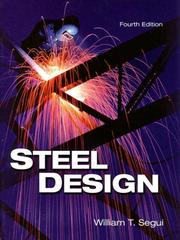
The steel counterpart, following AISC specifications, and the clearest of the common texts on why the limit states are what they are. Ends the path where practice begins: with a member you could actually specify.
Discussion
Keep reading
Paths that share books, cover the same subject, or open a related topic.