Structural engineering is one of the subjects where starting with the textbook reliably fails. A student who can solve a statically indeterminate frame but cannot look at an arch and say where the thrust goes has learned a procedure, not a discipline. The intuition has to be built first, and it can be built almost entirely without mathematics.
That is why this path spends its first half on books that explain how loads travel and why structures fail, and only then reaches the analysis texts an engineering student works through. It ends with design in concrete and steel, where mechanics meets code requirements and the subject becomes a profession rather than a physics problem. Worth saying once: reading these does not qualify anybody to design a structure. That is governed by licensure, codes and supervised practice, and the design texts here are course books, not permission.
Why things stand up
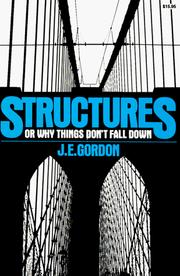
Structures, or, Why things don't fall down is the finest introduction to the subject ever written and the book practising engineers name first. Gordon explains stress, strain, bending and buckling in plain prose with almost no mathematics, and does it well enough that professionals reread it. Start nowhere else.
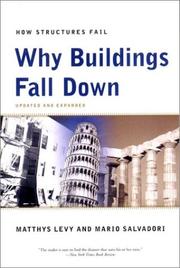
Why Buildings Stand Up works in the opposite direction: Gordon reasons outward from materials, Salvadori inward from real buildings, taking structures from the pyramids to skyscrapers and showing how each carries its loads. Its companion Why buildings fall down is the more instructive of the two — Hyatt Regency, Tacoma Narrows, Ronan Point. Failure case studies are how structural judgment is actually transmitted in this field, and reading them now means the later analysis has consequences attached.
Materials, failure and judgment
The New Science of Strong Materials is Gordon's other classic and the prerequisite half of the pair: why steel is strong, why glass is not, what a crack does, and why real materials fail far below their theoretical strength. It sits here because the analysis textbooks assume material properties you should first understand physically.
To engineer is human generalises the case studies: Petroski's argument is that engineering advances through failure, and that design is fundamentally a matter of anticipating how you might be wrong. The tower and the bridge is the last book before the textbooks and the one that gives you something to aim at — Maillart, Roebling, Eiffel, Nervi, argued as a discipline with aesthetic standards of its own, defined by efficiency and economy rather than decoration.
The analysis
Mechanics of materials is the prerequisite text: stress, strain, torsion, bending, combined loading, columns. Work the problems rather than reading it, because this is where Gordon's intuitions turn into quantities. Any recent edition is fine.
Structural analysis is the core textbook of the subject and the standard undergraduate text in North America — trusses, beams, frames, influence lines, then the classical methods for indeterminate structures. It follows directly from the previous book and uses the same notation, which is the main argument for staying with one author across both.
Matrix Analysis of Structures is the step from hand methods to what software actually does: stiffness matrices, assembly, solution. Read it third rather than first, because matrix methods are far clearer once you have already solved the same frames by slope deflection and moment distribution and know what answer to expect.
Design in real materials
Design of reinforced concrete is the standard first course in concrete design — flexure, shear, development length, columns, slabs — worked against ACI provisions. Steel Design is the counterpart following AISC specifications, and is the clearest of the common texts on why the limit states are what they are.
Two honest caveats on this last stage. Use editions matching a current code, because here the numbers are the point in a way they were not earlier. And both are written to North American standards; readers working to Eurocodes will need national texts for the design stage, though everything before it transfers unchanged. If code-based design is where you are headed, the related path on environmental engineering has the same structure of intuition first and standards last.
Eleven books, intuition before arithmetic. Follow the full path below.
Follow the full ordered path here: Best Books on Structural Engineering, in Reading Order.