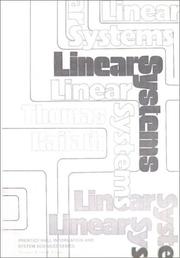
Best Books on Safety Engineering and Why Complex Systems Fail, in Reading Order
Catastrophes in tightly coupled systems are almost never caused by one careless person, and the whole intellectual project of safety engineering is to explain why. This path begins with readable accident narratives, moves to the two classic sociological accounts — Perrow's Normal Accidents and Vaughan's study of Challenger — then works through Reason and Dekker on human error before reaching Leveson's systems-theoretic method for designing hazards out in the first place.
How things actually break
BeginnerAcquire a stock of real failure cases and the habit of asking what the system was doing rather than who erred, before meeting any formal theory.
▸ Study plan for this stage
Pace: Four to five weeks. To Engineer Is Human (247pp) and Inviting Disaster (352pp) are both written for general readers and move quickly — a fortnight covers both comfortably. The Logic of Failure is shorter than it feels because its argument is built on experiments you will want to think through rather
- Petroski's central claim that engineering knowledge advances primarily through failure, so a collapse is data about the boundary of what was understood rather than simply a scandal
- The Hyatt Regency walkway collapse as Petroski's worked example of a small design change — a hanger rod detail altered during fabrication — doubling a load with nobody noticing
- Success as the actual danger in Petroski's argument: designs are extrapolated confidently until the extrapolation fails, which is why a run of successes narrows margins
- Chiles's recurring structure across cases: a chain of individually survivable conditions that becomes lethal only in combination, which is the pattern every later author formalises
- The distinction between a proximate trigger and the conditions that made the trigger consequential — available here as an observation, and named as latent conditions two stages later
- Dörner's experimental finding that competent people fail predictably at managing complex systems: they optimise the variable they can see, act too late, over-correct, and stop monitoring after intervening
- Side effects and time delays as the specific cognitive traps in Dörner's Tanaland and Lohhausen simulations — feedback that arrives after the next decision has already been made
- The habit this stage exists to build: on meeting any accident, asking what the system was doing rather than who was careless
- What actually failed at the Hyatt Regency, and at which point in the process did the change that caused it get made?
- Why does Petroski argue that a long run of successes is a warning sign rather than a reassurance?
- Take one case from Chiles and list every condition that had to be present. How many are individually unremarkable?
- What are the characteristic mistakes Dörner's subjects make, and which of them have you made in a system you were responsible for?
- What is the difference between a trigger and a precondition, and why does an investigation that stops at the trigger reliably produce the wrong recommendation?
- Build a case file: one page per accident across these three books, with the trigger, the preconditions, the coupling and the recommendations actually made. You will keep adding to it through the whole path and reinterpret every entry in stage four.
- Take one of Dörner's scenarios and write down your own plan of action before reading what his subjects did. Almost everyone makes at least one of the errors he catalogues.
- Write 200 words on the Hyatt Regency change as a design-review failure rather than as an individual's mistake, without excusing anyone. Getting that tone right is the whole skill this literature teaches.
- Pick a system you use or work on and list five conditions that are currently individually tolerable. Then look for a combination that would not be.
- Note every recommendation Chiles reports after each disaster and mark whether it addressed the trigger or the preconditions. The ratio is depressing and instructive.
Next up: You now have a stock of cases and the beginnings of the right question; the next stage gives you the two theories that answer it — one arguing certain accidents are inherent to the system's structure, one showing how an organisation talks itself into one.

Petroski's argument that engineering advances through failure — bridges, walkways, aircraft — is the gentlest possible entry, and it establishes the central attitude: failure is information, not scandal.

A tour of machine-age catastrophes from Apollo to Bhopal, written for a general reader but consistently attentive to the chain of small decisions behind each one. Read second, for breadth of cases.
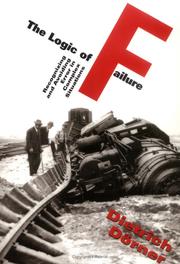
Dörner's simulation experiments show ordinary competent people wrecking complex systems in predictable ways. It supplies the cognitive half of the story that the accident narratives leave implicit.
The core account: systems, not villains
IntermediateUnderstand interactive complexity, tight coupling and the normalization of deviance well enough to apply them to an accident you have never read about.
▸ Study plan for this stage
Pace: Eight to ten weeks for about 1,270 pages, and the intellectual centre of the path. Normal Accidents (400pp) is a dense academic argument with long case chapters; read the theoretical framework in the opening chapter carefully, then the cases at 25 pages a session. The Challenger Launch Decision (592
- Perrow's two axes: interactive complexity — unfamiliar or unplanned interactions between components — and tight coupling, meaning little slack, no substitutions and time-dependent processes
- The normal accident itself: in a system high on both axes, some accidents are a property of the system's structure rather than of anyone's failure, and cannot be designed away by adding components
- Why redundancy can make things worse in Perrow's account — added components add interactions, and defences can hide the degraded state they are compensating for
- Perrow's political conclusion, which is often forgotten: some technologies should not be built, and that is an argument the reader is entitled to weigh rather than a technical finding
- Vaughan's normalization of deviance: an out-of-spec observation is explained, accepted, and becomes the new baseline, so the definition of acceptable drifts without any single decision to lower the standard
- The O-ring erosion history as Vaughan documents it — repeated anomalies each rationalised within the existing engineering framework, so that the night before launch was continuous with years of prior practice
- Vaughan's most uncomfortable finding: she looked for misconduct and found conformity. The engineers followed the rules and the culture, and the accident happened anyway
- Snook's practical drift: local adaptations that make sense in each unit's own conditions, accumulating into an incoherent global system that no one designed
- Define interactive complexity and tight coupling precisely, then place three systems you know on Perrow's grid and defend the placement.
- Under what conditions does adding redundancy reduce safety? Give a mechanism, not just an assertion.
- What is normalization of deviance, and what is the sequence by which an anomaly becomes an expectation?
- How does Vaughan's account differ from the standard narrative of managers overruling engineers, and what evidence does she use to displace it?
- What is practical drift, and how does it differ from normalization of deviance? The two are frequently conflated and the distinction matters.
- Does Vaughan's Challenger case confirm Perrow's thesis, refine it, or challenge it? Argue with specifics.
- Plot ten systems on Perrow's two-axis grid — the one you work in, a hospital, a power grid, an airline, a software deployment pipeline. Then write a paragraph on what each quadrant implies for how you should manage them.
- Reconstruct the O-ring erosion timeline from Vaughan, marking each observation and the reasoning that accommodated it. Seeing the sequence laid out is what makes normalization of deviance stop being a slogan.
- Write 200 words on the Challenger decision as Vaughan describes it, without using the words negligence, pressure or ignored. If you cannot, you are still telling the old story.
- Take one anomaly currently tolerated in a system you know and write its history: when it was first noticed, how it was explained, and what would have to happen for it to be treated as a signal again.
- Reread three entries in your case file from stage one and reclassify them using Perrow's and Vaughan's vocabulary. Several will change shape.
- Diagram Snook's three organisations and the points where their procedures met. Practical drift is easiest to see as a picture of interfaces.
Next up: Both theories keep running into the phrase human error; the next stage takes it apart properly, replacing it with a vocabulary precise enough to investigate with.
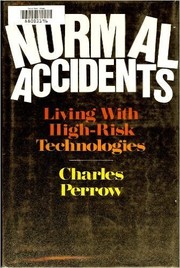
The founding text. Perrow's claim that some accidents are inherent properties of interactively complex, tightly coupled systems reframed the whole field, and every later author on this path is arguing with him.
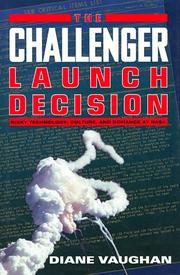
The most rigorous accident study ever written, and the source of 'normalization of deviance'. Read directly after Perrow: it tests his thesis against an exhaustively documented case and refines it.
Snook's account of two US helicopters shot down by their own side introduces 'practical drift' — how procedures and practice quietly diverge under real operating conditions. The bridge from sociology to daily operations.
Human error, properly understood
IntermediateReplace the folk notion of human error as a cause with the modern view of it as a symptom, and learn the vocabulary — slips, lapses, violations, latent conditions — that safety investigators actually use.
▸ Study plan for this stage
Pace: Six to eight weeks for about 820 pages. Human Error (311pp) is a serious cognitive psychology monograph and the hardest reading in the stage — 20 pages a session, and the taxonomy chapters deserve notes. Managing the Risks of Organizational Accidents (272pp) is written for practitioners and is much
- Reason's basic distinction: slips and lapses are execution failures of a correct intention, mistakes are failures of the intention itself, and the two require completely different countermeasures
- Violations as a separate category from errors — deliberate departures from procedure, usually well-intentioned and often necessary, which cannot be addressed by better training
- Latent conditions: decisions taken long before and far away — in design, staffing, procurement, scheduling — that lie dormant until combined with a local trigger
- The Swiss cheese model as Reason intended it: layered defences each with holes that move, so an accident requires momentary alignment. Widely used and widely flattened, and worth understanding in its original form
- Dekker's old view versus new view: in the old view, error is a cause and unreliable people threaten a basically safe system; in the new view, error is a symptom of trouble deeper in the system and is a starting point for investigation
- Hindsight bias as the mechanism that manufactures the old view — knowing the outcome makes the relevant cue obvious in retrospect, and Dekker's whole method is designed to defeat that
- Local rationality: the assumption that people's actions made sense to them given what they knew at the time, and that an investigation's job is to reconstruct that view
- The honest tension in this stage: Reason's classification supports counting and comparing errors, and Dekker argues that classifying errors at all encourages the old view. Both positions are held by serious practitioners
- Distinguish a slip, a lapse, a mistake and a violation, with an example of each from your own experience. Then say what countermeasure fits each.
- What is a latent condition, and how does it differ from an active failure? Name three latent conditions in a system you know.
- Explain the Swiss cheese model in Reason's own terms and say what is lost in the common simplified version.
- What is hindsight bias, and what specific techniques does Dekker propose for reconstructing an operator's view without it?
- What does Dekker mean by local rationality, and how would applying it change the report an investigation produces?
- Where do Reason and Dekker actually disagree? Being able to name the disagreement precisely is the test of having read both.
- Classify twenty incidents from your own field using Reason's taxonomy, then reclassify the same twenty using Dekker's method of reconstructing local rationality. Comparing the two outputs is the single best exercise in this stage.
- Take one accident report you can obtain and mark every sentence written with hindsight — every 'should have noticed', 'failed to', 'ignored'. Most reports are dense with them.
- Rewrite one paragraph of that report from the operator's point of view at the time, using only information available to them at that moment. Dekker's method is a discipline, and it takes practice.
- Draw the Swiss cheese for a system you know, with the real layers named and the actual holes in each. Then ask which layers you would notice were degraded and which you would not.
- Write out five violations that are routine and well-intentioned in a workplace you know, and for each, the operational pressure that makes it sensible. This is where practical drift from the previous stage becomes visible from the inside.
- Update your case file: add Reason's latent conditions column and Dekker's local-rationality note to every entry.
Next up: You can now explain accidents after they occur; the last stage moves upstream, from explaining failure to engineering hazards out of a system's requirements and control structure before anyone operates it.

Reason's taxonomy of slips, lapses and mistakes is the standard reference and underlies nearly every incident-classification scheme in use. Dense, but the definitions here are assumed everywhere afterwards.

Reason moving from the individual to the organization: latent conditions, defences in depth, and the Swiss cheese model. Read straight after Human Error, which supplies its vocabulary.
Dekker's practical case against the 'bad apple' theory, and the best short statement of the new view: error is a starting point for investigation, never a conclusion. The most immediately usable book on this path.
Designing the hazard out
IntermediateMove from explaining accidents after the fact to engineering safety into a system's requirements and control structure, using a modern systems-theoretic hazard analysis.
▸ Study plan for this stage
Pace: Four to six months for about 1,460 pages, and the most technical stage in the path. Drift into Failure (234pp) is short and theoretical and can be read in a fortnight. SAFEWARE (692pp) is a textbook and should be worked selectively — the hazard analysis and requirements chapters in full, the case hi
- Dekker's drift into failure: complex systems slide toward the boundary of safe operation through many locally rational decisions, under resource scarcity and competition, with no single wrong choice to point at
- Leveson's core reframing: safety is an emergent property enforced by constraints, so accidents result from inadequate control rather than from component failure
- The distinction between reliability and safety, which is the most consequential idea in Leveson's work: components can each perform exactly as specified and the system can still be unsafe
- Software's specific role in SAFEWARE — software does not wear out or break, so software-related accidents are requirements and specification failures, not coding failures
- The STAMP model — a hierarchical control structure with controllers, control actions, feedback and process models — and accidents as inadequate enforcement of constraints within it
- The four ways a control action becomes unsafe in STPA: not provided when needed, provided when unsafe, provided too early or too late or in the wrong order, and stopped too soon or applied too long
- The process model as the key mechanism: a controller acts on its model of the process, and most unsafe control actions come from that model diverging from reality — which is Vaughan's drift and Reason's latent conditions restated in control terms
- The honest limit: STPA is a method requiring real effort and organisational buy-in, and Leveson's own case studies show it finding hazards that traditional techniques miss — a strong claim under continuing evaluation rather than a settled universal result
- What is drift into failure, and why does Dekker argue that decomposition cannot detect it?
- State the difference between reliability and safety with an example where every component meets its specification and the system is unsafe.
- Why does Leveson insist that software accidents are requirements failures? Give a case from SAFEWARE that supports it.
- Draw a control structure for a system you know: controllers, controlled processes, control actions, feedback. What is missing from the feedback paths?
- Name the four categories of unsafe control action and generate one of each for a control action in your diagram.
- After the whole path: which of the earlier authors' concepts survive intact inside STAMP, and which are superseded?
- Run a complete STPA on a real system you know well: define losses and hazards, derive safety constraints, draw the control structure, enumerate unsafe control actions, and identify loss scenarios. This is the deliverable of the entire path and it takes weeks, not hours.
- Take one accident from your case file and redraw it as a control structure failure. Doing this for Challenger and for Snook's friendly-fire case is especially clarifying, since you have the detail for both.
- Write the safety constraints for one subsystem as requirements a developer could actually implement against. Vague constraints are the standard failure of first attempts.
- Compare a traditional fault-tree analysis and an STPA on the same small system, and list the hazards each finds that the other does not. Leveson's claim becomes checkable rather than rhetorical.
- For each controller in your diagram, write down its process model and one way that model could diverge from reality without anyone noticing. This is where the earlier stages pay off in a concrete artefact.
- Write a final two pages on why a specific complex system you know fails in the ways it does, using the whole path's vocabulary and naming which author each concept comes from. Note also where the authors disagree — Perrow's pessimism against Leveson's engineering optimism is the path's unresolved argument and you are now equipped to take a side.
Next up: This is the end of the path — cases, the sociological theories, the human-error literature and a systems-theoretic design method — and the natural next step is to reread Normal Accidents, whose claim that some accidents are unavoidable reads very differently once you have run an analysis designed to avoid them.
Dekker's most theoretically ambitious book: complexity theory applied to how safe organizations slide slowly into disaster with no one making a wrong decision. It sets up why component-based analysis is insufficient.
The foundational software-safety text — hazard analysis, requirements, and why software failure is a requirements problem rather than a coding one. Read before her later work, which assumes it.

The culmination of the path: STAMP and STPA, a systems-theoretic accident model that treats safety as a control problem. Everything earlier — Perrow's coupling, Vaughan's drift, Reason's latent conditions — is absorbed into a method you can actually run.
Discussion
Keep reading
Paths that share books, cover the same subject, or open a related topic.