This field has two literatures that barely acknowledge each other. One is written by race engineers who set up cars for a living: direct, empirical, full of rules of thumb that work. The other is written by academics and derives tyre models and state-space equations from first principles. Readers who start in the second camp usually give up before the mathematics connects to anything they can picture; readers who stay in the first camp end up with heuristics they cannot extend.
The right sequence puts a whole-vehicle overview first, then the practitioner books to build physical intuition, then the analytical treatments once you know what the equations are describing. One caution before that: this is engineering study material, not a modification guide. Suspension, steering and brake changes on a road car carry real safety and legal consequences, and competition preparation is governed by rules and scrutineering that no book overrides.
The whole vehicle first
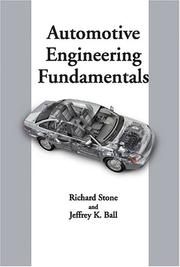
Automotive engineering fundamentals by Richard Stone, written with Jeffrey Ball, is the best single overview — engines, transmissions, structures, brakes, dynamics and the design compromises between them. It gives you the map before you start walking any one road.
BOSCH Automotive Handbook is the reference rather than a book you read: several hundred dense pages of standards, formulae, system descriptions and data covering essentially every subsystem on a modern car. Buy it once and keep it near the desk.
The practitioner books
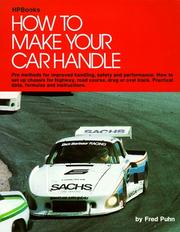
How to make your car handle by Fred Puhn is the classic accessible introduction to why a car behaves the way it does — weight transfer, roll centres, understeer and oversteer, spring and bar selection. It dates from 1981 and is visibly of its era on tyres, dampers and anything electronic, and it remains the clearest explanation of the fundamentals in print.
Chassis engineering by Herb Adams covers similar ground with more attention to structure and geometry. Tune to win by Carroll Smith is the setup book, written by an engineer who ran cars at Le Mans, and it teaches a method for changing one thing at a time and reading what the car tells you. All three assume a car simpler than the one in your driveway, which is a feature at this stage.
Vehicle dynamics properly
Fundamentals of Vehicle Dynamics by Thomas Gillespie is the bridge book and the one to read next: rigorous, but written to be understood by an engineer rather than a specialist, and strong on braking, ride and steady-state handling.
Vehicle dynamics by Reza N. Jazar is the mathematical treatment, heavy on kinematics and the derivations Gillespie summarises. Race car vehicle dynamics by William F. Milliken, written with Douglas Milliken, is the reference work of the field — tyre behaviour, the moment method, transient response, suspension geometry — and it is genuinely hard. Do not open it first. Opened after Gillespie it is one of the great engineering books.
Aerodynamics
Competition Car Aerodynamics by Simon McBeath is the applied introduction, and our catalogue stores its title in capitals, which is a records artefact rather than a different edition. It covers wings, diffusers, undertrays and what wind tunnel and track testing can actually tell you.
Automotive Aerodynamics by Joseph Katz is the analytical treatment from an author who also wrote the standard low-speed aerodynamics text, and it is where the flow physics gets developed rather than asserted.
Engineer to win, Carroll Smith again, closes the path on materials and fasteners — metallurgy, fatigue, why parts break and how to specify ones that do not. It is the least glamorous book here and the one working engineers quote most.
For the flow-solver side of aerodynamics, computational fluid dynamics picks up where Katz leaves off.
Follow the full ordered path here: Automotive Engineering and Vehicle Dynamics: What to Read First.