Nuclear engineering has a steeper prerequisite wall than most engineering fields, and the wall is in an unusual place. The mathematics of neutron transport is not conceptually harder than fluid mechanics, but it is unmotivated unless you already know what a reactor is trying to do and what happens when it stops doing it. Readers who open a reactor physics textbook cold usually stall in chapter three.
The other thing that trips people up is that this field's professional literature assumes a safety culture that no equation states. The accident histories below are not padding before the real material — they are how practitioners learn to read a design and ask what it does when something fails. One plain caveat before the list: these are study materials. Operating a reactor, handling licensed sources or working in radiation protection requires credentials, regulatory qualification and supervised training that no book substitutes for.
Start with what actually happened
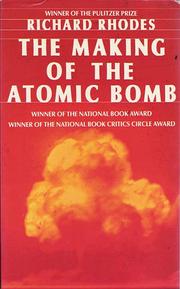
The making of the atomic bomb by Richard Rhodes is the best possible entry, because it teaches the physics through the people who worked it out. By the time you reach criticality you understand what a chain reaction is without having solved anything.
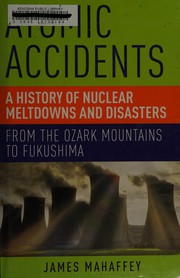
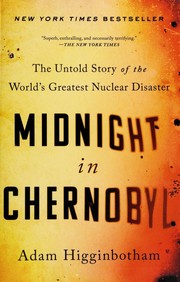
Atomic accidents by James A. Mahaffey walks through failures from the early criticality experiments onward, with enough engineering detail to be instructive rather than lurid. Midnight in Chernobyl by Adam Higginbotham then does one accident in full depth, including the reactor design flaw, the test procedure and the institutional pressure that combined to cause it. Read both — Mahaffey gives you the pattern, Higginbotham gives you the anatomy.
The core undergraduate text
Introduction to nuclear engineering by John R. Lamarsh is the standard first course and the book most programmes actually assign: nuclear physics, interaction of radiation with matter, reactor theory, heat removal and shielding, in that order. Work the problems.
Nuclear energy by Raymond L. Murray is gentler and broader, covering applications and policy alongside the physics, and it suits a reader coming from another discipline. Fundamentals of nuclear science and engineering by J. Kenneth Shultis is the strongest of the three on radiation science and dosimetry. You do not need all three. Pick Lamarsh if you want the standard curriculum, Murray if you want the survey.
Reactor physics proper
Introduction to nuclear reactor theory, also by Lamarsh, is the narrower and older companion to his introductory text and overlaps it substantially — skip it unless you specifically want diffusion and slowing-down theory developed at length.
Nuclear reactor analysis by James J. Duderstadt, written with Louis Hamilton, is the graduate-level treatment most engineers keep: multigroup diffusion, criticality, depletion, and the transient behaviour that matters for control. Nuclear Reactor Physics by Weston M. Stacey is the modern alternative and is more complete on computational methods.
Thermal-hydraulics, detection and dose
A reactor is a heat exchanger with an unusual heat source, and thermal-hydraulics is where a great many real design constraints live. Nuclear Systems Volume I by Neil E. Todreas, written with Mujid Kazimi, is the reference for it.
Radiation detection and measurement by Glenn F. Knoll is the instrumentation bible and is used far outside the nuclear industry — anyone who counts particles for a living owns it. Introduction to health physics by Herman Cember closes the path with shielding, dose limits and radiation protection practice, which is the part of the field with the most direct regulatory weight.
If you are working toward a degree or a licence, treat this as a companion to the coursework rather than a replacement for it. Related engineering paths sit under environmental engineering and elsewhere on the site.
Follow the full ordered path here: How to Learn Nuclear Engineering from Books, in Order.