In every other branch of structural design the engineer specifies the material. In geotechnical engineering the material is already there, it varies over a few metres, and the samples you have are the ones somebody managed to recover. That single difference shapes the whole literature: the field leans on case histories, correlations and judgment to a degree that surprises people arriving from steel or concrete design.
Which is why the order matters. Start with a textbook and soil mechanics reads like a strange, poorly justified branch of continuum mechanics. Start with why the field exists and what practising it is like, and every empirical correlation afterwards has a reason attached. A note before the list: these books teach the subject, not the profession. Design of anything that people stand on is governed by licensure, codes and supervised experience, and no reading path replaces that.
How the field thinks
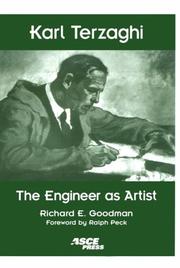
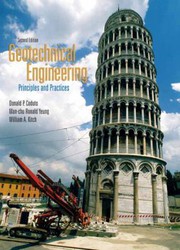
Karl Terzaghi is a readable biography of the man who turned foundation work from an empirical trade into a science, written by a distinguished geotechnical engineer. It is the only genuinely narrative book here, and it establishes why effective stress and consolidation were revolutionary rather than routine. Coduto's Geotechnical engineering comes second — the most approachable survey of the whole discipline, from site investigation through settlement and stability to foundations, with a strong practice emphasis. Read it before the mechanics texts so you can see where each piece of theory ends up being used.
The soil mechanics course
Das's Principles of geotechnical engineering is the core of the path: the standard North American undergraduate text, methodical and example-heavy, running from index properties and classification through effective stress, seepage and consolidation to shear strength and lateral earth pressure. Work the problems rather than reading it. Geotechnical intuition comes from repetition on real numbers.
Craig's soil mechanics is the British counterpart, now maintained by Jonathan Knappett after R. F. Craig, and it is stronger than Das on critical state concepts and on Eurocode-style limit state design. Reading a second text on the same material is not redundant here — the two traditions differ in emphasis, and the comparison teaches you which parts of the subject are physics and which are convention. Holtz and Kovacs, catalogued as An introduction to geotechnical engineering, is the clearest of the three on the physical basis of soil behaviour: why clay does what it does, and what the standard tests actually measure. It is the book to reach for whenever Das hands you a procedure without a reason.
Foundations and engineering judgment
Soil mechanics in engineering practice is the classic of the profession, and still the best statement of how to think about ground: theory paired throughout with case records and with candid discussion of when the theory does not apply. Our catalogue lists it under Terzaghi alone; the later editions are Terzaghi, Peck and Mesri. Read it after a modern course rather than instead of one.
Principles of foundation engineering is the design sequel to Das's soil mechanics text and uses the same notation — bearing capacity, settlement, mats, piles, drilled shafts, retaining walls, sheet piles. It is the most directly useful book here for anyone who will size a footing. Coduto's Foundation Design is stronger on the reasoning behind design decisions and on load and resistance factor design as actually applied, and pairs with Das for the same reason Craig pairs with him earlier. With both, use an edition matching a current code.
Advanced behaviour, and rock
Theoretical soil mechanics is Terzaghi's own analytical volume: closed-form plasticity solutions for bearing capacity, earth pressure and stability. Dated in presentation, but many formulae still embedded in codes and software originate here, and it is worth knowing what assumptions they carry. Soil behaviour and critical state soil mechanics is the standard graduate treatment of the critical state framework, which is the theoretical basis of the constitutive models in modern geotechnical finite element software — essential if you will run numerical analyses rather than hand calculations.
Introduction to rock mechanics ends the path with the material soil mechanics does not cover. Jointing rather than intact strength usually governs rock behaviour, and engineers trained only on soil consistently underestimate that.
One honest gap: nothing here covers geotechnical earthquake engineering, which is a course of its own. Follow the full path below for the eleven in order.
Follow the full ordered path here: How to Learn Geotechnical Engineering and Soil Mechanics from Books, in Order.