Best Books to Learn Earthquake Engineering and Seismic Design
Earthquake engineering sits between seismology and structural design: you need to know what the ground does, how a structure responds dynamically, and how codes turn both into buildable requirements. This path assumes an engineering background and builds in that order, spending a full stage on structural dynamics because every later text assumes it. It ends with the topics that separate code compliance from real seismic performance: displacement-based design, base isolation, and what the soil underneath does to all of it.
What the ground actually does
IntermediateGet the seismological input right before designing anything against it.
▸ Study plan for this stage
Pace: Six weeks, 931 pages, and note that these three books sit at three completely different levels — page count is a poor guide to effort here. Earthquakes (Bruce A. Bolt) is a general-audience and introductory-course book of 331 pages with almost no mathematics. Why Buildings Fall Down (Matthys Levy an
- Fault mechanics and elastic rebound: how strain accumulates and releases, and what a rupture surface actually is
- Magnitude scales and their differences — local, body wave, surface wave, and moment magnitude — and why moment magnitude is the one that does not saturate
- Seismic moment, its definition from rigidity, rupture area and slip, and how it connects to magnitude
- P, S, Love and Rayleigh waves; how each is generated, how they attenuate, and which dominates the ground motion at a given distance
- Intensity scales versus instrumental measures, and why intensity is what damage surveys actually record
- The strong-motion record as a data object: acceleration time histories, peak ground acceleration, velocity and displacement, and Arias intensity
- Site effects, basin amplification and near-fault directivity as the reasons two sites at the same distance record different motions
- Failure modes from Levy and Salvadori as physical intuition to carry into the analysis stages
- Write the definition of seismic moment and derive the moment magnitude relation from it — what does the logarithmic form imply about energy between magnitudes 6 and 7?
- Why do local and surface-wave magnitude scales saturate at large events, and at roughly what magnitude does each stop being useful?
- For a given epicentral distance, what is the arrival-time separation between P and S waves, and how is that used to locate an event?
- What background does Shearer assume in his first three chapters, and can you follow his derivation of the elastic wave equation from the stress-strain relations?
- Which of the failures in Why Buildings Fall Down are seismic, and which of those are attributable to configuration rather than to strength?
- Work Shearer's derivation of the P and S wave velocities from the Lamé parameters and density, then compute both for a typical crustal rock using his own tabulated values
- Take an S-minus-P arrival time and locate a hypocentre by hand using the method Bolt sets out, then check the result against a published catalogue entry for the same event
- Download a strong-motion acceleration record, integrate it once and twice by hand or in a short script to get velocity and displacement, and see for yourself what baseline drift does — this is the file format every later stage assumes
- Compute seismic moment for a named historical earthquake from published rupture area and slip figures, convert to moment magnitude, and compare with the catalogue value
- For three case studies in Levy and Salvadori, write a one-line failure mechanism in the vocabulary you will need later — soft storey, torsional irregularity, pounding, connection failure
Next up: Ground motion is only an input; the next stage builds the dynamic-response machinery that every earthquake engineering text will assume you already have.

Bolt's general introduction to earthquakes, faults and ground motion, written for people who need the physical picture without the full theory. The fastest way in.

The standard graduate introduction, covering wave propagation, source mechanics and the instrumentation. Read as much of it as you need to understand where a response spectrum comes from.
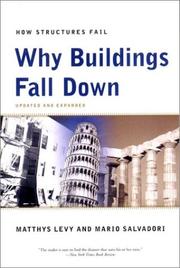
Levy and Salvadori's forensic case studies of structural failure, several of them seismic. A short, motivating read that makes the abstractions in the later books concrete.
Structural dynamics, the real prerequisite
BeginnerBuild the dynamic-analysis foundation that every earthquake engineering text assumes you already have.
▸ Study plan for this stage
Pace: Twelve to fourteen weeks, 1,322 pages, and this is the stage to take seriously — it is a full semester course and skipping it makes the rest of the path unreadable. Dynamics of Structures (Anil K. Chopra) is 876 pages and is the standard text; it assumes ordinary differential equations, linear algeb
- The single-degree-of-freedom equation of motion, damped free vibration, and the meaning of the damping ratio
- Duhamel's integral and the numerical time-stepping methods that replace it — central difference, Newmark's beta family, and their stability and accuracy conditions
- Response spectra: how an elastic spectrum is constructed point by point from a ground-motion record, and what the tripartite plot shows
- Multi-degree-of-freedom systems: mass and stiffness matrices, the eigenvalue problem, natural frequencies and mode shapes
- Modal orthogonality, modal superposition, and modal participation factors and effective modal mass
- Rayleigh damping and the classical damping assumption, and where that assumption stops being defensible
- Nonlinear response of an inelastic SDOF system, ductility demand, and the constant-ductility inelastic spectrum
- Response spectrum analysis and the modal combination rules — SRSS and CQC — and when CQC is required
- Starting from the SDOF equation of motion, derive the response spectrum construction procedure — what exactly is plotted against what?
- What are the stability conditions for the central difference method and for Newmark's average acceleration method, and why is one unconditionally stable?
- For a three-storey shear building, what are the mode shapes and periods, and what fraction of total mass does the first mode carry?
- When does SRSS combination become inadequate, and what does CQC add?
- What is the physical meaning of a modal participation factor, and why is effective modal mass the quantity codes actually use?
- How does an inelastic system's peak displacement compare with the elastic one at long and short periods, and what is the equal-displacement rule's range of validity?
- Code Newmark's method from Chopra's own algorithm box and reproduce one of his worked SDOF response histories exactly, matching his tabulated numbers
- Construct an elastic response spectrum from a real ground-motion record by running your Newmark solver over a sweep of periods at 5 percent damping, then compare the result with the published spectrum for that record
- Solve the eigenvalue problem by hand for Chopra's three-storey shear frame example and verify orthogonality of the mode shapes with respect to both mass and stiffness matrices
- Take one of Paz's fully worked MDOF examples and redo it with Chopra's notation; reconciling the two notations is worth the time because later texts use both
- Build a constant-ductility inelastic spectrum for ductility 2, 4 and 6 from the same record and read off the response modification implied at each period
Next up: With dynamics in hand you can read the discipline's core texts as engineering rather than as narrative, which is what the next stage requires.
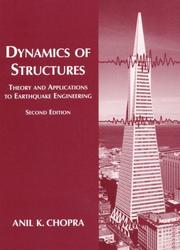
The indispensable text: single and multi-degree-of-freedom systems, modal analysis, response spectra, and earthquake applications throughout. Note that Clough and Penzien's classic shares this exact title and is a different book; this is Chopra's.
Paz is the more computational companion, heavier on worked numerical methods. Use it alongside Chopra where you need the algorithm rather than the derivation.
The core courses
BeginnerWork through the three texts that together define the discipline's curriculum.
▸ Study plan for this stage
Pace: Sixteen to twenty weeks, 2,432 pages — by far the largest stage in the path, and not one to plan as a single block. Fundamentals of Earthquake Engineering (Amr S. Elnashai) is 496 pages and is the tightest of the three — the best first read, organised around the input, the structure and the performa
- Capacity design: choosing where inelasticity occurs, then protecting everything else by overstrength — the single most important idea in the discipline
- Ductility in its four forms — material, section, member and structure — and the relationships between them
- Overstrength, redundancy and the behaviour factor or response modification coefficient that codes derive from them
- Structural configuration: plan and vertical irregularity, torsional response, soft storeys and the failure mechanisms each produces
- Hysteretic behaviour of reinforced concrete, steel and masonry members, and energy dissipation as the actual mechanism of survival
- Performance-based earthquake engineering: hazard levels, performance objectives, and the intensity-measure to damage-measure to decision-variable chain
- Pushover analysis and nonlinear time-history analysis — what each gives you and what each cannot see
- Capacity spectrum and coefficient methods for estimating target displacement
- Explain capacity design on a specific frame: which members are chosen to yield, how are the others proportioned, and what overstrength factors are applied?
- How do material, section, member and structure ductility relate, and why is the structural value always the smallest?
- What produces a soft storey mechanism, and what does the base shear versus roof displacement curve look like when one forms?
- What are the standard performance levels and hazard levels in performance-based design, and how is a performance objective defined from them?
- What does a pushover analysis miss that a nonlinear response-history analysis captures, and in what structures does the difference matter most?
- How is a behaviour factor actually justified from ductility and overstrength?
- Work through Elnashai's capacity design example for a moment frame in full, reproducing the overstrength calculations and the final member sizes
- Perform a pushover analysis on a simple frame — by hand with plastic hinge assumptions first, then in software — and locate the mechanism; check whether it is the one capacity design intended
- Build a bilinear idealisation of a pushover curve, extract the structural ductility capacity, and compare it with the behaviour factor a code would allow for that system
- Take the hysteresis loops in Villaverde for a reinforced concrete member and compute the energy dissipated per cycle by integrating the loop area, then repeat for a steel member and compare
- Read the Bozorgnia handbook's chapter on performance-based engineering and construct a full performance objective matrix — hazard level against performance level — for a hypothetical hospital
Next up: Concepts become buildings only through codes, and the next stage works the same structure through both the American and the European frameworks.

Elnashai and Di Sarno's textbook is the cleanest entry course, organised around the four response quantities of stiffness, strength, ductility and damping. Start the stage here.

Villaverde is broader and more explanatory, and better than Elnashai on the seismology-to-engineering handover. The two overlap deliberately; read both and the concepts stick.

Bozorgnia and Bertero's edited volume takes the field from engineering seismology through to performance-based design, with chapters by the people who built each area. The reference you will keep returning to.
Design to code
BeginnerTurn analysis into compliant, buildable seismic design in both American and European frameworks.
▸ Study plan for this stage
Pace: Fourteen to sixteen weeks, 1,942 pages. Seismic Design of Reinforced Concrete and Masonry Buildings (T. Paulay) is 744 pages and remains the definitive treatment of capacity design in concrete and masonry — its code references predate current editions but its method is the source of what those codes
- The equivalent lateral force procedure: how base shear is derived from spectral acceleration, mass, importance and the response modification factor
- Detailing for ductility in reinforced concrete: confinement, transverse reinforcement spacing, anchorage, and the strong-column weak-beam rule
- The shear-versus-flexure hierarchy — why shear failure must be precluded by design and how the overstrength shear demand is computed
- Eurocode 8's ductility classes DCL, DCM and DCH, its behaviour factor q, and the local and global capacity design rules attached to each
- Drift limits, P-delta effects, and the separation and pounding requirements between adjacent structures
- Diaphragms, collectors and load paths — the parts codes address explicitly because they are where real buildings fail
- Where the American and European frameworks genuinely differ, and where they differ only in notation
- Masonry and infill walls: how each framework treats them and why infill is the most common source of unintended behaviour
- For a given building, compute the design base shear by the equivalent lateral force method under both an American code and Eurocode 8 — how far apart are they, and which parameters drive the difference?
- How is the design shear force on a beam derived from the flexural overstrength of its plastic hinges, in Paulay's method?
- What does the strong-column weak-beam requirement demand numerically, and what happens to the mechanism if it is not satisfied?
- How does Eurocode 8's q factor map onto the American R factor, and are they defined on the same basis?
- What confinement reinforcement does each framework require in a potential plastic hinge region, and what is the confinement actually doing to the concrete?
- How does each code handle irregular structures, and at what point does it require dynamic analysis instead of the static procedure?
- Design the same six-storey reinforced concrete moment frame twice — once to the American procedure using Naeim's handbook and once to Eurocode 8 using Elghazouli's worked examples — and tabulate every difference in member size and reinforcement
- Reproduce one of Paulay's capacity design calculations for a beam-column joint completely, including the overstrength factors, and then check the joint shear
- Detail a plastic hinge region to both frameworks' confinement rules on the same section and compare the resulting hoop spacing and volumetric ratio
- Run a P-delta check on your designed frame at the code drift limit and determine whether second-order effects require amplification
- Take an existing building with a known infill layout, apply each code's provisions for infill, and identify the storey the provisions are trying to protect
Next up: Code compliance is a floor rather than a target, and the final stage covers the methods that produce a building whose performance you can actually predict.
Paulay and Priestley's book is where capacity design is set out in full. If one book on this list changes how you detail, it is this one.

Naeim's handbook is the practitioner's bridge from theory to American code provisions, material by material. Use it as the desk reference alongside Paulay's principles.

The equivalent treatment for the European framework, worked examples included. Necessary if you practise outside the United States and useful anywhere for seeing which requirements are physics and which are jurisdiction.
Past code minimums
BeginnerReach the topics that separate a compliant building from a genuinely resilient one.
▸ Study plan for this stage
Pace: Fourteen to sixteen weeks. Displacement-Based Seismic Design of Structures (M. J. N. Priestley) has no length recorded in our catalogue; it is a complete alternative design method — the argument that force-based design has the wrong independent variable — and needs to be worked rather than skimmed,
- Direct displacement-based design: substitute structure, effective stiffness at peak displacement, equivalent viscous damping, and design displacement as the starting point rather than the output
- Priestley's critique of force-based design — why initial stiffness is not independent of strength, and what that does to the period estimate a code procedure begins from
- Base isolation mechanics: period shift, the isolation system's effective stiffness and damping, and the displacement demand that follows
- Elastomeric and lead-rubber bearings versus friction pendulum systems, their force-displacement behaviour and their testing and acceptance criteria
- Supplemental damping — viscous, viscoelastic, friction and metallic yielding devices — and the design objective each serves
- One-dimensional site response analysis, equivalent linear and nonlinear approaches, and how a soil column modifies a rock outcrop motion
- Liquefaction: the cyclic stress ratio and cyclic resistance ratio framework, triggering evaluation, and the consequences of lateral spreading and settlement
- Soil-structure interaction — kinematic and inertial — and when ignoring it is unconservative
- Set out the direct displacement-based design procedure step by step for a bridge pier, and explain at each step what force-based design would have done instead
- Why does Priestley argue that a member's initial stiffness cannot be assumed independent of its strength, and what evidence does he give?
- For a base-isolated building, how do you determine the design displacement of the isolation system, and what controls it?
- How is a liquefaction triggering assessment carried out in Kramer's framework, and what field data does it depend on?
- How much can a soft soil column amplify a rock motion, and at what periods?
- When does a base isolation system stop being the right answer — what site and structure conditions rule it out?
- Design a structure by direct displacement-based design following Priestley's worked example, then design the same structure by the force-based method from the previous stage, and compare the required strengths
- Compute the effective period and equivalent damping for a lead-rubber bearing system from Naeim's own tabulated bearing properties, and check the resulting isolator displacement against his design spectrum
- Run a one-dimensional equivalent-linear site response analysis for a soil profile from Kramer's data, and plot the surface response spectrum against the input rock spectrum
- Perform a liquefaction triggering evaluation on a real SPT or CPT profile using Kramer's method, and compute the resulting settlement
- Take the six-storey frame you designed in the previous stage and reassess it for a soft-soil site using your site response result — record how much of the code design was predicated on the rock spectrum
- Compare the total cost drivers of the isolated and the ductile fixed-base version of one structure, using the member sizes each method produced
Next up: This completes the path: ground motion, structural dynamics, the discipline's core texts, code-level design in two frameworks, and the displacement-based, isolation and geotechnical methods that separate a compliant building from a resilient one.
Priestley, Calvi and Kowalsky's argument that design should start from a target displacement rather than a force reduction factor. The most important conceptual shift in the field since capacity design.

Naeim and Kelly on base isolation: the mechanics of the devices, the analysis, and the code framework. The clearest treatment of the technology that most changes seismic outcomes.

Kramer on site response, liquefaction and slope stability under shaking. Placed last because it is where the neat structural assumptions from the earlier stages meet the ground and lose.
Discussion
Keep reading
Paths that share books, cover the same subject, or open a related topic.