Environmental engineering has two literatures that rarely appear on the same list. One is the public argument — the books that made drinking water, sewage and air pollution into political subjects. The other is the design literature: unit processes, mass balances, reactor kinetics, and several thousand pages of it. The design texts are the actual discipline, but starting there gives you equations without any sense of what they were built to prevent.
So take the first literature first. It is short, it reads quickly, and it makes every subsequent chapter on coagulation or activated sludge feel like the answer to a question rather than an arbitrary procedure. One practical warning before you spend money: everything after the third book here is a multi-edition engineering textbook, standards change between editions, and our catalogue frequently holds an older printing's record. Check what you are buying.
Why the field exists
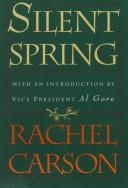
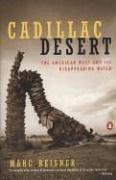
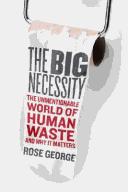
Silent Spring by Rachel Carson is the origin document of modern environmental regulation, and holds up as science writing rather than only as history. Cadillac desert by Marc Reisner is about western American water policy and is the best account anywhere of how large water infrastructure actually gets built — politically, not hydrologically. The big necessity by Rose George is the sanitation book: what happens to human waste worldwide, why two billion people still lack safe treatment, and why the engineering is the easy part.
The two introductory textbooks — pick one
Introduction to environmental engineering by Mackenzie Leo Davis and Introduction to environmental engineering and science by Gilbert M. Masters cover substantially the same ground for the same audience. Davis is closer to a practising-engineer text and heavier on unit operations; Masters is stronger on the science, on energy and on the atmospheric material, and is the more common choice where the course is shared with non-engineers. Read one properly. Reading both is mostly repetition, and the second will feel like a slog.
Chemistry for environmental engineering and science by Clair N. Sawyer is the prerequisite most people discover they need halfway through — aquatic chemistry, equilibria, the analytical methods behind every number in a discharge permit. If the chemistry in your introductory text feels thin, this is the gap-filler.
The core references, by medium
From here the field divides by what you are treating, and each division has a standing reference.
MWH's water treatment by John C. Crittenden is the drinking-water volume — coagulation through disinfection, at a depth no introductory text approaches. Wastewater engineering by George Tchobanoglous is the corresponding wastewater reference and is effectively the discipline's standard; biological treatment, nutrient removal, solids handling. Between them they cover most of what municipal practice consists of.
Air pollution control engineering by Noel De Nevers is the air-side equivalent, and is unusually readable for a book of this type — De Nevers explains why control technologies take the forms they do rather than only how to size them. Integrated solid waste management, also Tchobanoglous, handles the solid-waste stream from collection through landfill design and recovery.
Groundwater by R. Allan Freeze is the classic hydrogeology text and the right closing book, because contaminated groundwater is where the other three streams end up when something has gone wrong. It is decades old, it has not been displaced, and the fundamentals in it are the ones remediation practice still runs on.
An honest word on what books do
These get you the reasoning. They do not get you a licence. Practising as an environmental engineer means accredited coursework, examination and, in most jurisdictions, professional registration, and none of that is substitutable. What this path is good for is understanding the design decisions well enough to read a permit, a treatment plant schematic or a remediation plan and know what you are looking at.
Work through the full path in order — public argument, one introduction, then the medium you actually work in.
Follow the full ordered path here: How to Learn Environmental Engineering from Books, in Order.