Puerto Rican Cooking: The Best Books to Read, in Order
Puerto Rican cooking rests on a small number of building blocks — sofrito, adobo, sazón, achiote oil, green plantain and pork — assembled into a repertoire that is Taíno, Spanish and West African in roughly equal measure, with a mainland diaspora branch that has been developing separately for eighty years. This path starts with the island canon, moves to the diaspora kitchen that most English-language readers actually cook in, then to the restaurant and nueva cocina books, and ends with the wider Latin and Caribbean context plus a food history that explains why the ingredients are what they are. A note on the catalogue: this is a small English-language publishing niche, several newer titles do not resolve to a record here, and a few of the books below are catalogued under shortened or ampersand forms of their published titles.
The Island Canon
BeginnerLearn the foundation recipes — sofrito, adobo, arroz con gandules, pasteles, mofongo, lechón asado — from the reference books islanders themselves grew up with.
▸ Study plan for this stage
Pace: Four to six weeks, measured in dishes rather than pages. Valldejuli's Puerto Rican Cookery (389 pages) is the reference and is read alongside cooking rather than straight through — its recipes are terse and assume you know the vocabulary. Ortiz's A Taste of Puerto Rico (281 pages) has clearer headno
- The building blocks come before the recipes: sofrito, adobo, sazón and achiote oil. Almost every savoury dish in the repertoire starts from one or more of them, and learning them properly is the whole of the first fortnight.
- Sofrito is the base — a raw purée of aromatics including recao or culantro, ají dulce, peppers, onion and garlic — made in quantity and frozen. It is not the Italian or Spanish sofrito and should not be substituted for one.
- Adobo is a dry seasoning applied to meat in advance, and sazón is a seasoning blend that contributes colour as well as flavour. Achiote oil is where much of the characteristic colour comes from, and making your own is straightforward and better than buying it.
- Green plantain and pork are the two ingredients the repertoire is organised around. Plantain at different ripeness stages behaves like completely different ingredients, which is the single most useful practical fact in this stage.
- The core dishes to have cooked by the end: arroz con gandules, mofongo, pasteles, lechón asado, and a habichuelas guisadas. Between them they cover rice technique, plantain handling, the masa work, roasting and the stewed-bean method.
- Rice technique deserves its own attention. The pegao — the toasted layer at the bottom of the caldero — is a desired outcome rather than a mistake, and getting it requires the right pot and the right heat discipline.
- Valldejuli's Cocina Criolla is the standard Spanish-language household reference on the island and this is its English counterpart; both appear as separate records in this catalogue and you only need one.
- Rivera writes the island repertoire for cooks shopping in mainland American supermarkets, with substitutions worked out for what is hard to find, which makes him the practical bridge into the next stage.
- What goes into sofrito, what does each component contribute, and why is recao or culantro difficult to substitute?
- How do adobo, sazón and achiote oil differ in what they do and when they are applied? Which of the three would you make yourself and which would you buy?
- Describe how green, yellow and black plantain behave differently, and name a dish that requires each.
- What produces pegao, and what equipment and heat management does it require?
- Compare Valldejuli and Ortiz on the same dish. What does each assume the cook already knows?
- Which ingredients does Rivera find hard to obtain on the mainland, and what does his substitution cost in each case?
- Make a large batch of sofrito, freeze it in portions, and use it across at least five dishes. Note how the flavour changes with the age of the batch.
- Make achiote oil and adobo from scratch and compare each against a commercial equivalent side by side.
- Cook arroz con gandules three times, aiming for pegao, and record the pot, the heat and the timing each time.
- Make mofongo, and then make it again with plantain at a different ripeness. The failure of the second attempt is the lesson.
- Cook one batch of pasteles start to finish, including the masa and the wrapping. It is a whole-day project and it is the dish that most repays doing once properly.
Next up: The same repertoire developed separately off the island for decades, and the next stage cooks that version and asks what changed and why.
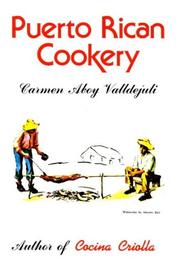
The canonical text and the one book to own. Valldejuli's Cocina Criolla was first published in 1954 and is still the standard Spanish-language household reference on the island; this is its English counterpart, and both resolve as separate records here — you only need one.
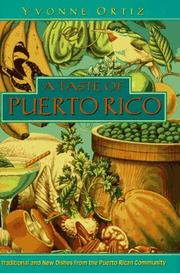
The friendliest modern introduction: the same core repertoire with clearer headnotes, shorter ingredient lists and more explanation of technique than Valldejuli offers. Read it second, and cook from it first if Valldejuli's terseness slows you down.
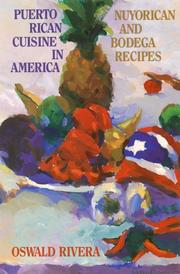
Rivera writes the island repertoire specifically for cooks shopping in mainland American supermarkets, with substitutions worked out for ingredients that are hard to find. Placed third as the practical bridge, and the natural handover to the diaspora books.
The Diaspora Kitchen
BeginnerCook the food as it developed off the island — in New York, New Jersey, Chicago and California — and understand what changed and why.
▸ Study plan for this stage
Pace: Three to four weeks for around 720 pages, cooking throughout. Maisonet's Diasporican (256 pages) is the anchor — read it properly over ten days, headnotes included, because the argument is in the prose as much as the recipes. Von Diaz's Coconuts and Collards (163 pages) is short and warm and takes f
- The diaspora kitchen is not a degraded copy of the island one. It developed separately in New York, New Jersey, Chicago and California over generations, adapting to different ingredients, different neighbours and different lives, and it is a tradition in its own right.
- Maisonet is the first Puerto Rican food columnist at a major American paper, and Diasporican is rigorously researched, opinionated about authenticity, and honest that a Sacramento kitchen is not a Ponce one. That honesty is the model for how to think about the whole stage.
- Authenticity as a question rather than a standard: every book in this stage takes a position on who gets to define the canon and what counts as a legitimate change. Reading them together makes the disagreement visible.
- Substitution has consequences that are worth naming rather than glossing. What happens to a dish when the pork is different, the plantain is shipped, the recao is unavailable and the pot is not a caldero is a real culinary question.
- Von Diaz's memoir-cookbook of a Puerto Rican childhood in Atlanta shows the island repertoire meeting the American South, which is a different encounter from the northeastern one and produces different dishes.
- The northeastern and southern diaspora stories are genuinely distinct, and reading Maisonet and Diaz consecutively is the fastest way to see that the diaspora is not one thing.
- Martinez is a New York cook with French culinary training, and her book is Latin home cooking for weeknights with Puerto Rican dishes at its centre. It is the most approachable book on the path and the broadest in scope, so use it for technique and accessibility rather than for canon.
- Coconuts and Collards is published with an ampersand, which is how it is catalogued here.
- What actually changed when the repertoire moved to the mainland? Separate changes caused by ingredient availability from those caused by time, money and household structure.
- Maisonet is explicit that a Sacramento kitchen is not a Ponce one. What does she take that to license, and what does she still refuse?
- Cook one dish from both the island stage and the diaspora stage. Describe the difference in method and in result, and say which you prefer and why.
- How does the southern diaspora kitchen in Von Diaz differ from the northeastern one? Name three concrete differences.
- Martinez trained in French technique. Where can you see that training in her recipes, and does it improve the dish?
- Who gets to define what is authentic in a diaspora cuisine? State the strongest version of at least two answers.
- Cook the same dish twice, once from an island book and once from a diaspora book, and write up the differences in ingredients, method and result.
- Read Maisonet's headnotes as an argument and summarise her position on authenticity in 300 words.
- Make a list of the substitutions the diaspora books recommend and rank them by how much they change the dish.
- Cook one dish from Von Diaz that could only have come from the American South, and identify exactly which element is southern.
- Plan and cook a weeknight meal from Martinez, timing yourself. The practicality is part of what the book is arguing.
Next up: Home cooking and restaurant cooking are different crafts, and the next stage shows what trained chefs do with this repertoire and where technique genuinely improves on the household version.

The most important recent book on the subject, from the first Puerto Rican food columnist at a major American paper. Rigorously researched, opinionated about authenticity, and honest that a Sacramento kitchen is not a Ponce one. The best single modern purchase here.

A memoir-cookbook of a Puerto Rican childhood in Atlanta, where the island repertoire met the American South. Read after Maisonet for the other half of the diaspora story — southern rather than northeastern, and warmer in tone. Published with an ampersand, which is how it is catalogued.
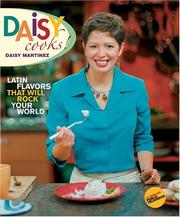
Martinez is a New York cook trained at the French Culinary Institute, and this is Latin home cooking with Puerto Rican dishes at its centre, written for weeknights. Included as the most approachable book on the path; it is broader than Puerto Rico alone, so use the index.
Restaurant Cooking and the Nueva Cocina
IntermediateSee what happens when trained chefs rebuild the criollo repertoire, and pick up the plating and technique that distinguish restaurant versions from home ones.
▸ Study plan for this stage
Pace: Three to four weeks for around 800 pages. Benet's Puerto Rico True Flavors (260 pages) takes a week and is worth cooking from selectively — pick three dishes rather than working through it. Puerto Rico Sabor Criollo (250 pages) follows in a week and should be read directly against the first, since t
- Restaurant cooking is a different craft from home cooking, with different constraints: consistency across covers, plating, mise en place broken down into components, and reduction and refinement of preparations that a household makes in one pot.
- Benet is the chef of a San Juan restaurant and the central figure in the island's modern restaurant cooking, and True Flavors is the traditional repertoire executed with French training. It is the clearest demonstration on this path of where technique can and cannot improve on the home version.
- The nueva cocina project is an argument about a national cuisine: that criollo cooking deserves the same technical treatment given to European cuisines, and that doing so is a form of respect rather than a departure.
- Sabor Criollo is Benet's later and more traditional collection, closer to the canon than to his restaurant menus, and reading the two together lets you watch a chef make an argument about his own cuisine and then revise it.
- Deciding what technique adds is the skill this stage teaches. Some traditional dishes gain from precision and reduction; others are structurally about abundance and slow cooking and are diminished by refinement.
- Plating is information as well as decoration: seeing a dish composed before you attempt it tells you how the components are meant to relate, which is what the illustrated survey is here for.
- The illustrated survey covers cooking, restaurants and produce and is useful mainly for the photography. It is catalogued here under the truncated title Puerto Rico.
- Honest scope note: this is a small English-language publishing niche and several newer titles do not resolve to a record in this catalogue, so the restaurant literature available here is thinner than the home-cooking literature.
- What does French technique actually add to a criollo dish? Take one specific dish and name the steps that change.
- Which traditional dishes are improved by refinement and which are diminished by it? Give an example of each and state the principle behind your split.
- Benet's two books take different positions. What is the difference, and what does the later one concede or reclaim?
- What is the nueva cocina arguing for, and what is the objection to it from a home cook's point of view?
- Looking at the plated photographs, what do they tell you about the intended relationship between components that a recipe does not?
- Which of Benet's techniques are worth importing into home cooking, and which require equipment or staffing you do not have?
- Cook one dish in both its household form from the first stage and Benet's restaurant version. Serve them side by side and record the honest verdict.
- Take one Benet recipe and write out its component preparations as a restaurant would break them down. Then work out which components can be made ahead at home.
- Plate three dishes you have already cooked, using the photographs as a guide, and photograph the results.
- Write a one-page comparison of Benet's two books, stating what changed between them and what that says about his view of the cuisine.
- Identify three techniques from this stage that you can realistically adopt and three you cannot, with the reason for each.
Next up: The last stage widens the frame: where these techniques sit within the wider Latin and Caribbean kitchen, and the colonial and agricultural history that decided what is on the plate at all.

Benet's first book, from the chef of Pikayo in San Juan and the central figure in the island's modern restaurant cooking. This is the traditional repertoire executed with French training, and the clearest demonstration of where technique can and cannot improve on the home version.
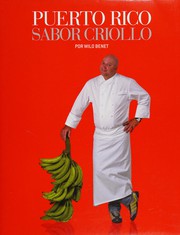
Benet's later and more traditional collection, closer to the criollo canon than to his restaurant menus. Read after True Flavors as the deliberate return to the source; between the two you can see a chef's argument about his own cuisine.

A large illustrated survey of island cooking, restaurants and produce, useful mainly for the photography and for seeing dishes plated before you attempt them. Catalogued here under the truncated title Puerto Rico.
Context: The Region and the History
IntermediatePlace Puerto Rican cooking within the wider Latin American and Caribbean kitchen, and understand the colonial and agricultural history that determined what is on the plate.
▸ Study plan for this stage
Pace: Five to six weeks. Presilla's Gran Cocina Latina (901 pages) is a reference of encyclopaedic scale and is not read cover to cover — spend two to three weeks in the Caribbean sections and the sofrito chapter, and use the rest as a lookup. Von Diaz's Islas takes a week and cooks well. Ortíz Cuadra's E
- Puerto Rican cooking is Taíno, Spanish and West African in roughly equal measure, and the historical stage exists so those three inheritances can be identified in specific dishes rather than asserted in a sentence.
- Presilla's reference covers the cooking of all Latin America with a substantial Caribbean section, and its value here is comparative: it shows which techniques are shared across the region and which are genuinely local.
- The sofrito chapter alone justifies the book's size, because it lays out the family of aromatic bases across Latin America and lets you see where the Puerto Rican version sits among its relatives.
- Islas widens from Puerto Rico to island cooking across the Caribbean and beyond, and it is the best follow-up if the diaspora stage was the part that caught you. Read it after Presilla, which supplies the mainland comparison it assumes.
- Ortíz Cuadra's study takes rice, beans, root vegetables, codfish and pork one at a time and asks how each became a staple, which turns the pantry into a historical document.
- Sugar monoculture is the central historical fact: land given over to export cane meant food had to be imported, which explains why salt cod and imported rice sit at the centre of an island cuisine.
- Colonial administration, first Spanish and then American, shaped what could be grown, what was imported and what was taught as proper cooking, and the modern repertoire carries all of that.
- The closing insight the whole path builds toward: the staples are what they are because of a specific economic and political history, and knowing that changes how you read every recipe in the first stage.
- Identify the Taíno, Spanish and West African contribution in three specific dishes you have cooked. What is the evidence for each attribution?
- How does Puerto Rican sofrito differ from its counterparts elsewhere in Latin America, and what does the comparison reveal about the island's particular history?
- Why is salt cod central to the cuisine of an island surrounded by fish? Answer historically.
- What did sugar monoculture do to what islanders ate, and how much of the modern pantry is a consequence of it?
- Which techniques does Presilla show to be regional rather than Puerto Rican? Does that change how you would describe them?
- Having read the history, which dishes from the first stage now read differently, and how?
- Take five staples — rice, beans, root vegetables, codfish, pork — and write a paragraph on each explaining how it became a staple, using Ortíz Cuadra.
- Compare Puerto Rican sofrito with two other Latin American aromatic bases from Presilla by making all three and tasting them side by side.
- Cook one dish from Islas that is not Puerto Rican and identify what it shares with the repertoire you have learned.
- Build a one-page family tree of the cuisine showing the Taíno, Spanish and West African inheritances with named dishes on each branch.
- Finish the path by rewriting the description of the cuisine you would have given before starting, and note what the history added that the cookbooks could not.
Next up: That closes the path: the island canon and its building blocks, the diaspora kitchen as its own tradition, what trained chefs do with the repertoire, and the colonial history that decided the pantry — with the honest caveat that this is a small English-language niche and several newer titles are not in this catalogue.
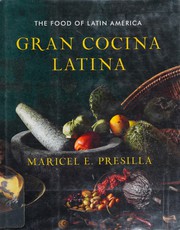
The James Beard-winning reference to the cooking of all Latin America, with a substantial Caribbean section. Read it to see which Puerto Rican techniques are shared across the region and which are local — the sofrito chapter alone justifies the book's size.

Diaz's second book, widening from Puerto Rico to island cooking across the Caribbean and beyond, and the best follow-up if the diaspora stage was the part that caught you. Read it after Presilla, which supplies the mainland comparison it assumes.

Not a cookbook: a food historian's study of rice, beans, root vegetables, codfish and pork, and how colonialism, sugar monoculture and mainland imports shaped island eating. The right closing book, because it answers the question every earlier stage raises about why the staples are these staples.
Discussion
Keep reading
Paths that share books, cover the same subject, or open a related topic.