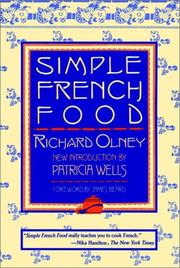
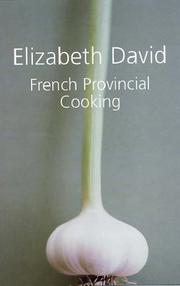
Start with Simple French Food. Richard Olney, an American painter who lived above Solliès-Toucas for forty years, writes discursive essays with the recipes embedded in them — few timings, no photographs, and no assumption that you will follow anything to the letter. That is deliberately the training this subject requires, because southern French cooking is organised around what the market has rather than around a recipe. Follow it with Elizabeth David's French provincial cooking for the geography: she is the clearest writer here on how one region's kitchen differs from the next and why.
The reason to keep an order is that English-language publishing tends to blur two distinct traditions into one idea of the sunny south. Provence and the Mediterranean coast cook with olive oil, garlic, vegetables and fish. Gascony and the southwest cook with duck and goose fat, confit, foie gras and cassoulet. They are not variations on each other, and a book about one will mislead you about the other. This path handles Provence first, then crosses to the southwest, then closes with menus, wine and the history of how this food arrived in English.
A practical note before you buy. Most of these books are decades old and were written for cooks with time and access to a French market. Salt cod, fresh cèpes, ventrèche, confit-grade duck legs, real Bandol, ripe olives worth making tapenade from — some of that is a specialist order and some of it you will substitute for. Every record below is an English-language edition; Cuisine Nicoise and Cuisine of the sun are translations from the French, and neither is a bilingual edition.
Cooking to the market
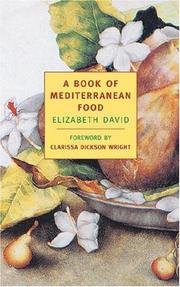
After Simple French Food and French provincial cooking, read A Book of Mediterranean Food, David's first book, published in 1950 into a rationed Britain and the origin of the whole Anglophone romance with olive oil and garlic. It is short and closer to an anthology than a manual; read it as the historical moment rather than as a working cookbook.
Provence itself
Lulu's Provenc̜al table is Olney's portrait of Lulu Peyraud of Domaine Tempier in Bandol and how she cooked for a working wine estate — the most useful single Provençal book here, because every dish is anchored to a household that actually ate it. Our catalogue renders one accented character in its title oddly; it is the 1994 book co-credited to Alice Waters. Cuisine Nicoise is the Niçois canon set down by the city's own mayor: pissaladière, socca, pan bagnat, farcis, and a purist's ruling on what does and does not belong in a salade niçoise. Patricia Wells at home in Provence is the modern counterweight to Olney — an American food journalist with a house near Vaison-la-Romaine, writing tested recipes with quantities and timings that work first time. If Olney's method frustrates you, cook from Wells and read Olney. Cuisine of the sun closes the stage with the restaurant register, from the chef of Le Moulin de Mougins: the same ingredients, classical technique, considerably more butter.
The southwest
The Cooking of South-West France is the standard work in English and the reason anyone outside France can produce a proper confit or cassoulet; Paula Wolfert researched it village by village over years. The record here is the earlier British edition, and the 2005 revision is substantially expanded — buy that one if you have the choice. It assumes the deepest French pantry of any book on this list. The Country Cooking of France follows well, being heavily illustrated, reliably tested, and useful for placing the southwest beside the other regional kitchens. A kitchen in France is the contemporary version from a household in the Médoc, seasonal and photographed and much less formal. French country cooking is that author's second book, moving inland with more game and mushrooms; the approach is identical, so take it or skip it. Note that Elizabeth David published a differently-produced book of nearly the same name in 1951, which is not the record you will find here.
Menus, wine and where the taste came from
The French Menu Cookbook is Olney's first book and the one nobody reads until they are ready: seasonal menus with wine matched course by course, assuming the techniques of Simple French Food. Adventures on the wine route is an American importer travelling the regions, including Bandol and the southwest, arguing for unfiltered and unmanipulated wine. Provence 1970 closes the path with the winter that Julia Child, M.F.K. Fisher, Olney and James Beard were all in the south of France at once, reconstructed from Fisher's journals — it explains where the taste this path teaches actually came from. Peter Mayle's A Year in Provence is the famous lighter version and is not on this list. For the broader national tradition these regional books sit inside, see French cooking.
Follow the full ordered path here: How to Learn Provençal and Southwest French Cooking from Books, in Order.
Ready to learn something deeply?
Build a reading path — free