Best Israeli Cookbooks to Learn the Cuisine
This curriculum takes you from the foundational pantry and cultural context of Israeli cooking all the way to the vibrant, modern Tel Aviv kitchen. Each stage builds on the last — first understanding the ingredients and traditions that define the cuisine, then mastering the iconic street foods and mezze table, and finally exploring the creative, boundary-pushing cooking of contemporary Israel.
Foundations: The Israeli Pantry & Cultural Roots
BeginnerUnderstand the multicultural origins of Israeli cuisine, stock an authentic pantry, and get comfortable with the essential flavor profiles — spices, olive oil, legumes, and fresh herbs — that underpin everything that follows.
▸ Study plan for this stage
Pace: 8–10 weeks, ~25–30 pages/day. Read "Jerusalem" over 5–6 weeks (450+ pages), then "Zaitoun" over 3–4 weeks (300+ pages). Allocate 1–2 weeks for pantry-building and flavor-profile exercises alongside reading.
- The multicultural layering of Israeli cuisine: Palestinian, Jewish, Levantine, and diaspora influences (Sephardic, Ashkenazi, Mizrahi) converging in one food culture
- The role of Jerusalem as a culinary crossroads—how geography, history, and migration shaped what Israelis eat
- Essential pantry staples: olive oil, za'atar, sumac, tahini, pomegranate molasses, dried legumes, preserved lemons, and fresh herbs (parsley, mint, cilantro)
- Flavor profiles that define Israeli cooking: bright acidity, herbaceous freshness, warm spice, and the balance of salt and richness
- The Palestinian food tradition as foundational to Israeli cuisine, including dishes like hummus, fattoush, and tabbouleh
- How Yotam Ottolenghi's personal story and Jerusalem's neighborhoods illustrate the intersection of food, identity, and place
- Seasonal and market-driven cooking as a core principle—shopping for what's fresh, not following rigid recipes
- The cultural and historical context of Levantine ingredients and techniques that define both Israeli and Palestinian food
- How do the different Jewish diaspora communities (Ashkenazi, Sephardic, Mizrahi) and Palestinian traditions contribute distinct elements to modern Israeli cuisine?
- What are the five essential pantry ingredients that appear repeatedly across both 'Jerusalem' and 'Zaitoun,' and why are they foundational to Israeli cooking?
- How does Yotam Ottolenghi use his personal story and Jerusalem's neighborhoods in 'Jerusalem' to illustrate the multicultural roots of Israeli food?
- What are the key flavor profiles that define Israeli cuisine, and how do they differ from Mediterranean or Middle Eastern cooking more broadly?
- How does 'Zaitoun' present Palestinian food traditions, and what overlap do you see between Palestinian and Israeli cuisines as described in both books?
- Why is seasonal, market-driven shopping emphasized in both books, and how does this approach differ from recipe-first cooking?
- Build your Israeli pantry: Source and purchase at least 8 essential ingredients (olive oil, za'atar, sumac, tahini, pomegranate molasses, dried chickpeas, preserved lemons, fresh herbs). Document where you sourced each and the cost.
- Cook three recipes from 'Jerusalem' (e.g., hummus, tabbouleh, and one vegetable dish) and three from 'Zaitoun' (e.g., Palestinian salad, a bread or grain dish, and a legume-based dish). Note which pantry ingredients appear across recipes.
- Create a flavor-profile tasting: Prepare small tasting portions of za'atar, sumac, and pomegranate molasses separately, then taste them in a simple dish (e.g., on yogurt or in a vinaigrette). Write 2–3 sentences on how each changes the dish.
- Map the neighborhoods of Jerusalem described in Ottolenghi's book and research the communities that live/lived in each. How does the food in each neighborhood reflect its cultural makeup?
- Compare one dish across both books (e.g., hummus or a salad) and note the differences in ingredients, technique, and framing. What does each author emphasize?
- Visit a Middle Eastern or Israeli market (in person or online) and photograph 10 ingredients you recognize from the books. Note which are Palestinian-origin, which are Israeli, and which are shared.
Next up: This stage establishes the flavor vocabulary, ingredient knowledge, and cultural context needed to move into technique-focused cooking—where you'll learn how to build dishes, balance flavors, and cook with confidence using the pantry and principles you've now internalized.
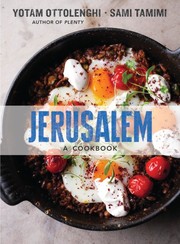
The perfect entry point: it tells the human story behind Israeli and Palestinian food while introducing the core pantry — za'atar, sumac, tahini, pomegranate molasses — through approachable, deeply flavorful recipes.

Broadens the beginner's understanding of the Levantine pantry and the Palestinian culinary tradition that is woven into Israeli food culture, providing essential context before diving into more Israel-specific books.
The Mezze Table & Salad Culture
BeginnerMaster the art of the Israeli salad spread and mezze table — the small plates, dips, pickles, and vegetable dishes that form the backbone of everyday Israeli eating.
▸ Study plan for this stage
Pace: 4–5 weeks, ~25–30 pages/day, alternating between reading and cooking practice. Start with "Plenty" (weeks 1–2.5), then move to "Shuk" (weeks 2.5–5). Plan 2–3 cooking sessions per week alongside reading.
- Vegetable-forward philosophy: How Ottolenghi and Admony prioritize vegetables as the star rather than supporting players, using techniques like charring, roasting, and layering flavors
- The mezze table structure: Understanding how small plates, dips, and salads work together as a cohesive eating experience rather than individual dishes
- Flavor building through acid, spice, and herbs: Mastering the use of lemon, pomegranate molasses, tahini, and fresh herbs (parsley, cilantro, mint) as foundational flavor layers
- Seasonal and market-driven cooking: Learning to build menus and dishes around what's available, as demonstrated through Ottolenghi's produce-led approach and Admony's shuk (market) philosophy
- Salad as a main course: Recognizing how Israeli salads—from simple chopped salads to grain-based and roasted vegetable salads—can anchor a meal
- Dips and spreads as flavor anchors: Understanding hummus, baba ganoush, labneh, and other dips as both nutritional and flavor foundations for the mezze table
- Pickling and preservation techniques: Using quick pickles and fermented vegetables to add brightness, texture, and longevity to the mezze spread
- Simplicity with intention: Appreciating how both authors achieve depth through restraint—using fewer, better ingredients rather than complexity
- How does Ottolenghi's approach to vegetables in 'Plenty' differ from traditional Western cooking, and what specific techniques does he use to make them the centerpiece of a dish?
- What are the core components of an Israeli mezze table, and how do dips, salads, pickles, and fresh vegetables work together to create a balanced meal?
- Describe the role of acid (lemon, vinegar, pomegranate molasses) and how Admony uses it in 'Shuk' to brighten and balance flavors in salads and dips.
- What is the relationship between shopping at the market (shuk) and menu planning in Admony's cooking philosophy, and how does this differ from ingredient-driven cooking?
- How do tahini-based dips function in Israeli cuisine, and what are at least three variations you can make based on recipes from 'Plenty' or 'Shuk'?
- Explain the difference between a traditional chopped salad, a grain-based salad, and a roasted vegetable salad—provide one example of each from the books you've read.
- Make Ottolenghi's Charred Eggplant Salad (or equivalent roasted vegetable salad from 'Plenty'). Focus on the technique of charring and note how it deepens flavor. Taste it at different stages—raw, roasted, and finished with acid and herbs.
- Prepare a basic tahini dip from 'Shuk' and create three variations by adjusting acid, spices, or garnishes. Serve all three alongside fresh vegetables and pita to understand how small changes shift the dish.
- Build a complete mezze table for 4 people using at least 6 components: one dip, two salads (from different categories), pickled vegetables, fresh herbs, and bread. Use recipes from both 'Plenty' and 'Shuk'.
- Make a quick-pickled vegetable recipe from either book (e.g., pickled turnips, pickled onions). Taste them daily over a week and note how flavor develops. Use them as part of a mezze spread.
- Recreate Admony's market-to-table approach: visit a farmers market or produce section, select 4–5 seasonal vegetables, then create a salad or side dish inspired by recipes in 'Shuk' using what you found.
- Prepare two grain-based salads (e.g., tabbouleh, freekeh salad, or similar from the books). Compare how grains absorb dressing and how they differ from vegetable-only salads in terms of texture and satiety.
Next up: This stage establishes the foundational building blocks—vegetables, dips, and small plates—that form the base of Israeli cooking; the next stage will expand into how these elements combine with grains, proteins, and bread to create complete, nourishing meals.

Ottolenghi's vegetable-forward cooking is deeply rooted in the Israeli mezze tradition; this book trains your eye and palate for building a stunning, produce-driven spread.

Centered on the Israeli market (shuk) experience, this book is the definitive guide to salads, pickles, dips, and mezze as they are actually eaten in Israel today, bridging tradition and modern home cooking.
Hummus, Street Food & the Falafel Counter
IntermediateGo deep on Israel's iconic street food canon — hummus, falafel, sabich, shakshuka, and the art of the pita — understanding technique, regional variation, and the culture of eating on the go.
▸ Study plan for this stage
Pace: 4–5 weeks, ~40–50 pages/day. Start with "Zahav" (weeks 1–2), then move to "Israeli Soul" (weeks 3–4), with a final week for review and recipe testing.
- The philosophy of Israeli cooking as a fusion of Mediterranean, Middle Eastern, and Levantine traditions, with hummus and tahini as foundational elements
- Technique mastery: how to make hummus from scratch, achieve the perfect texture, and understand the role of acid, garlic, and emulsification
- Falafel as both street food and cultural symbol—ingredient ratios, spice blends, frying temperature, and regional variations across Israel and the Levant
- The art of the pita: leavening, lamination, and how to achieve the perfect pocket for holding fillings
- Sabich and shakshuka as vehicles for understanding vegetable preparation, egg cookery, and the balance of spice and acidity
- The culture of eating on the go: how Israeli street food reflects daily life, social gathering, and the speed of urban eating
- Solomonov's approach to ingredient sourcing, flavor layering, and the importance of quality tahini, olive oil, and spices
- Regional and historical context: how Palestinian, Lebanese, and Israeli culinary traditions intersect in dishes like hummus and falafel
- What are the key steps to making creamy hummus, and why is the ratio of chickpeas to tahini critical?
- How do regional variations in falafel (Israeli vs. Palestinian vs. Lebanese) differ in terms of ingredients, spices, and texture?
- What is the relationship between pita bread structure and the dishes it holds, and how does lamination affect the final product?
- How do sabich and shakshuka exemplify the use of vegetables and eggs in Israeli street food, and what are the flavor principles that make them work?
- What does Solomonov identify as the core philosophy of Israeli cooking, and how do the street foods in these books reflect that philosophy?
- How do the eating practices and social contexts of Israeli street food differ from sit-down restaurant dining?
- Make hummus from dried chickpeas (not canned) at least twice, adjusting tahini, lemon, and garlic ratios each time to understand how each ingredient affects texture and flavor
- Prepare falafel using at least two different spice blends (one more traditional, one more modern) and compare how the flavor profile changes
- Make fresh pita bread from scratch, focusing on achieving proper lamination and the characteristic pocket; bake at least 3 batches
- Prepare sabich (roasted eggplant, potato, egg sandwich) following Solomonov's method, paying attention to the balance of tahini sauce, hummus, and fresh herbs
- Cook shakshuka using at least two variations (tomato-based and pepper-based), experimenting with spice levels and egg doneness
- Create a tasting menu of hummus variations (classic, roasted garlic, spiced, herb-forward) and serve with fresh pita to understand how subtle changes in technique and ingredients shift the dish
Next up: This stage establishes mastery of Israel's foundational street food techniques and flavor principles, preparing you to explore how these core elements are elevated in fine dining contexts and combined with seasonal vegetables and proteins in the next stage.

Solomonov's James Beard Award–winning book contains the most thorough, technique-driven treatment of hummus in print, alongside the full spectrum of Israeli street food and mezze, making it the essential intermediate text.

A direct follow-up to Zahav, this book zooms in on street food stalls, falafel shops, and the everyday food of Israeli cities — the perfect companion once you have Zahav's foundational techniques in hand.
The Modern Tel Aviv Kitchen
ExpertExplore the creative, cosmopolitan cooking of contemporary Israel — where Ashkenazi, Mizrahi, Yemenite, North African, and global influences collide to produce a bold, modern cuisine that is reshaping the world's tables.
▸ Study plan for this stage
Pace: 8–10 weeks, ~40–50 pages/day (mix of reading and recipe engagement)
- The layering of Ashkenazi, Mizrahi, Yemenite, and North African traditions in contemporary Israeli cooking
- How Einat Admony's personal narrative and restaurant philosophy shape modern Tel Aviv cuisine
- The role of seasonal, local ingredients and Mediterranean/Middle Eastern produce in defining modern Israeli food
- Flavor-building techniques: spice blending, fermentation, and the balance of acid, heat, and richness in Israeli dishes
- The concept of 'Sababa' (everything is good/cool) as a cultural and culinary philosophy of ease and generosity
- How global influences and international techniques are integrated without losing Israeli identity
- The relationship between home cooking and restaurant culture in shaping Tel Aviv's food scene
- How does Einat Admony's background and immigration story influence the philosophy and menu of Balaboosta?
- What are the key differences between Ashkenazi, Mizrahi, Yemenite, and North African Jewish cooking traditions, and how do they appear in modern Tel Aviv cuisine?
- How do 'Balaboosta' and 'Sababa' as concepts—both as book titles and culinary philosophies—reflect the ethos of contemporary Israeli cooking?
- What role do fermentation, spice blending, and acid play in the flavor profiles of the recipes in these books?
- How do Admony and Sussman approach the use of seasonal and local ingredients, and why is this central to modern Israeli cooking?
- What techniques or flavor combinations from these books could you adapt to your own cooking, and how would you apply them?
- Cook 4–5 recipes from 'Balaboosta' (e.g., hummus variations, roasted vegetables, a meat or fish dish) and document how Admony's narrative context shapes your understanding of each dish
- Prepare 3–4 recipes from 'Sababa' that showcase different cultural influences (one Ashkenazi-rooted, one Mizrahi, one with global fusion) and compare flavor profiles
- Create a spice-blending exercise: make zhug, harissa, and one other Israeli spice blend from scratch; taste them side-by-side and note how they transform simple proteins
- Host a 'Balaboosta dinner' for friends using 2–3 recipes from the book; practice the hospitality and generosity philosophy that defines the concept
- Research and taste one ingredient deeply (e.g., sumac, pomegranate molasses, or a specific cheese) across multiple recipes in both books; document how it functions differently in each context
- Adapt one recipe from each book to use seasonal produce available in your region; write notes on how substitutions change the dish's character
Next up: This stage equips you with the foundational narratives, techniques, and flavor profiles of modern Israeli cuisine, preparing you to explore either the historical roots of Israeli cooking in earlier waves of immigration, or to deepen your understanding of specific regional Israeli cuisines and their contemporary expressions.

Admony's debut cookbook captures the spirit of the modern Israeli home cook who draws freely from Yemenite, Persian, and Mediterranean traditions, bridging the gap between street food and refined restaurant cooking.

Written from inside Tel Aviv's food scene, this is the most up-to-date portrait of how Israelis actually cook and eat today — relaxed, eclectic, and deeply delicious — the ideal capstone for the full curriculum.
Discussion
Keep reading
Paths that share books, cover the same subject, or open a related topic.