Best books on Georgian cuisine and cooking
This curriculum takes an intermediate food enthusiast on a deep journey into Georgian and Caucasian cuisine, starting with the broader cultural and culinary context of the region before drilling into the specific techniques, dishes, and ingredients — from khachapuri and khinkali to walnut sauces and the spice-laden traditions of the Caucasus. Each stage builds the cultural vocabulary and cooking intuition needed to fully appreciate the next, culminating in advanced regional and scholarly perspectives.
Foundations of Georgian & Caucasian Cuisine
IntermediateGain a confident, broad understanding of Georgian culinary identity, key dishes, and the regional logic behind ingredients like walnuts, fenugreek, and tkemali.
▸ Study plan for this stage
Pace: 6–8 weeks, ~25–30 pages/day, alternating between both books to build thematic depth
- Georgian culinary identity as shaped by geography, trade routes, and cultural synthesis between Europe and Asia
- The role of walnuts as a foundational ingredient in Georgian sauces (satsebeli, bazhe, pkhali) and their symbolic importance
- Tkemali (sour plum sauce) as a defining flavor profile and its regional variations across Georgia
- Fenugreek (utskho suneli) and other spice blends that distinguish Georgian cooking from neighboring cuisines
- The feast (supra) as a cultural institution that structures Georgian food, hospitality, and social hierarchy
- Regional diversity within Georgia: Kartli, Kakheti, Imereti, and Svaneti cuisines and their distinct ingredient preferences
- Bread (puri, shotis puri) and khachapuri as central carbohydrate anchors and cultural symbols
- The preservation and fermentation techniques (pickled vegetables, wine-making) that reflect Georgia's agricultural calendar and history
- How do Georgian culinary practices reflect Georgia's geographic position between Europe and Asia, and what evidence of this do Goldstein and Capalbo provide?
- What makes tkemali essential to Georgian cuisine, and how do its regional variations (Imereti vs. Kakheti styles) illustrate broader culinary diversity?
- Explain the role of walnuts in Georgian cooking: which dishes rely on them, and why are they culturally significant beyond nutrition?
- What is the supra, and how does understanding it as a social institution (not just a meal) change how you interpret Georgian dishes and hospitality?
- How do fenugreek and other spice blends in Georgian cuisine distinguish it from Turkish, Persian, or Armenian cooking?
- Describe at least three regional Georgian cuisines (e.g., Svaneti, Kakheti, Imereti) and identify one signature dish or ingredient from each.
- Cook 2–3 walnut-based sauces from the books (bazhe, satsebeli, pkhali) and taste-test them side-by-side to understand how walnuts anchor different flavor profiles
- Make tkemali from scratch (or source authentic versions from different regions if available) and compare their sourness, spice, and texture; document your observations
- Prepare a simplified supra at home: invite 2–4 people, select 4–5 Georgian dishes from the books, and practice the toasting and social rituals described by Goldstein and Capalbo
- Create a flavor-pairing map: list 5–6 Georgian dishes and annotate which spices (fenugreek, coriander, marigold, etc.) appear in each; identify patterns
- Bake khachapuri and puri using recipes from both books; compare techniques and note how bread functions as both sustenance and cultural marker
- Read one chapter from each book back-to-back on the same regional cuisine (e.g., both authors on Kakheti) and write a 1–2 page synthesis of how their perspectives differ or complement each other
Next up: This stage establishes the foundational vocabulary, ingredient logic, and cultural context needed to explore Georgian cuisine's historical evolution and its relationship to neighboring food traditions in the next stage.
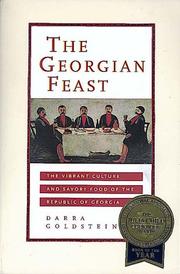
The definitive English-language introduction to Georgian cuisine by a leading scholar — covers history, culture, and core recipes including khachapuri and walnut sauces. Start here to build the essential framework.

A beautifully documented journey through Georgia's food, wine, and regions. Read second to put the recipes from Goldstein into vivid geographic and cultural context.
Cooking the Dishes — Hands-On Technique
IntermediateDevelop practical cooking skills for iconic Georgian dishes — dumplings, filled breads, stews, and sauce-making — with enough depth to cook them authentically at home.
▸ Study plan for this stage
Pace: 8–10 weeks, ~25–30 pages/day with 2–3 cooking sessions per week
- Dough-making fundamentals: hydration ratios, kneading techniques, and resting periods for khachapuri and khinkali wrappers
- Filling preparation and seasoning balance: cheese blends (sulguni, feta), meat mixtures, and herb combinations authentic to Georgian tradition
- Steaming, boiling, and pan-frying techniques for dumplings to achieve proper texture and seal integrity
- Bread-shaping and lamination methods for filled breads like lobio and penovani, including oven management
- Sauce construction: the role of adjika, tkemali, and walnut-based sauces in complementing cooked dishes
- Fermentation and preservation basics for traditional condiments and long-term ingredient storage
- Regional variation recognition: understanding how geography and ingredient availability shape dish preparation across the Caucasus
- What are the key differences in dough hydration and resting times between khachapuri and khinkali, and why do these differences matter?
- How do you select and combine cheeses and herbs to create an authentic Georgian cheese filling, and what role does salt play in the process?
- Describe the step-by-step process for folding and sealing khinkali to achieve the characteristic pleated top and prevent filling leakage during cooking.
- What are the primary sauce categories in Georgian cuisine (adjika, tkemali, walnut-based), and which dishes pair best with each?
- How does the lamination process for filled breads differ from simple dough-based dishes, and what oven conditions ensure proper browning without burning?
- What preservation and fermentation techniques allow you to prepare Georgian condiments and ingredients in advance for regular cooking?
- Make khachapuri adjaruli (cheese-filled bread boat) three times, adjusting dough hydration and filling ratios each attempt to achieve optimal texture and cheese distribution
- Prepare khinkali from scratch, focusing on consistent pleating and sealing; cook a batch and evaluate which folding technique prevents filling leakage best
- Create a cheese filling using at least two different cheese varieties (sulguni, feta, or local alternatives) and taste-test to understand how salt and herb ratios affect flavor balance
- Prepare two different Georgian sauces (e.g., adjika and tkemali) from Hercules' and Leahy's recipes, then pair them with cooked dishes to understand complementary flavors
- Make a filled bread (lobio or penovani) that requires lamination or shaping; document oven temperature, timing, and browning results
- Prepare a batch of Georgian dumplings or filled dish and freeze half for later cooking; compare the texture and quality of fresh versus frozen versions to understand storage techniques
Next up: This stage equips you with the hands-on muscle memory and ingredient intuition needed to move into the next level—whether that's mastering complex multi-component feasts, understanding the cultural and historical context behind regional variations, or developing the confidence to improvise and adapt recipes to available ingredients.

Hercules bridges Georgian, Armenian, and Azerbaijani cooking with accessible, modern recipes. Her treatment of dumplings, walnut pastes, and herb-driven dishes builds hands-on fluency after the foundational reading.

Focused on the breads and flatbreads of the Caucasus and their role in the meal, this book deepens understanding of the bread-making traditions that underpin dishes like khachapuri and the culture of the Georgian table.
The Wider Caucasian Table
IntermediateUnderstand how Georgian cuisine sits within the broader Caucasian and Silk Road culinary world, recognizing shared ingredients and techniques across Armenia, Azerbaijan, and neighboring cultures.
▸ Study plan for this stage
Pace: 4–5 weeks, ~40–50 pages/day (approximately 280–350 pages total)
- The Silk Road as a culinary highway: how trade routes shaped ingredient availability and cooking techniques across the Caucasus, Levant, and Central Asia
- Shared culinary vocabulary and techniques across Armenian, Azerbaijani, and Georgian cuisines (grilling, fermentation, use of pomegranate, walnuts, herbs)
- The role of geography and climate in determining what grows and how it's prepared in mountainous Caucasian regions
- How historical empires (Ottoman, Persian, Russian) influenced regional food cultures and created both distinctions and overlaps
- The concept of 'peasant cooking' as a unifying thread: how ordinary people across the region adapted similar ingredients with local variation
- Preservation and storage techniques (drying, pickling, fermenting) as survival strategies in harsh climates and their lasting impact on flavor profiles
- The political and cultural significance of food in post-Soviet identity formation, particularly how cuisine reclaims regional pride
- How does Yasmin Khan use the Silk Road framework to explain the similarities and differences between Georgian, Armenian, and Azerbaijani cuisines?
- What specific ingredients or techniques appear across multiple Caucasian cuisines in 'Zaitoun,' and what does this reveal about historical trade and cultural exchange?
- How did Ottoman and Persian rule shape the food cultures Khan describes, and what traces of these influences remain in contemporary Caucasian cooking?
- What role do preservation techniques (fermentation, drying, pickling) play in Khan's narrative about Caucasian food identity?
- How does Khan position Georgian cuisine within the broader Caucasian and Levantine culinary world rather than as an isolated tradition?
- What does Khan suggest about the relationship between geography, climate, and the development of regional cuisines in the Caucasus?
- Create a Silk Road ingredient map: Track 5–7 key ingredients (pomegranate, walnuts, sumac, eggplant, herbs like cilantro) across the cuisines Khan discusses. Note where each originates, how it travels, and how it's used differently in Georgian vs. Armenian vs. Azerbaijani cooking.
- Comparative recipe analysis: Select 3 recipes from 'Zaitoun' that appear in multiple Caucasian cuisines (e.g., a grilled meat dish, a walnut sauce, a fermented vegetable). Write a 1–2 page analysis of the variations and what they reveal about cultural exchange vs. local adaptation.
- Cook one Armenian or Azerbaijani dish from 'Zaitoun' and one Georgian dish you've learned previously. Document the techniques, flavors, and ingredients side-by-side. Reflect on what you notice about shared approaches.
- Timeline exercise: Create a visual timeline of the empires and trade routes Khan mentions (Ottoman, Persian, Silk Road, Soviet era) and annotate how each period influenced the food cultures she describes.
- Interview or research project: Find a recipe or food tradition from Armenia or Azerbaijan online or through family connections. Compare it to a Georgian equivalent using Khan's framework—what does the comparison reveal about regional identity and shared heritage?
- Preservation techniques deep-dive: Select one preservation method Khan emphasizes (fermentation, drying, pickling) and research its history across the Caucasus. Try making a small batch of a fermented or pickled item to understand the technique firsthand.
Next up: This stage establishes Georgian cuisine as part of a larger, interconnected Caucasian and Silk Road food world, preparing you to dive deeper into the specific techniques, regional variations, and contemporary revival movements that define modern Georgian cooking in the next stage.
Explores the overlapping food cultures of the Middle East and Caucasus, illuminating the shared pantry of pomegranate, walnut, and saffron that connects Georgian cooking to its neighbors.

While centered on Palestinian cooking, Khan's exploration of the eastern Mediterranean and Caucasian spice corridor provides crucial comparative context for understanding the walnut-and-herb flavor profile that defines Georgian cuisine.
Deep Dive — Scholarship, History & Fermentation
ExpertEngage with Georgian cuisine at a scholarly and gastronomic depth — understanding its ancient roots, its unique qvevri wine culture, and the fermentation traditions that shape its flavor identity.
▸ Study plan for this stage
Pace: 8–10 weeks, ~25–30 pages/day, with 1–2 weeks between books for integration and practice
- Fermentation as a metabolic process: how microorganisms (bacteria, yeasts, fungi) transform substrates and create flavor compounds, preservation, and nutritional value
- The role of wild and cultivated microbes in fermentation: spontaneous vs. controlled fermentation, starter cultures, and microbial ecology
- Qvevri fermentation in Georgian winemaking: the unique clay vessel's role in skin contact, oxidation, and flavor development during extended maceration
- Tannins, phenolics, and their extraction: how fermentation duration, temperature, and vessel material affect polyphenol development and wine structure
- Flavor chemistry of fermented foods: volatile compounds, organic acids, and esters that emerge through fermentation and contribute to Georgian cuisine's distinctive taste profile
- Historical and cultural context of Georgian fermentation traditions: how ancient practices shaped regional identity and persist in modern winemaking
- Practical application of fermentation science: monitoring pH, temperature, microbial activity, and sensory evaluation in home fermentation projects
- How do microorganisms metabolically transform raw ingredients during fermentation, and what are the key differences between anaerobic and aerobic fermentation pathways?
- What makes qvevri fermentation scientifically distinct from other winemaking methods, and how does the clay vessel's properties influence chemical and microbial processes?
- How do tannins and phenolic compounds develop during fermentation, and what role do maceration time and temperature play in their extraction and evolution?
- What volatile compounds and organic acids are produced during fermentation, and how do these contribute to the sensory characteristics of Georgian wines and fermented foods?
- How can you design and monitor a fermentation experiment (wine, kvass, or other Georgian fermented product) using scientific principles from both books?
- What historical and cultural factors shaped Georgian fermentation traditions, and how do modern scientific understandings validate or reframe these ancient practices?
- Conduct a side-by-side fermentation experiment: ferment grape juice or must in two vessels (one qvevri-style clay pot, one glass carboy) and document differences in color, aroma, pH, and taste over 4–8 weeks, correlating observations with Katz's and Goode's explanations of microbial and chemical processes
- Create a detailed fermentation journal for a Georgian-inspired fermented product (natural wine, kvass, or fermented vegetable): track temperature, pH, sensory notes, and microbial activity daily, then analyze your data against the scientific frameworks in both books
- Taste and analyze 3–4 Georgian wines (ideally including qvevri-fermented examples) with a focus on identifying tannin structure, volatile compounds, and flavor complexity; write tasting notes that reference specific fermentation science concepts from Goode
- Design a fermentation protocol for a home project: write out the steps, predicted microbial succession, expected chemical changes, and monitoring methods based on principles from Katz and Goode; execute it over 6–8 weeks
- Read and summarize 2–3 peer-reviewed articles on qvevri winemaking or Georgian fermentation traditions; synthesize findings with Katz and Goode to identify gaps between traditional practice and modern science
- Prepare a 10–15 minute presentation or written essay connecting a specific Georgian fermented food or wine to the microbial ecology and chemistry explained in both books, using sensory and scientific evidence
Next up: This stage equips you with the scientific vocabulary, fermentation literacy, and hands-on understanding needed to evaluate Georgian cuisine's authenticity, innovation, and terroir—preparing you to engage with regional cookbooks, producer interviews, or a practical culinary stage that applies fermentation science to Georgian cooking and wine pairing.

Georgia is one of the world's oldest fermentation cultures (wine, matsoni, churchkhela). Katz's authoritative text gives the technical and cultural depth to understand these traditions at an advanced level.

Georgian qvevri wine is inseparable from its food culture. Reading Goode after Katz provides the scientific grounding to understand Georgia's 8,000-year-old winemaking tradition and how it shapes the cuisine at the table.
Discussion
Keep reading
Paths that share books, cover the same subject, or open a related topic.