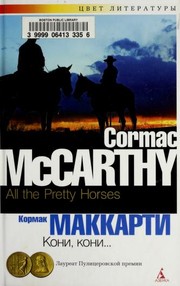
Wolf Hall Reading Order and Reading Guide
This curriculum guides a beginner into Hilary Mantel's Wolf Hall trilogy by first building historical and contextual foundations, then reading the trilogy itself in sequence, and finally deepening understanding through companion history and fiction that illuminate the world of Thomas Cromwell and Tudor England. Each stage prepares the reader for the next, so the trilogy itself lands at maximum impact in Stage 2.
Tudor Foundations
BeginnerGain a clear, accessible grounding in the Tudor period — its key figures, politics, and the Reformation — so that names, events, and stakes in Wolf Hall feel immediately familiar rather than overwhelming.
▸ Study plan for this stage
Pace: 8–10 weeks total: Weeks 1–5 for "The Tudors" by G. J. Meyer (~25–30 pages/day, 5 days/week), then Weeks 6–10 for "Six Wives" by David Starkey (~20–25 pages/day, 5 days/week). Allow extra buffer days after each book for review and reflection.
- The Tudor dynasty's rise to power: Henry VII's victory at Bosworth Field (1485) and the fragile legitimacy it produced, as traced in Meyer's opening chapters
- The mechanics of Tudor royal authority: how the monarch controlled nobility, Church, and Parliament — Meyer's recurring theme throughout his dynastic overview
- The English Reformation as a political act: Henry VIII's break with Rome driven by the need for an annulment, not purely theological conviction — a central argument in Meyer's treatment of Henry's reign
- The role of key power brokers — Wolsey, Cromwell, More, Cranmer — as intermediaries between Crown and Church, foregrounded in Meyer before Mantel fictionalizes them
- The six marriages of Henry VIII as political and dynastic instruments, not merely personal dramas — the core lens of Starkey's 'Six Wives'
- Each queen's individual agency, background, and factional support: Starkey's detailed portraits of Catherine of Aragon, Anne Boleyn, Jane Seymour, Anne of Cleves, Catherine Howard, and Catherine Parr
- The succession crisis and its stakes: how the desperate need for a male heir shaped every major political decision of Henry's reign, connecting Meyer's big picture to Starkey's intimate focus
- The intersection of gender, power, and survival in the Tudor court: how queens navigated — and sometimes failed to navigate — a system designed to discard them
- According to Meyer, what were the key weaknesses in the Tudor claim to the throne, and how did Henry VII and Henry VIII attempt to compensate for them through policy and marriage?
- How does Meyer characterize the English Reformation — as a religious movement, a political maneuver, or both — and what evidence does he marshal for his interpretation?
- Using Starkey's portraits, what distinguishes Catherine of Aragon's and Anne Boleyn's strategies for maintaining royal favor, and why did each ultimately succeed or fail?
- Which of Henry's six wives, as Starkey presents them, exercised the most independent political influence, and what does that reveal about the limits of queenly power?
- How do Meyer's account of Cromwell's rise and Starkey's account of the queens' fates together illustrate the volatility of favor in the Tudor court?
- After reading both books, what do you understand about the stakes — dynastic, religious, personal — that Wolf Hall's characters are navigating from the very first pages?
- Build a Tudor 'power map': after finishing Meyer, draw a diagram showing the monarch at the center and radiating outward to the Church, nobility, Parliament, and key ministers. Annotate it with names and dates from the book, then keep it as a reference while reading Starkey.
- Keep a character index card (physical or digital) for every major figure named in either book — one card per person, noting their role, their relationship to Henry, and their fate. By the end of Stage 1 you should have 15–20 cards ready to cross-reference when Wolf Hall begins.
- After completing Starkey's chapter on each queen, write a one-paragraph 'dossier' in your own words: who she was, what faction backed her, what she wanted, and how her story ended. This forces active recall and will make Mantel's allusions click instantly.
- Create a single consolidated timeline spanning both books: mark dynastic events from Meyer (Bosworth, the break with Rome, key executions) alongside each queen's entry and exit from Starkey. Seeing both narratives on one line reveals how personal and political crises overlapped.
- After finishing both books, write a short (300–400 word) answer to the question: 'Was Anne Boleyn's rise and fall primarily a personal story or a political one?' Draw explicitly on evidence from both Meyer and Starkey. This rehearses the kind of interpretive thinking Mantel demands of her readers.
- Re-read the brief author's notes or introductions in both books and compare how Meyer (broad dynastic history) and Starkey (intimate biographical focus) frame their subjects differently. Jot down three ways each author's approach shapes what details he emphasizes — this primes you to notice how Mantel's own narrative choices are themselves an interpretation.
Next up: The grounding in Tudor politics, the Reformation, and the six queens provided by Meyer and Starkey transforms the next stage's reading of Wolf Hall itself from a bewildering immersion into a richly informed experience — every character Mantel introduces will already have a face, a faction, and a fate the reader can anticipate and interrogate.
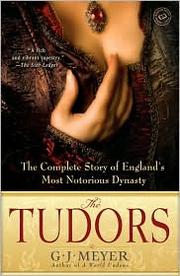
A highly readable, single-volume narrative history of the entire Tudor dynasty that introduces Henry VIII, Anne Boleyn, Thomas Cromwell, and the English Reformation with no prior knowledge assumed. Reading this first means every character Mantel introduces will already have a face and a context.
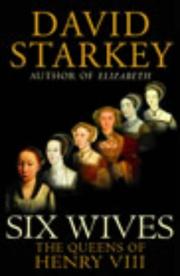
Starkey's authoritative account of Henry's six marriages fills in the intimate court drama at the heart of Wolf Hall. Reading it before the trilogy lets you follow the political and emotional stakes of each queen's rise and fall with confidence.
The Trilogy — In Sequence
BeginnerRead Hilary Mantel's Cromwell trilogy from beginning to end in publication order, experiencing the full arc of Thomas Cromwell's life as Mantel intended it to unfold.
▸ Study plan for this stage
Pace: 16–20 weeks total: Wolf Hall (~650 pp) over 6–7 weeks at ~25 pages/day; Bring Up the Bodies (~410 pp) over 4–5 weeks at ~25 pages/day; The Mirror and the Light (~750 pp) over 6–8 weeks at ~25 pages/day. Allow 2–3 buffer days per book for reflection and note-taking.
- Mantel's use of the close third-person 'he' — understanding that nearly every unattributed 'he' refers to Cromwell, and how this technique creates radical intimacy with his perspective
- Thomas Cromwell as a self-made man — tracing his rise from a Putney blacksmith's son through Wolf Hall, his consolidation of power in Bring Up the Bodies, and his fatal overreach in The Mirror and the Light
- The Tudor court as a system of patronage, danger, and performance — how favor is won, held, and lost across all three books
- Mantel's historical fiction method — the disciplined use of the present tense to collapse the distance between reader and past, and her fidelity to the historical record while imagining interiority
- The recurring motif of memory and the dead — Cromwell is haunted throughout all three volumes by figures such as his wife Liz, his daughters, Cardinal Wolsey, and eventually the executed Anne Boleyn
- Henry VIII as an unstable center of gravity — how each book reframes Henry's character as Cromwell's relationship with him deepens and then fractures
- The mechanics of power and survival — how Cromwell navigates religious reform, the dissolution of the monasteries, factions at court, and the king's marriages across the trilogy
- Structural and tonal shift across the three volumes — Wolf Hall's expansive world-building, Bring Up the Bodies' tighter, more claustrophobic focus on a single plot, and The Mirror and the Light's elegiac, autumnal quality as doom closes in
- By the end of Wolf Hall, what has Cromwell gained — in title, influence, and personal loss — and how does Mantel use his relationship with Cardinal Wolsey to establish his moral complexity?
- In Bring Up the Bodies, how does Cromwell orchestrate the downfall of Anne Boleyn, and to what extent does Mantel invite the reader to judge him for it?
- How does The Mirror and the Light dramatize Cromwell's loss of political footing — what specific miscalculations (the Cleves marriage, the handling of rivals) seal his fate?
- How does Mantel's present-tense, close-third-person narration change your experience of historical events you may already know the outcome of?
- What role do women — Jane Seymour, Anne Boleyn, Mary Boleyn, Katherine of Aragon — play across the trilogy, and how does Cromwell's perception of them evolve?
- How does the trilogy as a whole function as a meditation on mortality — whose deaths haunt Cromwell, and how does his own approaching death in The Mirror and the Light reframe everything that came before?
- Keep a running 'Power Map' as you read each book: draw the key figures at court (Henry, Cromwell, the Boleyns, Seymour, Gardiner, Norfolk, Cranmer) and update arrows of alliance and rivalry at the end of each major section — notice how the map transforms across all three volumes.
- After finishing each book, write a one-page 'Cromwell Balance Sheet' — list what he has gained (titles, allies, wealth, influence) and what he has lost (people, principles, safety) by the final page, then compare all three sheets at the end of the trilogy.
- Choose one scene from each book in which Cromwell says very little but the narration reveals his inner calculation (e.g., his interview with More in Wolf Hall, the interrogation of the accused men in Bring Up the Bodies, his audience with Henry in The Mirror and the Light). Write a short paragraph analyzing what Mantel withholds from the dialogue and why.
- Track Mantel's use of the word 'he' for the first 20 pages of Wolf Hall, marking every moment of ambiguity. Then reread the same passage after finishing the book and note how your fluency with the pronoun has changed — reflect on what that shift says about how readers build trust with a narrator.
- Create a brief timeline of the real historical events covered by the trilogy (1500–1540), then annotate it with page references to key scenes. Use this to identify where Mantel compresses, expands, or invents — and ask yourself what each choice serves dramatically.
- After completing The Mirror and the Light, write a short personal essay (300–500 words) responding to this prompt: 'Cromwell is both the most powerful and the most vulnerable person in the room. How does Mantel make both things true simultaneously?' Draw on specific moments from all three books.
Next up: Reading the trilogy in sequence gives you an embodied feel for Mantel's prose, structure, and themes that makes the next stage — deeper critical and historical investigation — far more rewarding, because you will have your own strong reactions and questions to test against scholarly and contextual material.
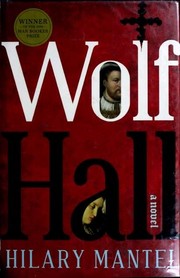
The first novel, covering Cromwell's rise from blacksmith's son to Henry VIII's chief minister. Start here — Mantel's distinctive present-tense, close-third-person style takes a few chapters to settle into, but the historical groundwork from Stage 1 makes the entry smooth.
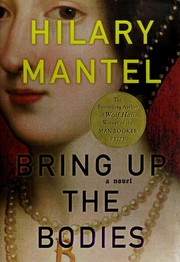
The Booker Prize-winning second novel, tighter and more propulsive, covering the fall of Anne Boleyn. Read immediately after Wolf Hall while the characters and Mantel's voice are fresh; the momentum between the two books is part of the experience.
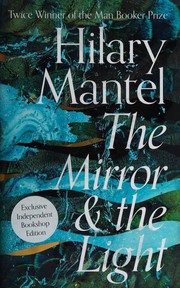
The concluding novel, the longest of the three, tracing Cromwell's final years and execution. Having lived with Cromwell through two books, the reader arrives here with the emotional investment needed to feel the full weight of the ending.
Going Deeper — History Behind the Fiction
IntermediateReturn to the historical record to see where Mantel diverged from, embellished, or faithfully followed the sources — sharpening critical appreciation of the trilogy as both literature and historical interpretation.
▸ Study plan for this stage
Pace: 10–12 weeks total: Weeks 1–8 for MacCulloch's "Thomas Cromwell" (~40–45 pages/day, 5 days/week — it is a dense, heavily footnoted biography, so allow extra time for cross-referencing with Wolf Hall trilogy passages); Weeks 9–11 for Norton's "The Anne Boleyn Papers" (~25–30 pages/day — primary-source
- MacCulloch's archival reconstruction of Cromwell's early life vs. Mantel's imaginative gap-filling — identifying where fiction begins where the record goes silent
- Cromwell's administrative and legal genius as documented in state papers vs. Mantel's intimate psychological portraiture of the same traits
- The historiographical debate around Cromwell's character: villain, pragmatist, or reformer — and how Mantel deliberately rehabilitates him
- Primary sources as literary raw material: how Norton's collection of letters, depositions, and warrants reveals the texture Mantel absorbed and transformed
- Anne Boleyn's own voice in the documentary record (her letters, reported speeches, scaffold statement) versus Mantel's deliberately opaque, externally-viewed Anne
- The mechanics of Tudor court politics — factions, patronage networks, and the role of rumour — as evidenced in both MacCulloch's biography and Norton's papers
- What the historical record cannot tell us: silences, destroyed documents, and biased sources — and how Mantel converts archival absence into narrative tension
- The difference between historical empathy (MacCulloch's scholarly mode) and historical imagination (Mantel's fictional mode) as complementary rather than competing approaches
- According to MacCulloch, what are the most significant gaps or uncertainties in the documentary record of Cromwell's early life, and how does Mantel exploit those gaps in Wolf Hall?
- How does Norton's collection of Anne Boleyn's own letters and reported words compare with the Anne the reader encounters in the trilogy — what does Mantel omit, amplify, or invent?
- Where does MacCulloch's scholarly assessment of Cromwell's motivations most sharply diverge from Mantel's fictional interpretation, and what does that divergence reveal about each author's purpose?
- What do the legal depositions and court documents in Norton's Papers reveal about the 1536 charges against Anne Boleyn, and how does Mantel handle the question of their truthfulness in Bring Up the Bodies?
- How do both MacCulloch and Norton handle the problem of biased or agenda-driven sources (e.g., Chapuys's dispatches, Cromwell's own letters), and what lessons does that offer for reading Mantel critically?
- In what ways does Mantel's famous present-tense, close-third-person narration through Cromwell's perspective constitute an argument about history itself — and how do the primary sources in Norton support or complicate that argument?
- Parallel-passage annotation: Select three major scenes from the Wolf Hall trilogy (e.g., Cromwell's childhood in Putney, Anne's arrest, the scaffold scene) and locate the corresponding evidence — or conspicuous absence of evidence — in MacCulloch and Norton. Write a one-page note on each explaining what Mantel invented, adapted, or faithfully rendered.
- Source-to-fiction tracking log: As you read MacCulloch, keep a running two-column table — 'Historical Record' vs. 'Mantel's Version' — for every major event or character trait mentioned. By the end, identify the five most striking divergences and write a short paragraph defending or questioning each of Mantel's choices.
- Close-read a primary document from Norton (Anne's letter to Henry from the Tower is ideal) and then re-read the corresponding scene in Bring Up the Bodies. Write a 500-word comparative analysis: what emotional or political meaning does Mantel add, and what does she strip away?
- Historiographical position paper: Using MacCulloch's introduction and conclusion as your anchor, write a 600–800 word essay arguing whether Mantel's Cromwell is historically responsible fiction or a distortion — marshalling specific evidence from both books.
- Character-voice exercise: Choose one figure who appears in both MacCulloch and Norton's Papers (e.g., Thomas Cranmer, Jane Seymour, or Thomas Wriothesley). Draft a one-page fictional interior monologue for that figure in Mantel's style, then annotate it to show which details are historically grounded and which are invented.
- Silence mapping: Identify three moments in the trilogy where Mantel builds a scene around something the historical record simply does not document. Use MacCulloch's footnotes and Norton's editorial notes to confirm the silence is real, then write a reflection on how narrative fills archival voids and what risks that carries.
Next up: By grounding the trilogy's imaginative leaps in the actual documentary record through MacCulloch and Norton, the reader is now equipped to move into a more thematic and literary-critical stage — examining how Mantel's formal and stylistic choices function as interpretive arguments about power, gender, and memory across all three novels.
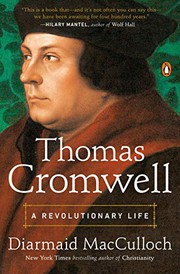
The definitive modern biography of Cromwell, published the same year as The Mirror and the Light. Reading it after the trilogy reveals exactly what Mantel invented, what she borrowed, and how the real Cromwell compares to her extraordinary creation.
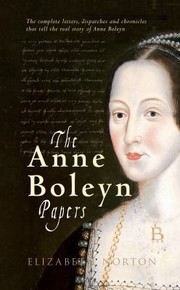
A primary-source-based account of Anne Boleyn that lets you hear the voices of real historical actors Mantel dramatised. It deepens understanding of Bring Up the Bodies in particular and shows how historians reconstruct lives from fragmentary evidence.
Expanding the World — Tudor Fiction in Dialogue
ExpertRead other major literary treatments of the same world to see how different authors interpret the same events, figures, and moral questions — enriching your reading of Mantel through contrast and conversation.
▸ Study plan for this stage
Pace: 4–5 weeks total: Weeks 1–3 for The Other Boleyn Girl (~30–35 pages/day across its ~660 pages), then Weeks 4–5 for A Man for All Seasons (~20–25 pages/day, including re-reading key scenes; the play is short but rewards slow, analytical reading).
- Authorial perspective and bias: how Gregory's third-person intimate narration through Mary Boleyn versus Mantel's close third-person through Cromwell shapes what the reader is allowed to know, feel, and judge
- The female gaze on Tudor power: Gregory foregrounds women's bodies, dynastic sexuality, and sisterhood as political currency — a lens almost entirely absent from Mantel's male-dominated corridors
- Anne Boleyn as protagonist vs. antagonist vs. victim: comparing Gregory's ambitious, cold Anne with Mantel's dangerous but more opaque Anne reveals how the same historical person becomes a different moral object depending on narrative allegiance
- Thomas More as saint vs. ideologue: Bolt's More is a heroic man of conscience and transcendent principle; Mantel's More is a torturer and fanatic — reading both forces the student to interrogate how hagiography and revisionism each distort
- The play as historical fiction: A Man for All Seasons uses theatrical devices (the Common Man, direct address) to make Tudor history a vehicle for universal moral argument, contrasting with the novel's immersive realism
- Silence and speech as political acts: Bolt's More weaponizes legal silence; Mantel's Cromwell weaponizes words — Gregory's women use rumor and seduction — all three authors treat language as the primary instrument of Tudor survival
- Popular history vs. literary fiction: Gregory writes in the tradition of accessible, plot-driven historical romance; Bolt in mid-century moral drama; Mantel in high literary modernism — the same era produces radically different aesthetic and ethical contracts with the reader
- Moral relativism vs. moral absolutism: Bolt argues for an inviolable self; Mantel argues the self is a strategic construction; Gregory suggests the self is a gendered trap — mapping these philosophies across the three works is the stage's central intellectual task
- How does Gregory's choice of Mary Boleyn as narrator reframe the political events that Mantel narrates through Cromwell — what is gained and what is obscured by each perspective?
- Bolt's Thomas More and Mantel's Thomas More are almost irreconcilable figures. Using specific scenes or passages from A Man for All Seasons and your memory of Wolf Hall, articulate the core interpretive disagreement between the two authors about More's character and legacy.
- In The Other Boleyn Girl, female agency is simultaneously celebrated and shown to be structurally impossible. How does Gregory's treatment of Anne and Mary's choices compare with the way Mantel treats the agency of figures like Jane Seymour or Katherine of Aragon?
- The Common Man in A Man for All Seasons is a theatrical device with no equivalent in Gregory or Mantel. What argument does Bolt make through this character, and how does his presence change the moral stakes of the drama compared to the immersive realism of the novels?
- All three works depict the relationship between personal conscience and political survival. Compare how at least two of the three books stage the moment when a character must choose between integrity and self-preservation.
- Gregory's Anne Boleyn and Bolt's Thomas More both die for something — but the nature of what they die for, and how the reader is positioned to feel about it, differs enormously. What does this contrast reveal about each author's underlying ideology?
- Dual-narrator rewrite: Take one scene from The Other Boleyn Girl (e.g., Anne's arrest or the sisters' confrontation at court) and rewrite it in Mantel's close-third-person style, focalized through Cromwell. Note every detail you must add, remove, or reframe — then write a paragraph reflecting on what the exercise reveals about narrative allegiance.
- Character dossier comparison: Build a side-by-side dossier for Thomas More as he appears in A Man for All Seasons and as he is remembered/described in Wolf Hall. Use direct quotations from both texts. Write a 300-word synthesis arguing which portrayal you find more historically honest and why, acknowledging the limits of your own position.
- Theatrical vs. novelistic time: A Man for All Seasons compresses years into scenes; The Other Boleyn Girl stretches months into chapters. Chart the timeline of the same historical period (roughly 1527–1536) as covered by both books, marking which events each author lingers on and which they skip. Write a short analysis of what each author's pacing choices argue about what matters in this history.
- Ideological spectrum mapping: Draw a simple spectrum with 'moral absolutism' at one end and 'moral relativism' at the other. Place Bolt's More, Gregory's Anne, Gregory's Mary, and Mantel's Cromwell on the spectrum using textual evidence. Then write a paragraph on where you would place Mantel's Cromwell versus Gregory's Mary — and whether either author endorses their protagonist's position.
- Book-club debate prep: Write a one-page position paper defending one of the following propositions — (a) Gregory humanizes the Tudor court more effectively than Mantel; (b) Bolt's More is a more dangerous historical myth than Gregory's Anne. Use only evidence from the books in this stage and Wolf Hall.
- Reading journal — the 'same scene' log: As you read Gregory and Bolt, keep a running log of every moment that covers an event also depicted in Wolf Hall (e.g., Anne's coronation, More's resignation, the Boleyn fall). For each entry, note the point of view, the emotional register, and one interpretive difference. Review the full log at the end of the stage and identify the single most revealing div
Next up: By having interrogated the same Tudor world through Gregory's popular romanticism and Bolt's moral absolutism, the reader has sharpened a critical vocabulary — perspective, ideology, narrative contract — that will be essential for returning to Mantel's own essays, interviews, and non-fiction, where she explicitly defends her interpretive choices and invites the reader to evaluate them as a fully i
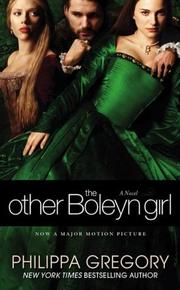
Gregory's bestselling novel covers overlapping events from Mary Boleyn's perspective, offering a sharp contrast to Mantel's cool, Cromwell-centred view. Reading it here highlights how point-of-view shapes historical fiction and how differently the same court can look.
This celebrated play presents Thomas More — Cromwell's great antagonist in Wolf Hall — as its hero, inverting Mantel's moral universe entirely. The juxtaposition is electrifying and provokes the deepest questions about truth, conscience, and historical sympathy.
Discussion
Keep reading
Paths that share books, cover the same subject, or open a related topic.