The Broken Earth Reading Order and Guide
This curriculum guides a beginner through N.K. Jemisin's work in a logical, rewarding order — starting with the landmark Broken Earth trilogy in sequence, then branching into her other major series and standalone work. Each stage builds familiarity with Jemisin's distinctive narrative voice, world-building complexity, and thematic depth before moving to the next challenge.
The Broken Earth Trilogy — Read in Order
BeginnerExperience the complete Broken Earth trilogy from start to finish, following the story arc, mastering Jemisin's unconventional second-person narration, and absorbing her themes of oppression, survival, and geological apocalypse.
▸ Study plan for this stage
Pace: 10–12 weeks total: ~3–4 weeks per book at a pace of 20–25 pages/day. The Fifth Season (468 pp): weeks 1–4; The Obelisk Gate (446 pp): weeks 5–8; The Stone Sky (398 pp): weeks 9–12. Allow extra buffer days after each book for reflection and journaling before moving on.
- Second-person narration ('you'): Jemisin's radical choice to address the protagonist as 'you' in The Fifth Season and beyond — understand why this technique creates complicity, intimacy, and destabilization of the reader's comfort zone
- The Fifth Season and the concept of cyclical apocalypse: the Stillness is a world that has survived countless extinction-level geological events called Fifth Seasons, shaping every institution and cultural norm
- Orogeny and systemic oppression: orogenes (people who can manipulate seismic energy) are enslaved, controlled, and weaponized by the Fulcrum and the broader society of the Stillness — a direct metaphor for racism, ableism, and the exploitation of marginalized bodies
- The Fulcrum as an institution of control: in The Fifth Season, the Fulcrum trains and brands orogenes, stripping them of autonomy and identity — examine how institutions perpetuate oppression even through those who benefit least from them
- Non-linear, multi-timeline structure: The Fifth Season weaves three storylines (Essun, Damaya, Syenite) that converge in a devastating reveal — tracking this structure is essential for understanding Jemisin's storytelling architecture
- The obelisks and the Silver: introduced more fully in The Obelisk Gate, the obelisks are ancient superweapons/tools tied to a lost civilization; understanding their function is key to the trilogy's climax in The Stone Sky
- Father Earth as a character and antagonist: the planet itself is sentient and vengeful, revealed progressively across The Obelisk Gate and The Stone Sky — this reframes the geological catastrophes as acts of will, not mere nature
- Survival, motherhood, and grief: Essun's search for her daughter Nassun drives all three books; The Stone Sky resolves their relationship in a way that forces readers to confront the cost of survival and the meaning of sacrifice
- By the end of The Fifth Season, who are Damaya, Syenite, and Essun — and what is the shocking structural truth that connects them? How does Jemisin use the non-linear timeline to make this reveal land emotionally?
- How does the Fulcrum function as a system of oppression in The Fifth Season, and in what ways do characters like Alabaster both resist and perpetuate that system?
- In The Obelisk Gate, how does Nassun's storyline in Jekity complicate our sympathy — and what does her relationship with Schaffa reveal about how oppressive systems recruit the oppressed into enforcing their own subjugation?
- What is the Moon, and why does its loss matter to the plot of the entire trilogy? How is its return connected to the choice Essun and Nassun must each make in The Stone Sky?
- How does Jemisin use the second-person 'you' differently across the three books, and what does the gradual revelation of the narrator's identity (Hoa) add to the meaning of that narrative choice?
- What is the central moral dilemma of The Stone Sky — the choice between saving humanity and punishing it — and how does the resolution reflect Jemisin's themes of oppression, complicity, and hope?
- Timeline mapping: As you read The Fifth Season, create a physical or digital chart tracking the three storylines (Damaya, Syenite, Essun). Mark chapter headings, locations, and clues about chronology. After the reveal, annotate your chart with how the timelines actually connect — this will sharpen your eye for Jemisin's structural craft.
- Narration journal: Each time you encounter a second-person passage ('you do this,' 'you feel that'), pause and write 2–3 sentences in your reading journal: Who is speaking? Who is being addressed? How does it make you feel as a reader — implicated, distanced, something else? Track how your answers evolve across all three books as Hoa's identity is revealed.
- Oppression systems diagram: After finishing The Fifth Season, draw a diagram of the social hierarchy of the Stillness — Stills, orogenes, Guardians, the Fulcrum, node maintainers, stone eaters. Add arrows showing who controls whom and who benefits. Revisit and update this diagram after each subsequent book as the system is destabilized.
- Parallel character comparison: In The Obelisk Gate and The Stone Sky, Essun and Nassun make parallel but diverging choices. Keep a two-column log — one column for Essun's decisions and emotional state, one for Nassun's — and write a short paragraph after finishing The Stone Sky arguing whose arc you found more tragic and why, using specific scenes as evidence.
- Thematic annotation: Choose one real-world system of oppression (historical or contemporary) and, after completing the trilogy, write a 1–2 page reading response connecting Jemisin's depiction of orogene subjugation to that real-world system. Focus on specific scenes from any of the three books — the node maintainer scene in The Fifth Season is a powerful starting point.
- Ending reflection essay: After The Stone Sky's conclusion, write a short essay (300–500 words) responding to this prompt: 'Nassun and Essun both love each other and nearly destroy each other. Is the trilogy's ending hopeful, tragic, or both?' Cite at least one moment from each of the three books to support your reading.
Next up: Completing the trilogy gives the reader a full command of Jemisin's world-building, narrative experimentation, and thematic ambitions — the ideal foundation for moving into deeper critical analysis, exploring Jemisin's other works, or tackling other socially engaged speculative fiction that builds on similar techniques.

The Hugo Award-winning opener that introduces the world of the Stillness, its caste system, and Jemisin's bold second-person point of view. Start here — everything else in the trilogy builds on the foundations laid in this book.
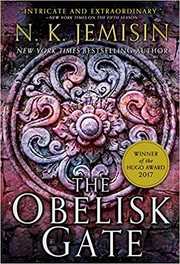
The direct sequel that deepens the mythology of obelisks and the moon, and expands the scope of the conflict. Read immediately after The Fifth Season to maintain narrative momentum and emotional continuity.

The trilogy's stunning conclusion, which resolves all three narrative threads and delivers the full emotional and thematic payoff. Must be read last in the trilogy — its revelations depend entirely on the prior two books.
The Inheritance Trilogy — Jemisin's Debut Series
BeginnerDiscover Jemisin's earlier voice and world-building style through her debut trilogy, which explores gods, mortals, and power in a richly imagined secondary world — a great complement to the Broken Earth's themes.
▸ Study plan for this stage
Pace: 8–10 weeks total: ~2–3 weeks per book at a relaxed beginner pace (~20–25 pages/day). Week 1–3: The Hundred Thousand Kingdoms; Week 4–6: The Broken Kingdoms; Week 7–9: The Kingdom of Gods; Week 10: reflection, review, and exercises.
- Divine hierarchy and power structures: In The Hundred Thousand Kingdoms, enslaved gods (Nahadoth, Sieh, Zhakkarn, and others) are literally owned by the ruling Arameri family — explore how Jemisin uses divinity as a metaphor for oppression and subjugation.
- Unreliable and fragmented narration: Yeine's first-person narration in The Hundred Thousand Kingdoms is self-consciously fractured and non-linear; Oree's sensory-based perspective in The Broken Kingdoms reframes what it means to 'see' truth; Sieh's narration in The Kingdom of Gods is shaped by his d
- Mortal–divine relationships and transformation: Each book centers on a mortal (or semi-mortal) protagonist entangled with gods — track how these relationships challenge, change, and ultimately redefine both parties across all three novels.
- World-building through mythology and oral tradition: Jemisin builds the Hundred Thousand Kingdoms world (Sky, the Maroland, the Three) through embedded myths, stories-within-stories, and unreliable legend rather than expository info-dumps.
- Colonialism, race, and inherited trauma: The Arameri empire's dominance over the Hundred Thousand Kingdoms, the erasure of the Darre people's culture (Yeine's heritage), and the stratified society of Shadow in The Broken Kingdoms all reflect real-world dynamics of colonial power and cultural suppres
- The nature of godhood and mortality: Across all three books, Jemisin interrogates what gods lose when they are constrained and what mortals gain — or sacrifice — when they touch divinity, culminating in Sieh's forced mortality in The Kingdom of Gods.
- Recurring characters as evolving lenses: Sieh, Nahadoth, and Yeine appear across all three books in shifting roles (enslaved god, free god, new goddess) — use their arcs to trace the trilogy's thematic evolution.
- Love, agency, and consent under power imbalance: Each book features a central relationship complicated by radical power differentials; examine how Jemisin interrogates whether genuine choice is possible when one party holds overwhelming power.
- In The Hundred Thousand Kingdoms, why are the Enefadeh (enslaved gods) bound to the Arameri, and how does Yeine's arrival at Sky set in motion the unraveling of that system? What does their enslavement reveal about the relationship between political power and divine power?
- How does Oree Shoth's blindness in The Broken Kingdoms function as more than a physical trait — what does her unique ability to perceive magic and godlings tell us about Jemisin's argument that 'sight' and 'truth' are not the same thing?
- By The Kingdom of Gods, Sieh — the god of childhood — begins aging and dying as a mortal. How does this transformation reflect the trilogy's central tension between freedom and constraint, and what does it cost him personally?
- How does Jemisin use the three different first-person narrators (Yeine, Oree, Sieh) to present three distinct relationships to power — the political outsider, the marginalized mortal, and the ancient divine being? What does each perspective reveal that the others cannot?
- Trace the Arameri family's role across all three books. How does their power evolve (or erode) from The Hundred Thousand Kingdoms through The Kingdom of Gods, and what does this arc suggest about the long-term sustainability of empires built on domination?
- The trilogy ends with a fundamentally changed cosmos. Comparing the world at the end of The Kingdom of Gods to the world at the opening of The Hundred Thousand Kingdoms, what has been lost, what has been gained, and does Jemisin frame this as a hopeful or ambiguous conclusion?
- Narration mapping: After finishing each book, write one page in the style of that book's narrator (Yeine's fragmented address to the reader, Oree's sensory-rich descriptions, Sieh's ancient-childlike voice). Then compare all three — what does the shift in voice reveal about each character's relationship to their own story?
- Power-structure diagram: Draw a visual hierarchy of power for each book — gods, ruling families, mortals, godlings — and annotate how that hierarchy shifts by the end. Lay all three diagrams side by side to map the trilogy's overall transformation of the cosmos.
- Mythology reconstruction: The Hundred Thousand Kingdoms is full of embedded myths about the Three (Itempas, Nahadoth, Enefa). Collect every version of the creation myth mentioned across the trilogy, note where they contradict each other, and write a short analysis of why Jemisin gives us multiple conflicting accounts rather than one authoritative version.
- Colonial parallel journaling: After each book, write a journal entry connecting one specific element of Arameri imperialism or cultural erasure to a real-world historical or contemporary example. Focus on specifics: the suppression of Darre customs in Book 1, the policing of godlings in Book 2, the legacy of inherited rule in Book 3.
- Character evolution tracker: Create a timeline for Sieh across all three books, noting every scene in which he appears. Track how his behavior, dialogue, and self-perception change from enslaved trickster god to mortal boy. Write a one-paragraph thesis on what his arc argues about the cost of freedom.
- Thematic bridge essay: After completing all three books, write a 400–600 word essay answering: 'How does the Inheritance Trilogy use gods and mortals to explore what it means to inherit — and potentially break — a system of oppression?' This will directly prepare you for engaging with the Broken Earth trilogy's similar themes of inherited catastrophe and systemic injustice.
Next up: Completing the Inheritance Trilogy gives you a fluent understanding of Jemisin's core thematic obsessions — inherited power, oppression encoded into the structure of a world, and narrators who are complicit in or constrained by the very systems they describe — which are all radically intensified and technically elevated in the Broken Earth trilogy's revolutionary use of second-person narration and
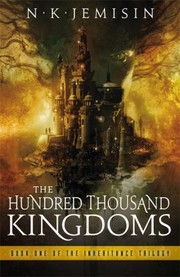
Jemisin's debut novel and a landmark of modern fantasy — it introduces her gift for intimate, first-person narration and morally complex divine beings. Starting here shows how her craft evolved toward the Broken Earth.

The second book in the Inheritance Trilogy, set in the same world but with a new protagonist and a street-level perspective on godhood. Reading it after the first book rewards you with layered world-building payoffs.
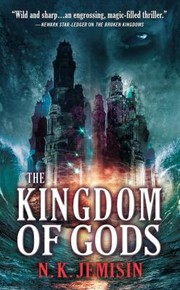
The trilogy's conclusion, narrated by a god-child and the most ambitious of the three in scope. It brings the Inheritance Trilogy to a satisfying close and showcases how Jemisin handles long-form narrative arcs.
The Dreamblood Duology — Darker & More Focused
IntermediateExplore Jemisin's standalone duology set in an ancient Egypt-inspired world, sharpening your appreciation for her tighter, more political storytelling and her recurring interest in dreams, death, and social control.
▸ Study plan for this stage
Pace: 4–5 weeks total: Week 1–2 — Read The Killing Moon (~3 chapters/day, ~25–30 pages/day); Week 3–4 — Read The Shadowed Sun at the same pace; Week 5 — Review notes, complete exercises, and reflect comparatively across both books.
- The Gatherer/Reaper system and the ethics of 'holy' killing — how The Killing Moon frames state-sanctioned death as religious duty and questions who truly benefits
- Dreamblood as a resource and metaphor — understanding how the harvesting and use of dream-essence functions as a stand-in for exploitation, consent, and bodily autonomy
- Theocracy and social control — how the city-state of Gujaareh uses religion, ritual, and the Hetawa to maintain political order and suppress dissent
- Corruption of institutions — tracing how both books show well-intentioned systems (the Hetawa, the Protectorate) rotting from within through power and self-interest
- Gender, trauma, and healing in The Shadowed Sun — Hanani's arc as the first female Sharer and the novel's unflinching treatment of sexual violence, grief, and recovery
- The political role of dreams and the unconscious — Jemisin's use of the dream world (Ina-Karekh) as a space where social hierarchies are both reinforced and subverted
- Tighter, duology-scale worldbuilding — how Jemisin constructs a fully realized ancient Egypt-inspired world in two books, using economy of detail rather than sprawling exposition
- Recurring Jemisin themes: marginalized bodies as sites of political struggle, the violence hidden inside 'civilized' systems, and the cost of survival for the oppressed
- How does The Killing Moon use the Gatherer Ehiru's crisis of faith to interrogate whether a system can be both genuinely sacred and genuinely corrupt — and what answer, if any, does the novel provide?
- In what ways does dreamblood function as more than a plot device? What real-world systems of extraction or exploitation does Jemisin seem to be interrogating through it?
- How does The Shadowed Sun deepen or complicate the world established in The Killing Moon — particularly regarding the Hetawa's relationship to women, outsiders, and political power?
- Hanani is the first female Sharer in Gujaareh's history. How does her journey reflect Jemisin's broader interest in what it costs individuals to integrate into — or challenge — exclusionary institutions?
- Both books deal with sleep, dreams, and death as intertwined states. How does Jemisin use the geography of Ina-Karekh (the dream world) to reflect the waking world's social and political tensions?
- By the end of The Shadowed Sun, has Gujaareh been 'saved' or merely transformed? What does the ending suggest about Jemisin's view of reform versus revolution?
- Corruption mapping: Draw a diagram of the Hetawa's hierarchy as presented in The Killing Moon. Annotate each level with where corruption enters, who knows about it, and who is harmed — then write a one-paragraph reflection on whether the institution is salvageable by the novel's end.
- Close-reading the dreamblood: Select two scenes — one from each book — in which dreamblood is harvested or used. Write a 300-word comparative analysis of how Jemisin frames consent (or its absence) in each scene, and what that framing implies about power.
- Character voice journal: After finishing The Shadowed Sun, write a one-page journal entry from Hanani's perspective set the morning after the novel's climax. Focus on her relationship to the Hetawa — does she feel she belongs? This forces deep engagement with her arc.
- Worldbuilding inventory: List 10 specific details Jemisin uses to evoke the ancient Egypt-inspired setting (architecture, titles, rituals, geography). For each, note whether it serves plot, theme, or atmosphere — then assess how efficiently the duology builds its world compared to a longer series.
- Thematic bridge essay (200–300 words): Write a short essay arguing which single theme from the Dreamblood Duology you expect to reappear — in transformed form — in The Broken Earth trilogy. Use at least one specific textual example from each book to support your prediction.
- Reread the opening chapter of The Killing Moon and the closing chapter of The Shadowed Sun back-to-back. Write bullet-point notes on how Jemisin's prose style, pacing, and thematic focus shift (or stay consistent) across the arc of the duology.
Next up: Mastering how Jemisin uses a contained duology to interrogate corrupt institutions, bodily exploitation, and the cost of survival for the marginalized directly primes the reader for the far more expansive — and formally radical — treatment of those same themes in The Broken Earth trilogy, where the stakes, the structural experimentation, and the emotional intensity are all dramatically amplified.
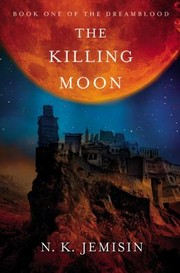
A self-contained fantasy noir set in a theocratic city-state where priests harvest dream-essence from the dying. It's a great palate-cleanser after the trilogies and shows Jemisin's range in a more compact, tightly plotted form.
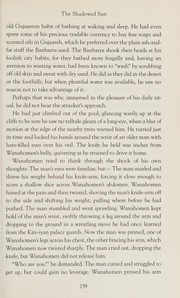
The direct sequel to The Killing Moon, set a generation later in the same world. Read second to get the full arc of the duology and its deeper exploration of trauma, healing, and resistance.
Standalone & Short Fiction — The Full Jemisin
ExpertRound out your Jemisin reading with her standalone novel and a celebrated short fiction collection, gaining a complete picture of her thematic obsessions and her versatility across formats and genres.
▸ Study plan for this stage
Pace: 4–5 weeks total: Week 1–2 — The City We Became (~25–30 pages/day, reading in thematic chunks by borough/character); Week 3–5 — How Long 'Til Black Future Month (~4–6 stories per sitting, with journaling pauses between sessions to track recurring motifs across stories)
- Cities as living, conscious entities — In The City We Became, New York City literally incarnates into human avatars, extending Jemisin's Broken Earth theme of the land as a sentient, aggrieved actor into an urban fantasy register
- Whiteness and gentrification as cosmic horror — The Enemy (the Woman in White / Lovecraftian tentacle force) in The City We Became is explicitly coded as a colonizing, homogenizing power that erases cultural specificity, mapping H.P. Lovecraft's own racism back onto his genre conventions
- Afrofuturism and Black joy as resistance — How Long 'Til Black Future Month showcases Jemisin's insistence that Black futures are not only dystopian; stories like 'The Ones Who Stay and Fight' and 'Red Dirt Witch' center joy, community, and inheritance as radical acts
- Short fiction as a laboratory — How Long 'Til Black Future Month collects work spanning Jemisin's entire career, allowing readers to trace the evolution of ideas (orogeny-like power systems, oppressive social contracts, chosen-family structures) that later crystallized in the Broken Earth trilogy
- Multiplicity and polyphony — Both books resist single-protagonist storytelling; The City We Became distributes its hero across five borough avatars, while the short collection gives voice to dozens of perspectives, reinforcing Jemisin's distrust of the lone-savior narrative
- Genre as political argument — Across both books Jemisin consciously inhabits and subverts urban fantasy, cosmic horror, portal fantasy, and secondary-world epic to argue that the conventions of each genre encode specific assumptions about whose stories matter
- The second-person address and reader implication — 'The Ones Who Stay and Fight' (the collection's opening) and echoes of the Broken Earth's second-person voice appear here, forcing the reader to examine their own complicity in unjust systems
- Intertextuality and the literary conversation — The City We Became is in explicit dialogue with Lovecraft, Samuel R. Delany's Dhalgren, and the tradition of city-as-character fiction; How Long 'Til Black Future Month's title story and others respond to Octavia Butler, Ursula K. Le Guin's 'The Ones W
- In The City We Became, how does Jemisin use the borough avatars' distinct cultural identities (Bronx, Brooklyn, Manhattan, Queens, Staten Island) to argue that a city's strength comes from its internal diversity rather than a unified monoculture — and how does this contrast with the Enemy's agenda?
- How Long 'Til Black Future Month opens with 'The Ones Who Stay and Fight,' a direct rebuttal to Le Guin's 'The Ones Who Walk Away from Omelas.' What specific moral and structural choices does Jemisin make to distinguish her utopia from Le Guin's, and do you find her argument persuasive?
- Identify at least three thematic or structural techniques in How Long 'Til Black Future Month that you can trace as 'prototypes' or early experiments for ideas Jemisin later developed in the Broken Earth trilogy. What does seeing the earlier version reveal about the trilogy's finished form?
- The Woman in White in The City We Became has been read as a figure for Lovecraftian cosmic horror, for gentrification, and for white supremacist cultural erasure simultaneously. How does Jemisin sustain all three readings at once, and what does collapsing them into a single villain argue about the relationship between aesthetics and politics?
- How does Jemisin's use of the short story form in How Long 'Til Black Future Month allow her to take risks — in voice, genre, and theme — that a novel cannot? Point to at least two specific stories as evidence.
- By the end of both books, what would you say is Jemisin's core, recurring answer to the question: 'What does it cost a person — or a city, or a world — to survive an oppressive system, and what makes survival worth it?'
- Borough mapping exercise (The City We Became): Create a one-page character sheet for each of the five borough avatars. For each, note their cultural background, their relationship to their borough's real history, the specific threat the Enemy poses to them personally, and one moment where their individual identity becomes the source of their power. Then write a paragraph arguing which avatar's arc
- Genre autopsy (How Long 'Til Black Future Month): Choose five stories from the collection that span different genres (e.g., secondary-world fantasy, contemporary horror, science fiction, fable). For each, identify the genre's conventional 'rules' and then annotate exactly where and how Jemisin breaks or inverts them — and to what political or emotional effect.
- Intertextual dialogue journal: Read 'The Ones Who Stay and Fight' alongside a summary or full text of Le Guin's 'The Ones Who Walk Away from Omelas.' Write a 500-word structured comparison: What does each story say about utopia, sacrifice, and moral knowledge? Then write a 200-word response from the perspective of a Broken Earth character (e.g., Essun or Nassun) reacting to both stories.
- Evolution timeline: Using the publication dates provided in How Long 'Til Black Future Month's author notes, arrange at least eight stories chronologically and write a one-sentence 'thesis' for each. Then draw a timeline annotating how Jemisin's preoccupations shift — note when orogeny-like power systems appear, when second-person narration is tested, when the social-contract theme sharpens.
- Lovecraft inversion essay (The City We Became): Write a 600–800 word analytical essay arguing how The City We Became functions as a deliberate 'hostile takeover' of Lovecraftian cosmic horror. Use at least three specific scenes or passages from the novel as evidence, and address what Jemisin gains — and risks — by working within a genre so associated with racism.
- Synthesis reflection — 'The Full Jemisin': After finishing both books, write a 400-word personal essay answering: What is the one idea, image, or moral question that appears in some form across the Broken Earth trilogy, The City We Became, and How Long 'Til Black Future Month? Use one specific textual example from each book to support your claim.
Next up: Having now read Jemisin's full range — from the intimate geological grief of the Broken Earth to the urban mythology of The City We Became and the genre-spanning experiments of How Long 'Til Black Future Month — the reader is equipped to step back and engage with critical and scholarly discourse about Jemisin's place in the speculative fiction tradition, examining how her work has been received, t
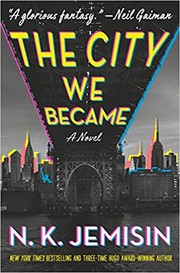
Jemisin's contemporary urban fantasy set in New York City, where the city itself is being born as a human avatar. It's her most accessible and playful book, and a perfect capstone that shows how far her imagination ranges beyond secondary-world fantasy.
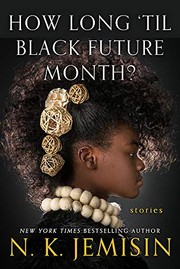
A Hugo Award-winning short story collection that includes early seeds of the Broken Earth world alongside standalone gems. Reading it last lets you recognize callbacks and early ideas, making it a rich retrospective on her entire career.
Discussion
Keep reading
Paths that share books, cover the same subject, or open a related topic.