The Booker Prize Winners: Where to Start, and What Order to Read Them In
The Booker has been awarded every year since 1969 to a single novel, chosen by a jury that is replaced annually — which is why the list of winners has no consistent taste and why reading it chronologically is a bad idea. Until 2014 only writers from the Commonwealth and Ireland were eligible; opening the prize to any novel written in English and published in Britain remains its most contested decision, with critics arguing it handed a British prize to American publishing. This path ignores the years entirely and moves by difficulty: the winners that welcome a reader in, then the ones the prize is remembered for, then the deliberately hard and divisive choices, and finally the winners that have been quietly re-judged since.
The Winners That Invite You In
BeginnerGet a working sense of what a Booker winner is by reading three that ask nothing of you but attention — clear prose, strong shape, and no formal difficulty.
▸ Study plan for this stage
Pace: Three to four weeks for all three, and this stage is deliberately the easiest calendar on the path. The Sense of an Ending is 154 pages and a single long evening. The Remains of the Day is 254 pages and reads faster than that because the voice carries you. Life of Pi is the longest at around 350 pag
- What a Booker winner actually is: one novel a year since 1969, chosen by a jury replaced annually, which is why the list has no consistent taste and why reading it chronologically produces whiplash rather than a sense of the prize
- The unreliable narrator as the prize's most-rewarded device — all three books here run on it, in three completely different registers
- Stevens in The Remains of the Day, whose self-deception is visible to the reader in every sentence he writes and invisible to him. Ishiguro achieves this without a single moment of authorial commentary
- Dignity as Stevens defines it against dignity as the novel demonstrates it, which is the whole engine of the book
- Life of Pi's final chapter and the choice it hands the reader between two accounts of the same voyage. The question of which story you prefer is an argument about what fiction is for, and it is the argument the rest of this path keeps having
- The Sense of an Ending's premise: a retired man discovers he has misremembered his own youth, and that the misremembering was not innocent
- The Booker's habit of rewarding compression as heavily as ambition — Barnes won on a novel under 200 pages, and it is worth noticing early that shortlists routinely mix a 700-page epic with a novella
- Julian Barnes won on his fourth shortlisting, which is a useful early lesson in how much the prize is a record of juries rather than of writers
- At what point did you understand more about Stevens than Stevens does? Find the sentence. Ishiguro plants the first one very early.
- What is Stevens's definition of dignity, and what does the novel think it costs? Note that the book never states its own view directly.
- Which of Pi's two stories do you believe, and which do you prefer? Martel's last pages insist those are different questions — do you agree?
- In The Sense of an Ending, what does Tony get wrong, and is his misremembering an error or a convenience?
- All three narrators are wrong about their own lives. What is it about that device that a Booker jury keeps rewarding?
- Having read three winners, write one sentence guessing what the prize is for. You will revise it twice on this path and the first guess is worth having on paper.
- In The Remains of the Day, mark every passage where Stevens explains why he did not do something. Collect five or six. Read them consecutively at the end — the pattern is the novel.
- After Life of Pi's final chapter, write 200 words arguing for the version of the story you did not choose. It is a genuinely hard exercise and it is the one the book is built to provoke.
- Read The Sense of an Ending in one sitting, then reread the first thirty pages the next morning. The book is short specifically so that the second pass is affordable, and it is a different book on the second pass.
- Start a one-page ledger you will keep for the whole path: title, year, one line on what the jury seems to have rewarded. Three rows now, thirteen by the end. It is the only way to see what the prize's taste actually is.
Next up: These three win on voice and shape without asking anything technical of the reader, which is exactly the trust you need before the next four — where the ambition goes up, the books get long, and two of them withhold their structure on purpose.

The best possible first Booker: an English butler drives across the West Country in 1956 and, sentence by careful sentence, reveals a life spent serving the wrong man. Nothing about it is hard to read and everything about it is hard to forget, which is exactly the combination that gets a reader to book two.
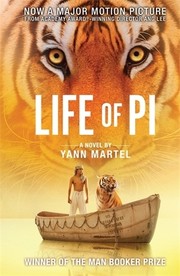
A boy in a lifeboat with a tiger — a winner that sold in the millions and is genuinely propulsive. Read it second because its final twist is an argument about what fiction is for, and that argument is the one the rest of this path keeps having.
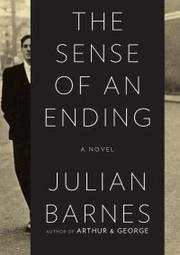
Barnes won on his fourth shortlisting with a novel under 200 pages about a retired man discovering he misremembered his own youth. A single evening's reading that demonstrates the Booker's other habit — rewarding compression as heavily as ambition.
The Winners the Prize Is Remembered For
IntermediateRead the four novels most often named when people say the Booker gets it right, and see what the prize actually rewards: ambitious historical or postcolonial fiction with a strong voice.
▸ Study plan for this stage
Pace: Ten to twelve weeks. This is the long stage. Midnight's Children is around 580 pages of dense, comic, non-stop prose and wants three to four weeks — thirty pages a day, no faster, because the sentences do not thin out. The God of Small Things is 357 pages and slower than its length suggests, since i
- Midnight's Children as the prize's own nomination for its best book — it won the Booker of Bookers in 1993 and the Best of the Booker in 2008, which is as close as an annually-rejudged prize comes to an official verdict
- Saleem Sinai's body as the Indian nation, and the comic-historical mode in which a private life and a national one are made literally the same story
- Roy's private English in The God of Small Things: invented compounds, capitalised phrases, repetitions that return with more weight each time. The plot is announced early and the suspense is entirely in the telling
- Reading for rhythm before plot, which is the skill The God of Small Things teaches and which everything later on this path uses
- The English Patient's withheld structure — four damaged people in a Tuscan villa, told in fragments that only assemble themselves late. This is deliberate practice for the much harder withholding in the next stage
- Wolf Hall's third-person present tense locked inside Thomas Cromwell's head so completely that the famously ambiguous he becomes a technique rather than an error. Read it knowing the pronouns are deliberate
- Mantel making historical fiction respectable at prize level, and then winning again with the sequel — the only writer to win with consecutive volumes of one story
- What the prize evidently rewards, visible once these four are read together: ambitious historical or postcolonial fiction carried by a strong and unusual voice
- Midnight's Children has been named the best Booker winner twice by the prize's own juries. Having read it, make the case against — what does the choice reveal about the prize's self-image?
- Roy tells you what happens very early and the book is still suspenseful. How? Name the specific techniques rather than the general effect.
- In The English Patient, when did you work out what had happened, and what did Ondaatje withhold to keep it from you? Distinguish between information he delayed and information he never gave.
- Wolf Hall's pronouns are its most complained-about feature. After a hundred pages, are they a problem or the point? Argue the complaint at its strongest first.
- Mantel makes Cromwell sympathetic and Thomas More cold, which reverses the received portrait of both. Is that a historical argument or a novelistic one, and does the book distinguish them?
- Set these four beside the three in the previous stage. What is the prize consistently rewarding, and where is your first-stage guess wrong?
- Keep a name list for Midnight's Children from page one — character, relation, when they appear. Rushdie introduces dozens and expects them back four hundred pages later. This is a small daily cost and the alternative is rereading.
- Take one page of The God of Small Things and read it aloud. Then take one page of The Remains of the Day and do the same. Ishiguro's prose survives it; Roy's requires it. That contrast is the clearest lesson on this path about what prose can be.
- Read the first fifty pages of Wolf Hall, and if you are lost, read them again immediately rather than pressing on. Almost every reader who reports bouncing off Mantel bounced inside that stretch, and the second pass costs one evening.
- In The English Patient, note the chapter where you first understood who the patient is. Then find the earliest page that gave it away. The distance between the two is Ondaatje's measure of how much a reader can hold unresolved.
- Add four rows to your ledger. Then write one paragraph on what a jury would have had to believe to choose Wolf Hall over the rest of that year's shortlist. You can look the shortlist up; the exercise is in the argument, not the research.
Next up: You can now hold a novel that withholds its structure and a novel written in a private idiom, which are precisely the two demands the difficult winners make — the difference being that the next three make both demands at once and do not soften them.
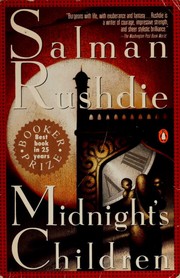
Winner of the Booker of Bookers and then the Best of the Booker, so by the prize's own repeated account the definitive Booker novel. India's independence told through a boy born at midnight, in prose that never stops talking. Read it after the short books: it is dense, comic and long, and it repays a reader who already trusts the prize.
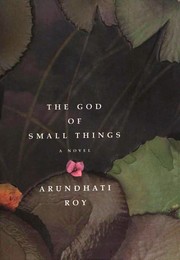
A debut, written in a private English of invented compounds and repeated phrases, about twins in Kerala and the day everything went wrong. It is the clearest demonstration that the Booker will reward a first novel outright — and it teaches you to read for rhythm before plot.
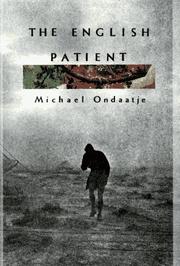
Four damaged people in a Tuscan villa at the end of the war, told in fragments that assemble themselves late. Placed here because it is the first book on this path that withholds its structure — good practice, and much easier than the withholding in stage three.
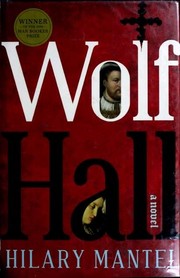
Thomas Cromwell's rise, in a present tense that stays inside his head so completely that Mantel's famously ambiguous 'he' becomes a technique rather than a mistake. The first of Mantel's two wins and the book that made historical fiction respectable at prize level; read it knowing the pronouns are deliberate and the first fifty pages are the price of entry.
The Difficult and the Divisive
IntermediateRead the winners that split their juries and their readers, and understand the case both for and against each — this is where the prize is genuinely argued over.
▸ Study plan for this stage
Pace: Eight to ten weeks. The Sellout is 304 pages and the shortest, but it is exhausting rather than long — read it in short bursts over two to three weeks. Milkman is 408 pages of long unbroken paragraphs and has a specific shape: about forty pages of genuine difficulty, after which the voice carries yo
- The 2014 rule change: until then only writers from the Commonwealth and Ireland were eligible, and opening the prize to any novel written in English and published in Britain remains its most contested decision. Critics argue it handed a British prize to American publishing; defenders argue a prize f
- The Sellout as the first American winner after that change, which makes it the single best test case for the argument in either direction
- Beatty's satire operating at a pitch many readers cannot get past in the opening pages — the discomfort is engineered and the book is not interested in being liked
- Milkman's refusal of names: an unnamed narrator, in an unnamed city, during a conflict never named, with characters identified only by their relation to her. The abstraction is a formal response to a place where naming was dangerous
- The forty-page rule for Milkman — the difficulty is real, front-loaded and finite, and the reception history is a near-perfect case of a book called unreadable on Tuesday and a masterpiece by Friday
- Lincoln in the Bardo told entirely in the voices of ghosts and in fragments of historical sources, some real and some invented, with no conventional narration at all
- Saunders never explaining his own rules, which is why it comes third — Milkman trains you to accept a novel that will not orient you, and Saunders requires that training
- The general point this stage makes: a jury's choice and a book's readability are different things, and the prize has repeatedly chosen difficulty on purpose
- The Sellout won under rules changed two years earlier. Set out the case that opening the prize was right and the case that it was wrong, as strongly as you can, and note which of them the novel itself supports — if either.
- Beatty's satire is deliberately hard to like. What is the discomfort doing that a more comfortable satire could not?
- In Milkman, nothing is named. What does the abstraction gain, and what does it cost you as a reader? Both are real.
- Where exactly did Milkman become readable for you? Note the page. The consistency of that number across readers is one of the more interesting facts about the book.
- Lincoln in the Bardo mixes genuine historical quotation with invented sources and does not flag which is which. What is that claiming about historical evidence?
- All three of these split their juries or their readers. Is difficulty something a prize should reward, and is your answer the same for all three books?
- Read the first forty pages of Milkman in one sitting. Not two. The book's difficulty is a barrier with a far side and fragmenting the approach is the reliable way to fail at it.
- Write 300 words on The Sellout's opening chapter for a reader who abandoned it. Do not defend it as important — describe what it is doing. Being able to do that is the actual test of whether you read it or endured it.
- In Lincoln in the Bardo, pick one page of source fragments and try to sort them into real and invented before checking. You will be wrong more than you expect, which is the point Saunders is making.
- For each of these three, write a one-sentence review from the jury's side and a one-sentence review from a hostile critic's side. Six sentences. This is the stage where the prize is genuinely argued over and the exercise makes the argument yours.
- Add three rows to the ledger, and revise the one-sentence guess about what the prize is for that you wrote in the first stage.
Next up: You have now read the winners at their most demanding and most contested, which is the right preparation for the last three — where the question stops being whether a book is difficult and becomes whether the jury was right at all.
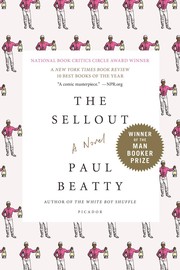
The first American winner after the 2014 rule change, and a satire so aggressive about race in America that many readers cannot finish the opening. Read it here because you need some tolerance for a novel that is deliberately hard to like, and because it is the single best test case for whether opening the prize was a good idea.

Northern Ireland during the Troubles, narrated by an unnamed young woman in long unbroken paragraphs where nobody is named at all. Widely called unreadable when it won and widely called a masterpiece since; the difficulty is real and lasts about forty pages, after which the voice does the work.
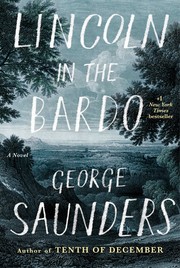
Saunders's first novel, told entirely in the voices of ghosts and in fragments of real and invented historical sources. Formally the strangest book on this path — read it last of the three, once Milkman has trained you to accept a novel that refuses to explain its own rules.
Deep Cuts and Re-Judged Winners
IntermediateFinish with three winners that fell out of print, out of fashion or out of the conversation, and form your own view of what the prize's judgement is worth over decades.
▸ Study plan for this stage
Pace: Six to eight weeks. Moon Tiger is 208 pages and the shortest book left, around a week and a half. Troubles is 446 pages, grimly funny and easy to read despite its length; two to three weeks. The Bone People is 464 pages and the hardest read on the path for reasons that are not formal — it contains s
- Troubles' setting — a crumbling Irish hotel in 1919, with the empire rotting quietly in the background and the comedy coming from nobody in the building noticing
- The prize's own administrative accident: 1970 was skipped when the Booker moved to same-year judging, so Farrell's novel was awarded retrospectively decades later. A winner that had to be re-awarded is a fact about prizes worth sitting with
- Moon Tiger's structure — a dying historian assembling her own life out of chronological order, from a childhood fossil hunt to wartime Cairo, with the same scenes retold from other people's points of view
- Lively's win considered an upset at the time and largely forgotten for two decades; it is now the standard example of the Booker rewarding a quiet book over a loud one, which is a reputation that took thirty years to form
- The Bone People's publication history: turned down by every major publisher and issued by a small feminist collective, then winning the prize outright — the strongest evidence on this path that a jury can act against the market
- Its contested status, on three separate grounds — the violence, the unconventional structure, and questions raised much later about its author's account of her ancestry. These are distinct disputes and are worth keeping distinct
- The general finding this stage delivers: a jury's judgement and a book's long reputation are separate objects, and they move in both directions over decades
- What survives, and why — reading three winners whose reputations went down, up and sideways is the only way to see the prize as a fifty-year record rather than an annual event
- Troubles is very funny about something that is not funny at all. How does Farrell hold both, and where does the comedy break?
- What does Moon Tiger gain by being told out of order, and what would a chronological version lose? Be specific about at least two scenes.
- Lively's novel was an upset and then forgotten and then canonised. What does that trajectory suggest about how quickly any jury can be judged?
- The Bone People is contested on several distinct grounds. Separate them, state each fairly, and consider whether they bear on each other at all.
- Every major publisher rejected The Bone People and a jury gave it the prize. What is that evidence for — about juries, about publishing, or about the book?
- Now finish the ledger and answer the question you first attempted in stage one: what is the Booker Prize for? Your answer should now be different from both earlier versions.
- Read the last twenty pages of Troubles, then the first twenty again. Farrell's hotel decays across the whole book and the two passages read as different buildings, which is the novel's method in miniature.
- In Moon Tiger, find a scene told twice from different points of view and write 200 words on what the second telling changes. Lively does this repeatedly and it is the closest thing the book has to an argument about history.
- Complete the thirteen-row ledger. Then rank the books, best to worst, on your own judgement alone, and write one line on each placing. Comparing your ranking with the prize's chronology is the point of having read them out of order.
- Pick the winner on this path you think has been most overrated and the one most underrated, and write a paragraph on each. A reader who cannot name both has not really formed a view of the prize.
- Choose the book you would hand to someone starting this path, and defend it against The Remains of the Day, which is the default answer. Having a reasoned alternative is the last test of whether the ledger did its job.
Next up: This is the end of the path. The obvious next move is not more winners but a single year's shortlist read whole — pick a year whose winner you admired, read the four books that lost, and judge it yourself.
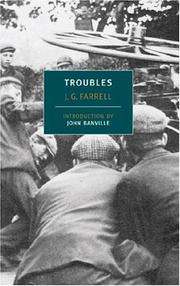
A crumbling Irish hotel in 1919 as the empire quietly rots around it — grimly funny and completely unlike anything else here. Its 1970 year was skipped when the prize moved to same-year judging, so it won retrospectively decades later; a prize winner that had to be re-awarded is worth reading on that ground alone.
A dying historian assembles her own life out of order, from a childhood fossil hunt to wartime Cairo. Considered an upset when it won and largely forgotten for twenty years; it is now the standard example of the Booker rewarding a quiet book over a loud one.
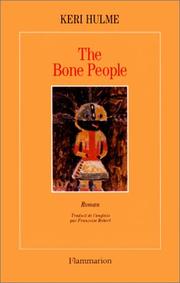
A Māori novel published by a small feminist collective after every major publisher turned it down, and still the most contested winner in the prize's history — for its violence, its structure, and later for questions about its author. Read it last: it is the strongest argument that a jury's judgement and a book's reputation are separate things.
Discussion
Keep reading
Paths that share books, cover the same subject, or open a related topic.