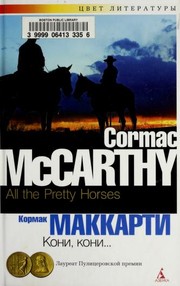
Start with All the Pretty Horses. It is the first volume of the Border Trilogy, it is the most accessible novel Cormac McCarthy wrote, and it won the National Book Award for exactly the reasons that make it a good entry point: a clear plot, a sixteen-year-old protagonist you can follow, and prose that is beautiful without yet being punishing.
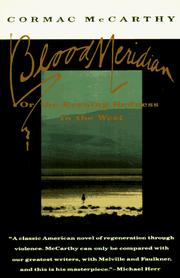
The obvious alternative recommendation is Blood Meridian, and it is the wrong place to begin. Blood Meridian is the greater book and the harder one — relentless scalp-hunting violence, biblical syntax, a protagonist who barely functions as a character. Read the trilogy first, learn how McCarthy writes, and then go to it. You will get more out of both.
The sequence
All the Pretty Horses, The Crossing, Cities of the Plain. Publication order is the correct order and there is no competing chronology worth discussing.
The structure is unusual for a trilogy. Book one follows John Grady Cole into Mexico. Book two follows an entirely different boy, Billy Parham, on an entirely different journey — the two protagonists do not meet until book three, which brings them together in New Mexico in 1952. If you finish All the Pretty Horses and open The Crossing expecting to continue John Grady's story, the disorientation is intended.
Honest warnings
The Crossing is the difficulty. It is structurally three long journeys, each one ending in loss, and it repeats its own shape deliberately. It contains McCarthy's most extraordinary sustained writing — the wolf sequence at the start is as good as American prose gets — and it is also the volume readers most often abandon. Long philosophical monologues from strangers, and a bleakness with no relief. Many serious readers consider it the best of the three. Many others cannot finish it.
Cities of the Plain is generally judged the weakest, a shorter and more conventional tragedy with an epilogue that arrives from somewhere else entirely.
Two practical warnings. McCarthy uses no quotation marks and minimal punctuation, so dialogue runs into narration; you adjust within twenty pages. And there is a great deal of untranslated Spanish, some of it carrying real plot weight. A translation guide is worth having open, though the sense usually survives without one.
Where Blood Meridian and the rest fit
After the trilogy, read Blood Meridian. It is the centre of McCarthy's work and the hardest thing in it, and the Judge is a genuinely unsettling creation. Outer Dark is the early Appalachian McCarthy, sparser and stranger, good for seeing where the style came from. The Road is the late, plainest, most emotionally direct book and the easiest to recommend to anyone.
For the country the trilogy is about, Andy Adams' The Log of a Cowboy is a first-hand 1903 account of a cattle drive and the corrective to romantic cowboy fiction, and Larry McMurtry's Lonesome Dove is the great popular western that does with warmth what McCarthy does with dread.
Where to stop
If you only want one McCarthy, read All the Pretty Horses and stop; it stands alone completely. If you want the trilogy, read all three, but treat The Crossing as the test — if you are unmoved by it, Cities of the Plain will not convert you.
Browse more sequenced reading orders in Discover.
Follow the full ordered path here: The Border Trilogy Reading Order and Guide.