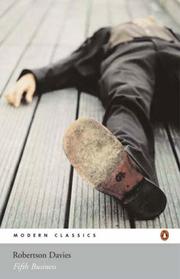
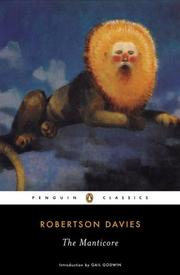
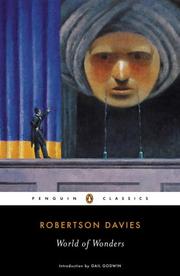
Start with Fifth Business. It is the first published volume, the shortest, and the one most readers finish convinced they have just read a great novel. Nothing about the trilogy asks you to begin anywhere else, and the two later books actively depend on it: they retell the same events — a snowball thrown in 1908, a woman driven out of her mind, a boy who grows up carrying the guilt — from two other points of view. Read out of sequence, that structure collapses into repetition.
The second reason to start there is practical. Fifth Business works completely as a standalone. If you read it and feel finished, you are allowed to be finished; a lot of readers are. The other two books are rewarding rather than necessary, and knowing that up front makes the trilogy far less intimidating than its reputation as a Canadian literary monument suggests.
The sequence
Read in publication order, which is also narrative order:
- Fifth Business (1970) — Dunstan Ramsay writes a long, aggrieved letter to his old headmaster explaining what his apparently dull life as a schoolmaster actually contained: hagiography, a saint, a magician, and one unresolved act of childhood cowardice.
- The Manticore (1972) — David Staunton, son of the man who threw the snowball, undergoes Jungian analysis in Zurich after his father dies.
- World of Wonders (1975) — Magnus Eisengrim, the boy in the middle of the whole business, tells the story of what happened to him, and it is the strangest of the three.
The honest warning about book two
The Manticore is where readers stall. It is structured as sessions of Jungian analysis, which means long stretches of a man narrating his own biography to a therapist who occasionally interprets it. Some readers find it the most psychologically acute of the three; others find it a lecture with a plot attached. Both reactions are common and neither is wrong. If you are bogging down, the good news is that World of Wonders is nothing like it — it is a carnival memoir with a murder in it, and it moves.
The Jung question
Davies read Jung seriously and the trilogy is built on Jungian scaffolding — the persona, the shadow, the figure of the trickster, the idea that a life has an archetypal shape. You do not need any of this to enjoy the books. But if the Zurich sections of The Manticore make you curious rather than impatient, the two obvious follow-ons are Man and His Symbols, the accessible collection Jung edited for a general readership, and Memories, Dreams, Reflections, his semi-autobiography. Read them after, not before; going in loaded with theory turns the novels into an exam.
The other genuinely useful companion is The golden legend, the medieval compilation of saints' lives that Dunstan Ramsay spends his career studying. Davies is not being decorative about hagiography — the trilogy is asking what a saint is and whether one can appear in small-town Ontario. Joseph Campbell's The hero with a thousand faces covers adjacent ground on the shape of mythic biography, though Davies is far more sceptical and funnier than Campbell.
Where to go next
If you finish the trilogy and want more Davies, the next stop is the Cornish Trilogy, which begins with The rebel angels — a university novel about art forgery, gypsy scholarship and academic appetite. It is looser and more comic than Deptford. For Davies on his own terms, The enthusiasms of Robertson Davies collects his journalism and criticism, and is a good picture of the man behind the persona.
There is no publication-versus-chronological controversy here, no missing volume, no notoriously slow book five. This is one of the cleanest reading orders in modern fiction: three books, one order, and permission to stop after the first. If you want more trilogies with this shape, the Wolf Hall trilogy is the obvious neighbour.
Follow the full ordered path here: The Deptford Trilogy Reading Order and Guide.
Ready to learn something deeply?
Build a reading path — free